


Category IV Emotions: Emotive States, Part One
This is the tenth article in a series of twelve and gives an overview of some of the main Category IV Emotions, or Emotive States, in Affect Engineering, such as Boredom, Surprise, Helplessness, Confusion, Restlessness, Joyfulness, and Greed. It is designed for the layperson and explains the basics of Affect Engineering as a theory of emotions. Each article in this series begins with a list of questions that it will aim to address. The sections that follow are in two parts each. The first part is a short statement that answers each question as succinctly as possible. The second part will offer a more in depth explanation that goes into more detail where needed by exploring some of the implications of the short answer.
QUESTIONS
- What distinguishes the Category IV Emotions from the other Categories of Emotions in Affect Engineering?
- What are the major Category IV Emotions and what are some of their defining characteristics?
1) What distinguishes the Category IV Emotions from the other Categories of Emotions in Affect Engineering?
SHORT ANSWER
Category IV Emotions, or Emotive States, in Affect Engineering consist of emotions that do not fit neatly into a specific archetype as the other categories of emotions. They are oftentimes more complex than the other emotions, and many emotions in this category have more nuances than emotions in the other three categories.
IN DEPTH EXPLANATION
Category IV Emotions differ from the other three categories of emotions in how they are identified or in some cases their composition. These emotions, for the most part, are a miscellaneous category of emotions. Category IV Emotions may arise due to variations in a single variable, due to variations in multiple variables, or they may arise from the individual’s acknowledgement of a situation that arises from the influence of multiple purposes, entities, and subsequently, other emotions (e.g., interactions between three, four, or more purposes); in these cases, sometimes one purpose held by an individual is also an entity that the individual is assessing for another purpose. Any situation where a purpose held by the individual is also an entity for another purpose, would likely be classified as a Category IV Emotion. Interactions and relationships between multiple Category I, II, or III emotions where the individual wants the dynamic to change would also be classified as a Category IV Emotion. Lastly, some Category IV Emotions may have durations that are considerably longer-lived (e.g., weeks or months) than the emotions described in the other three categories.
2) What are the major Category IV Emotions and what are some of their defining characteristics?
SHORT ANSWER
Some of the major Category IV Emotions are Boredom, Surprise, Helplessness, Confusion, Restlessness, Joyfulness, and Greed. A few of these emotions are distinguished by sudden and extreme changes to a particular variable that changes their graph, such as Surprise. Others are distinguished by having one or more variables that may be unknown or that can only be estimated within a range, such as Confusion. Some may be distinguished by having variables that are chronically low or high, such as in the case for Helplessness. Others still may be distinguished as situations that can arise due to the combined influence of several other emotions and relevant purposes, or that can arise as a conflict between multiple purposes and emotions or (e.g., Boredom, Restlessness, Joyfulness, and Greed).
IN DEPTH EXPLANATION
Boredom
Of all the emotions discussed thus far, few perhaps have quite the reach, influence, and relevance today as Boredom does, so it will be addressed here first. Even with only a passing glance at the many economies and markets of the world, it would be hard to miss the fact that there entire industries are built on or centered around combating boredom, alleviating boredom, or preventing situations that may potentially lead to boredom in the first place.
For example, in the United States, the Arts and Entertainment sectors (e.g., sports, comedy, movies, theater, and musical concerts, to name a few) represented about 4.2% of the United State’s GDP in 2023 ($1.2 Trillion), or approximately 5.4 million workers according to the National Endowment for the Arts (out of the 171.9 million who worked that year, from Bureau of U.S. Labor Statistics, or about 3.1%). Although four percent is not a particularly large amount, this was not the only sector of the workforce concerned with eliminating boredom as part of its product. The broader service-industry as a whole, which includes everything from eating out at restaurants, to food delivery Apps such as Door Dash, to Amazon Prime deliveries made to one’s home, and streaming subscription services like Netflix, Disney+, Paramount+, and Hulu, comprises about 79% of the U.S. workforce (from Statista, Distribution of the Workforce Across Economic Sectors in the United State), and much of this economic activity is convenience driven. The primary appeal of a convenience driven economy is that it offers people speed in order to save time, accessibility to save people from feeling restricted, and ease to save people from difficult work. All of these things, waiting, (i.e., for anything in general), being restricted, and having to do difficult work, are things that are often associated with boredom and presented as undesirable.
Before going further, however, boredom needs a workable definition for it to be of any use here. Defining boredom in a manner that is clear and unambiguous might seem difficult at first, as it can appear in a number of different contexts that are contradictory. For example, boredom is highly specific to the individual; what bores one person may excite another person. Moreover, boredom can also arise in completely opposite scenarios. If a task is too easy and not challenging enough for the individual, they may become bored; on the other hand, if a task is too difficult then the individual may see no way to succeed and grow tired of engaging with it if their efforts feel wasted, also leading to boredom. The APA Dictionary of Psychology’s definition of boredom is as good a place to start.
Boredom is “a state of weariness or ennui resulting from a lack of engagement with stimuli in the environment. It is generally considered to be one of the least desirable conditions of daily life and is often identified by individuals as a cause of feeling depressed. It can be seen as the opposite of interest and surprise.” – Boredom, from APA Dictionary of Psychology
Interest, a suggested opposite to boredom in the above definition, is subsequently defined as “an attitude characterized by a need or desire to give selective attention to something that is significant to the individual, such as an activity, goal, or research area.” – Interest, from APA Dictionary of Psychology
If interest is characterized by a need or desire to give selective attention to something that is significant to the individual, then one would expect boredom to be characterized by the exact opposite. Selective attention is modeled by the variable of Reasoning in Affect Engineering (Article four, question #4 in this series goes into more detail on Reasoning and selective attention, Emotional Responses and Emotional Regulation in Affect Engineering, Article 4 of 12). That is to say, the feeling of boredom would be characterized by a need or desire to take selective attention away from something that is insignificant to the individual. As Psychology Today also observed, a growing number of scientists have conceived of the state of boredom as a signal for change that indicates “a current activity or situation isn’t providing engagement or meaning,” and that this serves as a call to the individual to shift their attention to something or some activity that is more fulfilling (from Boredom, Psychology Today).
Lastly, John Eastwood, a clinical psychologist, Associate Professor of Psychology at York University, and expert on the subject of boredom, along with his colleagues described boredom as “the aversive experience of wanting, but being unable, to engage in satisfying activity,” (from The Unengaged Mind: Defining Boredom in Terms of Attention). “A bored person,” as Kirsten Weir sums up Eastwood’s words, “Doesn’t just have nothing to do. He or she wants to be stimulated, but is unable, for whatever reason, to connect with his or her environment — a state Eastwood describes as an “unengaged mind” (Perspectives on Psychological Science, 2012),” (as cited in the APA Monitor on Psychology).
Taking into account all of this, Boredom, in Affect Engineering, would need to be understood as a signal or call to action to the individual to redirect selective attention elsewhere, such as towards the fulfillment of a different purpose or to the acquisition of a different entity that is potentially more meaningful to the individual. Given Affect Engineering’s structure, redirecting selective attention would also help to optimize the use of Anxiety and Negative Anxiety resources for an individual for one of two general manners:
- To redirect selective attention and resources away from tasks that are of too little importance to the individual (e.g., low variables in the base of the function and low Threat variables), or away from tasks that are too easy (e.g., high Efficacy variable) in order to prioritize other entities as they relate to goals that are more difficult and may require more concentration, or that may provide more satisfaction if they are achieved;
- Or, to redirect selective attention and resources away from tasks that are too difficult and offer the individual little to no chance of success (e.g., extremely low Efficacy variables); this would orient the investment of Anxiety and Negative Anxiety towards objectives the individual could realistically influence and achieve some sort of satisfaction.
Article Two, question #2 in this series describes the concepts of Anxiety and Negative Anxiety in Affect Engineering (Reframing Anxiety as a Resource, Article 2 of 12)
A desire for novelty and novel experiences, even if the individual is not exactly sure of what they want, is also oftentimes described as a source of boredom, particularly if a purpose and the acquisition of whatever entity is associated with its fulfillment becomes repetitive over time and begins to feel too easy (e.g., manner #1 above, too easy). Taking into account Affect Engineering’s 1:1:1:1 ratio, this might manifest as the individual starting to experiment with the entity at hand, and see if it can be used for the fulfillment of a novel purpose (for more on the 1:1:1:1 ratio, see Article Two, Question number #4 in this series, Reframing Anxiety as a Resource, (Article 2 of 12). For example, a child who finds putting laundry in the hamper for cleaning (a relatively simple and repetitive task for most people) to be boring, may start using the laundry bin as a basketball hoop and begin throwing their clothing into the hamper like a basketball so that the task feels more stimulating and less mundane. It is the same entity (i.e., dirty laundry), but being used for a slightly different purpose that potentially has more appeal, throwing into a hoop. The end result is still the same, however, as the laundry ends up in the hamper, even though it is being used for a different purpose. This was the logic behind a product that is still being sold today:

Hamper Hoops by Wham-o
Hamper Hoops by Wham-o (youtube video link describing the product)
In contrast, if the task of putting dirty laundry in the hamper was too difficult or impossible, such as if the hamper is in an inaccessible area that is too high for the child (e.g., manner #2 for Boredom from above, task is too difficult), then a novel purpose and novel entity may be sought to help fulfill it, such as by putting the dirty laundry in a cardboard box that is accessible instead. However, if no alternatives to the too difficult task are available (e.g., no cardboard box or containers of any kind can be found), abandonment of the fulfillment of the original purpose and the use of the entity are also possible. Wearing dirty laundry again and foregoing washing it altogether, or even opting to just not wear clothes at all and go around naked are two such possibilities.
To demonstrate Boredom and the other Category IV Emotions, the entity of money will be considered in some fictional scenarios, given that money is a concept that most people are familiar with. The character of Buck, age five, will be considered.

Buck, at age five.
To Buck, a child in this scenario who currently has no understanding that money is used to trade for other desirable things, money just seems like pieces of paper or shiny pieces of metal. As Buck has a low estimation of money’s worth (e.g., due to perceived low or unknown Sufficiency variables, low Uniqueness variables, or a low Sentiment variable if the purpose itself, acquiring money, is just not important to Buck), then his perceived efficacy to acquire money would likely also be heavily inflated, particularly if money is just paper or pieces of metal to him. Buck may see money as no different than coloring books on which he has drawn pictures, or metal bottlecaps. The acquisition of money would not be stimulating to him in such an instance, as it appears interchangeable with other common items and would be of too little importance to him given what he knows of the world in that moment. Being told to go acquire money, in this case for Buck, would very likely elicit boredom from him, as the task appears too easy and holds little meaning to him. This would be due in large part to him not knowing money is used as a facilitator of trade.
Boredom could still arise if Buck, alternatively, is aware of what money is used for, but had been born into a situation of extreme wealth (e.g., low perceived Uniqueness variable for money) and his Efficacy to acquire money is abnormally inflated because he is indulged and spoiled by his parents with an absurdly large allowance. The importance attributed to money by Buck can also diminish by circumstance or by choice; that is to say, if money is deemed too easy to acquire or not a challenge, then the variables in the base of the function for the entity of money become diminished for Buck. He may seek out the acquisition of other entities for the fulfillment of other purposes that he deems to be more challenging or worthy of his effort, such as high risk taking behavior, vandalism, or the fulfillment of purposes that money simply cannot buy. Being compelled to acquire money by a parent or guardian would be boring for Buck in this scenario as well, but for a different reason: the task appears too easy.
In a third case, if Buck was instead born into a situation of extreme poverty, one where no one around him had any money either, and his Efficacy to acquire money was effectively zero for him and everyone he knows for the foreseeable future, then it would seem futile to him to focus on the acquisition of money. It would be more advantageous for him to seek out alternatives that could match the money on all levels, such as bartering and trading for other goods, or even focusing on less materialistic things. Despite there being a severe lack of Efficacy for this particular entity as it relates to the fulfillment of a single purpose, Buck’s Boredom here does not necessarily slide into another yet to be discussed Category IV Emotion, Helplessness (e.g., low Efficacy concerning the acquisition of multiple entities for the fulfillment of multiple purposes, usually with a resignation to their fate) because he wants to find meaning elsewhere but is unable to do so for whatever the reason may be. If Buck were told by his parents to go out to acquire money, an impossible task for him at this point, boredom with the task is a strong possibility as he cannot realistically acquire it and particularly so if he would rather be engaged in some other activity.
John Eastwood noted in a statement that boredom, in a nutshell, boils down to “being the unfulfilled desire for satisfying activity,” (from, Never a Dull Moment, APA Monitor). Following from this, in Affect Engineering, Boredom, as a Category IV Emotion, involves an interplay between at least two different purposes and entities and the conflict resulting between the two:
- Purpose #1 The self is trying to acquire a particular entity for the fulfillment of a purpose, and much of their selective attention is being devoted towards it. In this case, Buck is trying to acquire money (e.g., coins or paper currency) for the fulfillment of a purpose, the acquisition of money. Buck may or may not be successfully fulfilling this purpose, depending on the scenario.
- Purpose #2 The self wants to find a satisfying activity to engage in. That is to say, the entity that the self wants to acquire is a satisfying purpose, but purpose #1 above, the one towards which most of their selective attention is being devoted towards, is either not offering enough satisfaction or does offering enough potential for satisfaction. In Buck’s case, pursuing the acquisition of the entity of money is either producing too little satisfaction (if it is too easy, too low stakes, and the entity has a low value), or none at all (if money’s acquisition is too difficult and offers little hope of success for Buck) for the amount of attention being given towards it. Buck feels dissatisfaction for purpose #2 (i.e., it is not being fulfilled) due to circumstances or disappointment regarding purpose #1.
In Affect Engineering’s framework, what this means is that the acquisition of a satisfying purpose itself has become an entity that the individual seeks to acquire. The current purpose being attended to, the one that has a substantial amount of selective attention being given towards it (i.e., the acquisition of money for Buck in this case), is being compared against the purpose of finding a satisfying activity to engage in, and there is conflict between these two purposes. Being compelled to give more attention than one wants to give towards an entity for the fulfillment of a purpose, either because fulfillment of the purpose is offering too little satisfaction or offering no satisfaction at all, would be the onset of Boredom in Affect Engineering. For Buck, this means that the acquisition of money is either not offering him enough fulfillment if it is too easy, or it is not offering him favorable odds that it will be fulfilling if it is too difficult to achieve.
This will be visualized first in a scenario, where Buck, age five, is unaware of money’s worth. Buck has never felt compelled to acquire it, and he just sees it as interchangeable with scrap book paper or shiny bottle caps. His parents have provided everything he has needed to survive up to this point (e.g., food, water, shelter, clothing), and the concept of money does not interest him yet. Taking note of this, Buck’s parents have decided to bring him to the beach and have commanded him to use a metal detector that they have provided him to scour the beach for coins, aluminum cans, or any metal that can be recycled in exchange for money. Buck, however, would rather build sandcastles on the shore than hunt for coins or aluminum cans with the metal detector.
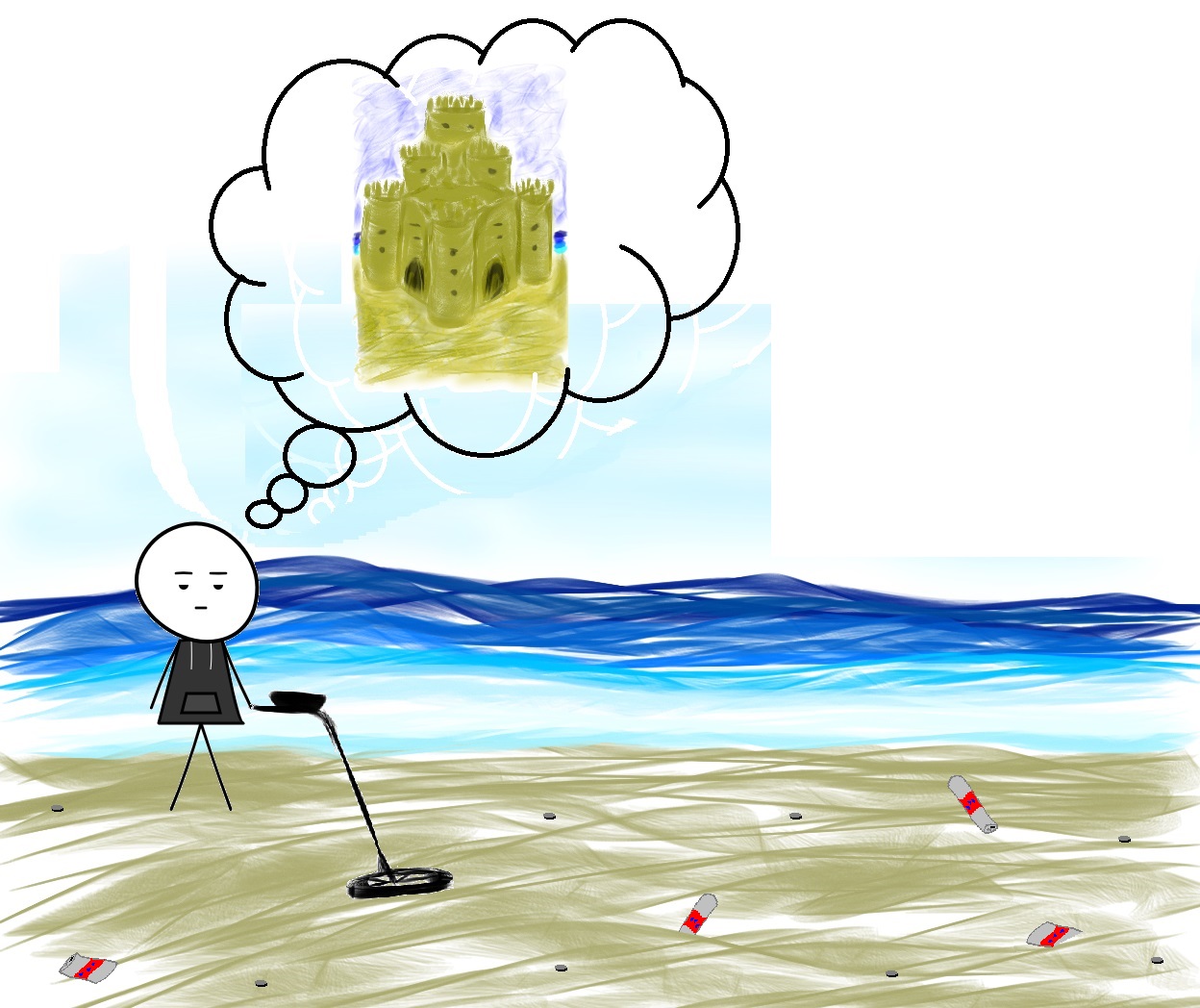
The first manner in which Boredom may arise (e.g., task too easy) would be considered here, as coins are just shiny pieces of metal to Buck at this point, much like paper clips or nuts and bolts, and they are littering the beach above. His selective attention is being directed towards an entity and the fulfillment of a purpose that hold little significance for him; he would prefer to direct his attention elsewhere. Buck does not understand what all the fuss is about over money, as paper that resembles money and pieces of metal that resemble coins seem to be everywhere, but he does not get the chance to build sand castles and would much prefer to be doing that.
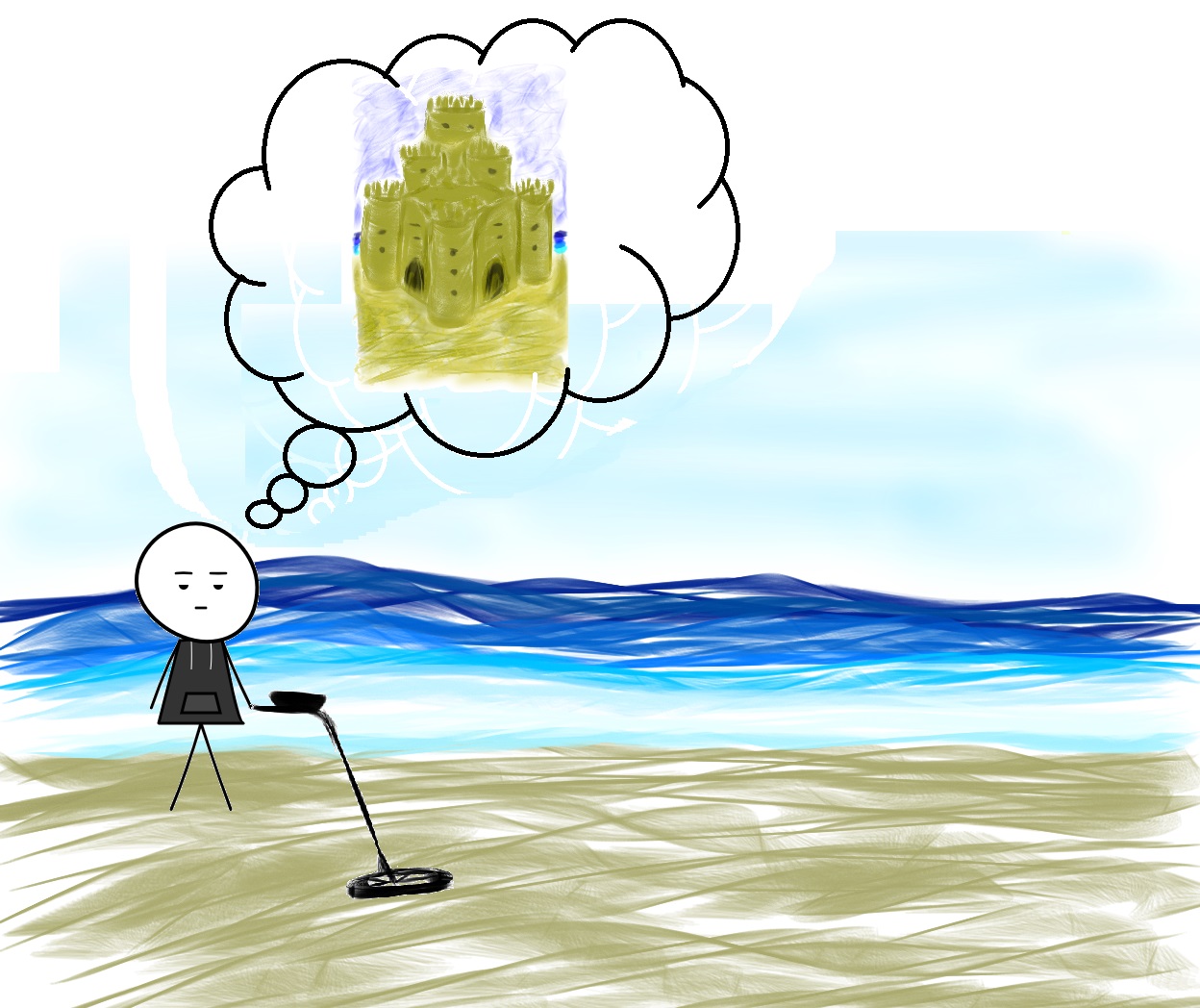
Conversely, if Buck is instead aware of what money is used for — trading for desirable things — but has no chance of finding anything to acquire money because the beach has already been picked clean by other people with metal detectors, then Boredom may arise by the second manner (e.g., task too difficult). His selective attention is being directed towards acquiring an entity that is extremely difficult or nearly impossible to find on the beach, and his efforts, to him, feel futile and wasted. He would still rather be building sandcastles instead of looking for something he will likely never find. He might even prefer to just be doing something else, even if he does not know what it is that he would prefer to be doing.
Sample function for Boredom with the variables that influence it circled (below).
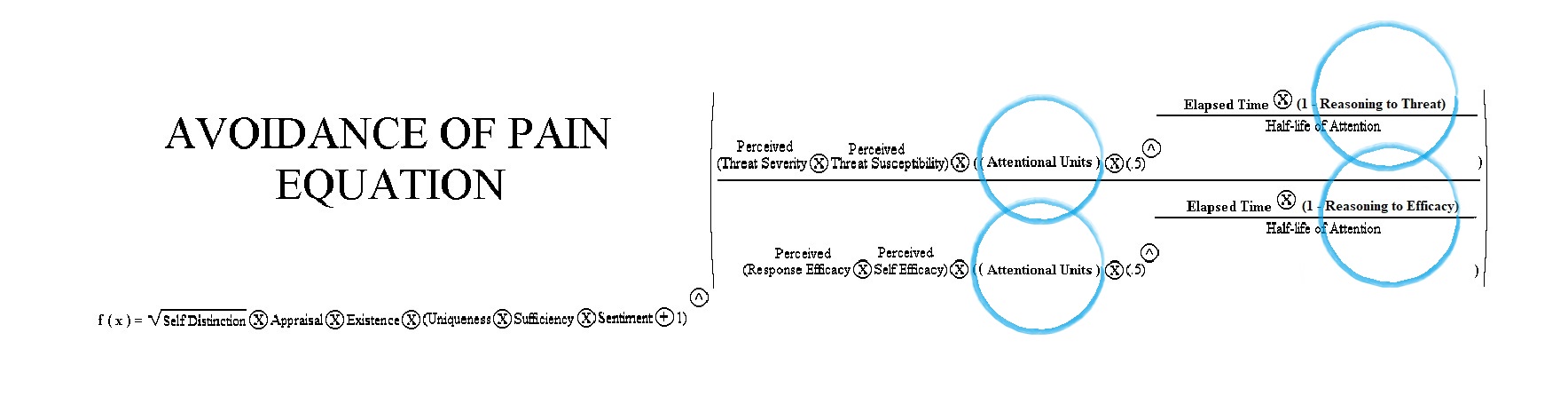
Boredom results in both cases due to Buck’s selective attention being directed towards a task that holds little interest to him, and he would rather be doing something else that interests him. In this case, that other activity is building sandcastles, but the activity does not need to be identified, or may not even be known. Boredom, in Affect Engineering, holds that there is conflict between the current purpose being attended to, and the individual’s desire pursue the fulfillment of a satisfying purpose.
Surprise
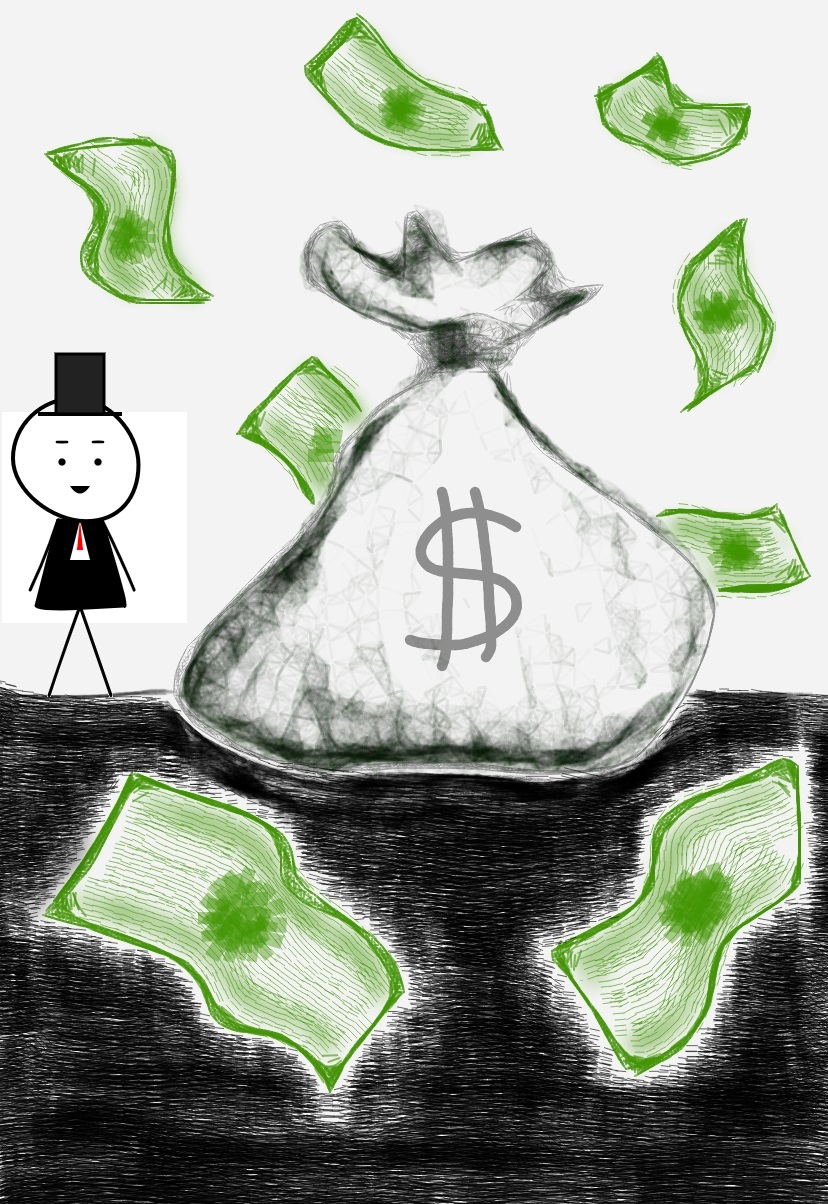
Thirteen years later, Buck has become an adult, fully understands what money is used for, knows its worth, and he has moved out to be on his own. Buck has all the glamorous trappings of adulthood: bills to pay, daily expenses, taxes owed to the government, a minimum wage job, and is struggling to get by in tough economy. However, he receives a surprise in the form of a windfall from an inheritance that was left to him by his late great-uncle. Unbeknownst to him, it had been in a trust until he turned eighteen, at which point it would become available to him to spend as he pleases. This brings about the next Category IV Emotion for Buck, Surprise. Surprise is generally defined as “an emotion typically resulting from the violation of an expectation or the detection of novelty in the environment.” – Surprise, from APA Dictionary of Psychology
For Buck, his circumstances are an instance of peripeteia, a literary term indicating a sudden reversal of fortune or situation. Peripeteia is nearly always indicative of surprise as it is generally unexpected and an extreme change of fortune; it can occur if an extremely poor individual suddenly wins the lottery to become rich, or if a wealthy individual suddenly goes bankrupt overnight from a stock market crash. Surprise, like peripeteia, can go both ways however. For Buck, with his new money, this would look like he has suddenly been lifted out of the grind of working tirelessly for money into the stratospheres of wealth.
Sample function for Surprise with the variables that will typically influence it circled (below). For the Pursuit of Pleasure Function below, Inattention and the Doubling time of Inattention are used as an alternative to Attention and the Half-life of Attention that were used in the Avoidance of Pain function.
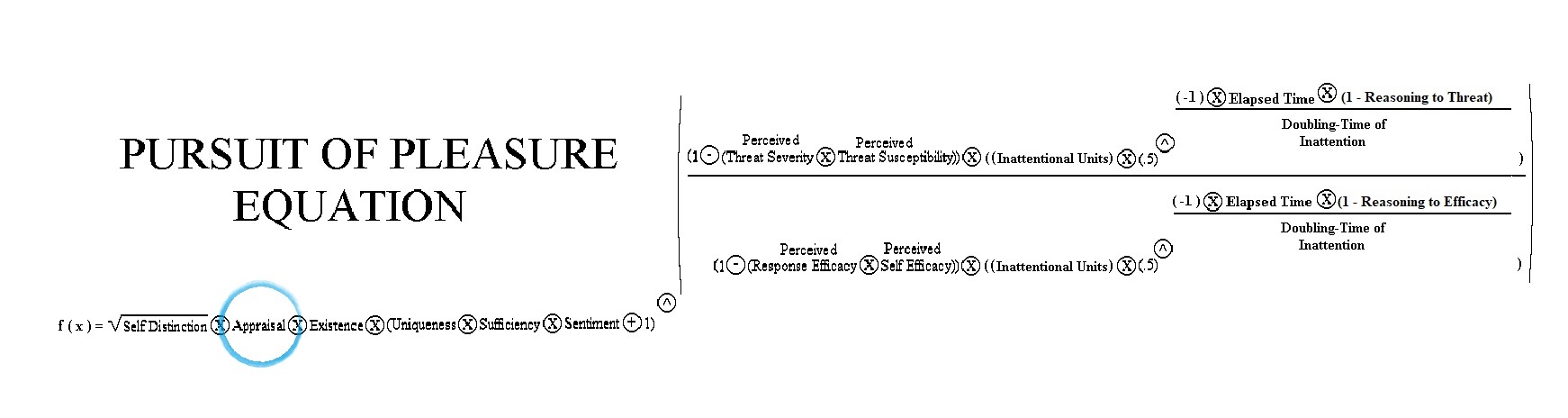
Buck then decides to invest all of the money he had from before along with the money he recently inherited into buying a new home. Unfortunately, shortly after purchasing his new home, Buck’s fortunes reverse again. His house is completely destroyed by an unexpected natural disaster for the area that he lives in, a tornado.
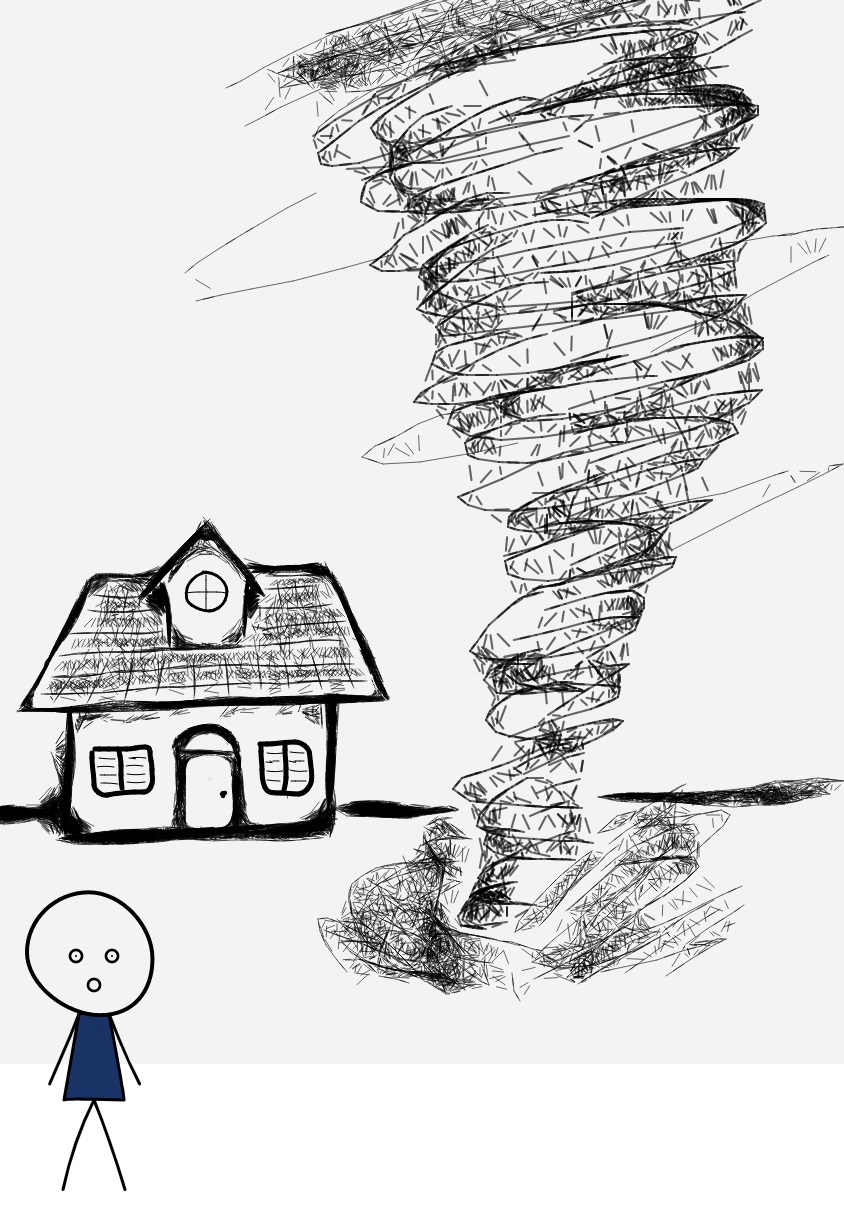
Buck’s Surprise has now fully swung in the opposite direction. Unfortunately, he is now worse off than he was before he received the inheritance, having lost the money he had saved from before along with everything that he had inherited from his late great-uncle. To make matters worse, the tornado also destroyed the building and business where he was employed, so he is also unemployed now as well.
Sample function for Surprise with the variables that will typically influence it circled (below)
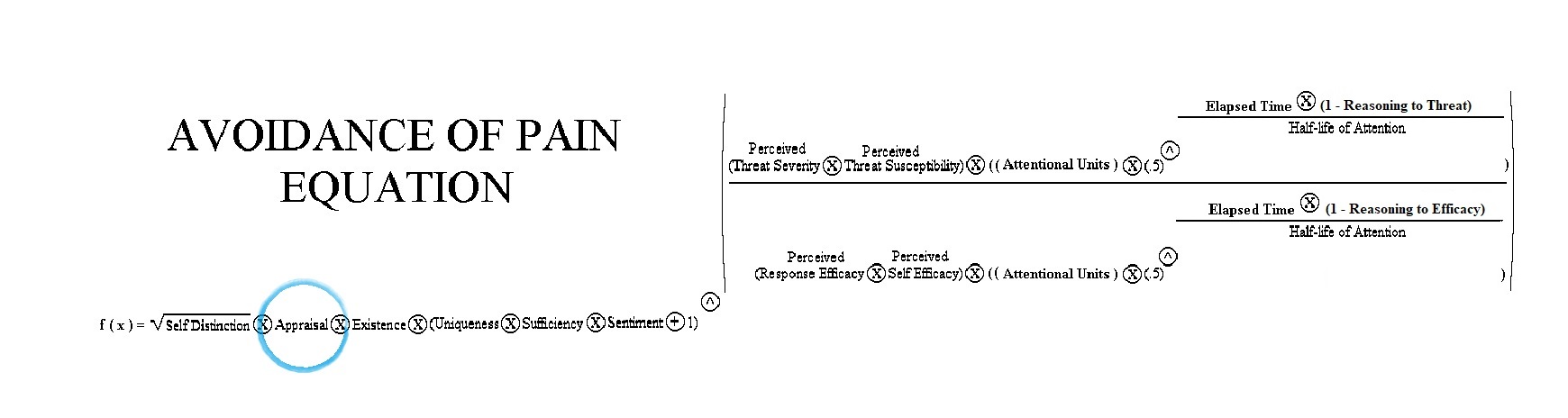
Surprise, in Affect Engineering, entails a dramatic change in the valuation of an entity for the fulfillment of a purpose. The most dramatic shift would be those that involve a change in the Appraisal (a discrete variable in Affect Engineering equaling either +1 or -1).
Helplessness
As far as adapting to a situation is concerned, there are a number of things that Buck might do to feel empowered or in control to recover lost money after a natural disaster or if another unfortunate event strikes: he might attempt to repair damaged property and then sell it to recoup some of his investment; he might attempt to rebuild it altogether to sell at a higher price if it was completely destroyed; he might attempt to collect a claim from a home owner’s insurance policy that he held. For Buck, unfortunately, none of these are possible. Buck is not skilled enough to make the home repairs himself, nor is he adept at building a home from scratch. Moreover, the home owner’s insurance policy that he did possess tragically did not cover windstorm damage.
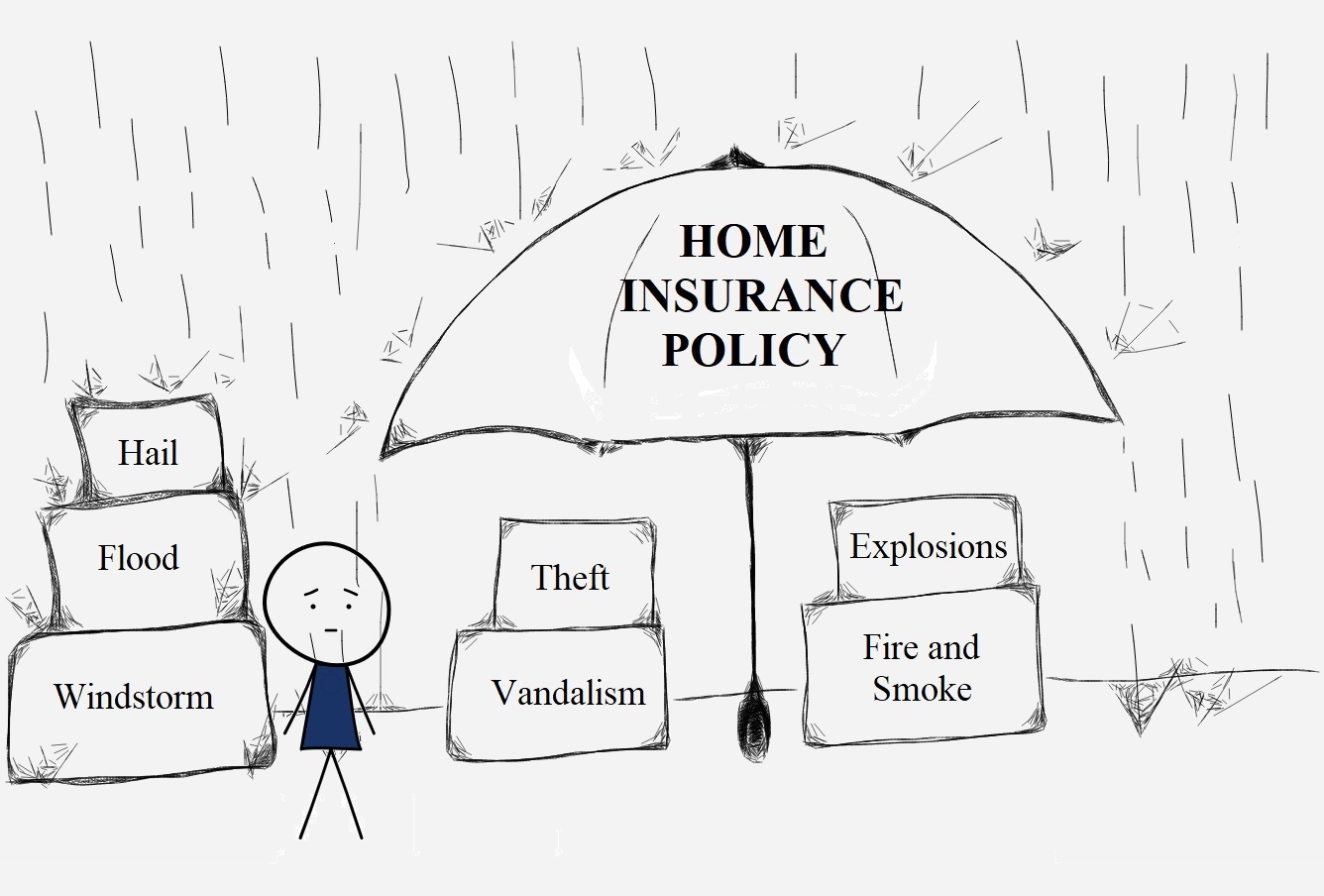
Buck is helpless to fix his home and can not do anything to collect a claim from his home insurance policy. Buck’s efficacy to recover any money from his home is at zero or near zero for all of the above courses of action.
Helplessness, is defined as “a state of incapacity, vulnerability, or powerlessness associated with the perception that one cannot do much to improve a negative situation that has arisen.” – from Helplessness, from the APA Dictionary of Psychology). This certainly describes Buck’s current state of affairs.
In Affect Engineering, Helplessness consists of a low Efficacy or Efficacy variables that are near zero across one or several purposes that are important to the individual. Given that the tornado also destroyed the building where Buck worked, his ability to acquire money via working a job is diminished. This helplessness or resignation to his fate, though it may not seem advantageous, may inspire goodwill from a benevolent third party witnessing it; at the very least, it might prevent Buck from making his situation any worse by adopting a wait it out approach.
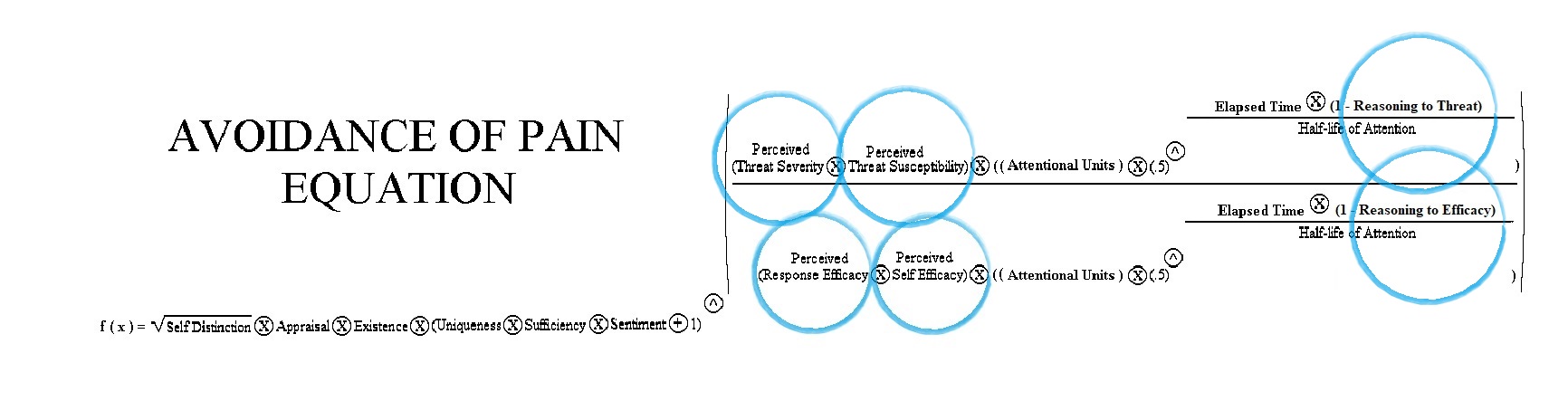
Sample function for Helplessness with the variables that influence it circled (below). High levels of Threat variables and a high level of Reasoning directing Attention towards Threat components, along with a low level of Efficacy variables and a low level of Reasoning directing Attention towards Threat components are modeled to elevate Helplessness in Affect Engineering.
Confusion
After some time, Buck finally decides that he is going to take action to try and get back on his feet financially. He decides that he is going to invest in foreign currencies and cryptocurrencies to try and earn some money. Unfortunately, Buck has no experience with the foreign exchange market, much less cryptocurrencies. Upon seeing the vast array of foreign currencies and cryptocurrencies that he can invest in, Buck is initially overwhelmed.
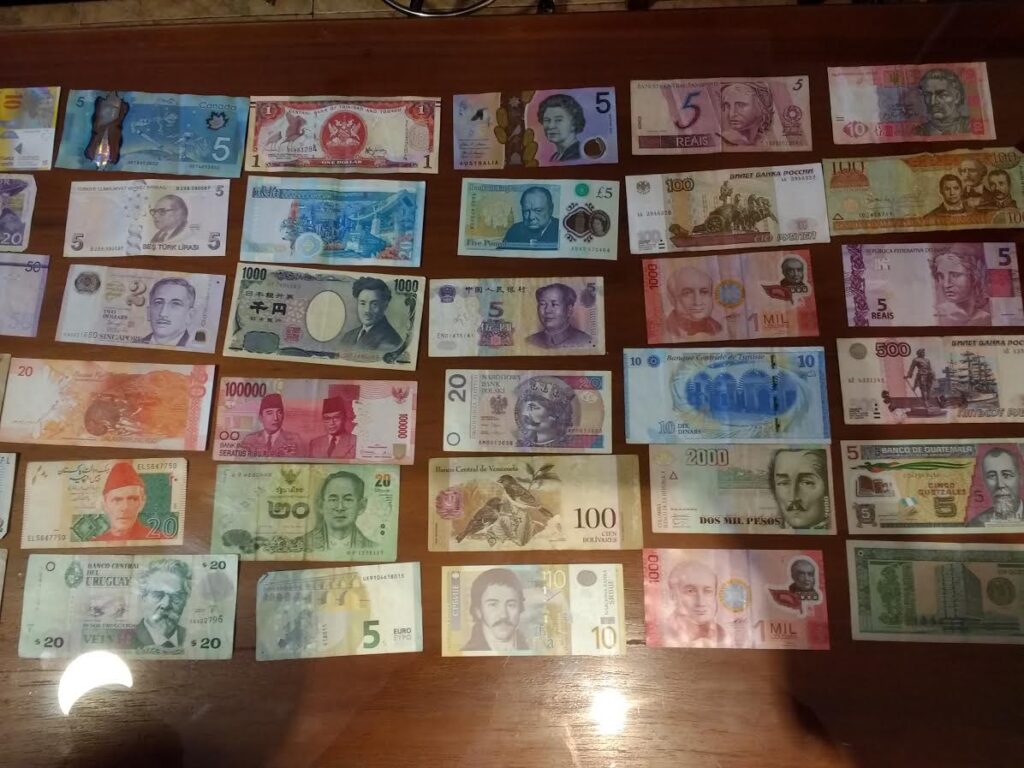
Different Banknotes from around the world.

Buck realizes that he does not know enough about any other currencies to judge their value. He has no idea what their buying power would be if he wanted to buy a loaf of bread (e.g., Sufficiency variable), nor does he know how much of each currency is in circulation (e.g., Uniqueness variable). He also does not know if there is political turmoil in any of the countries that back the banknotes (e.g., Threat variables) In short, Buck’s knowledge about the different currencies is too uncertain for him to make any decision. His understanding of cryptocurrencies is even less than it is for the foreign banknotes. It would be safe to say that Buck feels confused by all of these different types of money, but this confusion needs to be explained in terms of the variables in Affect Engineering.

(Above) Buck is overwhelmed and confused by the multitude of so many new currencies that he is discovering.
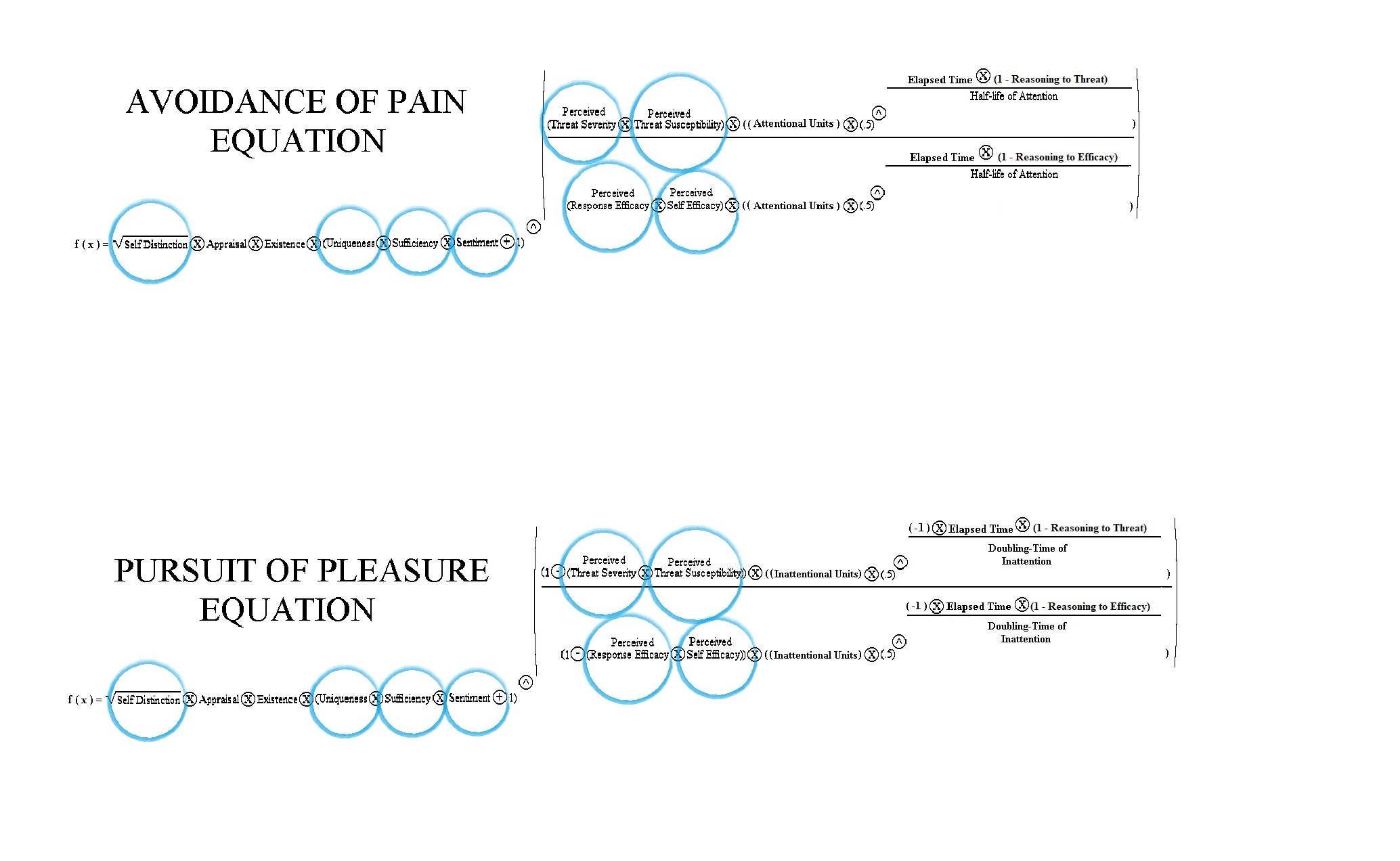
In Affect Engineering, Confusion is understood as uncertainty arising due to one or several variables being unknown, being known only within a certain range, or being unknown due to novelty, such as encountering a never before seen currency and not knowing its utility (e.g., variables in the base of the function, such as Sufficiency and Uniqueness). This, in turn, makes choosing a course of action based upon expectations difficult or impossible. Confusion, notwithstanding, can lead to mental fatigue, stagnation, and analysis paralysis in the decision making process, or alternatively, to making rash and impulsive decisions based on chance (e.g., a coin flip) due to the lack of available information. Confusion can happen when any of the variables in the function are unknown, or known only within a range, though certain variables are more likely to be unknown or ambiguous than others.
Sample functions for Confusion along with the variables that primarily influence it are circled (below). Uncertainty or unknown values for the circled variables would generally lead to Confusion being modeled in Affect Engineering.
Restlessness
Buck, at first, made no decision about what to invest in. The overwhelming amount of things to consider left him at a standstill. However, Buck’s bills, expensive, and lines of credit kept rising. He had to do something. Buck was becoming restless.
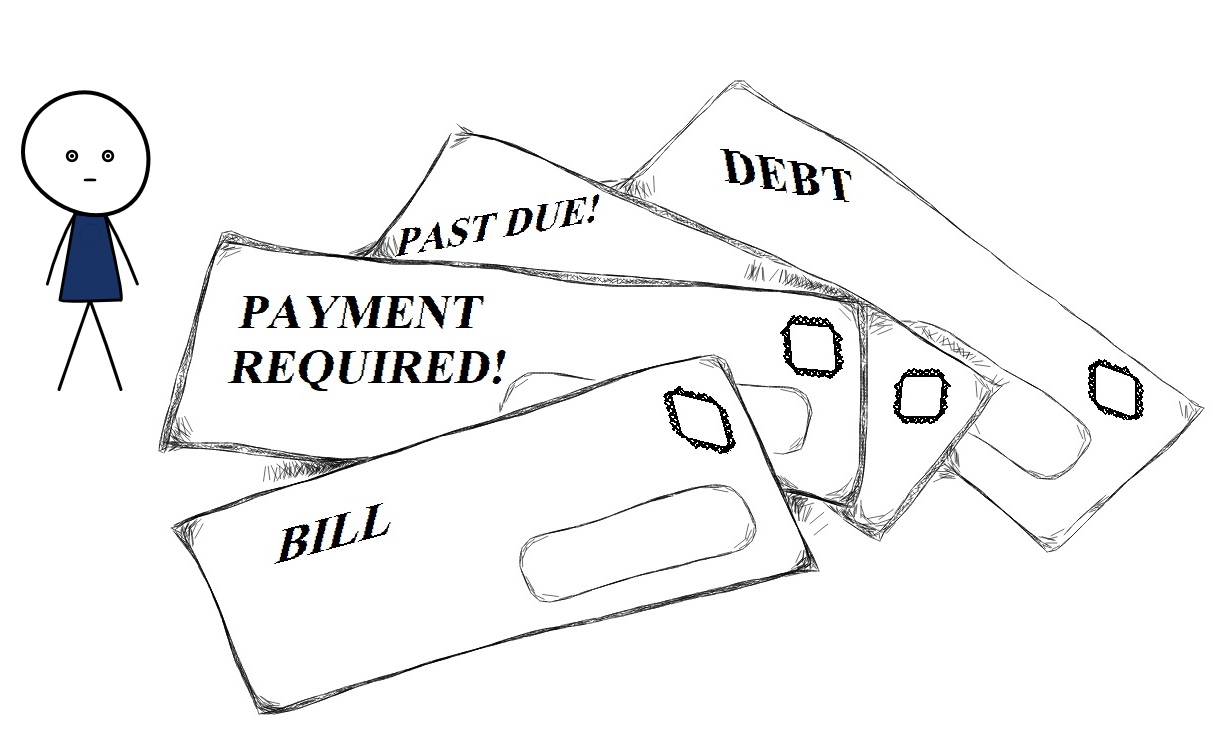
The restlessness here is best thought of as “discontent or dissatisfaction that drives one to keep looking for solutions, alternatives, or new things.” – from restlessness, Dictionary.com. In the framework of Affect Engineering, Restlessness entails discontent or dissatisfaction felt by the individual with respect to one or several entities for several purposes and this leads to a shortfall in Anxiety resources (e.g., akin to pain in Affect Engineering) due to nearly all of it being already being mobilized to mark entities with value; no, or very little Anxiety, is available to mark new entities with value. This, in turn, would compel the individual to continue looking for solutions to the multiple problems due to the rising levels of Anxiety being invested in different entities, or even in the same entity, as it relates to the fulfillment of different purposes.
For Buck, all of his bills are separate objectives that happen to require acquisition of the same entity, money. Discontent and dissatisfaction are being felt for the entity of money as it relates to the fulfillment of each of these separate purposes (e.g., Sadness or Fear felt towards the entity of money with respect to each of these purposes). Restlessness, in Affect Engineering, then arises as an event or situation where an individual begins to feel as if they are running out of Anxiety to invest in new entities for the fulfillment of new purposes. For Buck, this means feeling overwhelmed by all of the tasks at hand and pressing deadlines (e.g., bills). He has no Anxiety resources left to worry about he is driving the newest car or whether the socks he is wearing match.
Of the Category IV Emotions discussed thus far, it can be seen that in the case of Boredom, Buck’s selective attention was the focal point. In the case of Surprise, volatility in expectations was the focal point (e.g., an oscillating Appraisal variable). In the case of Helplessness, Buck’s lack of Efficacy was the focal point. In the case of Confusion, Buck’s lack of clarity about the value of one or multiple variables was the focal point. In the case of Restlessness, Buck’s depletion of Anxiety available to value future entities was the focal point; in this case, the depletion of Anxiety available to value entities was due to the combined influence of multiple purposes (e.g., Bills and debt in Buck’s case), that all have the same entity being valued for them (i.e., money). The acquisition of more Anxiety to invest in other entities (e.g., to mark them with worth or priority) is the purpose at hand when Restlessness arises.
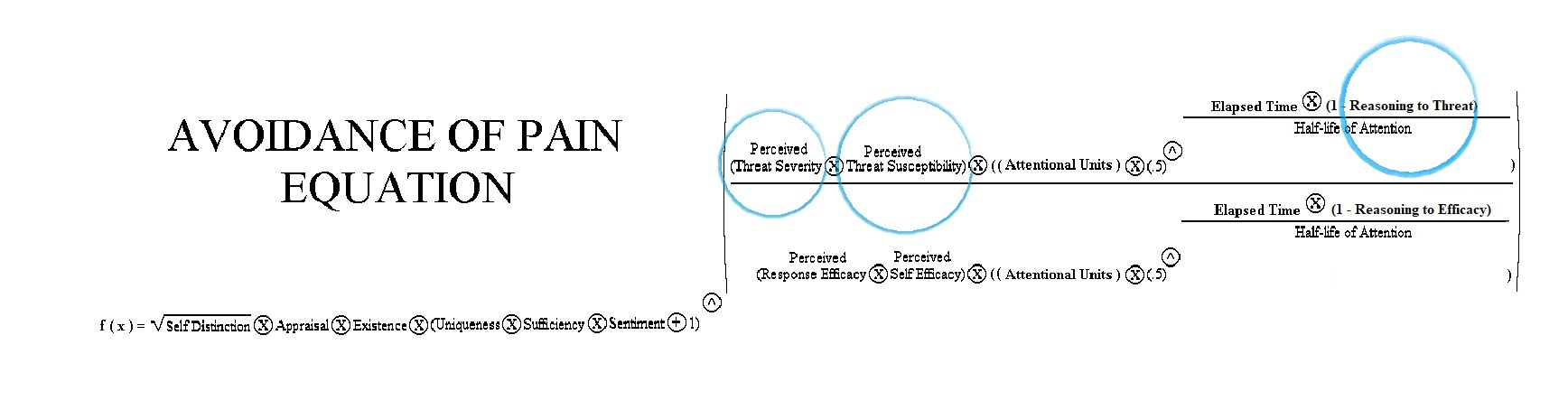
(Above) Sample function for Restlessness with the variables that primarily influence it are circled. High levels of Threat variables, along with a high level of Reasoning directing attention towards Threat components for one important purpose or several different purposes that are important to the individual, would amplify Restlessness in Affect Engineering.
Joyfulness
In need of money, Buck decides to invest the last portions of money in his possession into several different currencies in an effort to earn some money. Over the next several months, Buck’s fortunes begin to change for the better. His investments in shares of foreign currencies and cryptocurrencies begin to yield positive returns. After many months, Buck now has multiple streams of income coming in from his investments and feels joyfulness. He is living like a king again.
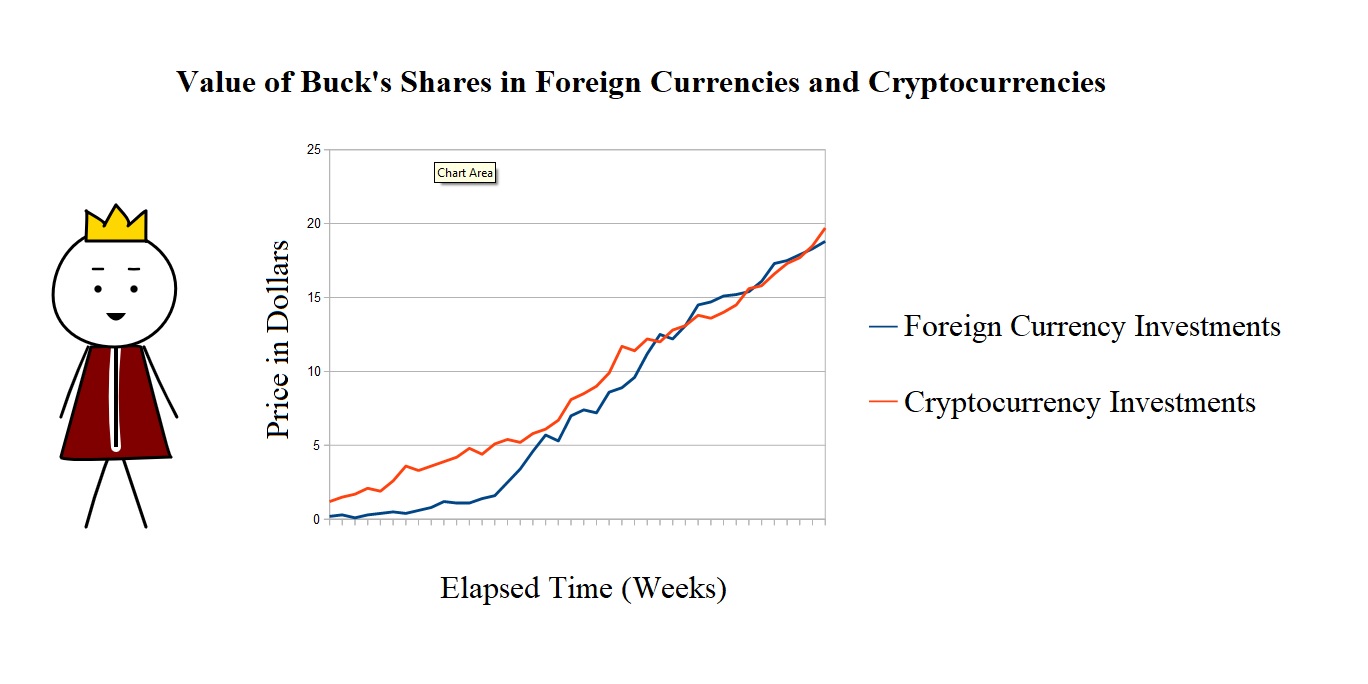
Joyfulness, or joy, is generally described as “a feeling of extreme gladness, delight, or exultation of the spirit arising from a sense of well-being or satisfaction.” – Joyfulness, from the APA Dictionary of Psychology
In the context of Affect Engineering’s framework, Joyfulness can be understood as the counterpart to Restlessness. For Buck, this would mean having an excessive amount of Negative Anxiety (e.g., akin to pleasure in Affect Engineering) invested in the entity of money for different purposes as it now available in excess. Whereas Restlessness in Affect Engineering was concerned with the depletion of Anxiety available to value future entities, Joyfulness is concerned with the depletion of Negative Anxiety available to value future entities.
Why this might be a problem for an individual (e.g., feeling too much pleasure felt with respect to the acquisition of money) has more to due with the repercussions it could have on the pursuit of other entities as they relate to the fulfillment of other purposes held by the individual. If all of Buck’s Negative Anxiety becomes tied up in the acquisition and valuing of money, then it leaves little room for anything else. It could trigger addictive behavior, the excessive pursuit of money in Buck’s example, and inadvertently hinder maintaining homeostasis (e.g., balancing a purpose with its complementary purpose in Affect Engineering). Addiction can happen with any behavior of course, and is not restricted to the acquisition of money. It could happen with food, or water, clothing, shelter, or any entity pursued excessively.
(Below) Sample function for Joyfulness along with the variables that would primarily influence it. High levels of Efficacy and a high level of Reasoning preventing Inattention to Efficacy from Increasing (i.e., this is similar to not letting Efficacy components fall into Attentional Decay), would amplify Joyfulness felt.
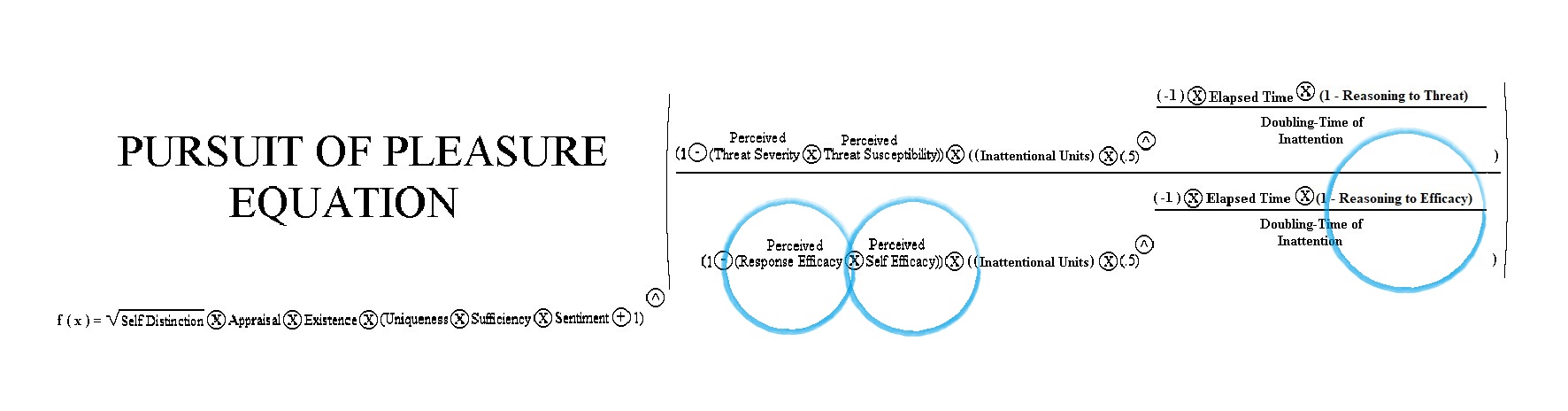
In the case of Joyfulness, Buck’s depletion of Negative Anxiety available to value future entities is the focal point; Buck’s depletion of Negative Anxiety available to value entities is due to the combined influence of multiple purposes (e.g., Buck’s successful investments bringing him money), that all have the same entity being valued for them (i.e., money). The acquisition of more Negative Anxiety to invest in entities is the purpose at hand here for Buck, as it would enable him to find pleasure in the fulfillment of other purposes. The danger here for Buck, however, can also arise from the purposes and entities that are not being attended to while Buck vigilantly pursues the acquisition of ever increasing amounts of money.
Greed
In Buck’s case, his resurgent wealth and determination to keep acquiring more and more money has lead him to become rich beyond his wildest dreams. Buck, now has enough money to start buying up houses and real estate everywhere. He has accumulated enough wealth to recapture some of the joy he experienced upon initially becoming wealthy and he will likely never again have to experience misfortune.
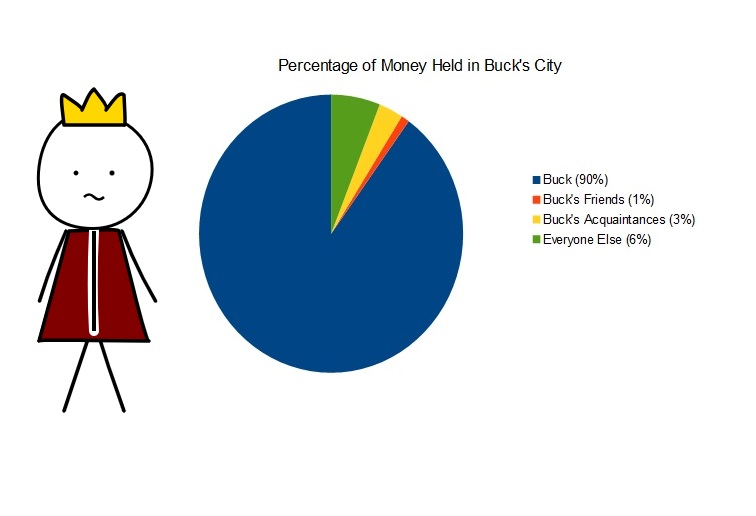
Buck now possesses nearly all the money and buying power where he lives.
Unfortunately, for Buck’s friends, relatives, acquaintances, and everyone around him, because he has accumulated so much money, nobody else can acquire enough money to be able to buy a home for themselves. Buck would like for them to be able to buy a home, and he wants to help them achieve their aims; however, Buck also wants more and more money for himself, and he can not bear to part with his own money to help them. Greed, defined as “a selfish and excessive desire for more of something (such as money) than is needed,” is modeled here to arise as an event where there is conflict between two or more objectives held by the individual. In Buck’s case, there is conflict between the Happiness (e.g., a Category I Emotion, described in Article seven, question #1 of this series, The Intra Personal Emotions or Emotions of the Self, Article 7 of 12) he feels at acquiring money for himself conflicting with the fact that his actions are preventing him from helping his friends achieve their goals of owning a home (e.g., the Category III Emotion of Jealousy due to him being unsuccessful. Jealousy is described in article nine, question #2 of this series, Compound Interactive Emotions, Article 9 of 12). In Affect Engineering’s framework, this would be conflict between Buck’s personal objectives, happiness felt with respect towards the acquisition of money, and Buck’s desire to help his friends to achieve their goals. Because Buck’s actions and pursuit of money have directly contributed to his friends not being able to buy homes, Buck would be modeled to simultaneously feel both Happiness with respect to his own goal of acquiring money, and the Category III Emotion of Jealousy towards his friends, as his actions have also directly lead him to fail to helm them in their efforts to buy a home.
Greed, in Affect Engineering is understood as an event or situation where conflict arises between at least two or more competing purposes, one held by the individual for the individual, and this purpose takes precedence over a second purpose related to something the individual wants for another party. Moreover, the individual must also want to change the dynamic between these two competing purposes. In this example, Buck’s pursuit of one entity (e.g., Happiness felt with respect towards the acquisition of money, a Category I Emotion), comes at the expense of a purpose held by another party that Buck wanted them to achieve; that is, Buck fails to help his friends achieve their objective, and would be modeled to feel the Category III Emotion Jealousy because of that, a Category III Emotion. The distinguishing feature between Greed and Jealousy (fear of losing loyalty of a loved party) is that Buck also wants to change his current behavior, and more emotions are at play for Greed. This means that four purposes are in consideration Greed, and not merely the two for Jealousy. A 4:4:4:4 ratio then, is in play, regarding entities being valued for purposes held by the individual:
- Purpose #1: Buck wants to acquire Money (He has succeeded, Happiness is felt). This is a 1:1:1:1 Ratio, the Category I Emotion of Happiness.
- Purpose #2 and Purpose #3 (Purpose #3 is vicariously felt as if the self were a targeted other): Buck wants to take action to help a targeted party achieved their goal. However, his relentless acquisition of money (success for a personal goal) has directly prevented a targeted party from achieving their goal. Buck’s failure to help his friends acquire money to buy a house has lead to Jealousy (e.g., Sadness + Vicarious Shame or Guilt + Vicarious Shame) felt as if the self were the targeted third party. Jealousy is a 2:2:2:2 Ratio in Affect Engineering.
- Purpose #4: Buck is dissatisfied with this dynamic and wants to engage in activity where his personal goals do not prevent him from helping a targeted party achieve their goal. The situation is now a 4:4:4:4 ratio, as this final purpose aims to alter the importance of an entity, (in this case the entity is Purpose #1) in order to change the outcome for purposes #2 and #3, ideally shifting it to Benevolence felt instead of Jealousy.
The individual desiring to change this dynamic (purpose #4 from above), and being unsuccessful thus far, would be the foundation for modeling Greed in Affect Engineering’s framework. It is a 4:4:4:4 ratio because there are three purposes at play held by the individual, and a fourth purpose that is vicariously experienced.
PREVIEW
Many of the Category IV Emotions involve dynamics like Boredom and Greed, with purposes themselves becoming the entity the individual seeks to acquire or manipulate in order to influence relationships with other purposes. This naturally leads into the much larger and broader philosophical implications concerning ethics and which purposes should have a priority to an individual, a topic in which many emotions also have their origins. Purposes that have other purposes as an entity still adhere to 1:1:1:1 Ratio in Affect Engineering, but they must expand in such a way that the ratio always stays proportional, be it a 5:5:5:5 ratio, or a 6:6:6:6 ratio, and so on. In the next article, additional Category IV Emotions as well miscellaneous emotions and their representation in Affect Engineering will be explored along with implications for other areas such as ethics.