


Category IV Emotions: Emotive States, Part Two
This is the eleventh article in a series of twelve and gives an overview of some additional Category IV Emotions as well as some miscellaneous emotions as they would be modeled in Affect Engineering. It is designed for the layperson and explains the basics of Affect Engineering as a theory of emotions. Each article in this series begins with a list of questions that it will aim to address. The sections that follow are in two parts each. The first part is a short statement that answers each question as succinctly as possible. The second part will offer a more in depth explanation that goes into more detail where needed by exploring some of the implications of the short answer.
QUESTIONS
- How are new, obscure, or highly specific emotions classified and integrated into Affect Engineering?
- What are some examples of obscure or lesser known Category IV emotions and other miscellaneous emotions?
- How are ethics and morality implemented into Affect Engineering?
1) How are new, obscure, or highly specific emotions classified and integrated into Affect Engineering?
SHORT ANSWER
The classification of new, obscure, or highly specific emotions in Affect Engineering involves performing one or more of the following actions:
- Identifying whether or not the emotion is instead a specific instance or subtype of another Category I, II, or III emotion.
- Identifying whether or not multiple purposes/objectives are in the definition of the emotion and ascertaining the nature of the interactions between the purposes. In other words, are the purposes in conflict or in concert with one another.
- Identifying if a key component of the emotion is due to variation in a specific variable or variation in multiple variables that have been described in Affect Engineering.
- Identifying if the emotion is one that is developmental in nature, such as in the construction of a variable (i.e., the self’s creation of variables used in Affect Engineering) or an individual’s relational system between the variables (i.e., the organizational scheme that the self uses to build a personalized function in Affect Engineering).
IN DEPTH EXPLANATION
Determining how to classify a novel, obscure, or highly specific emotion in Affect Engineering is accomplished by going through a checklist of four features:
- Determinging if it is another Category I, II, or III Emotion
- Determining if multiple purposes are involved
- Determining if a particular variable is an indicator of the emotion
- Determining if the emotion is developmental in nature.
Instances or subtypes of Category I, Category II, or Category III Emotions
First, if the novel emotion appears to be similar to another Category I, II, or III Emotion already identified in Affect Engineering’s framework, then the classification of the emotion would fall under one of those domains. Various phobias and philias, such as acrophobia (fear of heights), arachnophobia (fear of arachnids), claustrophobia (fear of confined spaces), bibliophilia (fondness for or love of books), logophilia (fondness for or love of words), cinephilia (fondness for or love cinema), would fall under this realm. They would best be categorized as specific instances of a particular Category I, Category II, or Category III Emotion.
Multiple Purposes or Objectives are in the Definition of the Emotion
In the second case, if the novel emotion does not appear to match any other Category I, II, or III Emotions, then determining the number of purposes or objectives in its definition becomes the next task. If multiple purposes or objectives can be identified in its description, or if one of the purposes itself serves as an entity for another purpose, then it will generally be classified as a Category IV Emotion. This was the case for Boredom and Greed, discussed in Article 10, question #2 Category IV Emotions, Emotive States, Part One (Article 10 of 12) The 1:1:1:1 Ratio that Affect Engineering adheres towards is still upheld in these cases, but can become a much higher, unsimplified ratio (e.g., a 3:3:3:3 ratio, a 4:4:4:4 ratio, a 5:5:5:5 ratio, etc.).
Variation in specific or multiple variables
Thirdly, if the novel emotion does not appear to possess multiple objectives or purposes within it, then determining whether or not the description of the emotions involves a manipulation of a specific variable or variables in the function becomes the next task. For example, this would be the case for an individual forecasting expected scenarios in the future or revisiting scenarios from the past, both of which involve manipulation of the variable representing the passage of time in a function. Novel emotions where the individual is described as detaching themself from themself (e.g., thinking of their past or future self as another person), alternatively, would involve manipulation of the Self-Distinction variable as well as the variable for Elapsed Time.
Developmental Emotions
Fourthly, if the novel emotion does not fit any of the above criteria, then the novel emotion will best be classified as developmental in nature. Emotions that are developmental in nature relate to the construction of the variables used in the functions of Affect Engineering, such as Self-Distinction for the formation of empathy in Affect Engineering. Alternatively, developmental emotions might instead relate to the self’s assessments of the limitations of these variables. For example, the self’s assessment of variables representing the Time Elapsed, or those for Existence could lead to the identification of novel emotions that describe scenarios that are developmental in nature, such as if the individual begins to critically assesses their range or reliability.
2) What are some examples of obscure or lesser known Category IV emotions and other miscellaneous emotions?
SHORT ANSWER
Some examples of obscure or lesser known Category IV Emotions include Limerence, originally formulated by Dorothy Tennov in her book Love and Limerence (1979), along with notions of romantic love. Additionally, many of the emotions coined by John Koenig in his work The Dictionary of Obscure Sorrows (2012) would be classified as either a Category IV Emotion or a miscellaneous emotion, such as: Enouement, Lachesism, Liberosis, Kenopsia, Trumspringa, Harmonoia, Hubilance, Chrysalism, Pronoia, Kadot, Zenosyne, Jouska, Daguerreologue, Sonder, Vellichor, and Occhiolism, to name a few. Other emotions that are older, like Schadenfreude and Mitfreude, are better classified as specialized instances of emotions from other Categories in Affect Engineering (e.g., Category I, II, or III).
IN DEPTH EXPLANATION
Several examples for classifying novel emotions will be explained for each of the four stages of the checklist. The definition of each emotion will be provided first. Some, like Schadenfreude, are from language and much older, while others like Limerence are taken from more recent literature on Psychology. The majority listed here are neologisms from John Koenig’s Dictionary of Obscure Sorrows to serve as examples, but any novel or invented emotion can be classified into a category in Affect Engineering using the process describe in the answer to question #1 of this article.
Emotions Best Described as Instances or subtypes of Other Category I, Category II, or Category III Emotions
Schadenfreude
Schadenfreude, a word of German origin, is a good example of an emotion that is similar to one already described in Affect Engineering’s classification scheme. Schadenfreude is described as, “Satisfaction or pleasure felt at someone else’s misfortune,” (from Dictionary.com), and as “malicious joy in the misfortunes of other” (from online etymology dictionary). Its counterpart in some circles is considered to be Mitfreude, a term that translates to “with joy”, or sharing joy and rejoicing in another’s happiness. Both Schadenfreude and Mitfreude would be similar to the Category II Emotions of Hateful Humiliation (for Schadenfreude) and Loving Pride (for Mitfreude) in Affect Engineering’s framework. Both Hateful Humiliation and Loving Pride are explained in the eighth article of this series, question #1, (Category II Emotions, the Interpersonal Emotions or Four Degrees of Empathy, Article 8 of 12)
Chrysalism
Chrysalism, “the amniotic tranquility of being indoors during a thunderstorm.” — from John Koenig’s Dictionary of Obscure Sorrows
Chrysalism most resembles the Category I emotion of either Content, or Happiness, depending upon the order in which the threat of the thunderstorm is processed relative to the individual’s efficacy to safeguard themselves against it. If the threat of the thunderstorm is processed first, meaning the individual just returned indoors only after the weather took a turn for the worse and the threat became evident, then it would most likely resemble Happiness. If the individual was already safely indoors when the threat of the thunderstorm became salient, then it would most likely resemble Content. The end result would be the same once everything is assessed. Chrysalism would simply be a highly specific instance of one of these two emotions. Category I Emotions were examined in article seven of this series, the (Category I Emotions: the Intrapersonal Emotions or Emotions of the Self, Article 7 of 12).
Kadot
Kadot, “fear of the prospect of not existing one day, feeling like a student about to graduate from the universe, on the cusp of a transition you don’t feel ready for.” — from John Koenig’s Dictionary of Obscure Sorrows
Kadot, in Affect Engineering, would be best classified as a specific type of fear about a particular event (i.e., not existing one day). It most resembles the Category I Emotion of Fear, which was also examined in article seven of this series. However, because most of the life goals that an individual holds also depends upon their continued existence, kadot would necessarily carry a great deal of significance for most individuals. Whatever life goals or objectives that one does not manage to fulfill before dying would likely be absorbed by this feeling as well.
In contrast, for an individual who has done everything that they desired to do in life, or at least tried to the utmost of their ability, and left nothing on the table, kadot would likely not hold as much significance to them.
Callosity
Callosity: “lack of feeling or capacity for emotion.” — from Merriam Webster Dictionary
Callosity most resembles the Category II Emotion of Indifference in Affect Affect Engineering, and would be best classified as a type of Indifference if a scenario where empathy is expected is being considered. The reason for the lack of emotion in instances where it would be expected, (e.g., such as a lack of empathy during a tragedy) could be due to a number of reasons. The individual may have intentionally suppressed them (e.g., in Affect Engineering’s framework, by using Reasoning to direct Attention away from anything that would heighten empathy), or unintentionally suppressed if processes beyond the individual’s conscious control are modifying it (e.g., this would be represented mathematically by a coefficient alongside the Self-Distinction variable in a function). It may also be the case that their capacity for empathy may have not developed in the first place.
Pronoia
Pronoia, “in psychology, a belief that the world is conspiring in one’s favour” — from John Koenig’s Dictionary of Obscure Sorrows
This is most similar to the Category I emotion of Courage, and suggests that the individual may be inspired to take certain risks that are perhaps unwarranted or unjustified. Accordingly, it would best be classified as a subtype of Courage in Affect Engineering’s framework. However, in a worst case scenario, pronoia might embolden an individual to take on more risk than a situation warrants and become more susceptible to harm. In this regard, it would be as detrimental as its counterpart, paranoia, but in the other direction; paranoia in a worst case scenario, might dissuade an individual from pursuing something that they would find rewarding.
Emotions that Have Multiples Purposes or Objectives in their Definition
Limerence
Limerence, a term coined by Dorothy Tennov in her work Love and Limerence (1979), is generally defined as “a state of mind resulting from romantic attraction, characterized by feelings of euphoria, the desire to have one’s feelings reciprocated.” — from Colins Dictionary, Limerence
The primary desire for someone in a state of limerence is a desire for a reciprocation of feeling. The individual experiencing limerence also has reason to both hope and doubt, given that the reciprocation of feeling has not been confirmed. Although Dorothy Tennov’s description of limerence is far more detailed in her writing than can be covered here, this article from Psychology Today, Limerence highlights some of the main features of it that include the following:
- “The experience of limerence is different from love or lust in that it is based on the uncertainty that the person you desire, called the “limerent object” in the literature, also desires you,” and it can be thought of as the “Desire to be desired.” — from Psychology Today, Limerence
- “The focus of limerence is the mental obsession of whether the object of limerence feels the same way toward you.” — from Psychology Today, Limerence
- “Uncertainty is necessary for limerence.” — from Psychology Today, Limerence
This Marginalian article, Love and Limerence, also goes into additional detail concerning many of the characteristics of Limerence as described originally by Dorothy Tennov.
- “Intrusive thinking about the limerent object.” — from Marginalian article, Love and Limerence
- “Acute longing for reciprocation.” — from Marginalian article, Love and Limerence
- “Fear of rejection and sometimes incapacitating but always unsettling shyness in LO’s presence, especially in the beginning and whenever uncertainty strikes.” — from Marginalian article, Love and Limerence
- “Acute sensitivity to any act or thought or condition that can be interpreted favorably, and an extraordinary ability to devise or invent “reasonable” explanations for why the neutrality that the disinterested observer might see is in fact a sign of hidden passion in the Limerent Object.” — from Marginalian article, Love and Limerence
- “Buoyancy (a feeling of walking on air) when reciprocation seems evident.” — from Marginalian article, Love and Limerence
What this entails for modeling limerence in Affect Engineering is a bit more complex and turbulent, sometimes resembling a hall of mirrors with the self looking for a reciprocated feeling in the targeted party. At least five other purposes would be in consideration, with several other emotions ranging from euphoria and happiness, to uncertainty (e.g., confusion) and despair (e.g., sadness) occurring:
- Purpose #1: The self desires the targeted other (i.e., the limerent object) as a potential sexual or romantic partner; that is to say, the self desires to acquire the entity of intimacy with the targeted other.
- Purpose #2 and #3 (#3 is felt vicariously): The self desires for the targeted other (i.e., the limerent object) to successfully acquire a romantic relationship or sexual partnership with the self. This would necessarily entail that the targeted other must want a romantic relationship with the self more than they do not want a romantic relationship with the self, or in other words, that the self desires a reciprocation of feeling (i.e., a reciprocation of purpose #1 from above). There are two additional purposes here that are in consideration. The first purpose entails the self wanting the targeted other (i.e., limerent object) to succeed at a particular purpose, either passively (Category II Emotion) or actively (Category III Emotion) with the self taking action to ensure the limerent object’s success. The second purpose is experienced vicariously, with the self imagining itself as the limerent object wanting to acquire a romantic or sexual partnership with the self.
- Purpose #4 and #5 (#5 is felt vicariously): The complementary purpose to the vicariously felt emotion (purposes #2 and #3 from above) that the self feels for the targeted other or the limerent object, is also under consideration and carries significant weight to the self. This would concern the limerent object wanting to avoid a romantic or sexual partnership with the self altogether. The self, as it follows, does not want the targeted other (i.e., the limerent object) to succeed at avoiding a romantic relationship or sexual partnership with the self, as this would indicate that the self’s feeling (from Purpose #1) is not being reciprocated.
Because uncertainty is also a crucial element of limerence, Confusion would also be one of the emotions felt for one, if not both of the vicariously experienced emotions in the case of Limerence in Affect Engineering’s framework. As new information becomes available, the individual’s state may swing from one extreme to another (e.g., euphoria to despair, or vice versa) as new information becomes available and the limerent object’s disposition evolves.
Buck (below, in the blue shirt), from the examples in article ten, will be considered in a hypothetical scenario for limerence where he desires a reciprocation of feeling from a limerent object, Buckette (below, in the pink skirt).
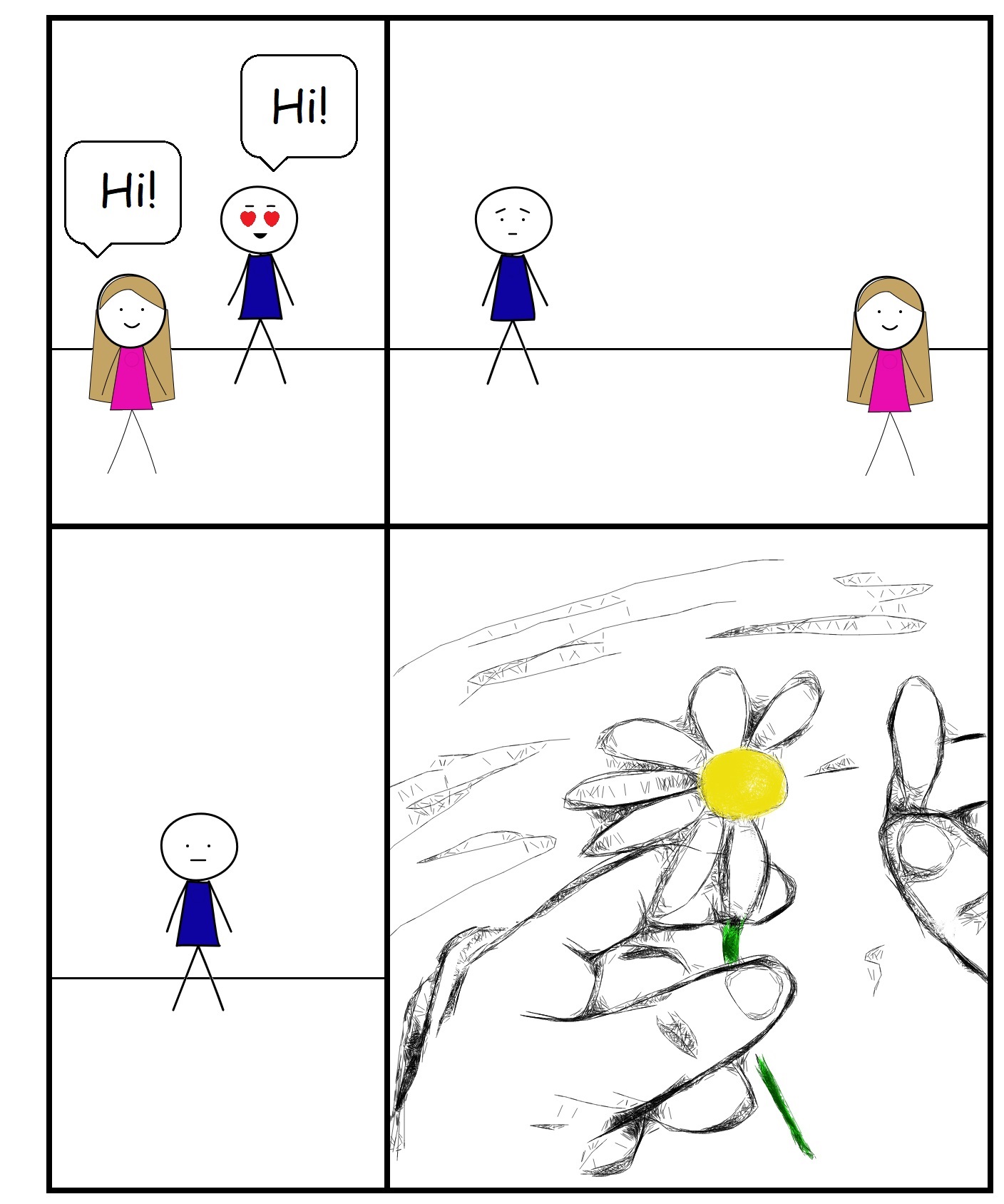
As simple as the example is above, there is enough uncertainty — with reason to both hope and doubt — for Buck’s limerence to continue, with Buck left wondering if Buckette desires him or not. If the other party reciprocates the feeling, then limerence will end from “consummation,” and the scenario will evolve into either a “physical or romantic relationship” as they discover that “the object of their desire also has a desire for them.” — from Psychology Today, Limerence. Limerence can also end in other ways, such as if the uncertainty ends (e.g., via rejection).
Admittedly, romantic love is a concept that means many different things to many people; romantic love has been written about by millions of singers, artists, and writers throughout history, and is difficult to pin down to a few words. The APA Dictionary of Psychology, however, observes that romantic love, “In some taxonomies of love, is identified with passionate love,” and it notes that “Passionate lovers typically are greatly preoccupied with each other, want their feelings to be reciprocated, and are usually greatly distressed when the relationship seems awry.” If romantic or passionate love are being modeled in Affect Engineering, then it would be sensible to also include the self’s desire for a reciprocation of feeling from the targeted other in a manner somewhat similar to limerence, but perhaps as a desire for a continued reciprocation of feeling. Several purposes would likely be in consideration, but one of the main differences between modeling romantic love and limerence in Affect Engineering would be that no uncertainty or reason to doubt would typically be present in the case of romantic love as there was for limerence, as the reciprocation of feeling would already have been confirmed in the case of the romantic love.
Enouement
Enouement, “the bittersweetness of having arrived here in the future, finally learning the answers to how things turned out but being unable to tell your past self.” — from John Koenig’s Dictionary of Obscure Sorrows
To model Enouement in Affect Engineering, there are two separate purposes the individual holds that would need to be considered:
- Purpose #1: The self desires to acquire knowledge about the future.
- Purpose #2: The self desires to deliver the acquired knowledge to one’s past self.
The conditions for the success of the first objective (experiencing the future firsthand) are only possible once the deadline for action has passed for the second objective, and the self is no longer in the past. For this pair of objectives, one cannot achieve both the first and second objectives listed. For Enouement, a great deal of frustration would center around the fact that the Efficacy component (both Self-Efficacy and Response Efficacy) for this second objective appears to be zero, due to the one way directionality of time’s progression. More on Efficacy can be found in article four, question #3 in this series, Emotional Responses and Emotional Regulation in Affect Engineering (Article 4 of 12)
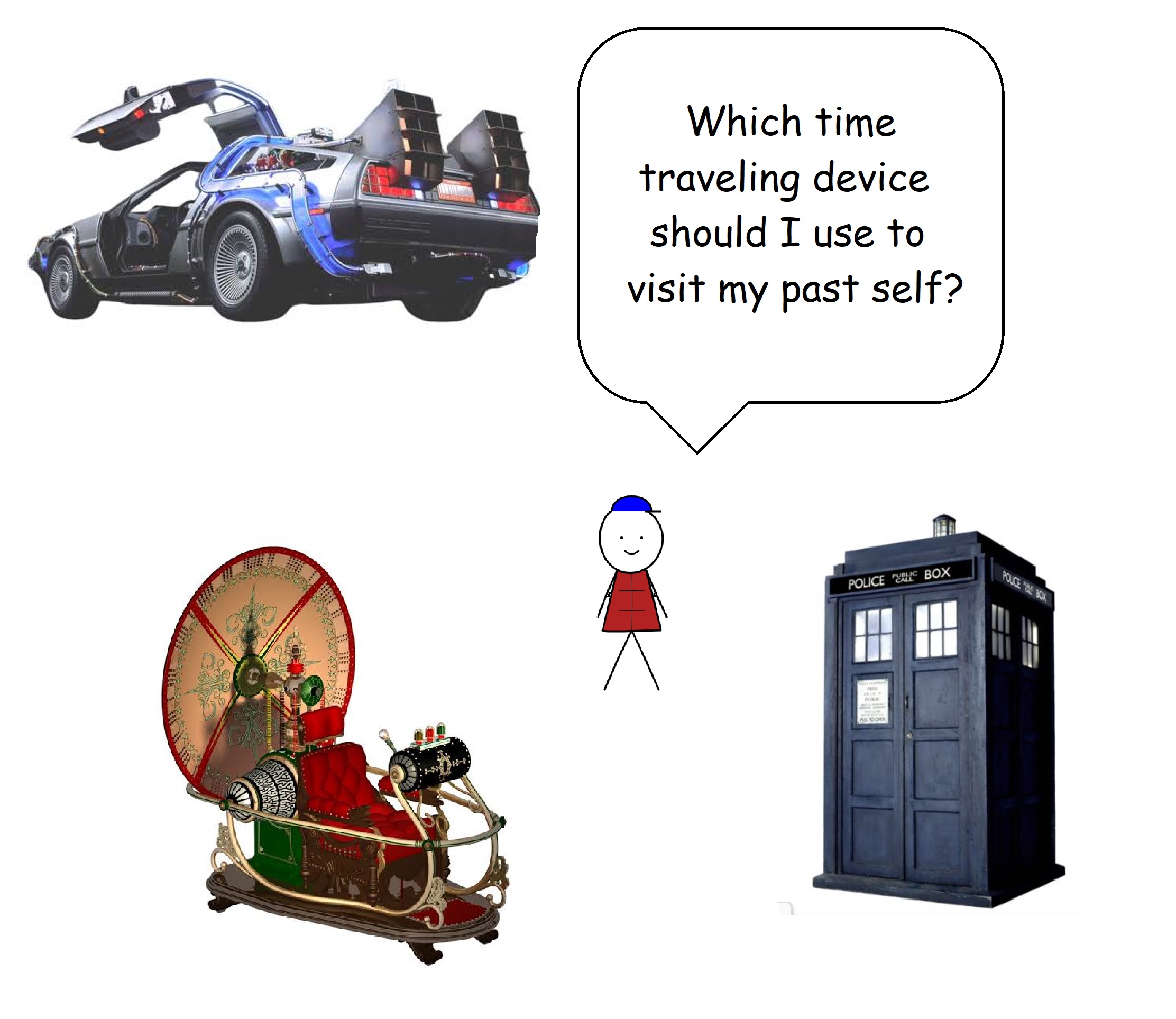
Given that time traveling Deloreans (from Back to the Future), time machines (from H.G. Well’s Time Machine), and TARDISes (from Doctor Who) are all in short supply in reality, it follows that the second purpose from above, concerning the self’s desire to deliver the acquired knowledge to one’s past self, is not actually possible to achieve.
Lachesism
Lachesism, “Longing for the Clarity of Disaster.” — from John Koenig’s Dictionary of Obscure Sorrows
To model Lachesism in Affect Engineering, there are at least three purposes that would need to be considered, but potentially more depending upon how many objectives are cluttering an individual’s list of priorities :
- Purpose #1, Purpose#2 (or potentially more): Confusion (i.e., uncertainty) exists regarding what entity should be valued the most with respect towards its ability to fulfill a particular purpose held by the self. There may be two, three, or more purposes in consideration here as well.
- Purpose #3: The self desires for the uncertainty to be eliminated, in this case, by a threat of harm taking place that that eliminates all, or all but one of the entities.
- Purpose #4: The self desires to discover the entity and the purpose associated with it that have the utmost importance if the most important one is sought. Alternatively, they may desire instead a blank slate from which to begin totally anew.
At its base, the main component of Lachesism is the self’s desire to be rid of the uncertainty present in another purpose. If the threat of harm actually takes place and reveals to the self that which matters most or should matter most to the individual, then the uncertainty is gone. Zombie apocalyptic, or apocalyptic shows and movies in general, will sometimes explore or use the emotion of Lachesism as a catalyst to drive the story. One such example is The Last of Us: Trailer for The Last of Us.

Liberosis
Liberosis, “the desire to care less about things; to figure out a way to relax your grip on your life and hold it loosely and playfully, keeping it in the air like a volleyball, with quick and fleeting interventions, bouncing freely in the hands of trusted friends, always in play.” — from John Koenig’s Dictionary of Obscure Sorrows
To model Liberosis in Affect Enginerering, at least two purposes would need to be held in consideration:
- Purpose #1: A great deal of Anxiety is invested by the self into one or more entities towards the fulfillment of one or more purposes.
- Purpose #2: The self desires to lower the amount of Anxiety being invested into the aforementioned entities. Stated differently, the individual desires to acquire more free Anxiety to invest by demobilizing it from whatever it is currently invested in.
The critical feature of Liberosis concerns the second purpose listed above, and centers on the self’s desire to divest or free up the Anxiety that is currently being invested into entities. Anxiety, in Affect Engineering, is treated as a resource in Affect Engineering’s framework (Article two, Reframing Anxiety as a Resource). The individual is still able to successfully manage purpose #1 above, but is also working towards fulfilling purpose #2 from above.
Kenopsia
Kenopsia, “The Eeriness of Places Left Behind” — from John Koenig’s Dictionary of Obscure Sorrows
To model Kenopsia in Affect Engineering, at least three purposes would need to be held in consideration.
- Purpose #1: Desire to acquire the experience of a particular location that is normally bustling with activity.
- Purpose #2 and Purpose #3 (#3 is vicariously felt): Loneliness and Vicarious Indifference are felt by the self due in part to the absence of the people that are normally there that the self expects should be there.
Kenopsia would be modeled to result from a conflict between the self’s expectations and the reality of the situation. The self still expects the empty venue to still be crammed with people and bustling with activity because it has always been that way. In the self’s mind, lots of people should be at the venue, but they are not. The absence of the crowd in some ways may seem like an abnormality to the self; the eeriness of it might even stem from a parallel to the crowd being there and ignoring the self. Even though these would be two different scenarios, to the self they might feel similar as the they struggle to accept the new reality of the venue.
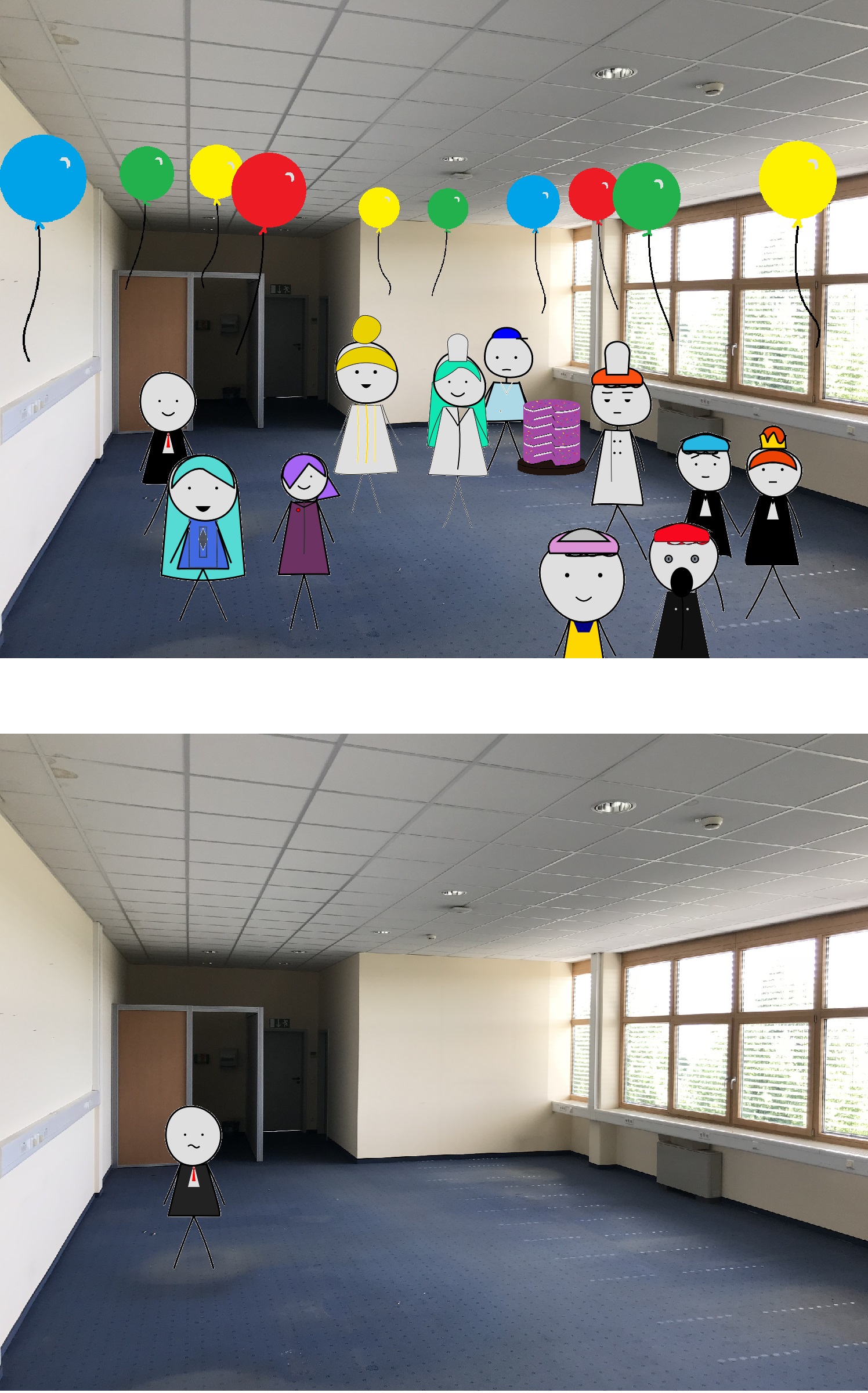
Buck (above) returns to what was a usually busy office after its moving party (above), but now discovers that it appears abandoned since the company moved (below). Buck, up until the present moment, had envisioned it as a place full of other people with desires, experiences, and meanings that he had to consider. He now has to reckon with the new reality of it.
Trumspringa
Trumspringa, “the longing to wander off your career track in pursuit of a simple life—tending a small farm in a forest clearing, keeping a lighthouse on a secluded atoll, or becoming a shepherd in the mountains—which is just the kind of hypnotic diversion that allows your thoughts to make a break for it and wander back to their cubicles in the city.” — from John Koenig’s Dictionary of Obscure Sorrows
To model Trumspringa in Affect Engineering, at least two purposes would need to be considered:
- Purpose #1: The self desires to pursue or acquire expertise and experience in a particular career (e.g., for financial stability) and they currently doing this.
- Purpose #2: The self, thereafter, desires to pursue a different set of goals, for instance, ones that are mutually exclusive with the aforementioned career path.
For the case of Trumspringa, the second purpose listed above overtakes the first in terms of importance. Within Affect Engineering’s framework, this could be modeled by a change in the value of the Sentiment variable. Henry David Thoreau’s account of his experiences of living simply in a cabin for two years, detailed in his book Walden, or Life in the Woods (1854), is a good example of Trumspringa.


Harmonoia
Harmonoia, “an itchy sense of dread when life feels just a hint too peaceful—when everyone seems to get along suspiciously well, with an eerie stillness that makes you want to brace for the inevitable collapse, or burn it down yourself.” — from John Koenig’s Dictionary of Obscure Sorrows
To model Harmonoia in Affect Engineering, at least two purposes would need to be held in consideration:
- Purpose #1: The self is feeling Joyfulness as everything seems to be going one’s way; the self is successfully achieving purposes.
- Purpose #2: The entity of Joyfulness or the previous success itself becomes viewed as a threat to future purposes or other objectives.
Notably, the rationale behind the emotion of Harmonia itself is also centered around the self’s belief in a gambler’s fallacy, a type of logical fallacy. The gambler’s fallacy concerns an error in reasoning where an individual believes that in a scenario that is based on random chance (e.g., flipping a coin and getting heads or tails) that past outcomes will influence future outcomes. In this instance, the self views the success and joy that is currently being felt as a threat to future unrelated objectives due to the erroneous belief that their perceived luck or good fortune will run out and bad things must inevitably be on the way.
For example, if the self were indeed gambling on a coin flip, and had already correctly guessed heads ten times in a row, then they still have a fifty percent chance of guessing heads again correctly on the eleventh flip of the coin.

A person experiencing Harmonoia, however, would fear that their chance of getting heads on their eleventh try would be less than fifty percent, given that they have had a seemingly lucky streak of ten coin flips in a row where they correctly guessed heads in a row. In addition to requiring two purposes, Harmonoia also incorporates an error in reasoning.
Hubiliance
Hubilance, “the quiet poignance of your own responsibility for someone, with a mix of pride and fear and love and humility—feeling a baby fall asleep on your chest, or driving at night surrounded by loved ones fast asleep, who trust you implicitly with their lives—a responsibility that wasn’t talked about or assigned to you, it was assumed to be yours without question.” — from John Koenig’s Dictionary of Obscure Sorrows
To model Hubilance in Affect Engineering, at least two purposes would need to be held in consideration, but potentially others.
- Purpose #1: The self vicariously experiences the purposes related to survival in the targeted parties (e.g., the drive to maintain all drives in Affect Engineering) and takes action to ensure the survival of the targeted party or parties (Category III Emotion of Benevolence).
- Purpose #2: As the self’s responsibility necessarily encompasses every purpose the targeted party or parties possesses, this can exhaust the self’s supply of Anxiety due to the enormity of the responsibilities at hand. At this point, the self may begin questioning their own Efficacy or begin to demobilize Anxiety that was invested into other purposes they had and shift them towards the necessary ones at hand.
Hubilance, in essence, might involve the self putting aside one’s own personal objectives in order to ensure that the targeted parties survive and are able to pursue their own objectives. It might alternatively inspire the opposite and compel the self to ensure that their own personal objectives are successful if the survival of the targeted parties depends on the self’s success at their own endeavors as well. If a group of baby ducklings or geese, newly born, imprint (a process where “newly hatched chicks tend to follow the first moving object, human or animal, that catches their attention”, from APA Dictionary of Psychology) on a human instead of their mother, then hubilance might be an emotion expected to arise in the human if they take the chicks into their care.
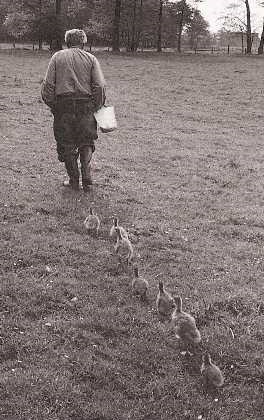
Imprinting was formalized and popularized by Konrad Lorenz (above, with his geese) in 1935.
Emotions Involving Variation in Specific Variables or Multiple Variables
Zenosyne
Zenosyne, “The Feeling That Time Is Getting Faster.” — from John Koenig’s Dictionary of Obscure Sorrows
The primary variable involved in modeling Zenosyne within Affect Engineering’s framework would be Elapsed Time. For instance, the individual’s mental clock may give the appearance that time is going by more quickly if the self’s reassessment of time is on a slower loop (e.g., longer intervals between each tick and tock). This means that more time would have passed by upon the self’s reassessment of the elapsed time.
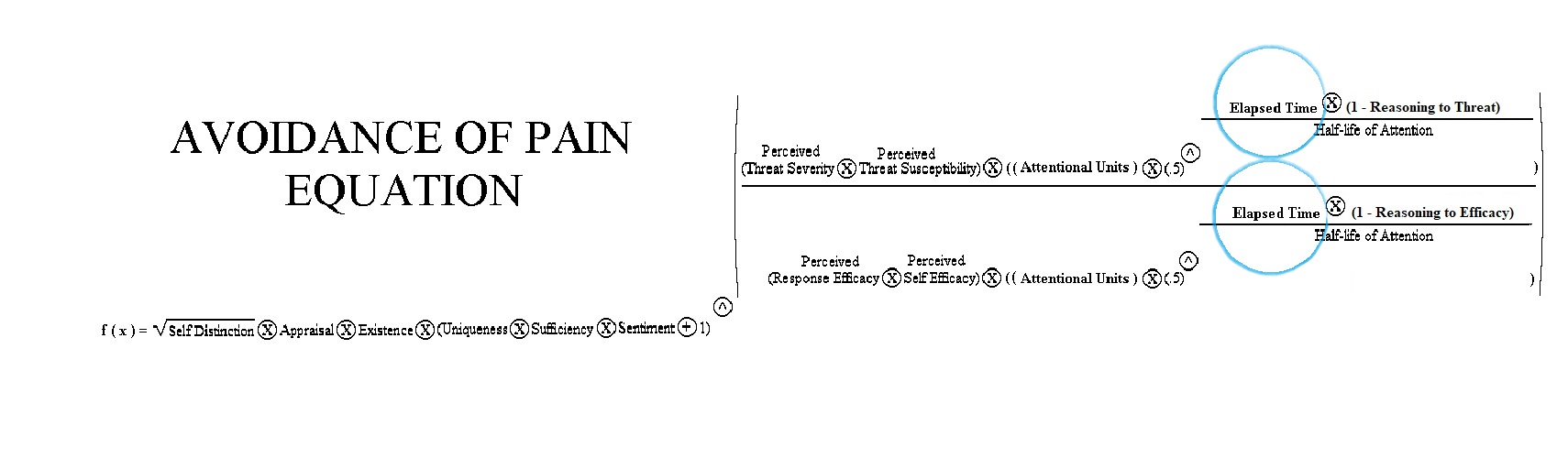
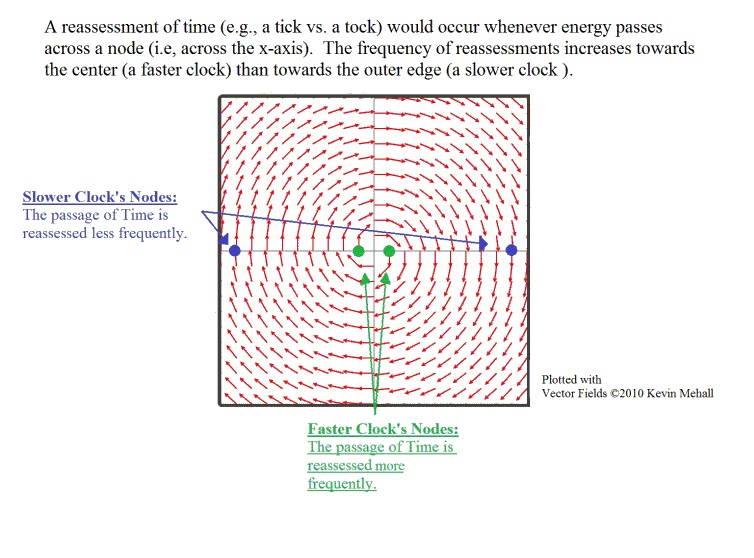
Zenosyne would by modeled in Affect Engineering as a shift in the self’s internal clock from one with a shorter reassessment interval to one with a longer reassessment interval. This would also happen with the self being aware of it. The modeling of a mental clock as a unit of measurement is described on the Affect Engineering web page (Modeling a Mental Clock with a Vector Field).
Jouska
Jouska, “a hypothetical conversation that you compulsively play out in your head—a crisp analysis, a devastating comeback, a cathartic heart-to-heart—which serves as a kind of psychological batting cage that feels far more satisfying than the small-ball strategies of everyday life.” — from John Koenig’s Dictionary of Obscure Sorrows
The primary variables involved in modeling Jouska in Affect Engineering’s framework would be Time, Efficacy, Threat, and potentially Self-Distinction. This may include imagining a future hypothetical scenarios about what might happen . . . a trial run of what might occur so to speak, taking place in the imagination. If the hypothetical responses of other individuals is being considered, then Self-Distinction would be involved as well.
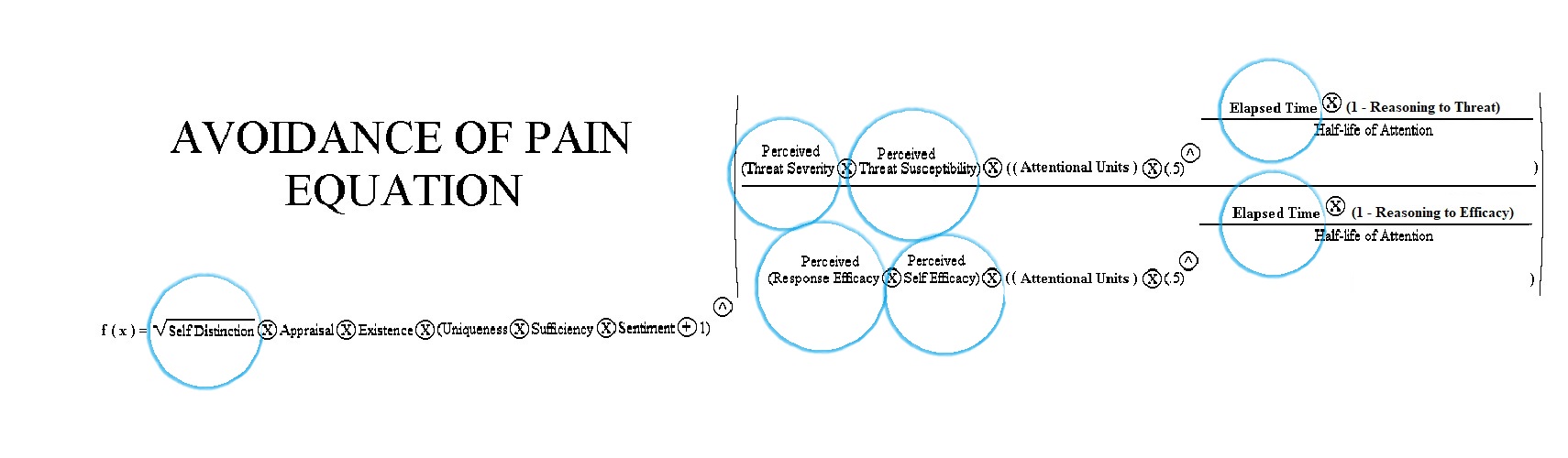
The circled variables above, Self-Distinction, Threat and Efficacy Components, and Elapsed Time, would be the ones primarily involved with Jouska.
Daguerreologue
Daguerreologue, “an imaginary conversation with an old photo of yourself, in which you might offer them a word of advice—to banish your worries, soak it all in, or shape up before it’s too late—or maybe just ask them if they thought you had done justice to the life they built for you.” — from John Koenig’s Dictionary of Obscure Sorrows
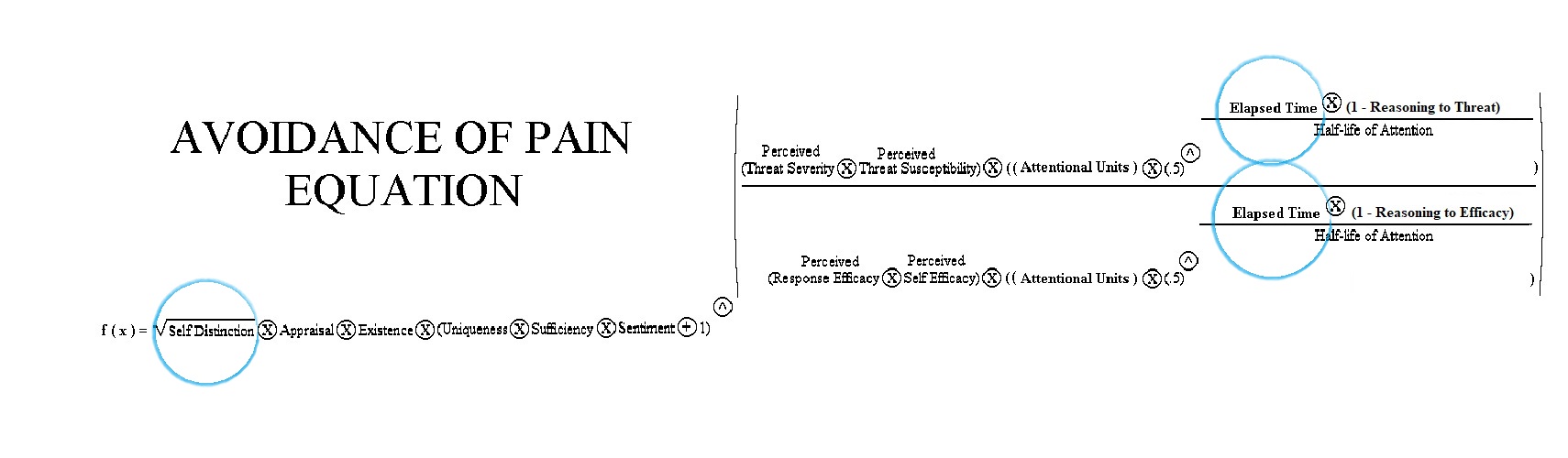
The primary variables involved in modeling Daguerreologue in Affect Engineering would be Time and Self-Distinction. This would be a rewinding of one’s mental clock to revisit the self in the past as if one’s past self were a different person.
Emotions that are Developmental in Nature
Sonder
Sonder, “the feeling one has on realizing that every other individual one sees has a life as full and real as one’s own, in which they are the central character and others, including oneself, have secondary or insignificant roles.” — from John Koenig’s Dictionary of Obscure Sorrows
As a concept, Sonder would be linked to the development of empathy, and in Affect Engineering, this would entail the emergence and shaping of the Self-Distinction variable for the individual. With sonder, its development would be two-fold, involving:
- The realization that the self’s experiences are distinct from the experiences of other people and other lifeforms
- The realization that another person’s or lifeform’s experiences are distinct from the experiences of other people or other lifeforms.
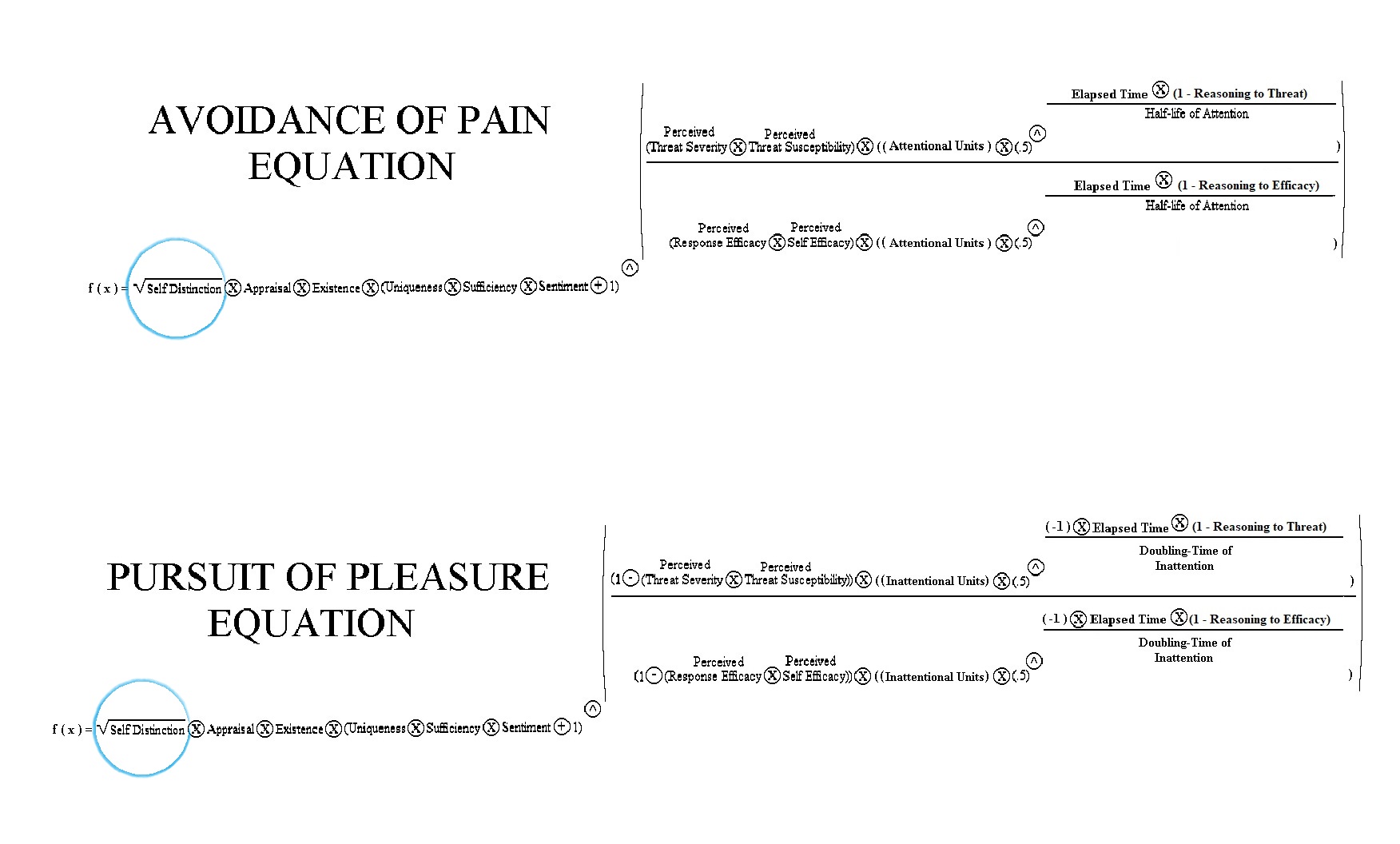
Sonder primarily concerns the formation of the Self-Distinction variable and its refinement in Affect Engineering.
Vellichor
Vellichor, “the strange wistfulness of used bookstores, which are somehow infused with the passage of time—filled with thousands of old books you’ll never have time to read, each of which is itself locked in its own era, bound and dated and papered over like an old room the author abandoned years ago, a hidden annex littered with thoughts left just as they were on the day they were captured.” — from John Koenig’s Dictionary of Obscure Sorrows
As a concept, Vellichor would relate to the self’s realization that the variable of Elapsed Time, particularly the self’s experiencing of it, is a finite resource. This creates a deadline for action for all the things that one may hope to achieve in their own lifetime, as an individual’s life expectancy can be estimated thereafter. The self realizes that there is not enough time to experience everything, and this is made more poignant by all the books in the bookstore.
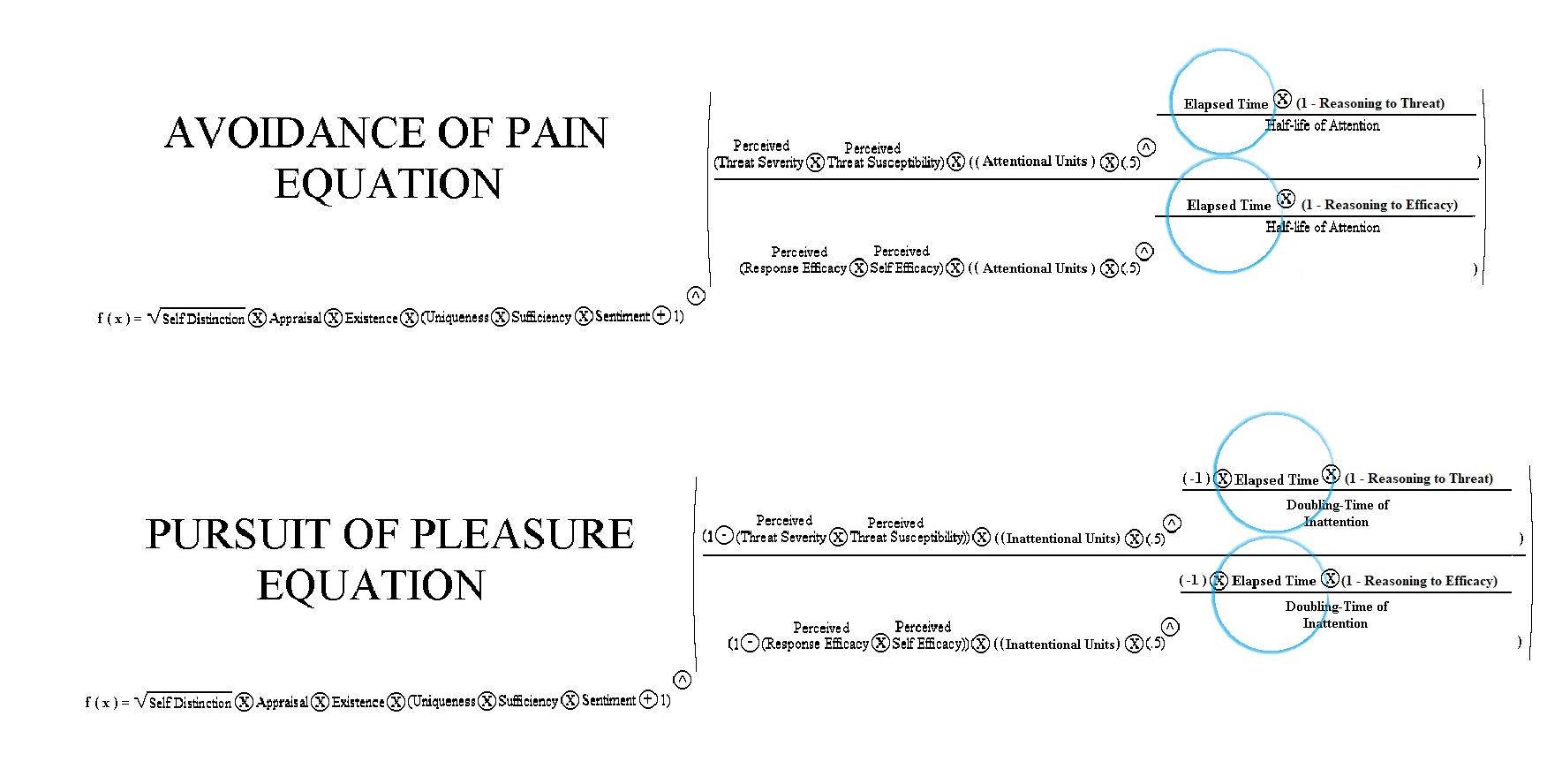
Vellichor primarily concerns the realization that the self’s awareness of elapsed time will have an end point, and that the time the self gets to experience alive is limited. The vastness of a bookstore, filled with thousands of books and stories they will not have time to read in their lifetime, would be the onset of this realization. A similar response might be felt when looking at a library of every movie ever filmed and produced, or exploring a library of every song every written and performed, as there is not enough time in an individual’s life to watch or listen to them all.
Occhiolism
Occhiolism “the awareness of how fundamentally limited your senses are—noticing how little of your field of vision is ever in focus, how few colors you’re able to see, how few sounds you’re able to hear, and how intrusively your brain fills in the blanks with its own cartoonish extrapolations—which makes you wish you could experience the whole of reality instead of only ever catching a tiny glimpse of it, to just once step back from the keyhole and finally open the door.” — from John Koenig’s Dictionary of Obscure Sorrows
As a concept, Occhiolism relates to the variable for Existence in Affect Engineering, and the perceptual routes that lead to the awareness of an entity’s existence (e.g., touch, taste, sight, smell, sound). Occhiolism would concern self’s realization that many entities and distinctions between entities exist that the self is completely oblivious to due to the limitations of perception.
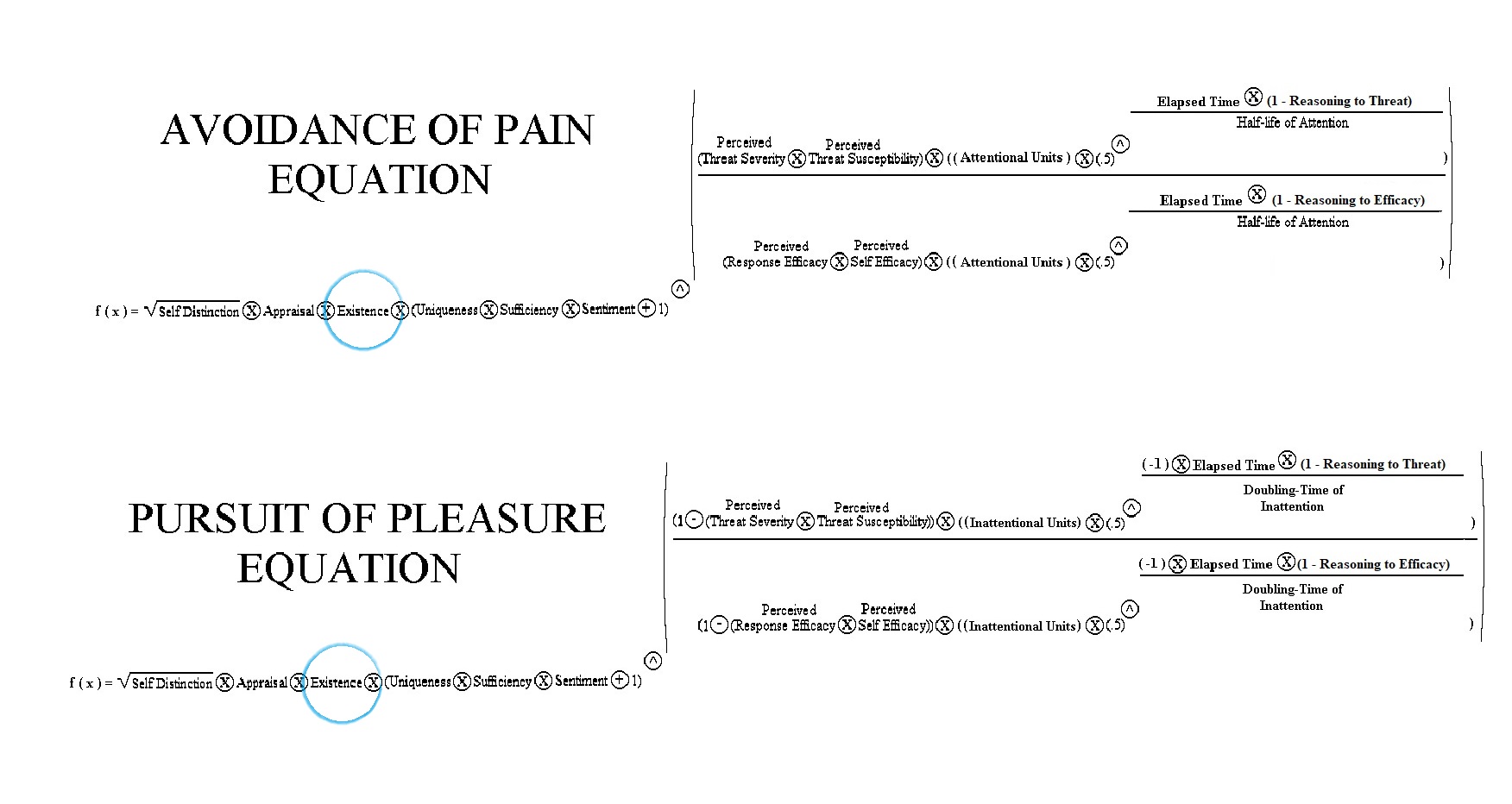
Occhiolism concerns the self’s realization that their perception has limitations, and that entities exists that the self is wholly unaware of due to the senses either not being either sharp enough or far reaching enough to detect.
3)How are ethics and morality implemented into Affect Engineering?
SHORT ANSWER
Ethics and Morality are indicated or modulated in Affect Engineering predominantly through the Sentiment variable (e.g., variable in a function for the priority ranking of a purpose), and the Self-Distinction variable, which concerns modeling empathy.
IN DEPTH EXPLANATION
“Ethics refers to the rules of conduct recognized within a specific group, culture, or class of human actions. These rules are provided by external sources.
Morals are principles with respect to right or wrong conduct. Morals refer to an individual’s own principles and morality is a personal compass of right and wrong.” — excerpt from theknowledgeacademy
In short, it may be said that morality generally concerns an individual’s own principles, while ethics generally concerns the principles of an external group or source to which the individual may also belong. Regarding the morality of an individual (i.e., their own personal moral code), this is modeled simply by ordering different purposes held by the individual along their Sentiment value in Affect Engineering. This is, in essence, the individual’s moral code, their ranking of purposes according to priority. Similarly, the ethical code of an external group, culture, or class of humans, incorporates the Self-Distinction variable in Affect Engineering; the self vicariously experiences another group’s, culture’s, or class’s organization of purposes according to priority, or their Sentiment value in Affect Engineering. Essentially, this is what the self imagines their (e.g., targeted others) principles to be based upon the self’s observations.
In Affect Engineering, the individual’s own personal moral code concerns the priority ranking of purposes held by the self (i.e., where Self-Distinction variable equals +1 in Affect Engineering). The ethical codes of different groups, cultures, or classes of humans concerns the priority ranking of purposes that the self imagines targeted others hold; these are experienced vicariously by the self (i.e., where the Self-Distinction variable equals -1 in Affect Engineering).
PREVIEW
The final article in this series will explore additional applications of Affect Engineering and address any outstanding concerns.