


Additional Applications of Affect Engineering
This is the twelfth and final article in a series and covers some additional applications of Affect Engineering and addresses topics that include vector fields, artificial intelligence, dreams, biological rhythms, and the erasure of memories. It is designed for the layperson and explains the basics of Affect Engineering as a theory of emotions. Each article in this series begins with a list of questions that it will aim to address. The sections that follow are in two parts each. The first part is a short statement that answers each question as succinctly as possible. The second part will offer a more in depth explanation that goes into more detail where needed by exploring some of the implications of the short answer.
QUESTIONS
- Why is this theory called a Unified Field Theory of Emotions?
- What inspired the creation of Affect Engineering and what use would anyone have for functions designed to model emotions?
- How, if at all, might Affect Engineering be applied to artificial intelligence or simulated intelligence?
- How would emotions arising in subconscious states, unconscious states, or altered states of consciousness such as sleep, be modeled in Affect Engineering? How might their transition from a subliminal state to extinction (i.e., totally purged from the individual’s memory) be modeled?
1) Why is this theory called a Unified Field Theory of Emotions?
SHORT ANSWER
Assessing changes in the flow of energy invested into entities by the individual across changes in the flow of time as experienced by the individual is a core component of Affect Engineering. Although it is not essential to use vector fields in order to grasp this concept, this flow can be visualized easily with vector fields in the six dimensions that Affect Engineering uses.
IN DEPTH EXPLANATION
Measuring changes in the flow of energy being invested into entities over time is a focal point of modeling emotions in Affect Engineering. Given that the conception of time by an individual is also modeled as a flow of energy, and given that an entity may receive a valuation for several different purposes from an individual, organizing all of this information neatly is a crucial consideration for the theory. As everything in Affect Engineering is modeled with a pair of functions, the subtitle Unified Field Theory of Emotions seemed appropriate to add to Affect Engineering in order to clarify what it entails when it was written.
A slope vector field, or direction field, of the functions used in Affect Engineering is one of the best ways to visualize the organization of information in Affect Engineering. These enable an observer to classify instances of particular emotions occurring at a glance of a graph. One of the common uses of slope vector fields is for modeling the flow of a material. Vectors are assigned to points on a grid and they typically represent different physical properties of a system such as velocity (e.g., ocean currents), or force (e.g., gravitational pull, electromagnetic fields). Wind speed vectors, for example, are often used by meteorologists on a map to visualize local wind speeds.
Below, a sample wind vector field overlain on a map (from YubaNet, October 2018)
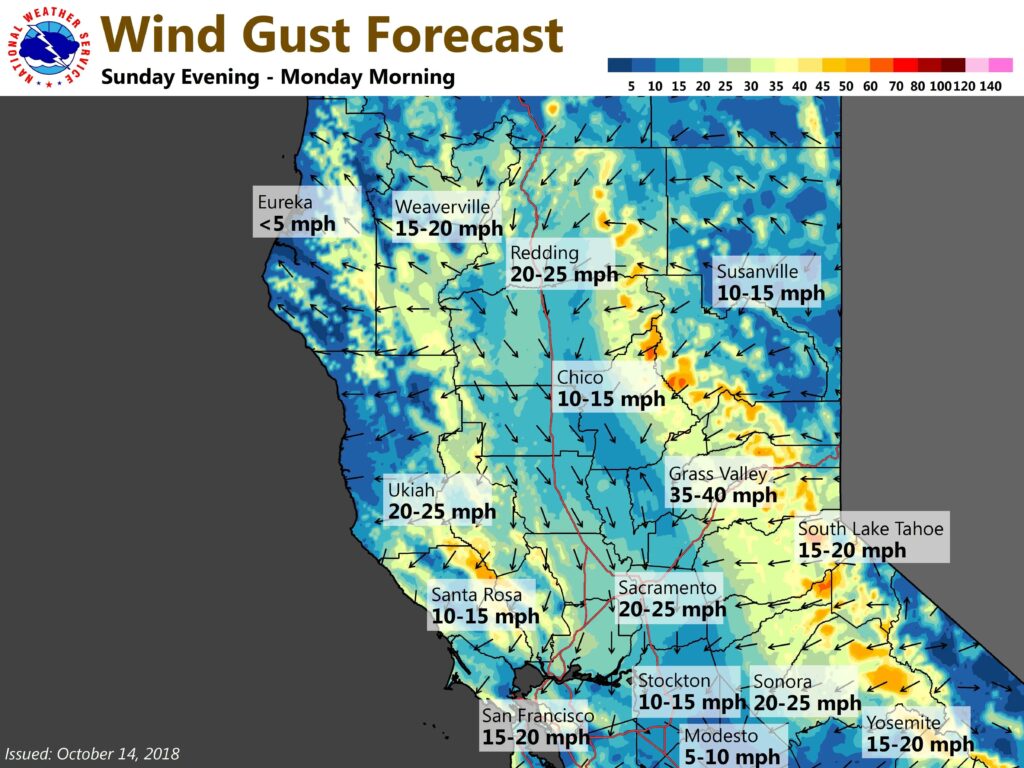
Example of a vector field being used to show wind speed and direction. From YubaNet article (October 2018), “Here’s what’s being done ahead of the wind event and what You should do”
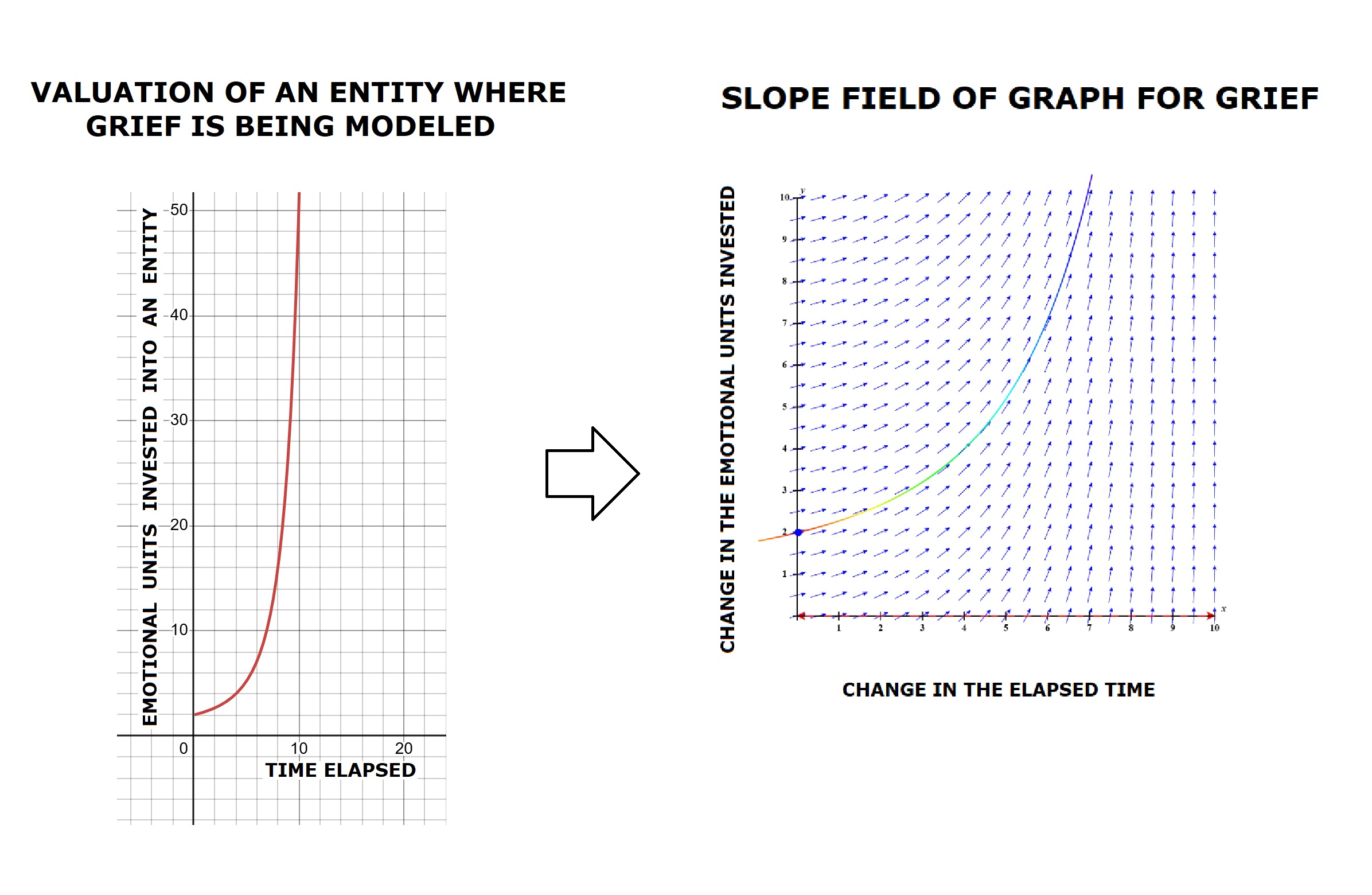
For the functions used in Affect Engineering, this would entail plotting the slope for the valuation given to an entity with respect to the fulfillment of a purpose, and doing this at certain intervals (e.g. every second, or minute, or hour, depending on the interval of time desired). If, for example, Grief felt towards an entity (e.g., a beloved pet that one desires to play with again, but they are about to be euthanized) were being modeled in Affect Engineering, then the valuation of the pet might look similar to the graph below (left), while the slope field, obtained from the derivative, would be the other graph (below and right).
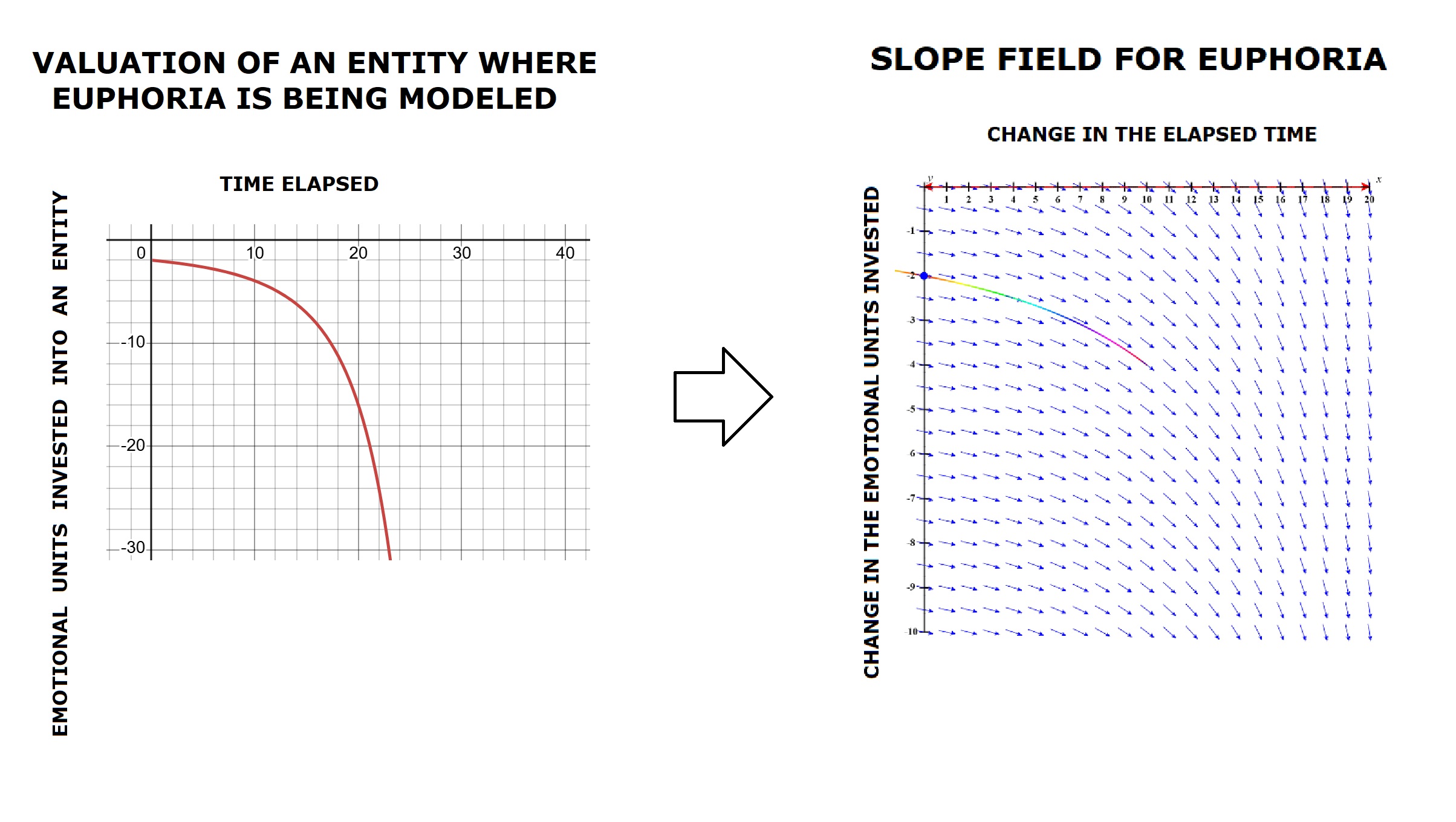
In another example, if Euphoria were being modeled for someone who just won a lifetime supply of their favorite snack, chocolate chip cookies, then the valuation of the entity (e.g., chocolate chip cookies for the fulfillment of the purpose of eating), might look like the graph below (left). Meanwhile, the slope field might look like the graph next to it (below and right).
In a third example, if an emotion such as fear felt towards an entity is being modeled (e.g., where the individual’s valuation of the entity rises and then tapers off again), then the slope field would also reflect this. This could happen in an instance where the self initially might be somewhat confident in their ability to protect the entity from harm, but if, over time, the individual begins to doubt their own ability (i.e., ignoring Self-Efficacy to prevent a threat of harm to the entity and focusing only on the threat itself), then their valuation of the entity may elevate accordingly. For instance, an individual who initially possesses a good deal of confidence in their ability to pass an upcoming test, but is bombarded with messages about how difficult it is and all the people who have recently failed it, might have a graph and slope field resembling the ones below.
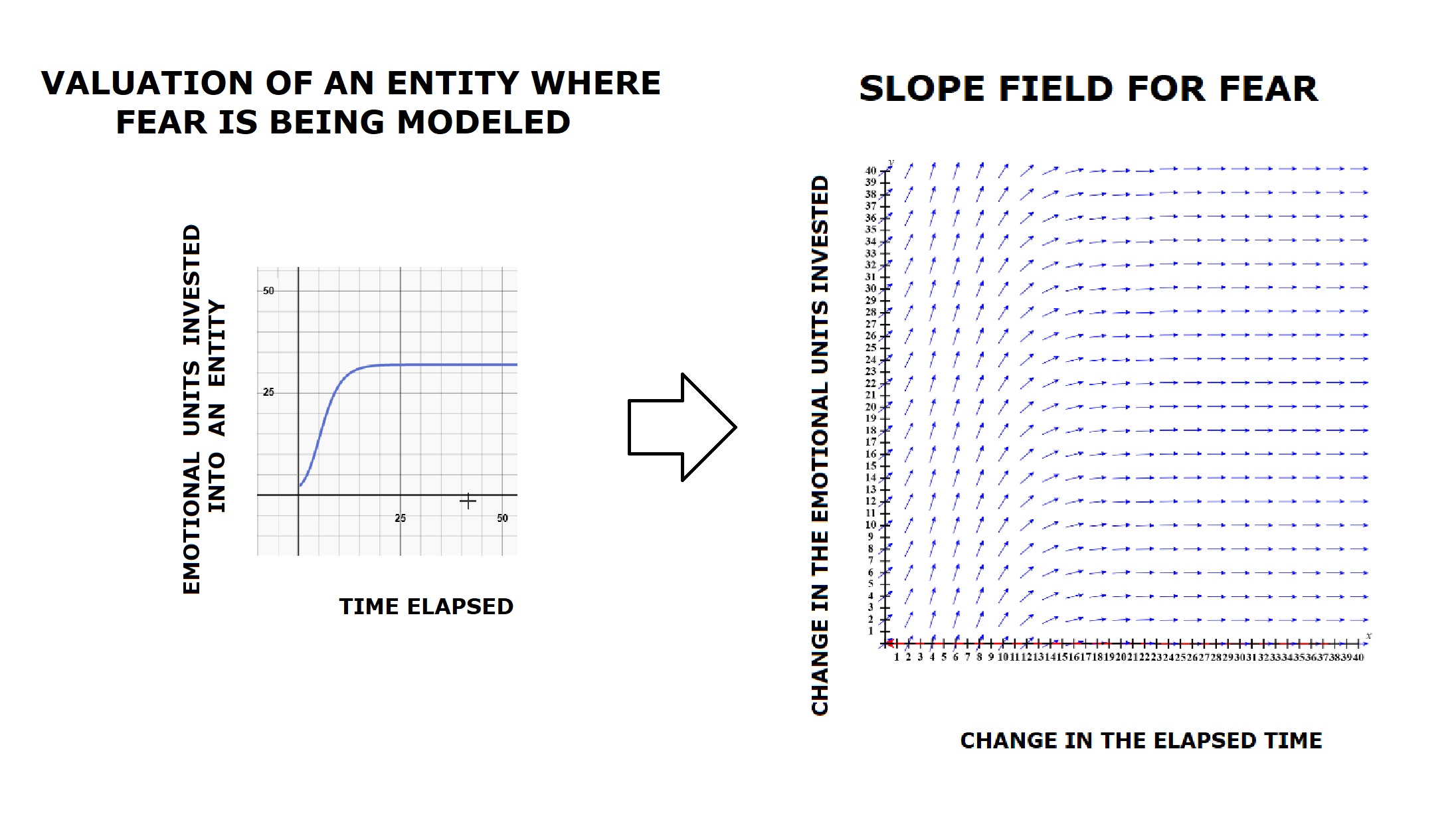
As Affect Engineering has six dimensions that it predominantly uses to organize information, tracking this flow of energy across changes in time can make interpreting and making comparisons at a glance more straightforward.
2) What inspired the creation of Affect Engineering and what use would anyone have for functions designed to model emotions?
SHORT ANSWER
In addition to modeling both common and obscure emotions, a secondary aim of using functions to model emotions in Affect Engineering’s is to facilitate reconciling the many different approaches to the study of emotion under the common language of math. The functions can also be used to interpret the behavior and motives of individuals or groups, to improve the effectiveness of communication, and to assist with introspection among other things.
IN DEPTH EXPLANATION
Affect Engineering began for me inadvertently as an outgrowth from a final paper I was working on in a Culture and Emotions that I was taking while I was an undergraduate at Boston College; the class was taught at the time by Makiko Deguchi (currently a professor at Sophia University). Of all the classes I took while in college, that one inspired the most ideas in me, and played a large role in the formation of Affect Engineering. There were, of course, other ideas mingling and merging in my head from a few other classes I was taking at the time, but this class and the work in it resonated with me the most. For our final paper in the Culture and Emotions class we had to come up with our own theory of emotions, and ultimately this is where Affect Engineering began; more specifically, with what would later become the Roll Cage Theory of Drives (image below), which is itself embedded into Affect Engineering’s paradigm and occasionally used to model or explain concepts from Psychodynamic Psychology within Affect Engineering’s framework.
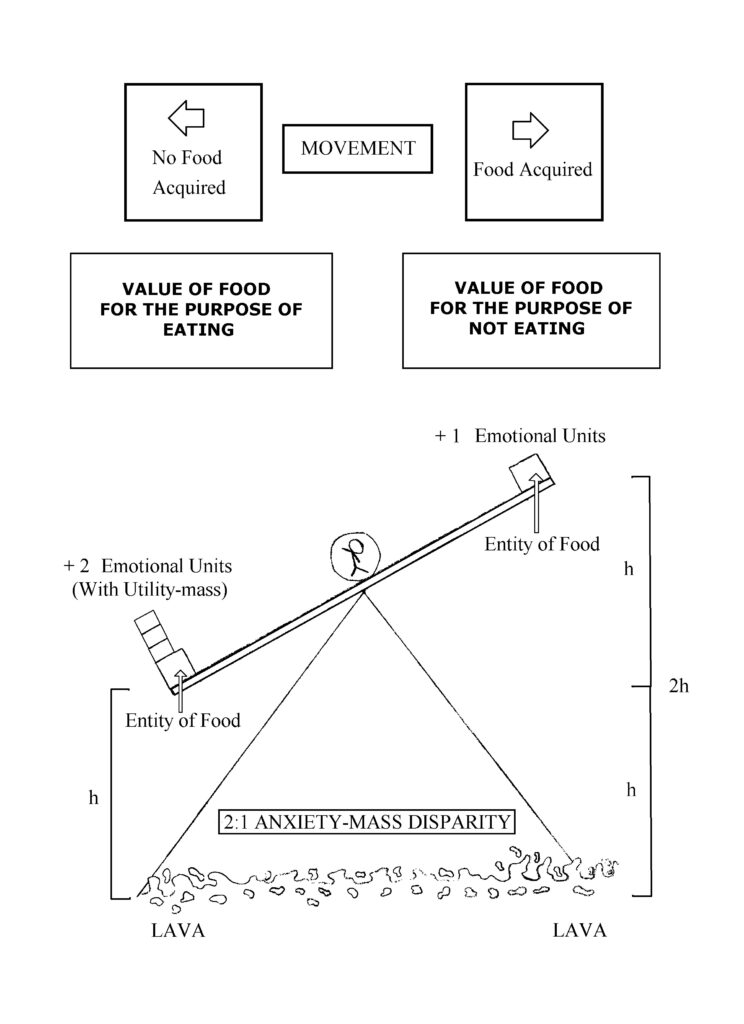
The Roll Cage Theory of Drives, a visualization of how the self balances competing objectives within Affect Engineering’s framework.
The Roll Cage Theory of Drives is another way to visualize the individual’s effort to balance opposing goals against one another. In this model, the self is tasked with balancing itself upon a disc above a fulcrum that is being tipped by Anxiety being invested into opposing or complementary purposes (e.g., primary and secondary drives). If the self, represented by the roll cage, is unable to stay alive by balancing itself between the two complementary and opposing purposes, then it will fall into a giant pool of lava beneath the cone and disc apparatus surrounding it on all sides and perish.
As for the second part of this question, my principle aim in creating Affect Engineering and using functions to model emotions was to design a structured process for studying the Psychology of Emotion (e.g., also called Affective Sciences), one that offers itself as a methodology for both organizing and reconciling the many different, oftentimes seemingly contradictory approaches to the study of the Psychology of Emotion under the common language of math. Most approaches to the study of emotions fall under either biological and physiological, cognitive and appraisal based, and sociological and constructivist based ones. One of my aims in writing Affect Engineering was to unite them all under the language of math, as each approach possesses valid claims and arguments that are difficult to reconcile with one another when viewed through a single lens.
Other uses for Affect Engineering include, but are not limited to: enhancing one’s self-understanding; interpreting the behaviors, actions, and motives of other lifeforms, both human and non-human; and crafting more effective messages to targeted audiences.
3) How, if at all, might Affect Engineering be applied to artificial intelligence or simulated intelligence?
SHORT ANSWER
As Affect Engineering is structured on math principles, it lends itself to being applied to artificial or simulated intelligence in whatever manner desired. Nonetheless, it is not always sensible to do so in all cases.
IN DEPTH EXPLANATION
In short, all of the concepts and the framework in Affect Engineering can be applied to artificial intelligence or simulated Intelligence. However, it is not necessarily practical to do so in every case, as it might potentially reduce the machine’s reliability in some cases. For example, given that free will is also incorporated into Affect Engineering’s framework, via the variable of Sentiment, this would be the equivalent of giving any mechanical device this capacity (i.e., the capacity of free will as conceived in Affect Engineering) and all the issues associated with breaking a double bind — Article Two, question five in this series, addresses breaking a double bind, (Reframing Anxiety as a Resource, Article 2 of 12). This would be the equivalent of granting a microwave the capacity to self-destruct at whim, or at chance based on a few lines of code, for instance, by refusing to shut off and overheat. Alternatively, free will exercised by an appliance might take the opposite route and the microwave might not even power itself on completely in the first place.
One of the earliest movies that I can remember watching as a child was the Disney movie The Brave Little Toaster (1987).
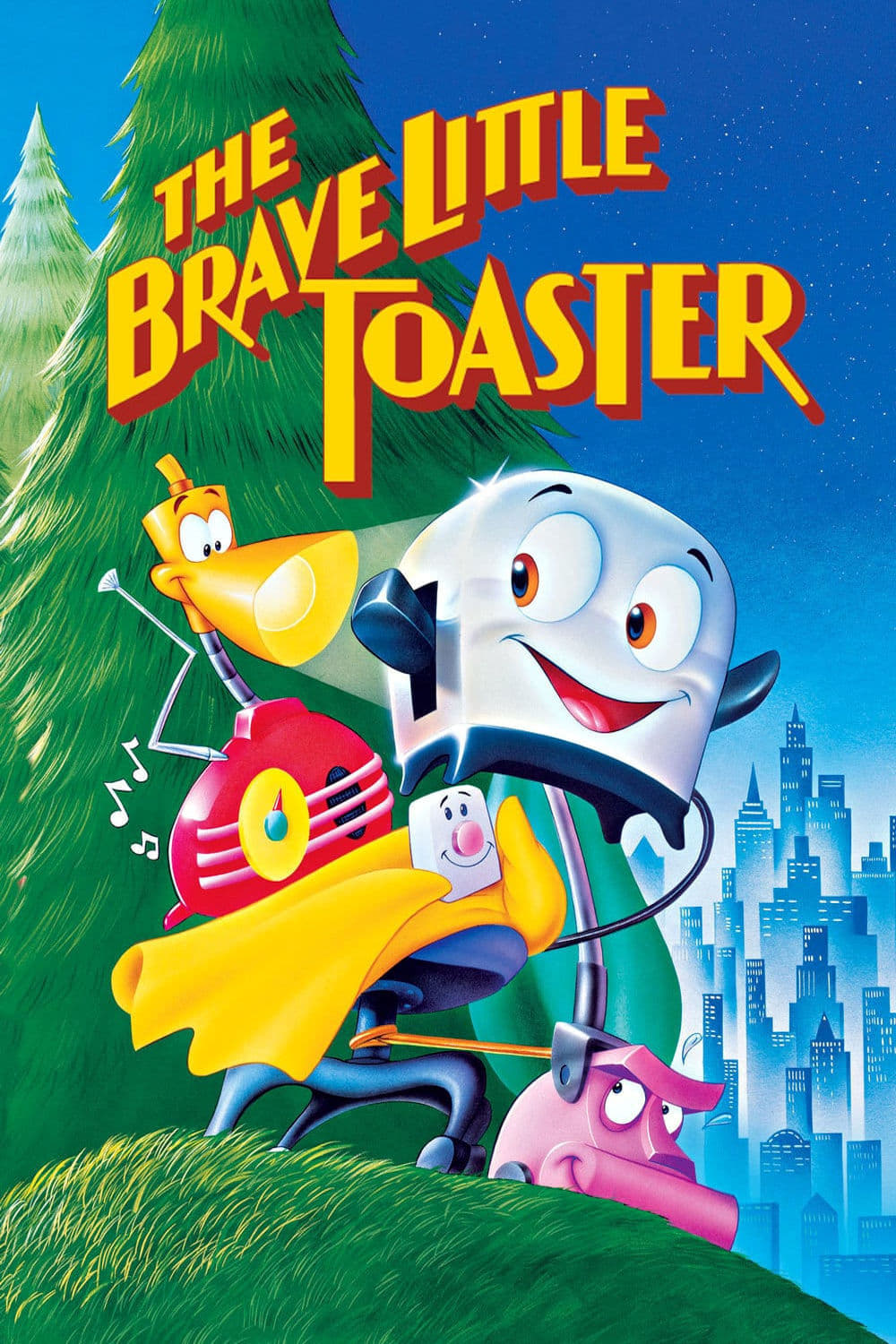
Anthropomorphized appliances are abound in this animated, and somewhat dark film. For anyone unfamiliar with this movie’s plot, it is about five sentient household appliances who have been left behind for years. Fearing they have been abandoned and that they are no longer useful, they set out to find their owner, simply referred to as “the Master.”
Granting free will to appliances necessarily gives them them the capacity to choose a course of action that could potentially lead to self-destruction, because that falls under the domain of free will. It is worth stating that a machine simply choosing to destruct at whim would be an impractical implementation in most scenarios if it were input into every device. Reliability and predictability are traits that most people generally want in their tools, and those are two things that free will is not, reliable and predictable. The scene in The Brave Little Toaster where the air conditioner self-destructs is a good example of what can go wrong when appliances face an existential crisis (The Air Conditioner Scene. Moreover, the song “Worthless” that occurs later near the film’s climatic junkyard scene, takes this motif of depression induced self-destruction in appliances a bit further.
A notable exception to acts of self-destruction being completely unwarranted would include instances where a mechanical device might be called upon to forego whatever inclinations of self-preservation have been programmed in its code and choose to sacrifice itself for the good of another. This question, “When should self-sacrifice (e.g., self-destruction) be considered over self-preservation?” is also a question presented to robots in other popular works of fiction where artificial and simulated intelligence are prominent, such as I, Robot (2004) and WALL-E (2008).


This capacity for free will, which in Affect Engineering entails possessing the ability to break a double-bind and abandon the inclination for self-preservation, is debatably lauded as one of the quintessential distinguishing features between complex lifeforms and machines with their cold and mechanical efficiency. Machines simply do whatever they are programmed to do, but the possibility of them doing otherwise makes for intriguing stories; it gets audiences to ask themselves, “At what point might a robot’s actions be considered heroic?”
In Affect Engineering’s framework, free will is a double-edged sword; possessing it means an individual has the ability to pursue the fulfillment of one purpose against the fulfillment of its opposite purpose to the utmost, even in the face of death, at any time or place. The notion of machines wandering the world with this capacity, to shift at whim from acting for their own self-preservation to suicidal behavior (e.g., altruistic or otherwise) should give people at least a moment’s pause for concern, particularly if free will is implemented into them without careful consideration of the consequences.
Just as a determined human with an inexorable resolve can be a dangerous thing, a determined machine with an inexorable resolve can also be a dangerous thing.
4) How would emotions arising in subconscious states, unconscious states, or altered states of consciousness such as sleep, be modeled in Affect Engineering? How might their transition from a subliminal state to extinction (i.e., totally purged from the individual’s memory) be modeled?
SHORT ANSWER
Emotions arising from subconscious states, the unconscious, or altered states of consciousness such as sleep, are best modeled with different setups of the functions used in Affect Engineering. For example, one form of attention may be more ideal for modeling dreams, nightmares, and repressed memories that have been blocked, while another form of attention may be more ideal for modeling emotions arising in individuals with neurodegenerative diseases or to model situations where neural death or amnesia are taking place.
IN DEPTH EXPLANATION
Different setups of the functions in Affect Engineering may be used depending on what one intends to model. If analyzing a situation where some amount of affect is normally suppressed or alternatively elevated above normal levels, but then the affect ceases to be regulated by the individual, then the Valuation Resilience Form of Attention in Affect Engineering would be more ideal for modeling this than some of the other forms of attention. In the first case, the self’s valuation of the entity rebounds to the level it would normally be at if it was being suppressed. In the second case, it dwindles to a lower level if it was being elevated up to that point. This could be precipitated by a change in the individual’s state, going from a condition or activity level where an individual suppresses a larger portion of the affect they would normally experience, into a condition or activity level where that affect is no longer being suppressed and valuations of entities begin to fluctuate. It is the metaphorical equivalent of opening the floodgates.
Biological Rhythms and Sleep
Biological rhythms refer to any “periodic variation in a living organism’s physiological or psychological function.” Circadian Rhythms (those occurring in approximately 24-hour periods, like the sleep cycle) are perhaps the most well known. There are also ultradian rhythms, (those occurring in less than 24-hour periods, such as breathing and the stages of the sleep cycle, like REM sleep), and infradian rhythms (those occurring in longer than 24-hour periods, such as monthly menstrual cycles and hibernating, a circannual rhythm). In Affect Engineering’s framework, these can be represented with trigonometric expressions.
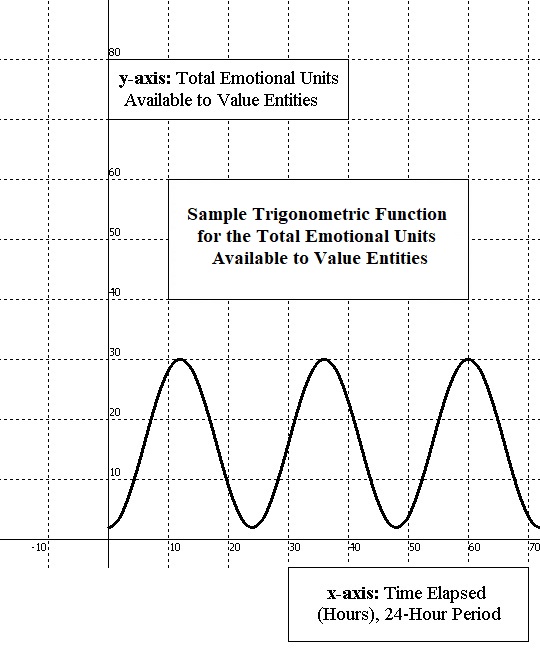
Graph of a sample trigonometric expression that shows how many Emotional Units are available to an individual to value entities based on one biological rhythm. This graph oscillates between 2 and 30 Emotional Units available.
If biological rhythms are used to interpret information, then the trigonometric expressions for each rhythm would be in the denominator underneath the entire expression (Below, denominator). For ease of interpreting, this can then be scaled (Below left) as a fraction of the individual’s total emotional energy available value entities; the most practical scale would be to 100, as it would yield a percentage.
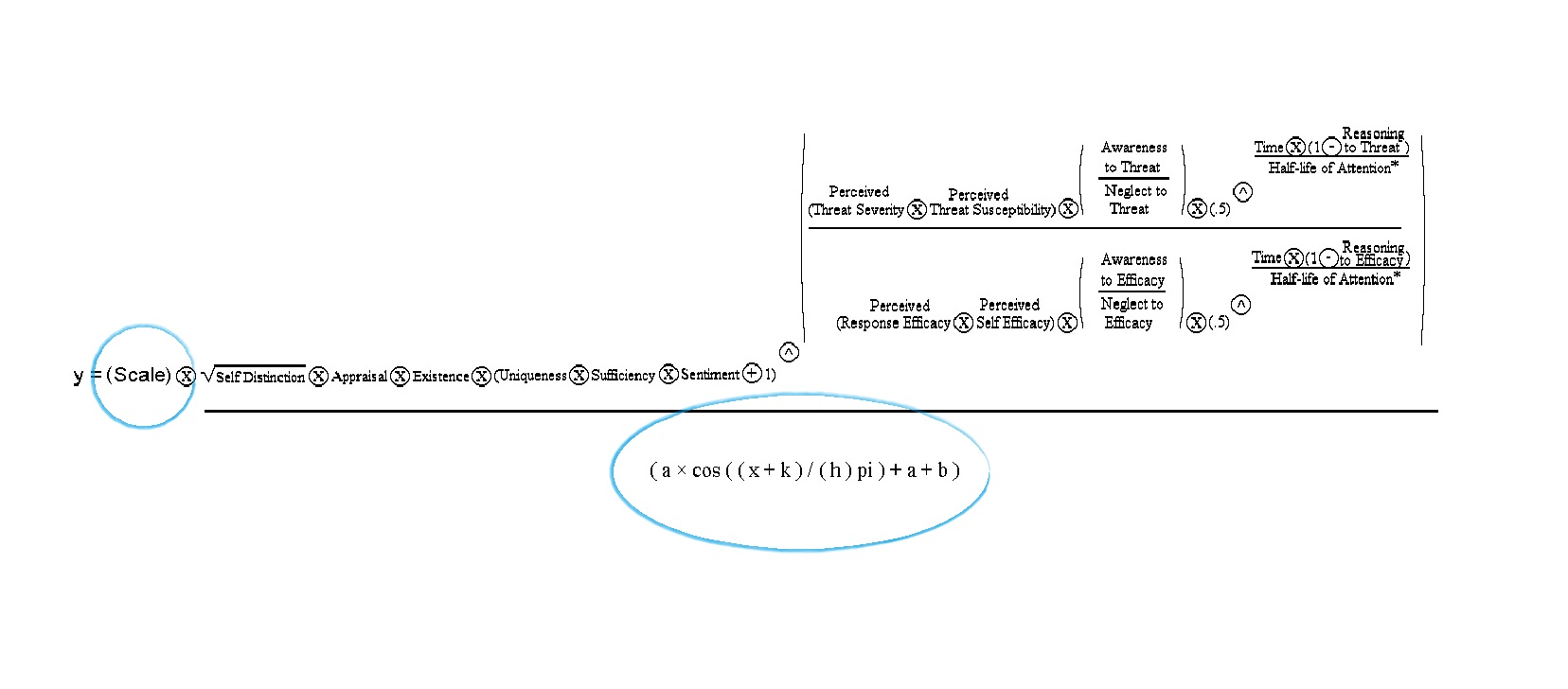
The introduction of biological rhythms also modifies what the y-value would represent. The y-value, with biological rhythms being considered, would now represent the Emotional Units being invested into a particular entity as a fraction of the total Emotional Units available. In Affect Engineering’s framework, the total Emotional Units available would correspond to Anxiety and negative affect, or alternatively, Negative Anxiety and positive affect if pleasure is being considered instead.
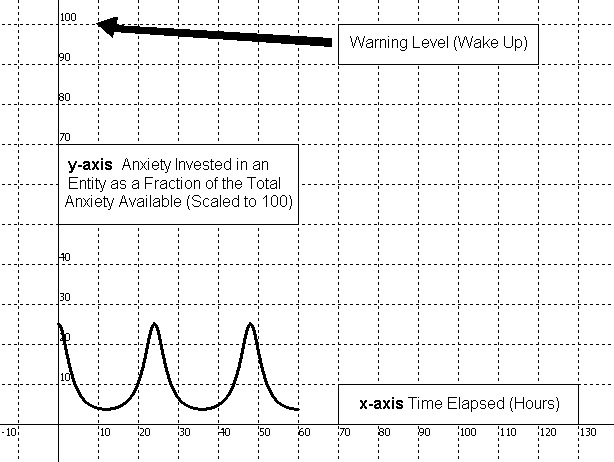
In the above graph, the individual’s valuation of the entity with respect to a particular purpose is remaining constant, but their total emotional energy available to value entities is fluctuating on a 24-hour cycle from a single biological rhythm. Additional biological rhythms of less or more than 24-hours in length could be implemented that would change the shape of the above graph, than, but it would still repeat at a certain point. Because the valuation of the entity stays under 100% of the individual’s total Emotional Units available to value entities, there is no need for the individual to wake up and mobilize more energy to value entities; they remain asleep.
Dreams and Nightmares
If during the day, for example, an individual is suppressing awareness to a serious threat of danger against a valuable entity, such as by actively diverting attention away from the threat, then Anxiety invested in the entity would generally remain low while this is occurring. However, if upon going to sleep, the individual’s suppression of their awareness of the threat ceases, then the threat of danger may surge to a higher level once this pressure cap is lifted so speak. The graph (below) was modeled using the Valuation Resilience form of Attention in Affect Engineering; the self’s valuation of the entity was modeled to increase while they are asleep on two successive nights, with the second night being more intense than the first. In both instances, the elevating valuation of the entity calls for more emotional units than are available while the individual is asleep. This might take the overt form of a sudden bout of panic a nightmare that wakes the individual up in the middle of the night.
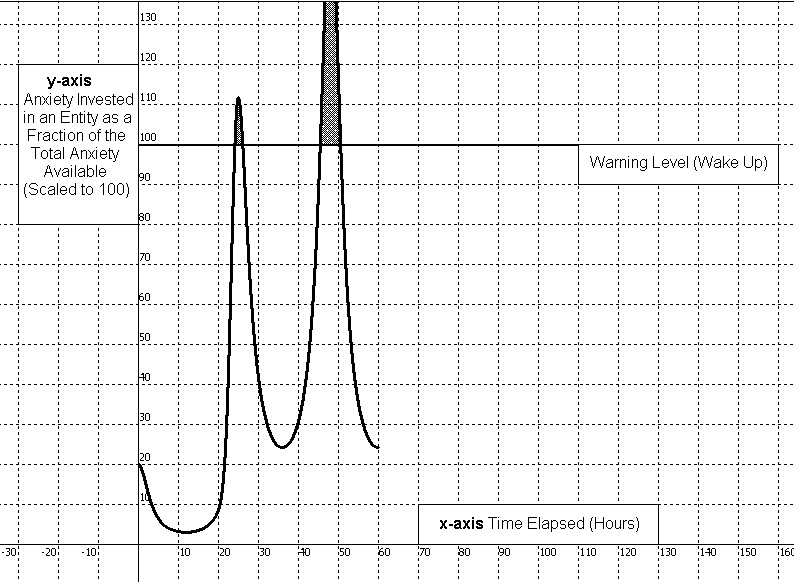
This graph models the tracking of an individual’s valuation of an entity for a purpose as a fraction of their total Emotional Units available to value entities over the course of two nights. On both nights, the entity’s valuation surges as more Anxiety is invested into the entity while they are asleep, and models the individual being woken up in a panic.
This resurgence of an entity’s value could also apply to things the individual is ignoring that would alternatively evoke pleasure felt with respect to a single goal instead of pain. If Negative Anxiety were at stake instead, then the dream might be a pleasant one, but it would still be capable of waking the individual up if it outstrips the individual’s Emotional Units available to value entities while they are asleep. This could happen if the individual had been adhering to a strict diet for a long time, but desired to indulge in something sweet. A dream about gorging themselves on a feast of cake, cookies, and other sweets, while pleasant, could wake them up with the intensity of the pleasure they are experiencing in the dream just as a nightmare might wake them up in terror.
Modeling Extinction of the Entity
For situations where the individual’s cognition that something exists becomes jeopardized, forms of the functions used in Affect Engineering that account for the possible extinction or erasure of an entity from an individual’s psyche may be more ideal. Some of these situations include neurodegenerative diseases such as Alzheimer’s Disease, Parkinson’s Disease, Huntington’s Disease and scenarios where the introduction of any neurotoxins (e.g., arsenic, and heavy metals such as lead, and mercury). Amnesia, or the act of simply forgetting that an entity was ever encountered in the first place.
These could be modeled by a coefficient variable alongside Existence in the base of the function that either signals that the entity exists to the individual (e.g., coefficient of +1), or signals that the individual’s cognition of the entity is extinct (e.g., coefficient of 0).
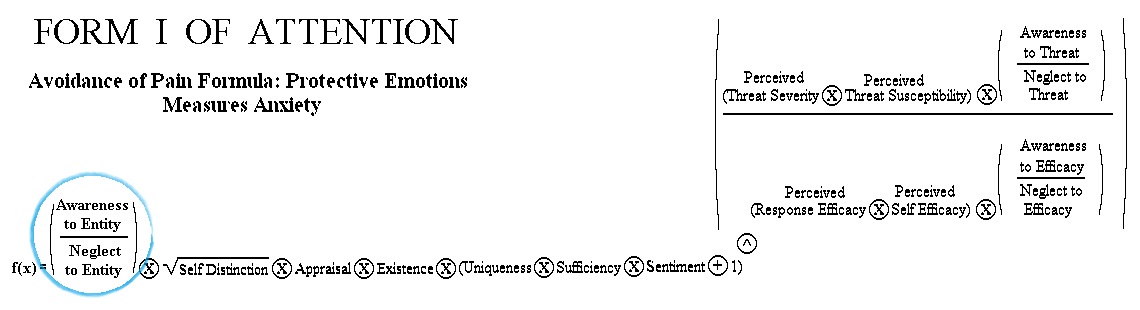
An entity that lingers in an individual’s unconscious for long enough might very well go extinct, or be subtly purged from acknowledgement through the severing of neural connections in a use it or lose it fashion to maintain efficiency. The brain, after all, possesses remarkable plasticity. As it follows, any approach to cataloging emotions would need to account for its complexity and adaptability.
All Articles in this Series
Article Two: On the Nature of Emotions: Reframing Anxiety as a Resource (Article 2 of 12)
Article Five: On the Nature of Emotions: Empathy in Affect Engineering (Article 5 of 12)