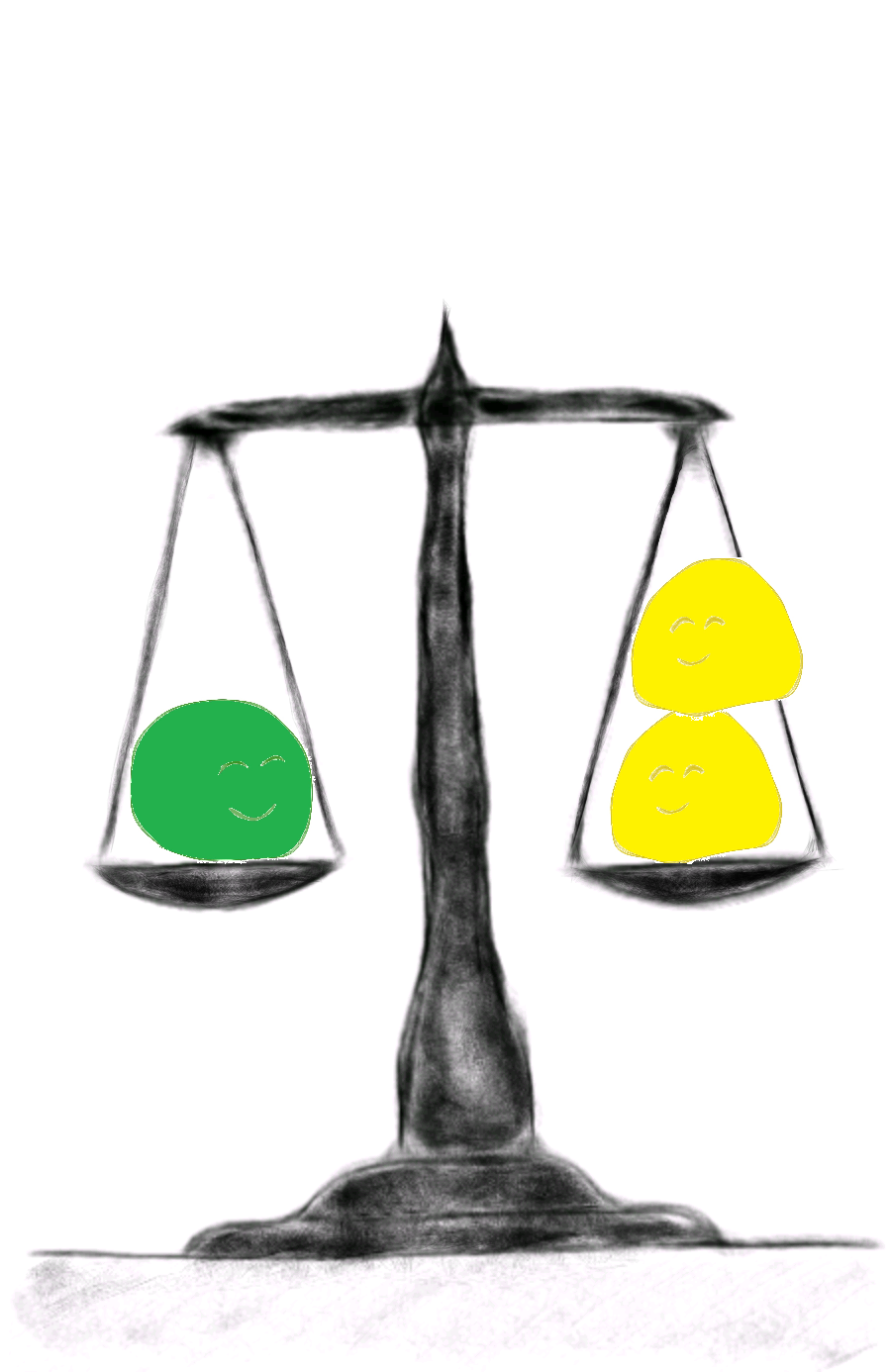
On the Nature of Emotions: Category II Emotions, the Inter-personal Emotions or the Four Degrees of Empathy

Category II Emotions: the Inter-personal Emotions or the Four Degrees of Empathy

Category II Emotions: the Inter-personal Emotions or the Four Degrees of Empathy

This article gives an overview of Category II Emotions (the Inter-personal Emotions or Four Degrees of Empathy) in Affect Engineering. It is the eighth article in a series of twelve designed for the layperson that explains the basics of Affect Engineering as a theory of emotions. Each article will begin with a list of questions that it will aim to address. The sections that follow will be in two parts each. The first part will be a short statement that answers each question as succinctly as possible. The second part will either be an explanation that goes into more detail where needed or explain some of the implications of the short answer.

*Note, this article contains some movie spoilers, albeit for older films.*

QUESTIONS

  1. What are the Category II Emotions and what distinguishes them from Category I and Category III Emotions?
  2. Why are there only four degrees of empathy in Affect Engineering if there are five pairs of Category II Emotions?
  3. Why does Affect Engineering bother to distinguish emotions that are experienced vicariously depending on whether or not one party has the ability to influence the outcome of another party’s situation?
  4. For what reasons might an individual intentionally alter their identification level with a target?

1) What are the Category II Emotions and what distinguishes them from Category I and Category III Emotions?

SHORT ANSWER

Category II Emotions in Affect Engineering concern instances where one party vicariously experiences the situation of another party but has no ability to influence the outcome (i.e., they are completely passive). Category II Emotions always involve empathy, and the presence of empathy distinguishes them from Category I Emotions. Additionally, Category II Emotions always have a party that is passively empathizing with the observed party, and the passivity of one party distinguishes them from Category III Emotions where the empathizing party can actively influence the outcome for the other’s situation.

IN DEPTH EXPLANATION

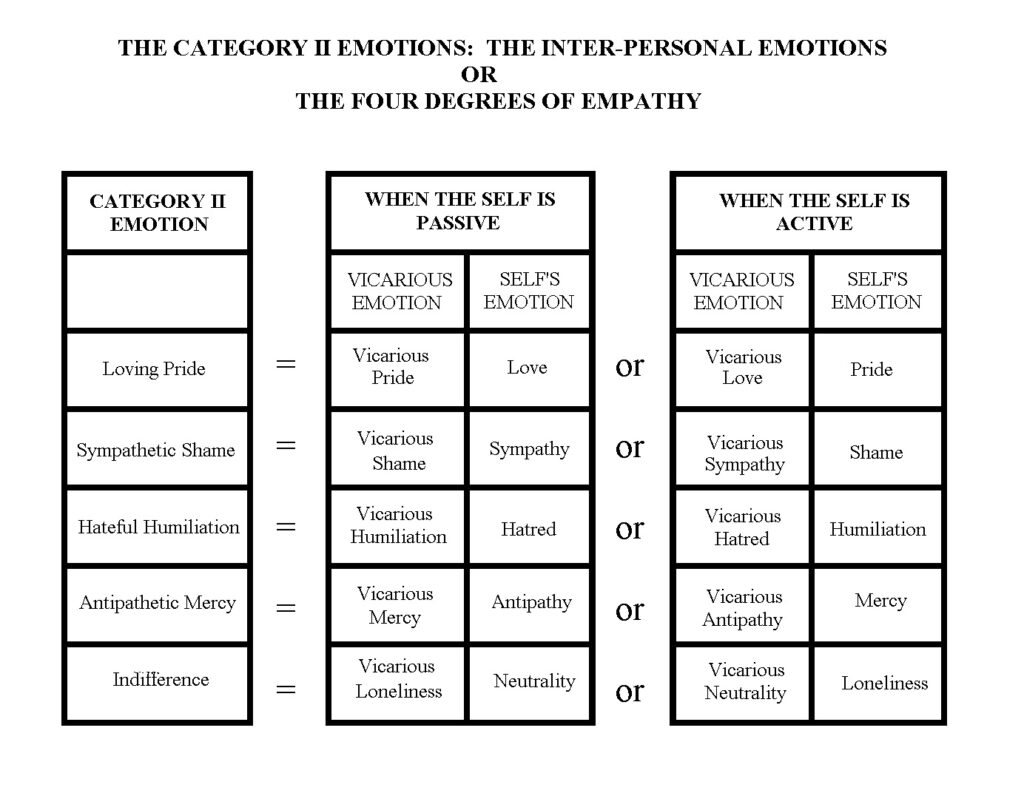
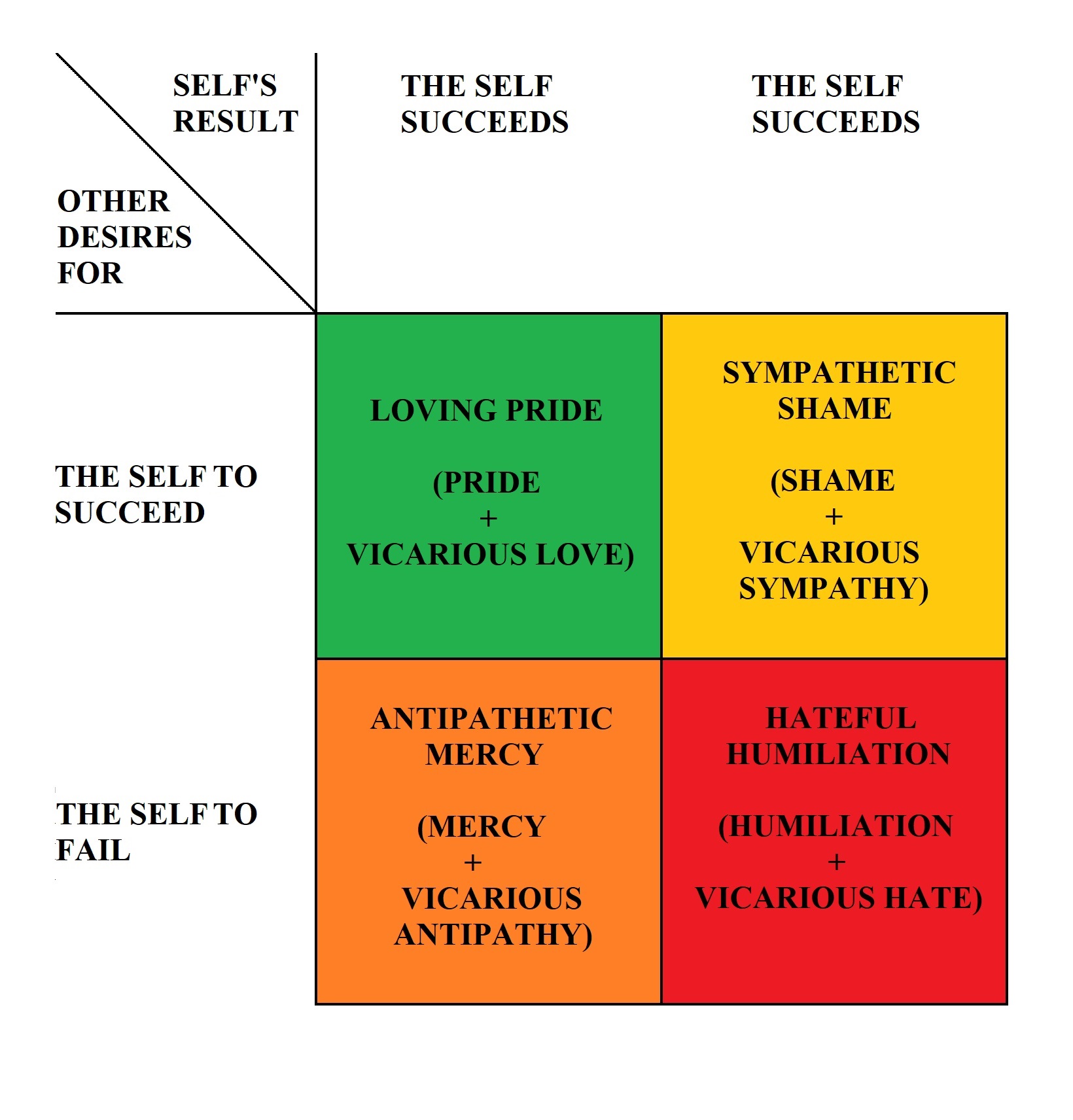
Category II Emotions are organized into two separate, but related, groups. Love, Sympathy, Hate, Antipathy, and Neutrality are felt by the passive party that is observing the active party. The passive party imagines themself as the target and desires to vicariously experience the target’s success (for Love and Sympathy), or their failure (for Hate and Antipathy), or neither (for Neutrality).

The other group, consisting of Pride, Shame, Humiliation, Mercy, and Loneliness, are construed in Affect Engineering as emotional responses arising in the target from awareness that their circumstances and the outcome are being empathized with in some manner by an observing party (for Pride, Shame, Humiliation, and Mercy), or not empathized with at all in the case of Loneliness.

Altogether, there are five pairs. Each pair may have one of two constructions depending on which party is passively observing and which party is actively attempting to influence the outcome for a scenario and a relevant purpose. For the following examples, the self will be assumed to be passively observing and empathizing with a targeted party that is actively attempting to achieve a purpose.

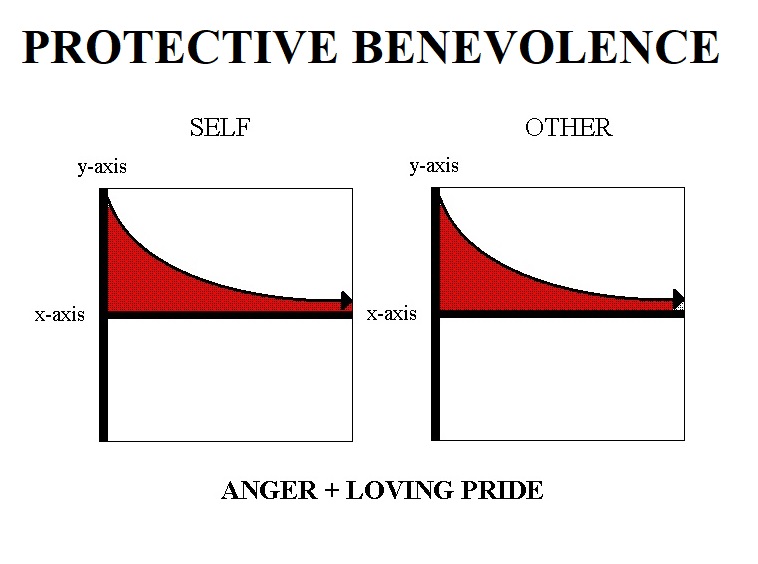
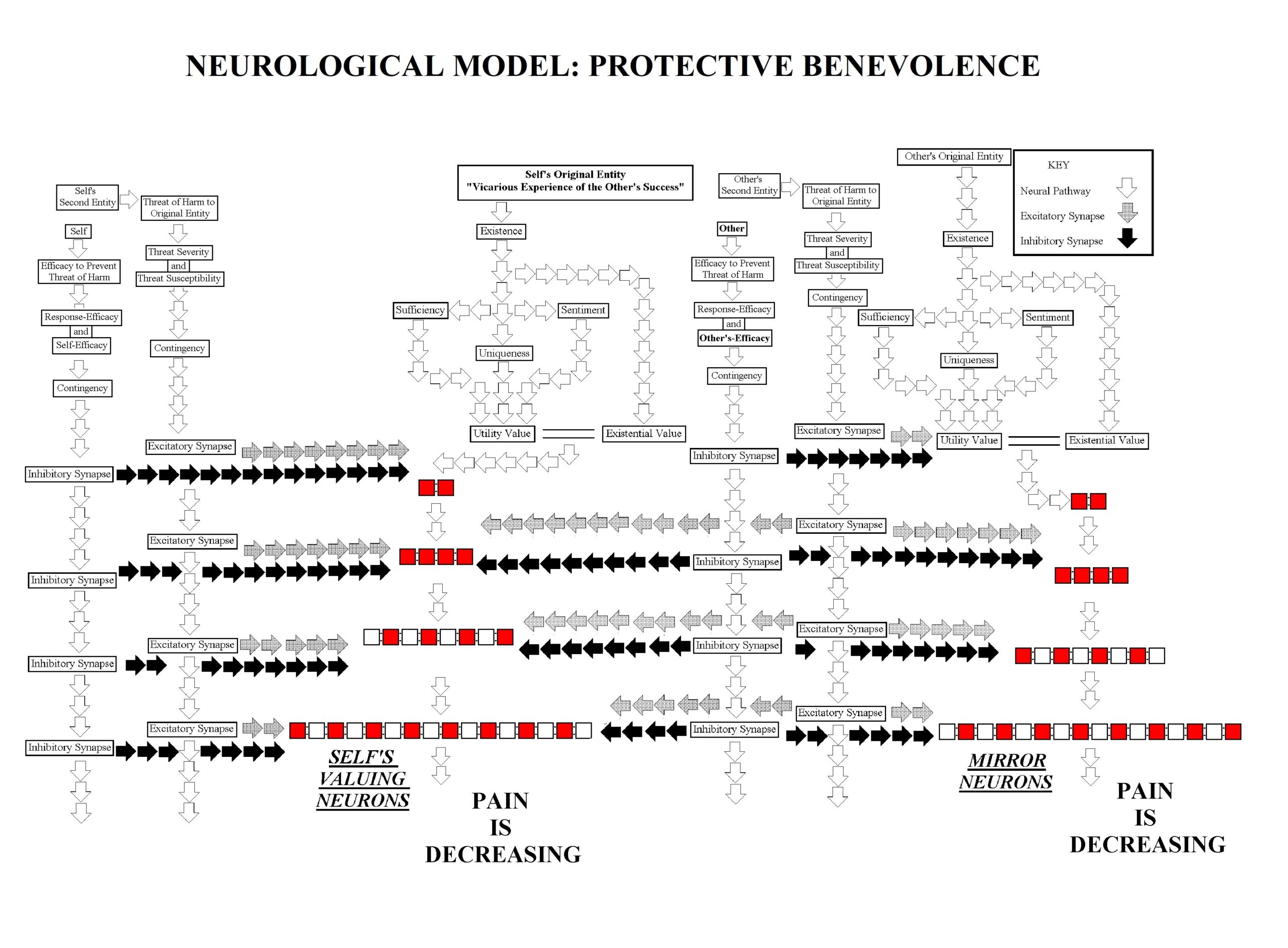
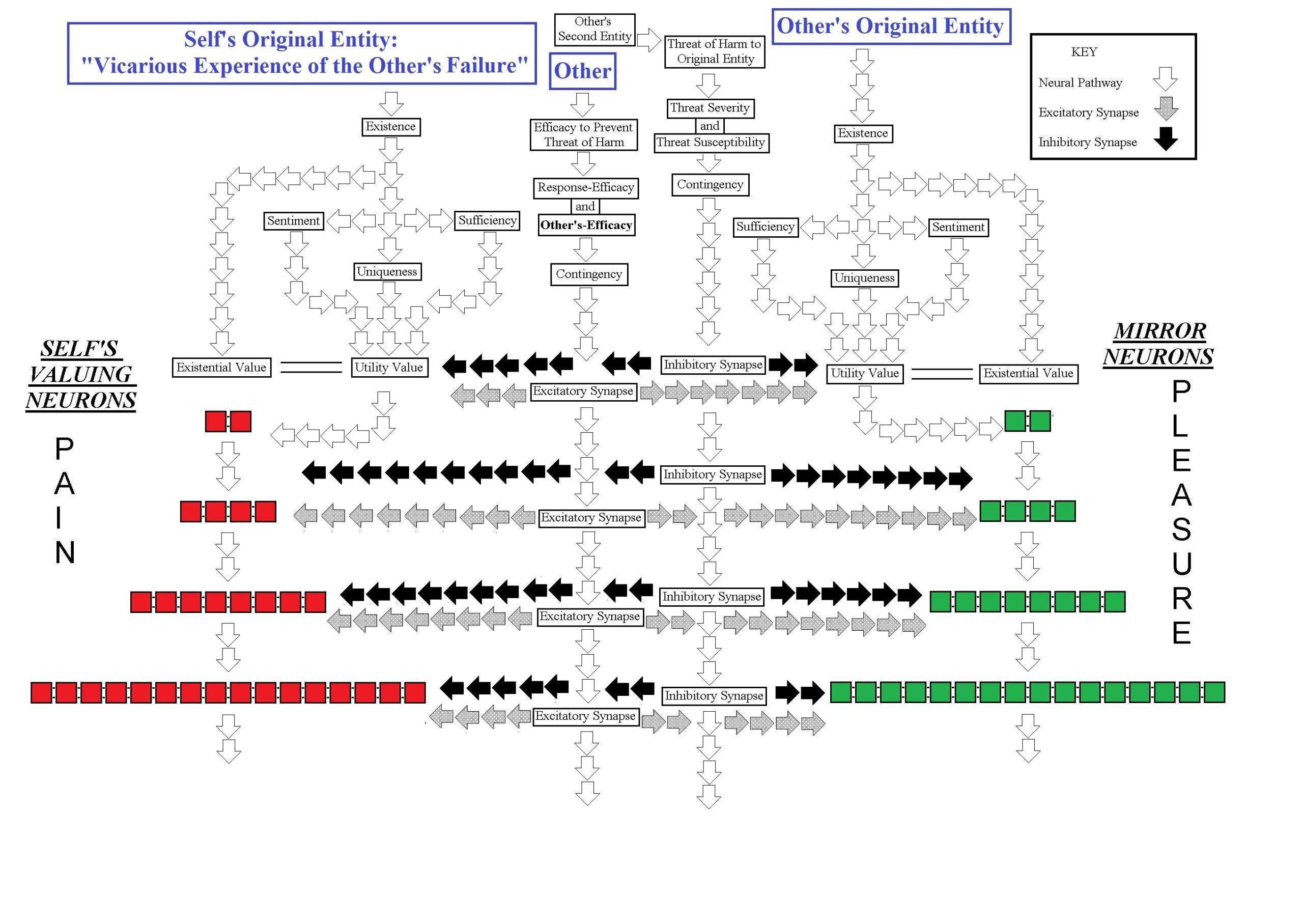
For the case of Loving Pride in Affect Engineering, the self would desire for the targeted party to succeed and subsequently, to vicariously experience their success. If the other party succeeds, then this would be classified as an instance of love in Affect Engineering. Love, in this context, is construed as a sense of satisfaction at having acknowledged and vicariously experienced another’s success and good fortune; it is not love in the romantic sense, which often entails additional objectives. Pride, a sense of accomplishment arising when a goal has been achieved and also recognized and approved by others, would be modeled to occur in conjunction with this from the targeted party; pride would arise from the awareness by the targeted party that the self desires for them to succeed and they are being admired for it because they did succeed. Pride, in this context, is understood as an emotional response in the loved party.

Moreover, because the self is not the loved party (the self is the one doing the loving) and they are only passively observing, they would not be modeled to feel pride themselves directly. The targeted party would feel pride if they are aware that the self or any other empathizing party wants them to succeed and they do succeed. The self, at the very least, knows that they want the targeted party to succeed, and so the self would be modeled to feel vicarious pride along with love in Affect Engineering.

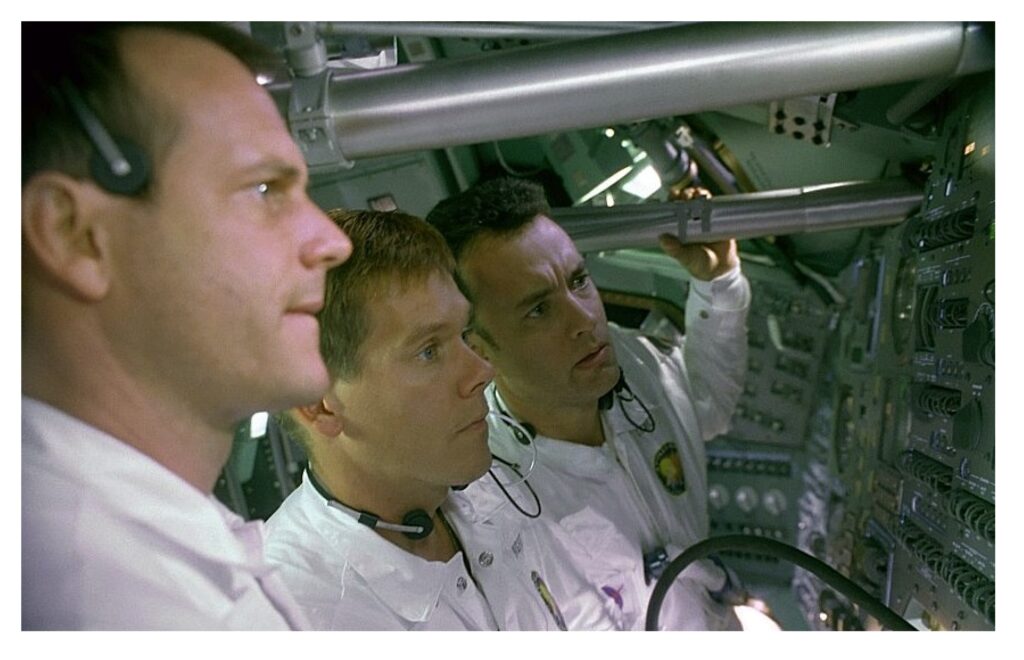
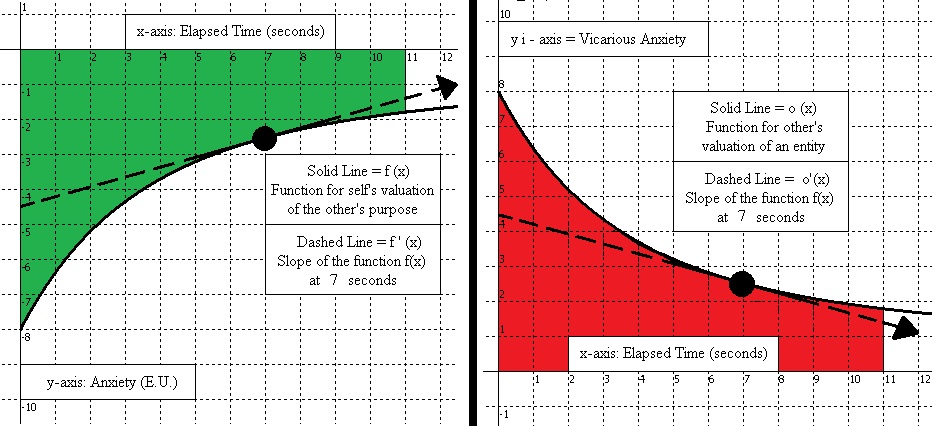
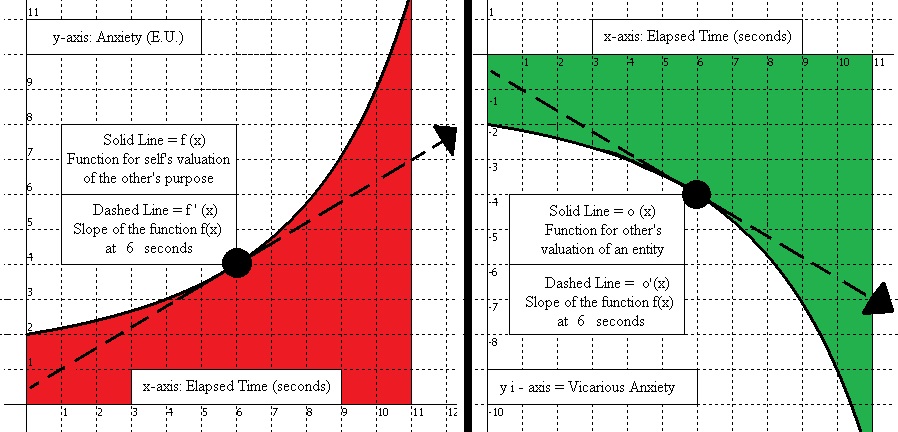
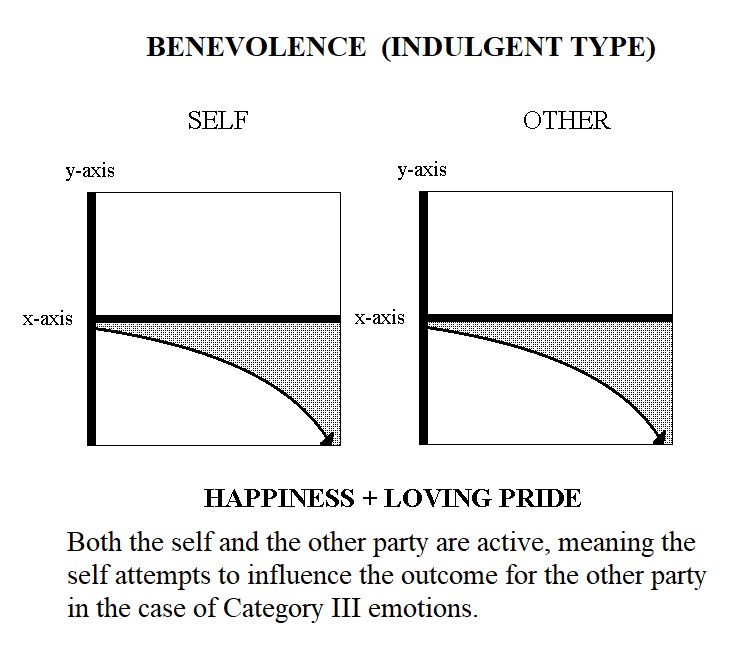
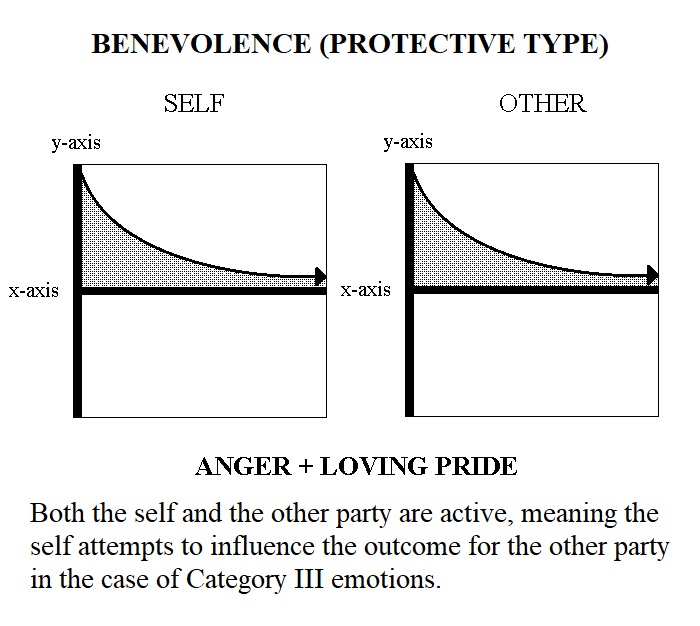
  • In the Love and Vicarious Pride variant of Loving Pride, an observer, (e.g., the self) desires for the targeted party to achieve their goal, and they succeed. For the targeted party, the goal might be something as simple as a desire to safely return home, as was the case for the crew of astronauts in the movie Apollo 13 (1995), (link to Roger Ebert’s review of Apollo 13 with some background for those unfamiliar with the story). Another example would be the pets Shadow, Sassy, and Chance in the Disney movie Homeward Bound: The Incredible Journey (1993) (link to the Homeward Bound Disney movie trailer). For individuals watching and wanting the targeted parties to succeed, these would be modeled as instances of Love in Affect Engineering. The self wants the target party to succeed and the targeted party does succeed. Both movies have happy endings, given that they are mentioned in this group of Category II Emotions, and take a fairly direct approach in the sense that viewers are expected to want these characters to succeed.
  • The targeted parties, if they were aware that the self were observing them, would feel pride at the acknowledgement that the self wanted them to succeed, in this case by safely returning home. Because these are movies filmed beforehand, this is not technically possible, but it can be simulated with other characters and family members in the story that want them to succeed. The self can then more easily imagine being in the position of the characters feeling loved for safely returning home. The self would feel vicarious pride, imagining themself as the targeted party feeling pride for safely returning home, if the supporting characters are likable enough that audience members can also identify with them.
  • The hero, if they were aware that they were being empathized, would be modeled to feel Vicarious Love, imagining themself as the self or another spectator wanting them to succeed. If a story is well written, then whoever is waiting for the hero to return home would ideally be someone that an audience member or viewer can easily identify with in order to be more effective (e.g., family members of the astronauts Jim Lovell, Fred Haise, and Jack Swigert, or the three children Peter, Jamie, and Hope who the pets identify as their owners in Homeward Bound).

An example of Loving Pride (e.g., Love and Vicarious Pride variant) felt by the audience. Apollo 13 (1995) with Jim Lovell (portrayed by Tom Hanks), Fred Haise (portrayed by Bill Paxton) and Jack Swigert (portrayed by Kevin Bacon).

An example of Loving Pride (e.g., Love and Vicarious Pride variant) felt by the audience. Chance, Shadow, and Sassy from the movie Homeward Bound: The Incredible Journey (1993).

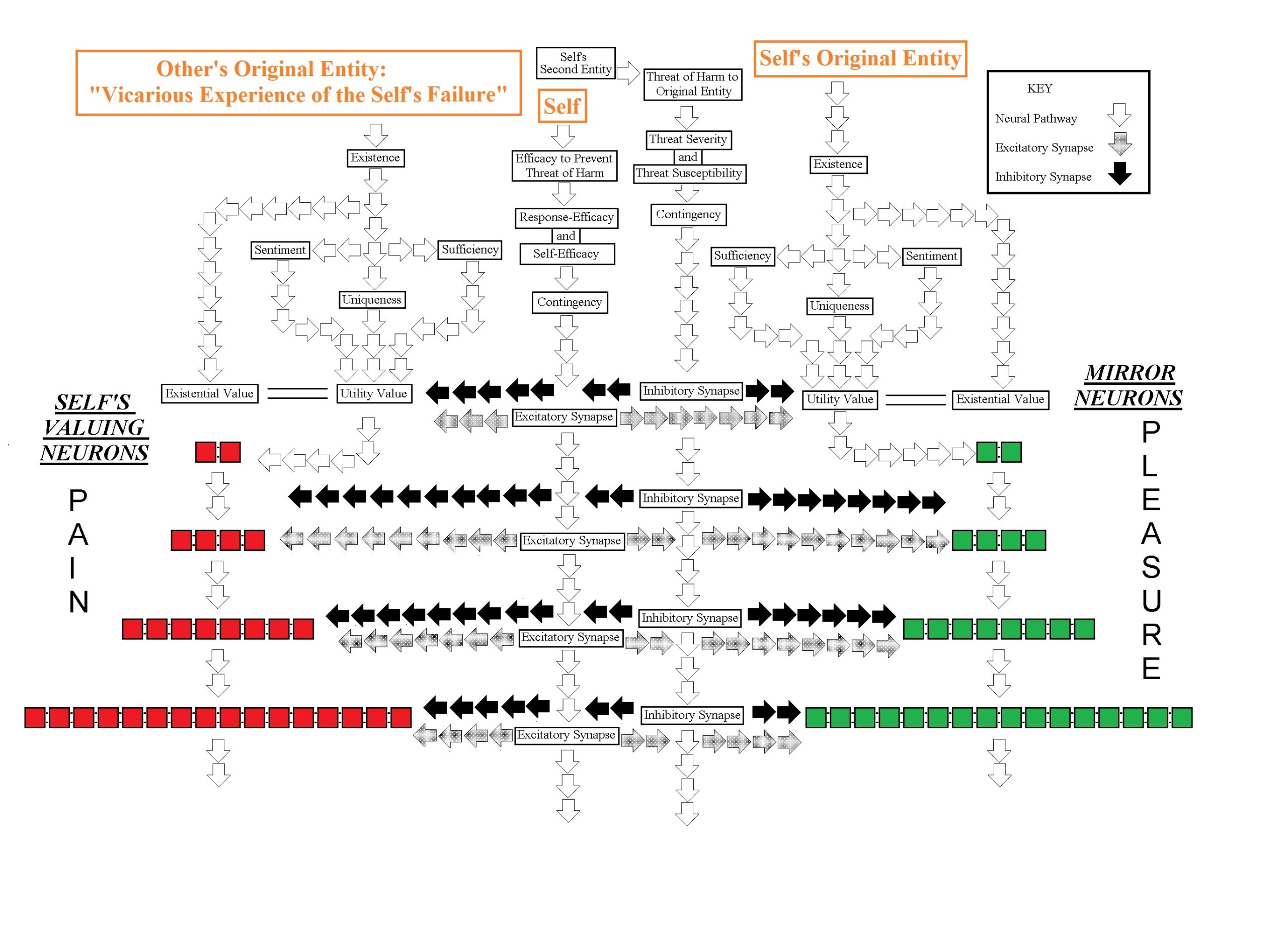
For each party (i.e., the self and the other), one of the two emotions would be felt as a vicarious one while the other emotion would be felt for the individual themself. If the self were instead the active party in the story, then the emotions felt would be flipped with the self feeling Pride and Vicarious Love and the other party feeling Love and Vicarious Pride. As each was a movie filmed beforehand, the closest scenario that this could be the case would be if the real life astronauts that the Apollo 13 movie was based on watched the movie version of their ordeal with their characters being portrayed by famous actors (e.g., Tom Hanks, Bill Paxton, Kevin Bacon). Not surprisingly, after watching the film, actual Apollo 13 captain Jim Lovell said in a statement in the Independent, “More than 50 years after the mission, the film put me right back in the captain’s seat.”

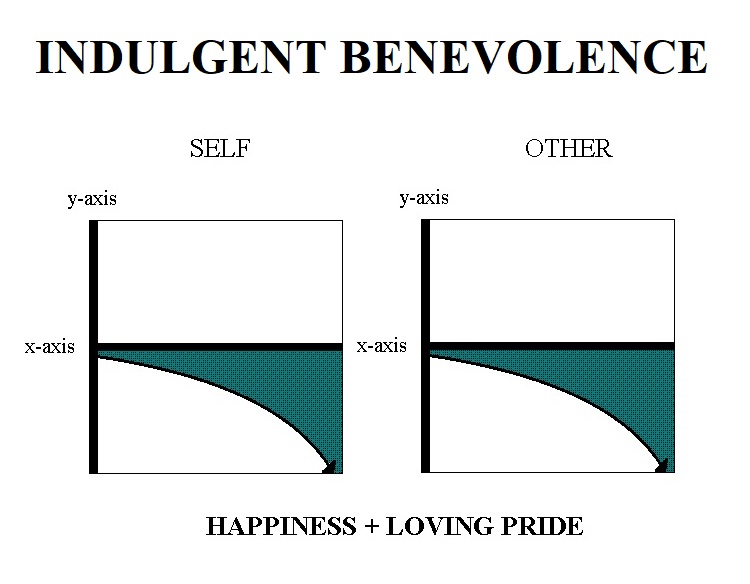
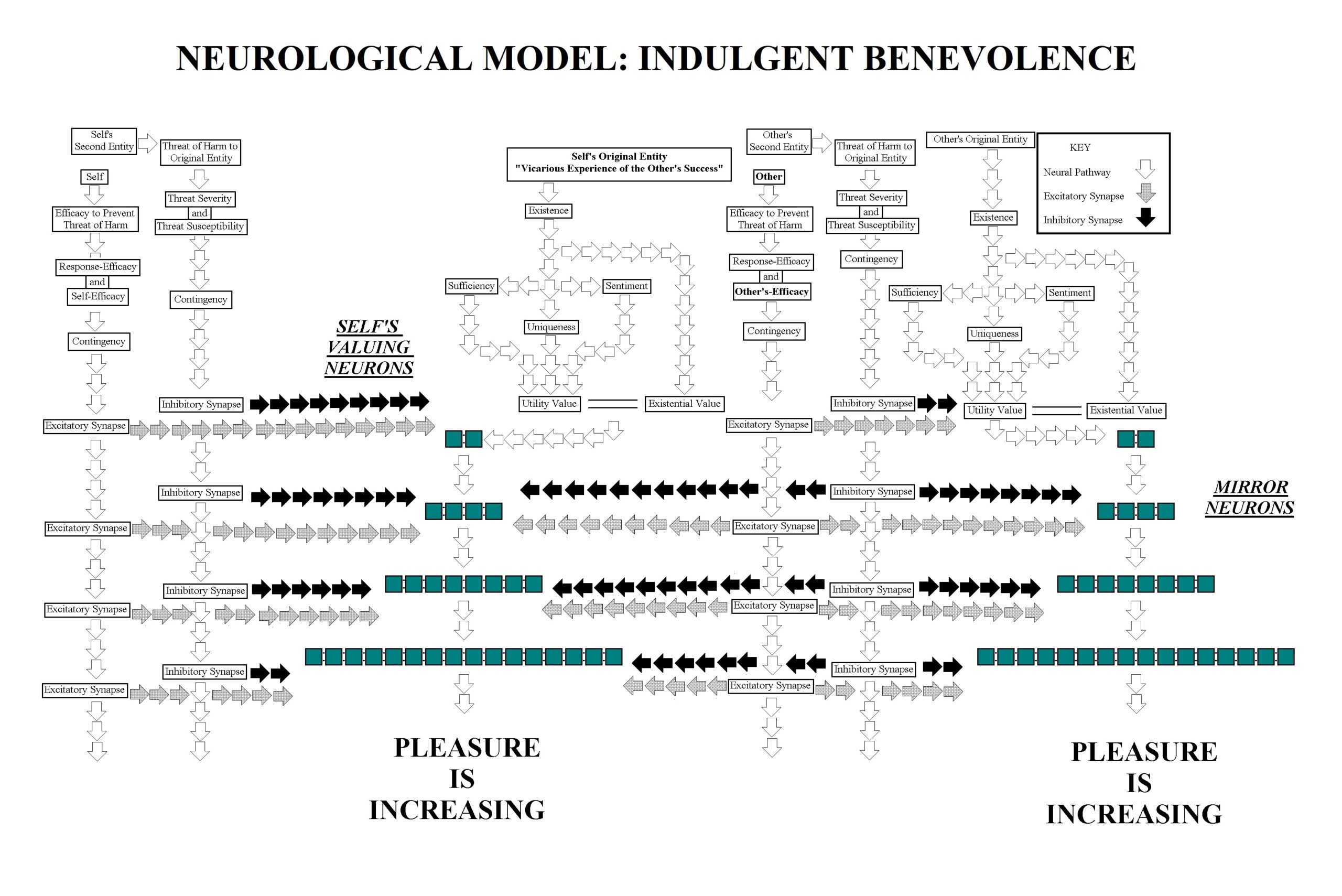
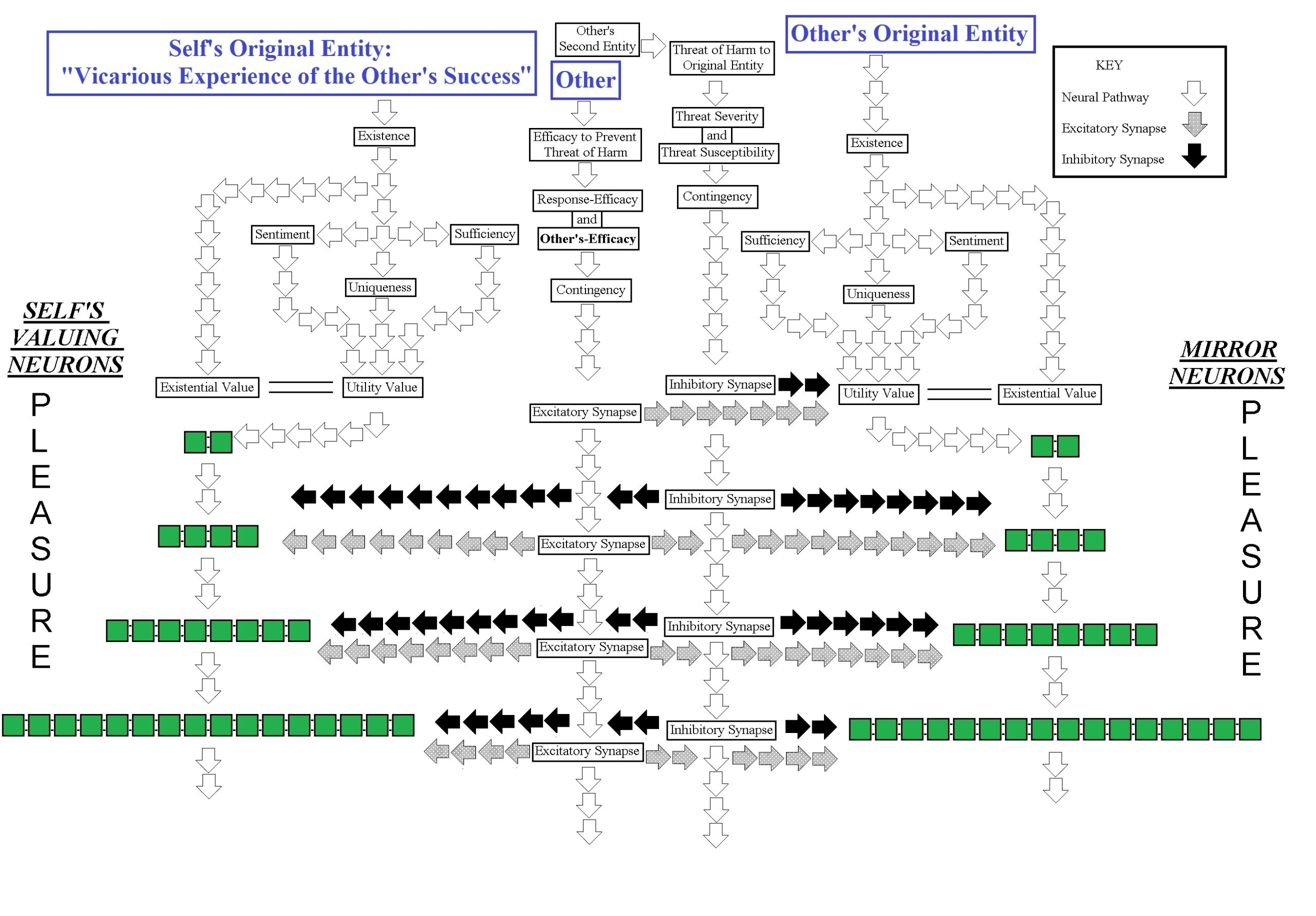
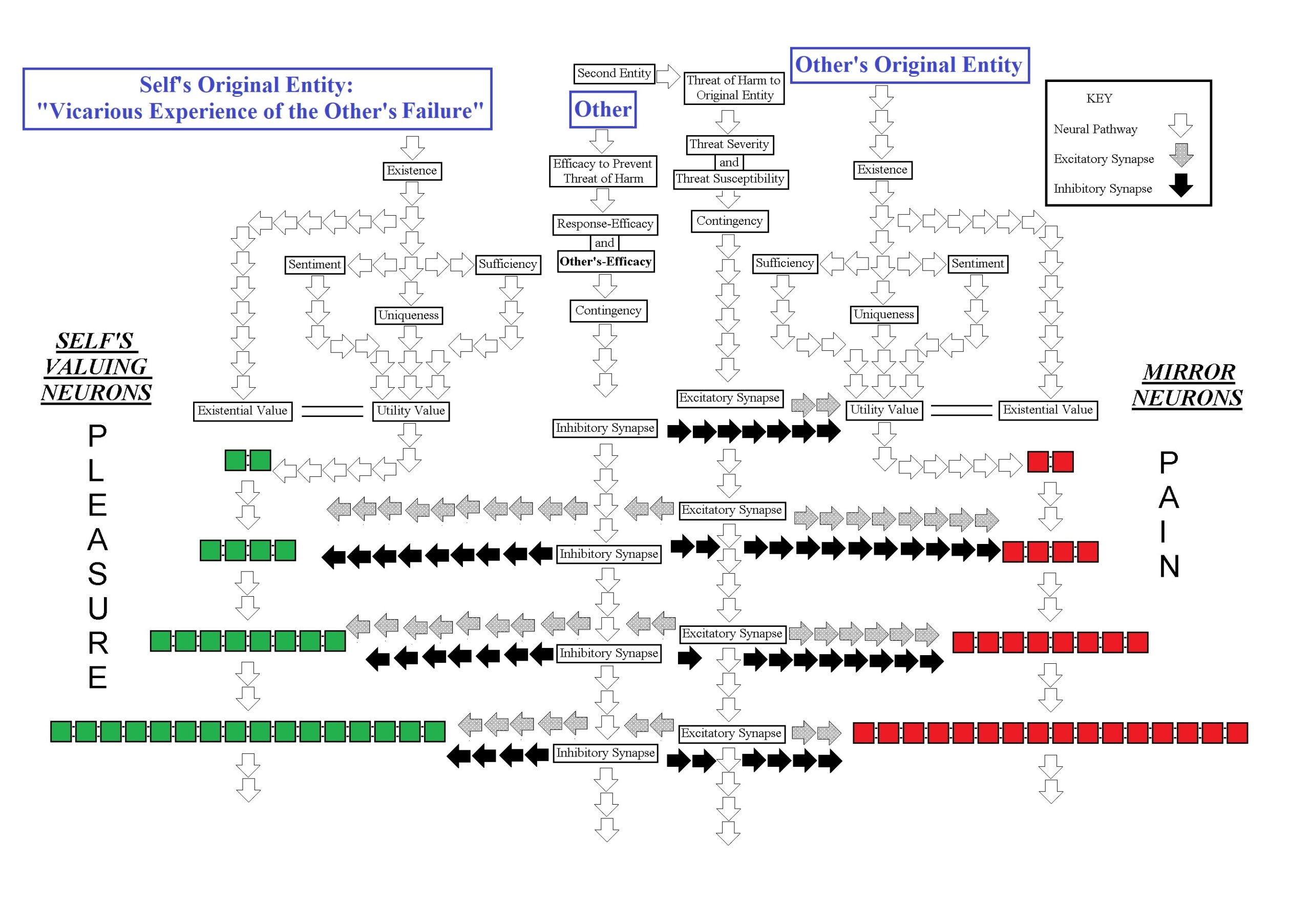
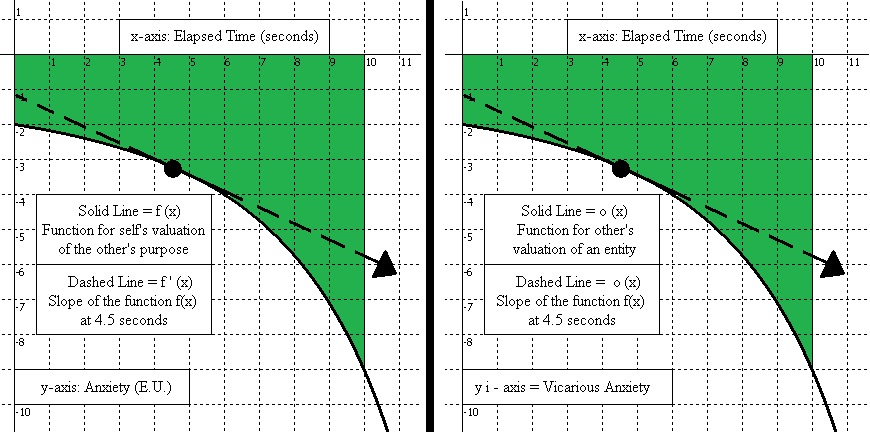
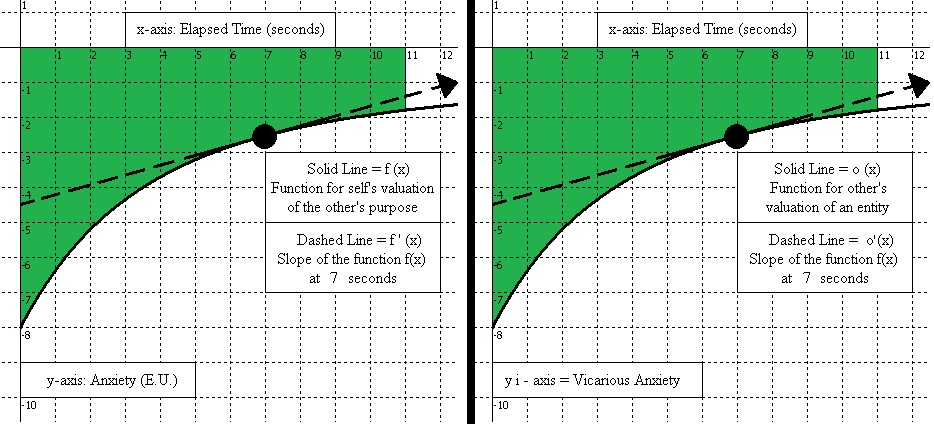
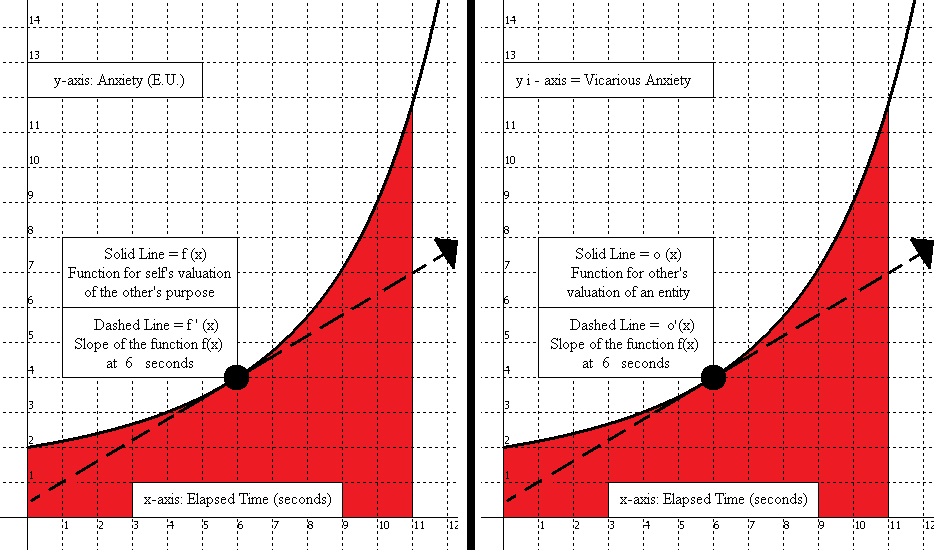
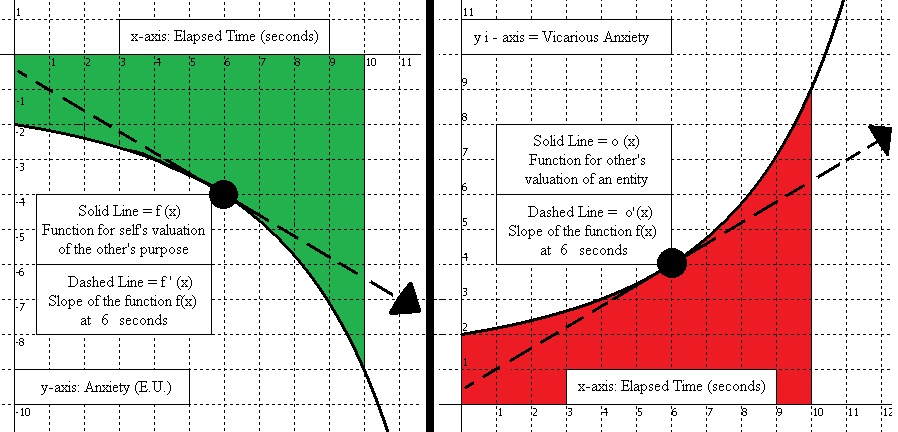
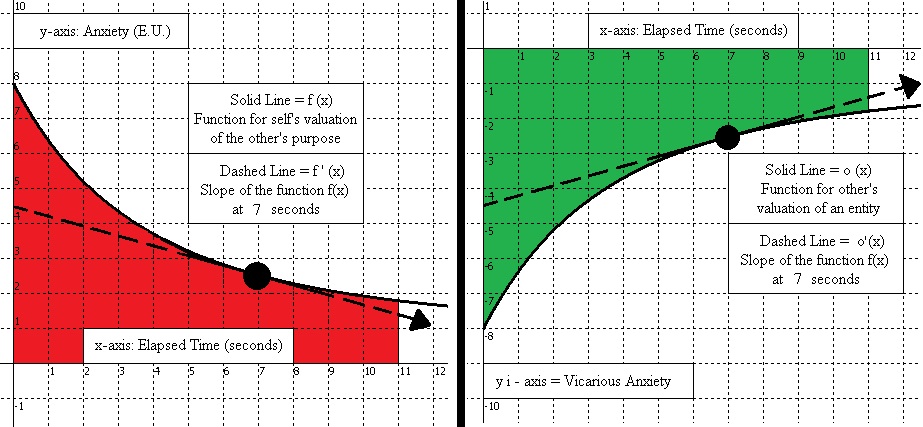
Image 3a (below) Sample neural model for Loving Pride where the self is the passive party and feels Love and Vicarious Pride.

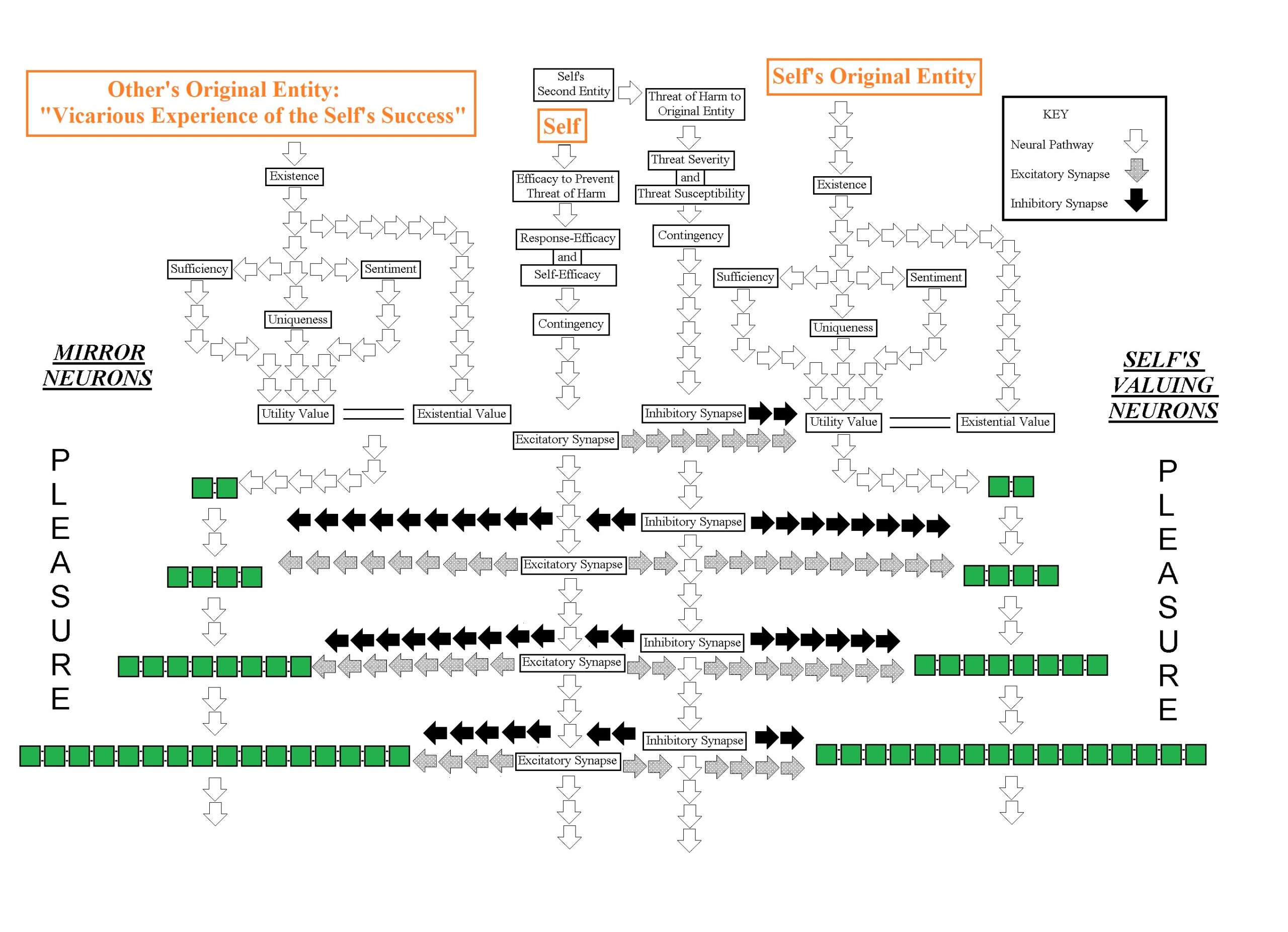
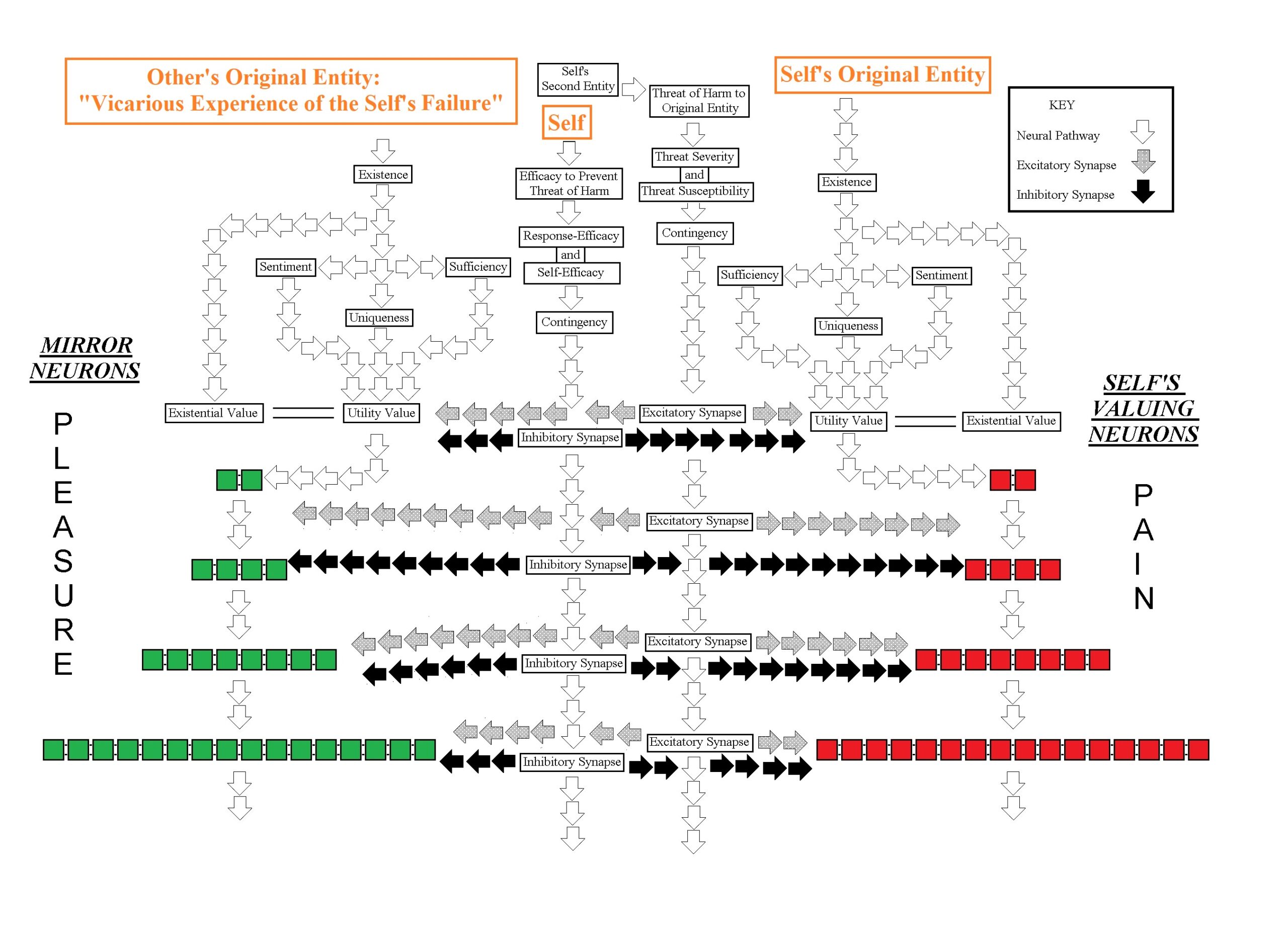
Image 3b (below) Sample neural model for Loving Pride where the self is the active party and feels Pride and Vicarious Love.

The passive party vs. active party dynamic applies to all of the other Category II Emotions in Affect Engineering as well. The passive party will either feel Love and Vicarious Pride, Sympathy and Vicarious Shame, Hate and Vicarious Humiliation, Antipathy and Vicarious Mercy, or Neutrality and Vicarious Loneliness. The active party will either feel Pride and Vicarious Love, Shame and Vicarious Sympathy, Humiliation and Vicarious Hate, Mercy and Vicarious Antipathy, or Loneliness and Vicarious Neutrality.

In each case, the 1:1:1:1 Ratio is still maintained, but becomes a 2:2:2:2 for all parties (for more on the 1:1:1:1 Ratio, see Article two, question number four in this series Reframing Anxiety as a Resource). The self, for example, imagines themself to be another person while vicariously experiencing the other’s situation, so the ratio is upheld.

It should not come as a surprise that the other pairs of Category II Emotions are also prevalent in popular cinema, books, or other works of art that seek to sway an audience one way or another, often times for artistic or rhetorical effect. In more benign cases, being able to readily identify when and how this is occurring can help give an audience a greater appreciation for the work and effort that went into crafting a message or story, or to critique the narrative if it fell short in some regard. In more malignant cases, it can afford audiences some inoculation against being manipulated via bias or prejudice by being better able to recognize it.

For the case of Sympathetic Shame, if the self were the passive party observing another and wanted a targeted other to succeed, but they failed, then the self would be modeled to feel Sympathy in Affect Engineering. Correspondingly, the targeted party, if they were aware that they were being empathized with, would feel Shame; shame, in this case, is more a sense of disappointment at having failed to achieve a goal that one desired to achieve coupled with the acknowledgment that others around expected or wanted the individual to achieve it. The self, in turn, would experience this sense of disappointment or Shame secondhand and vicariously in Affect Engineering’s framework, even if the self were the only one feeling Sympathy for the targeted party’s plight at having failed.

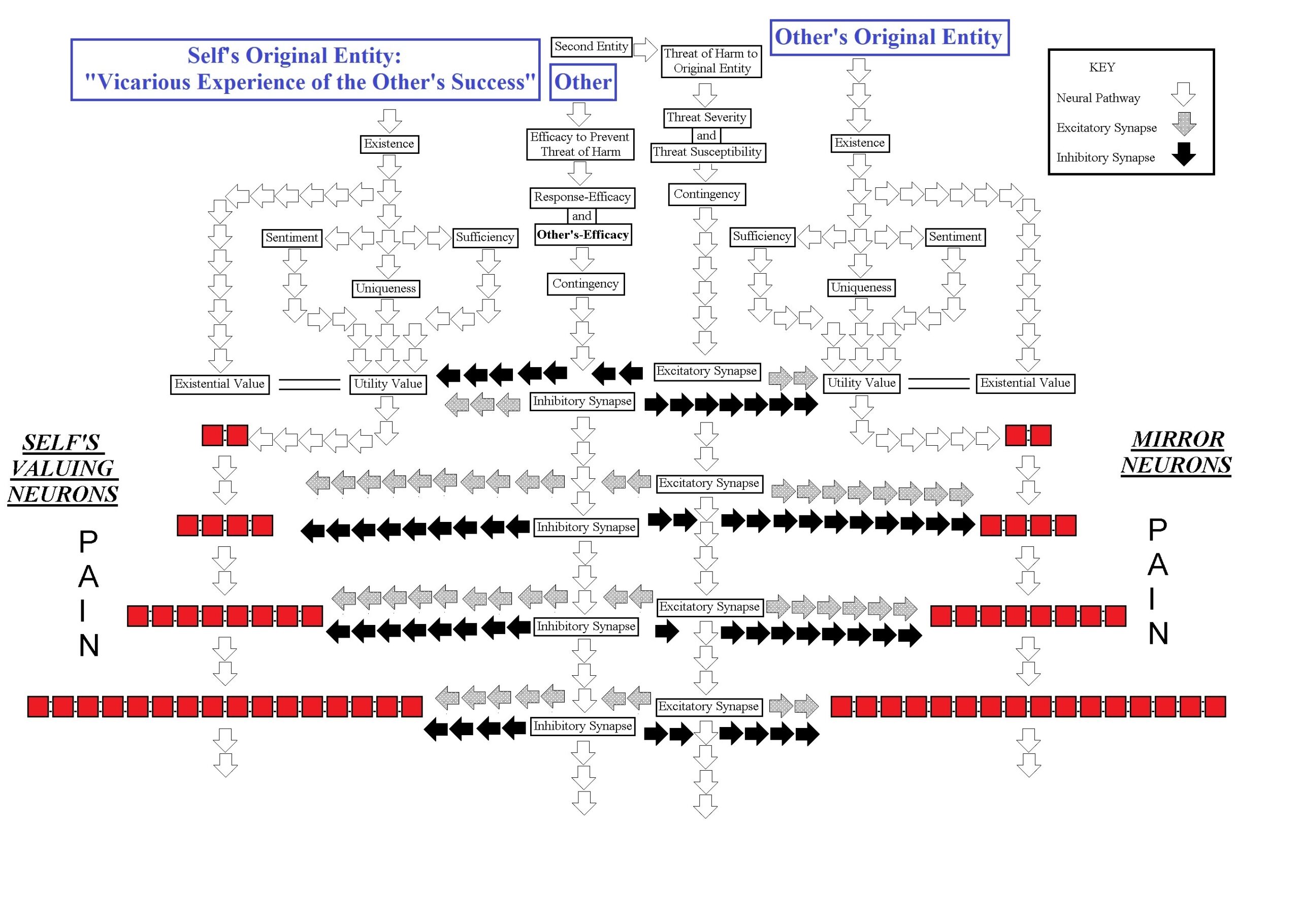
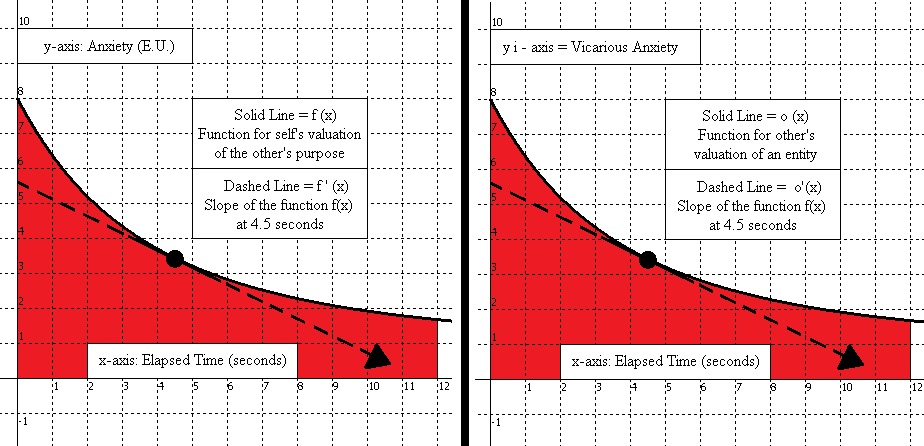
Image 4a (below) Sample neural model for Sympathetic Shame, where the self is the passive party and feels Sympathy and Vicarious Shame.

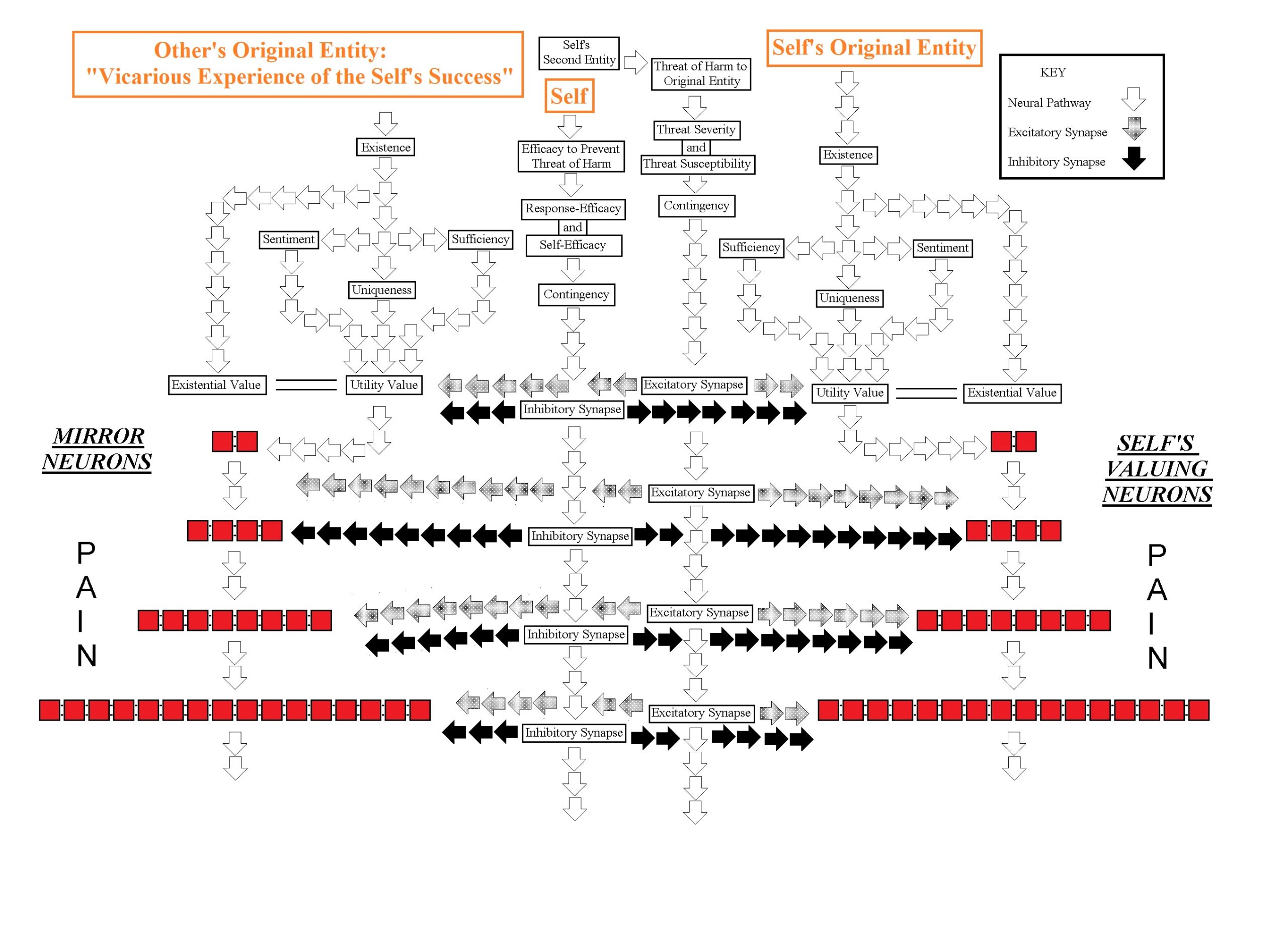
Image 4b (below) Sample neural model for Sympathetic Shame where the self is the active party and feels Shame and Vicarious Sympathy.

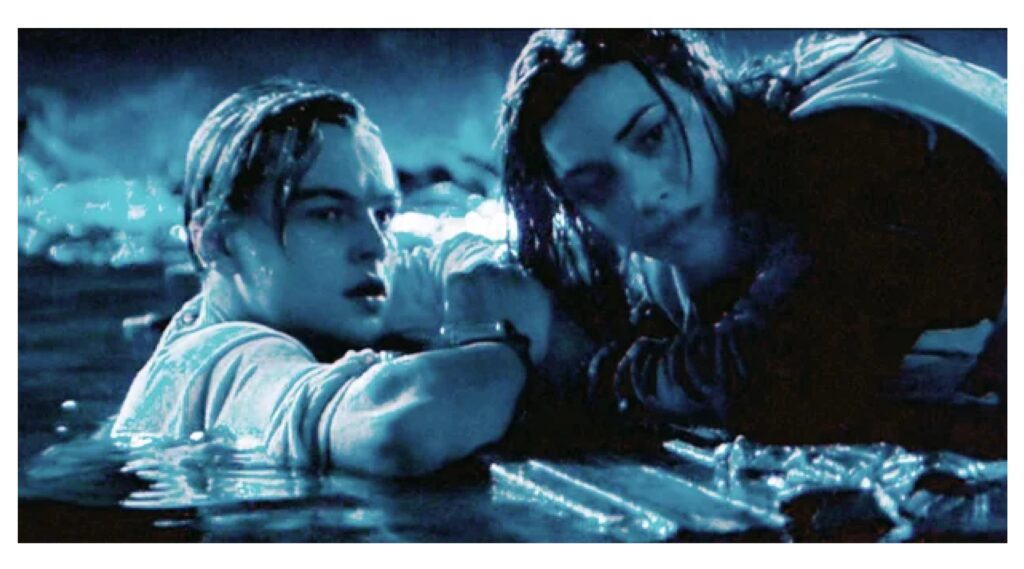
  • In the Sympathy and Vicarious Shame variant of Sympathetic Shame, the self wants the targeted party (e.g., hero, protagonist, etc.) to achieve their goal, but the hero is unsuccessful in their endeavors. The character of Jack Dawson in Jame’s Cameron’s movie Titanic is a good example of this, as most audience members who watched the film wanted him to survive. This would be an instance of Sympathy in Affect Engineering (i.e., the self wants the target to succeed, but the they fail). In this particular case, the target of empathy, Jack, made it almost all the way to the finish line, but unfortunately fell short just before rescuers came and saved Rose. Jack’s fate, by many, is viewed as undeserved and unfair given all the other things he survived through to get there.
  • The targeted party would be modeled to feel Shame at the acknowledgement that the self or anyone empathizing with their situation, wanted them to succeed, but they were unable to succeed, and this leads to disappointment in those witnessing it.
  • The self would be modeled to feel vicarious Shame, imagining themself as the hero feeling Shame at having failed to achieve their objective and everyone else wanted them to, even if the self is the only one feeling sympathy for their failure.
  • The hero or protagonist in this case, feels vicarious Sympathy, imagining themself as the self or another spectator wanting them to succeed but being compelled to witness their failure and become disappointed.

An example of Sympathetic Shame (e.g., Sympathy and Vicarious Shame variant) felt by the audience. Jack and Rose on the floating piece of wood from the movie Titanic (1997)

The above two Category II Emotions of Loving Pride and Sympathetic Shame are often used in narratives where an author, politician, content creator, artist, or marketer to name a few fields, wants to align the audience with a particular group or ideals, such as the protagonist, the hero, or whatever values they espouse.

In contrast, on the other side of the spectrum are Hate with Humiliation and Antipathy with Mercy. These Category II Emotions are generally reserved for targeted parties that the creator of a narrative desires to be viewed as antagonists, villains, or in politics, any person or group that one may seek to demonize or suggest that their values are less than wholesome.

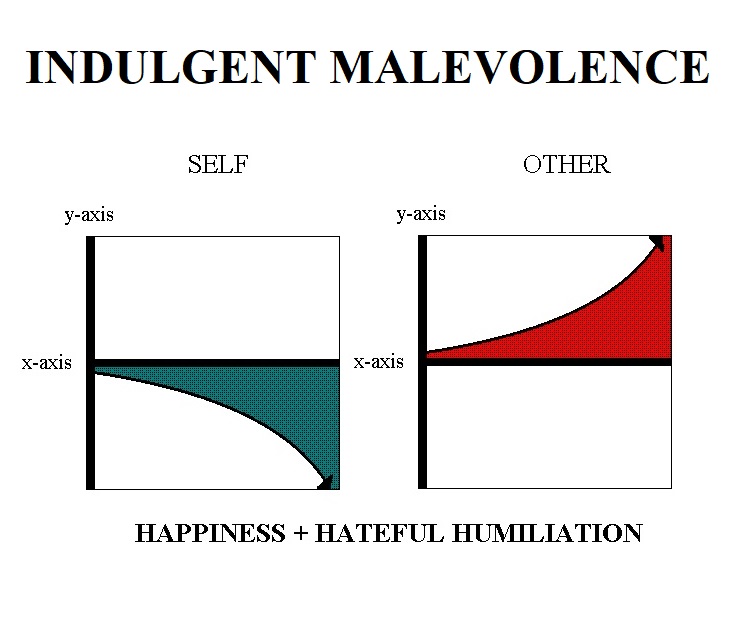
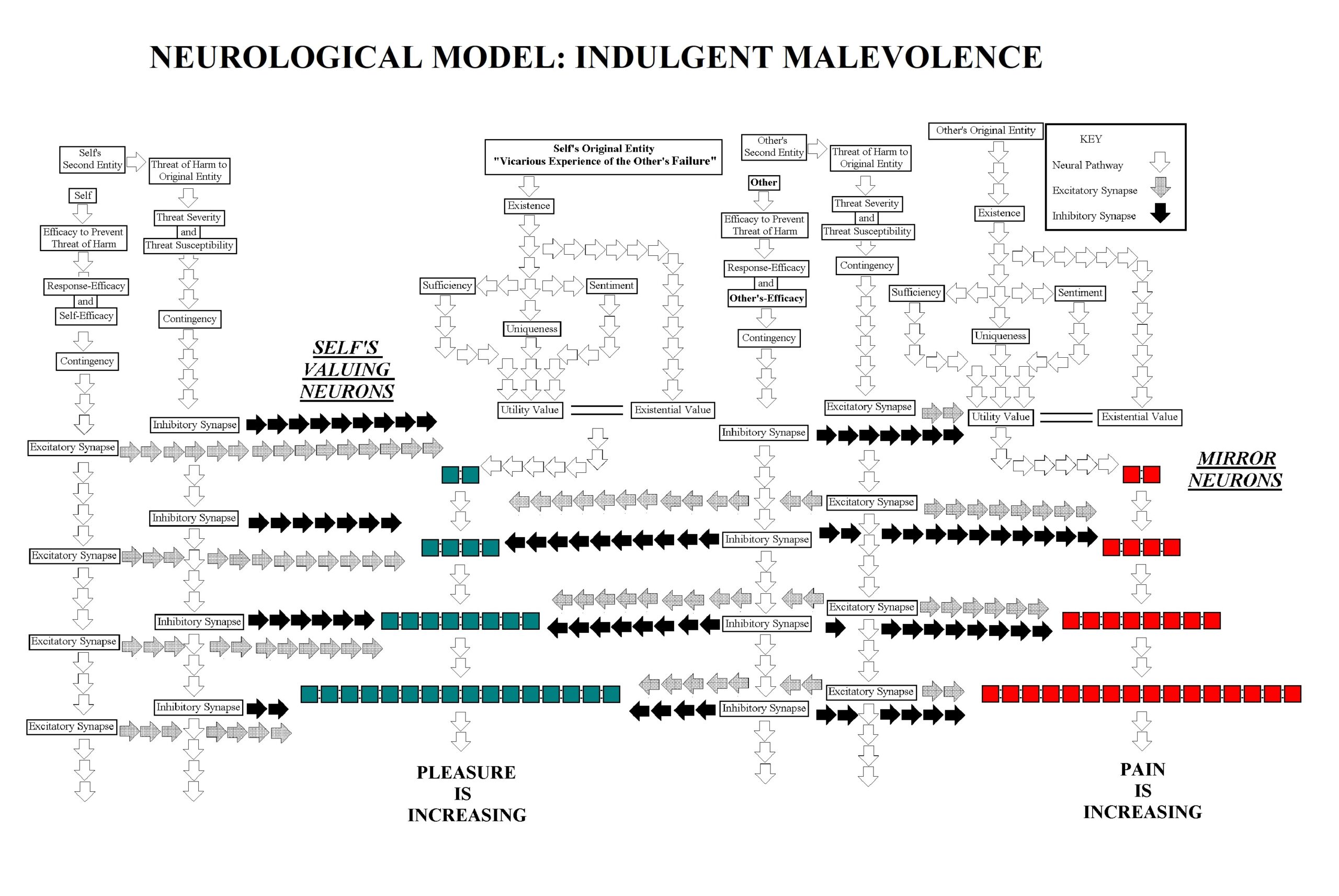
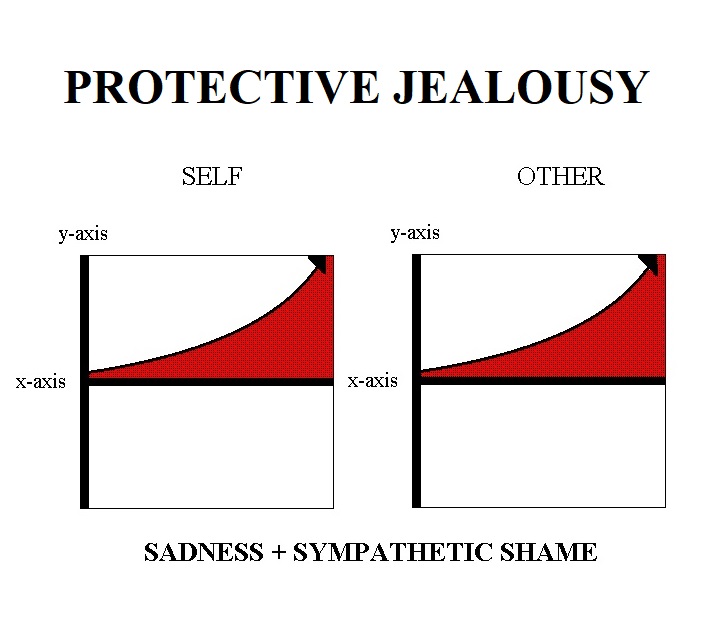
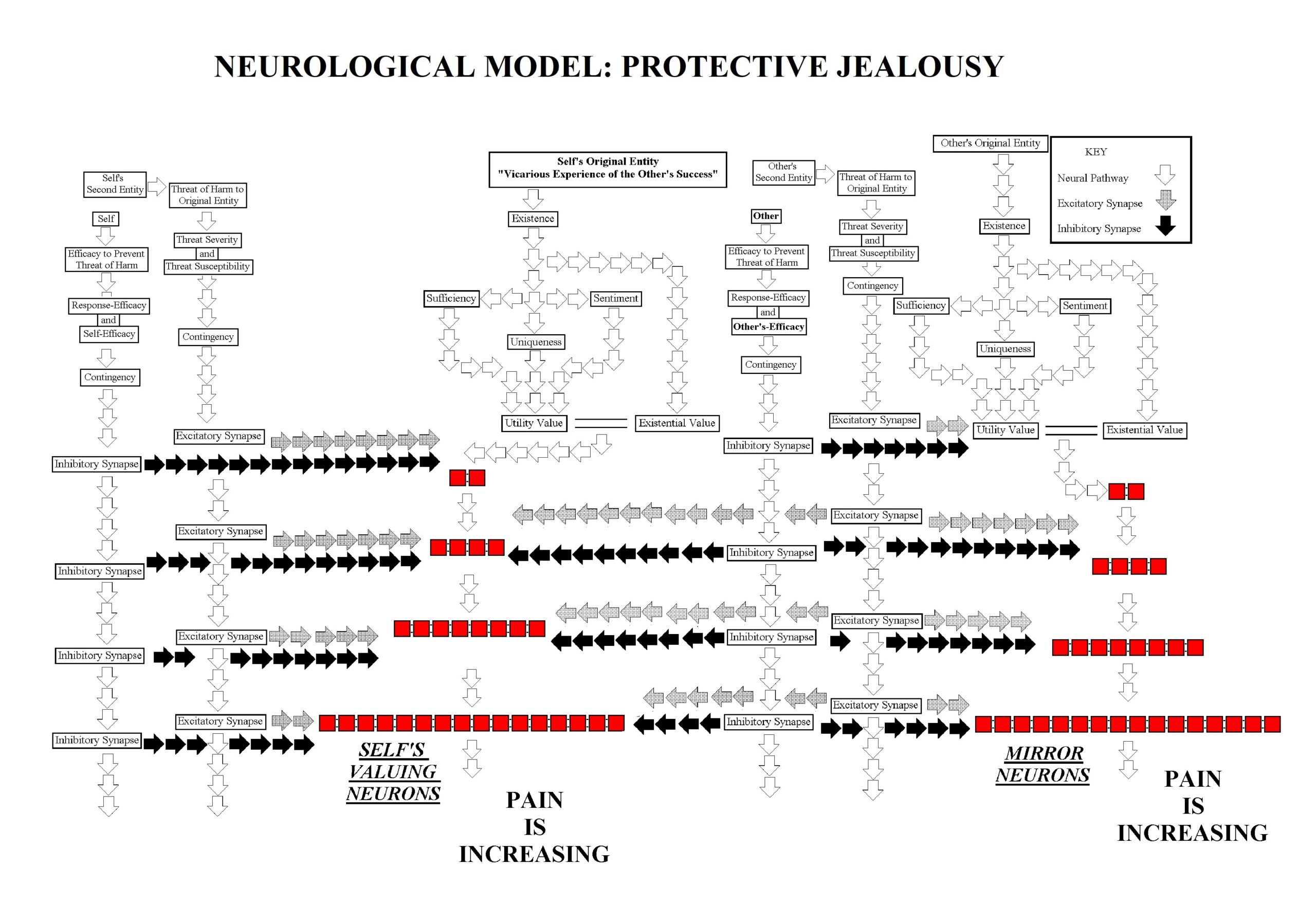
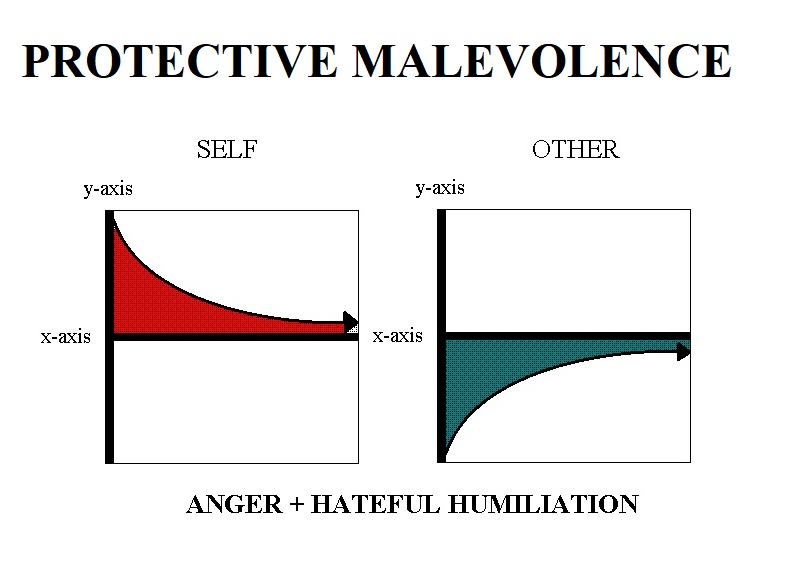
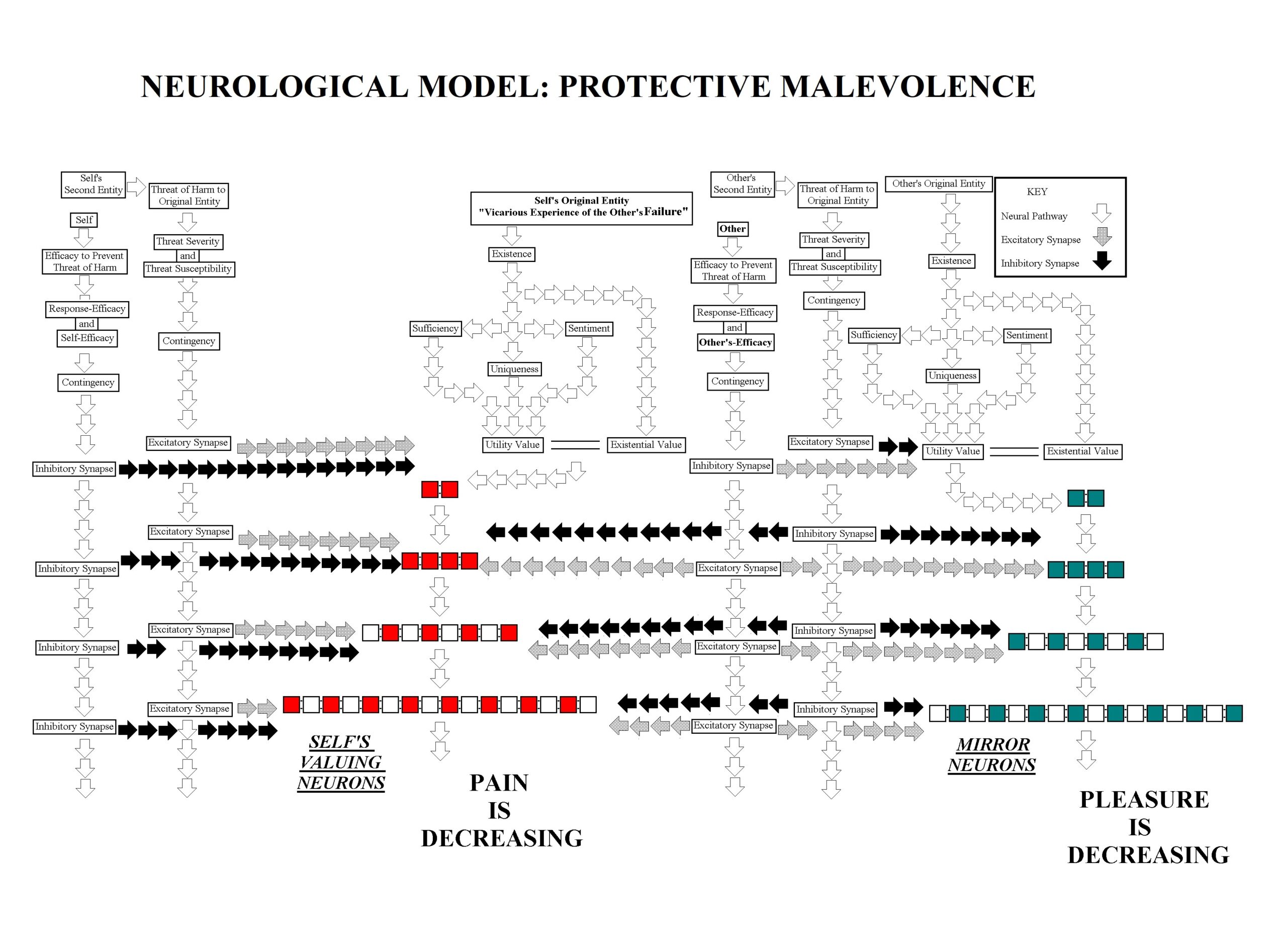
If the self is passively observing a target party (e.g., a villain), wants the villain to fail at their objective, and the target party fails, then the self would be modeled to feel Hate in Affect Engineering, that is to say, delight at the failure of the other. Correspondingly, the target party or villain in this case, would feel Humiliation upon acknowledging that the self or other empathizing parties wanted them to fail at their objective and they did fail. The sense of humiliation here arises from the target being aware that observers disapprove of their objective and are celebrating upon their failure.

Meanwhile, the self, passively observing in this example, would experience the target’s sense of humiliation secondhand and vicariously.

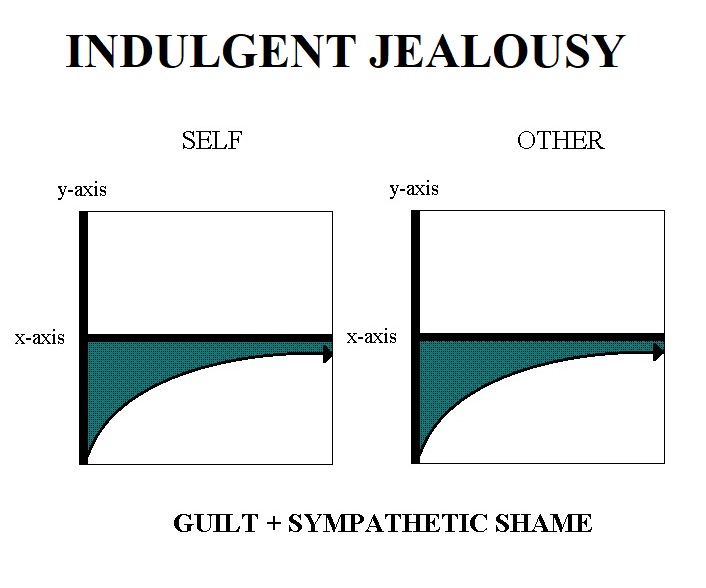
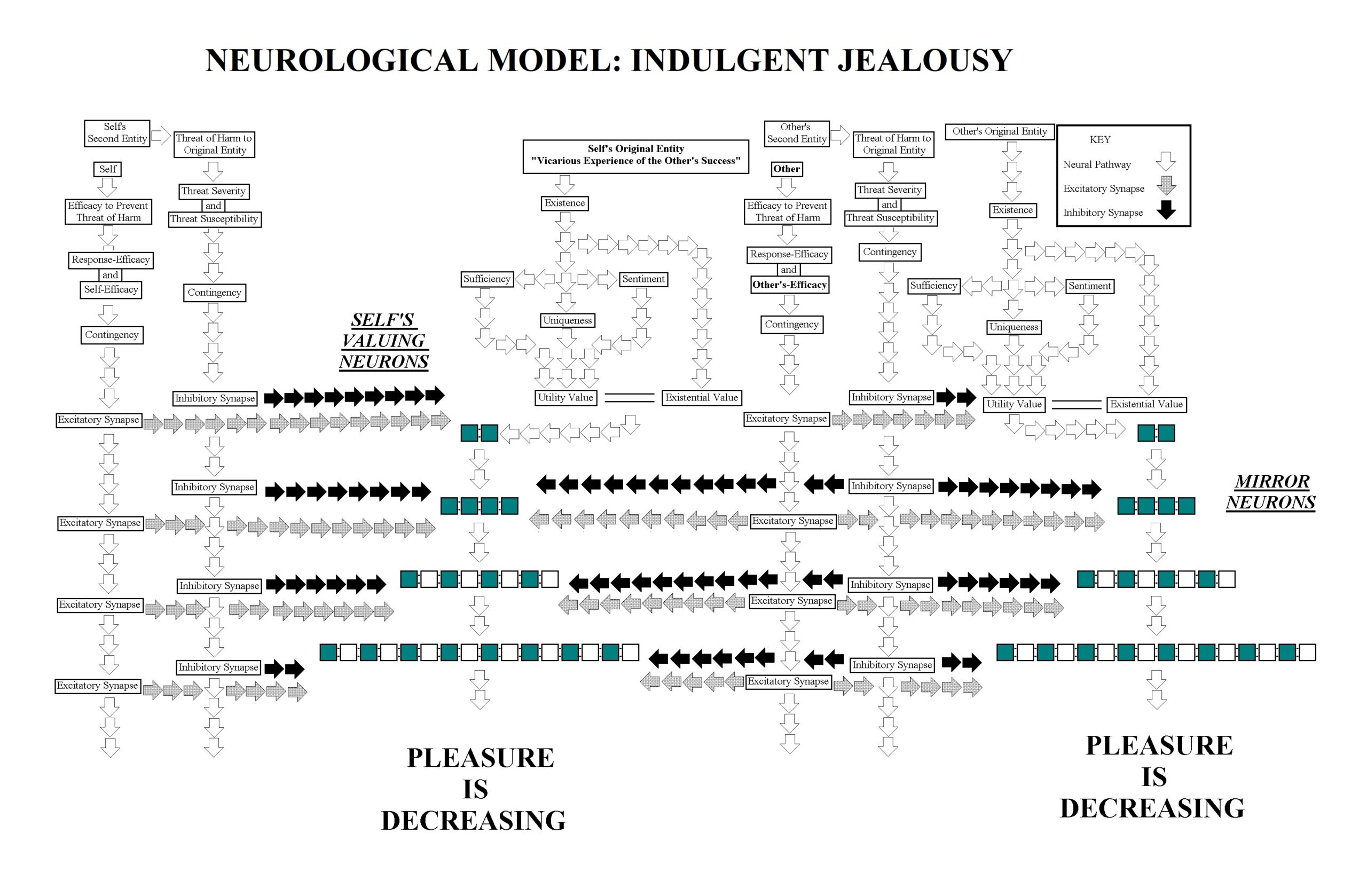
Image 5a (below) Sample neural model of Hateful Humiliation where the self is the passive party and feels Hate and Vicarious Humiliation.

Image 5b (below) Sample neural model of Hateful Humiliation where the self is the active party and feels Humiliation and Vicarious Hate.

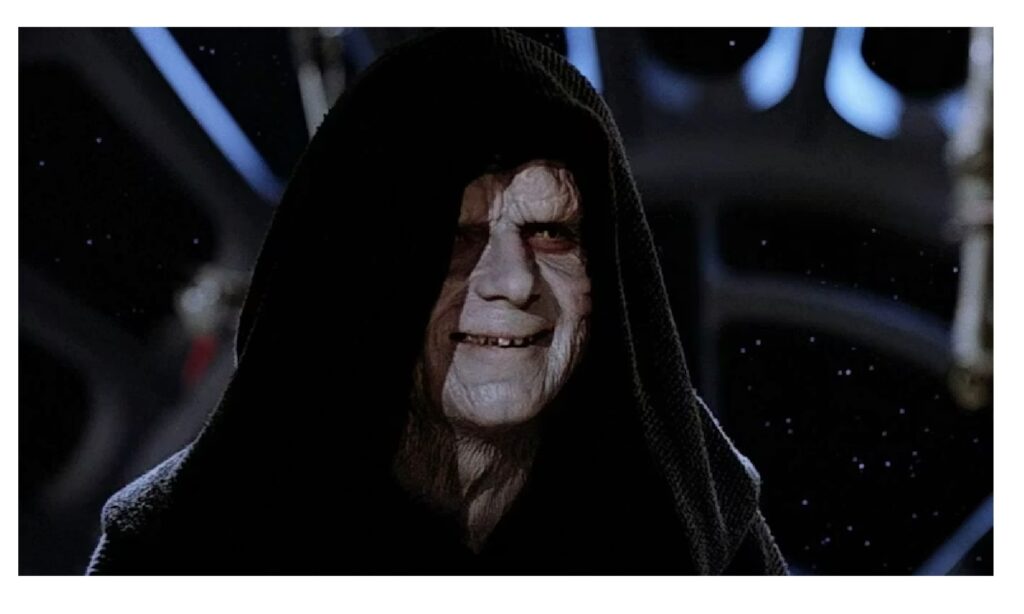
  • In the Hate and Vicarious Humiliation variant of Hateful Humiliation, the spectator (e.g., the self) wants the villain (the target party) to fail by being unsuccessful and the villain was unsuccessful. This would be an instance of Hate, as the self wants the hero to fail and the villain does fail. In popular films, this would be exemplified by Emperor Palpatine from the Star Wars franchise, or Pennywise from the movie It. These are both characters that are relatively easy for audiences to cheer against and hope for their downfall, as neither one has any particularly redeeming qualities and they are easy to label, for lack of a better word, as evil.
  • The villain (the target party) would be modeled to feel Humiliation at the acknowledgement that the self wanted them to fail and they were unable to achieve their aims.
  • The self feels Vicarious Humiliation, imagining themself as the villain feeling Humiliation.
  • The villain, in this case, would be modeled to feel vicarious Hate, imagining themself as the self or another spectator wanting them to be unsuccessful and celebrating their failure.

An example of Hateful Humiliation (e.g., Hate and Vicarious Humiliation variant) felt by the audience. Emperor Palpatine from the Star Wars franchise.

An example of Hateful Humiliation (e.g., Hate and Vicarious Humiliation variant) felt by the audience. Pennywise from the movie It.

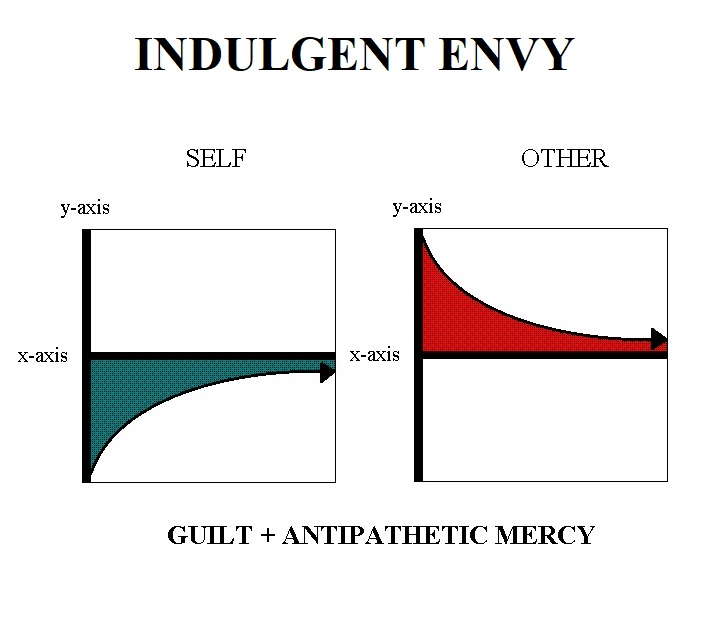
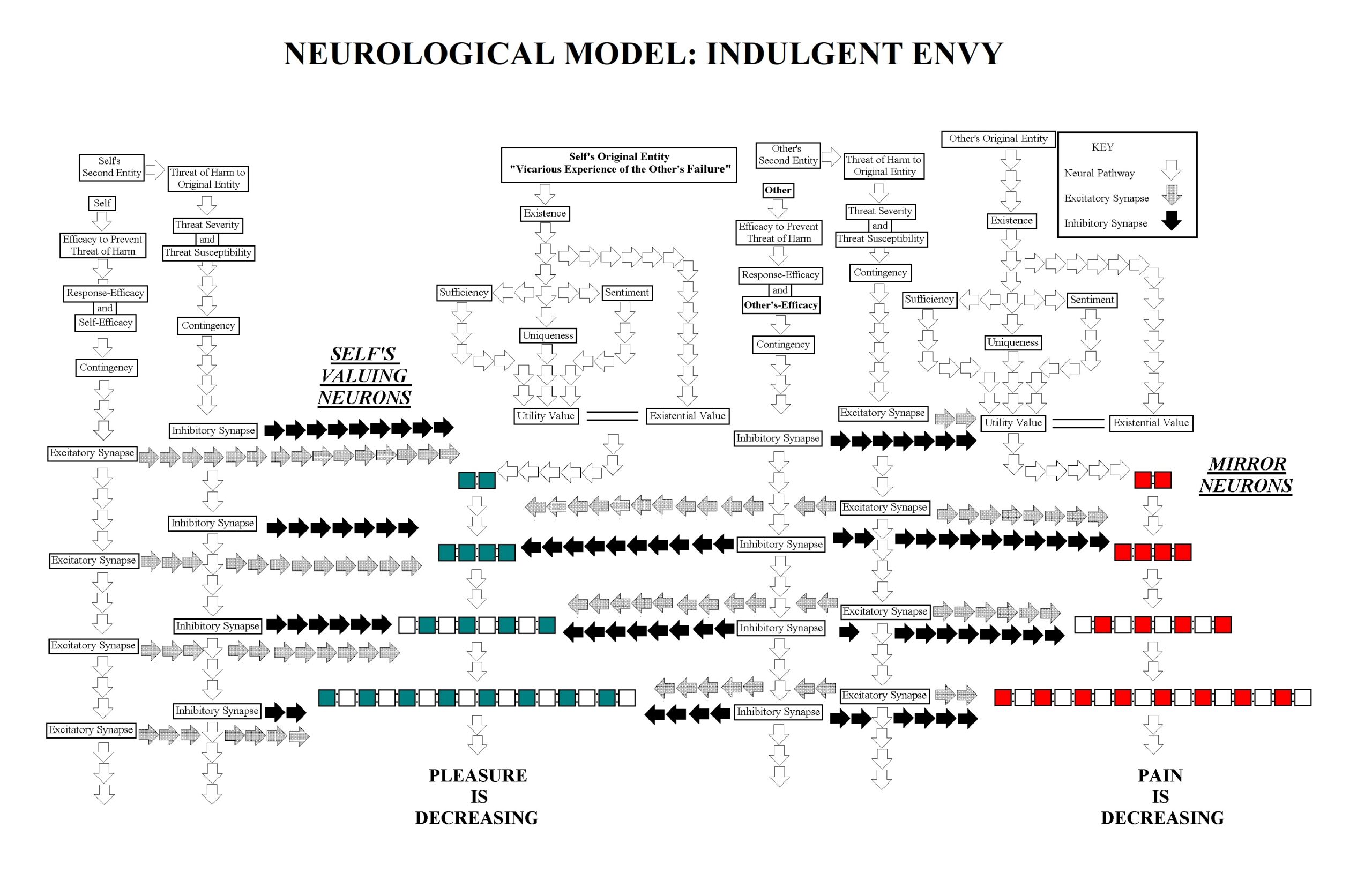
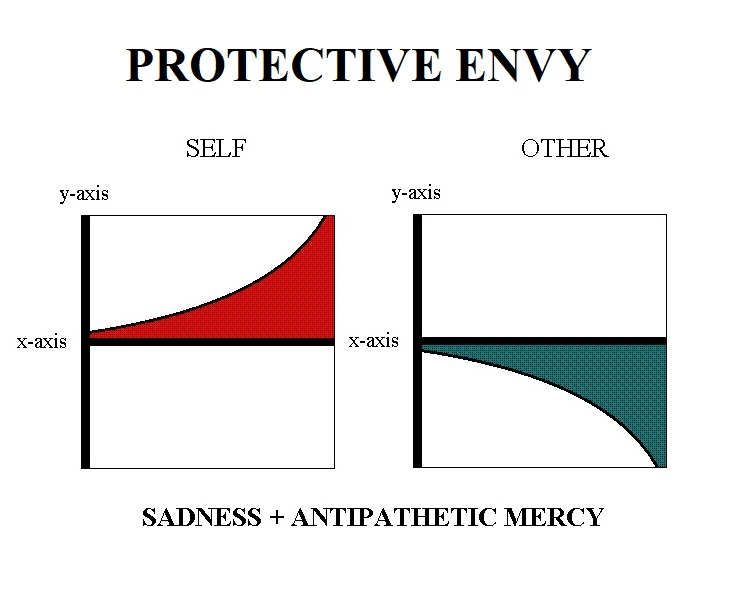
Fourth on this list is the situation where the self is a passive party observing a target party (e.g., a villain), wants the target party to be unsuccessful at their objective, but the target party succeeds. The self would be modeled to feel Antipathy in these instances, as the target party ends up successfully achieving their aims despite the self not desiring this to have occurred. Correspondingly, the target party would be modeled to feel Mercy (e.g., a sense that they have escaped justice, either obtaining an unearned reward or evading deserved punishment for their actions) in Affect Engineering at having succeeded despite the fact that those observing desired or expected for them to fail to achieve their objective (e.g., if their actions are in the wrong). Additionally, the self, passively observing, would experience the target’s sense of mercy secondhand and vicariously.

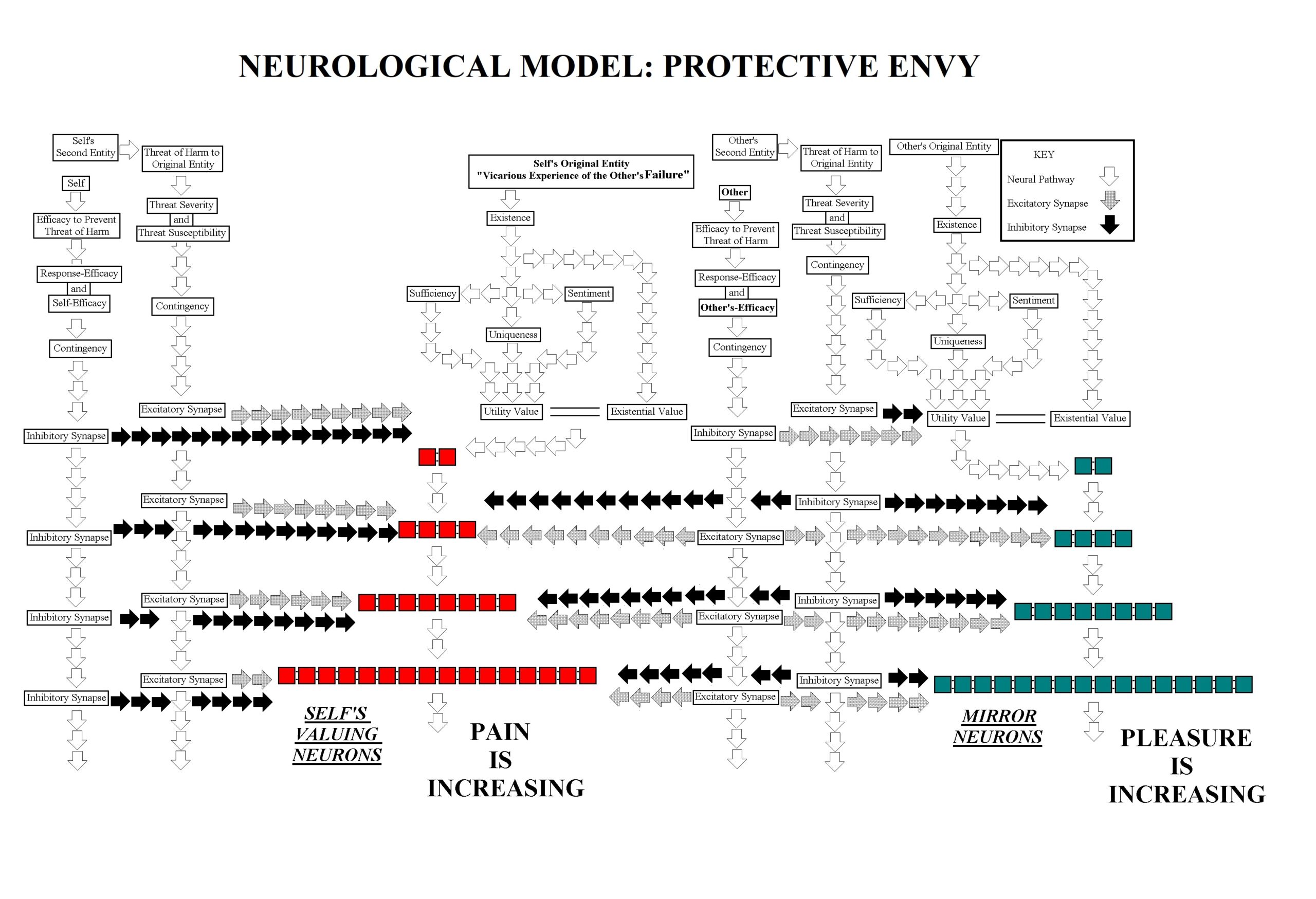
Image 6a (below) Sample neural model of Antipathetic Mercy, where the self is the passive party and feels Antipathy and Vicarious Mercy.

Image 6b (below) Sample neural model of Antipathetic Mercy where the self is the active party and feels Mercy and Vicarious Antipathy.

  • In the Antipathy and Vicarious Mercy variant of Antipathetic Mercy, the spectator (e.g., the self) wants the villain or, antihero in some cases, to fail, but they are successful. This is modeled as an instance of Antipathy in Affect Engineering as the self wanted the target to fail, but they succeed anyway. The character of Joe Goldberg in the series You is an example of this, as the character in the series commits some fairly egregious deeds ranging from theft, to kidnapping and murder, yet manages to repeatedly escape justice, even if for no other reason than being the main character of the show and possessing plot armor, so to speak, along with the benefits that go with it (“You” trailer). Another example would be Danny Ocean in the 2001 remake of Ocean’s Eleven (e.g., Ocean’s Eleven trailer). These types of characters are also often written as being very charismatic, which can help enable them to earn a pass for their wrongdoings from observers and those empathizing with them.
  • The targeted party (e.g., a villain or an antihero) would be modeled to feel Mercy at the acknowledgement that the self wanted or at least should expect them to fail, but they were successful nonetheless.
  • The self would be modeled to feel Vicarious Mercy, imagining themself as the villain feeling Mercy, even if the self is the only one mercifying them.
  • The villain, or alternatively an antihero, would be modeled to feel Vicarious Antipathy, imagining themself as the self or another spectator wanting them to be unsuccessful but being disappointed because they succeeded despite this.

An example of Antipathetic Mercy (e.g., Antipathy and Vicarious Mercy variant) felt by the audience. Joe Goldberg from the series You.

An example of Antipathetic Mercy (e.g., Antipathy and Vicarious Mercy variant) felt by the audience. Danny Ocean from the 2001 remake of Ocean’s Eleven.

Lastly, Neutrality with Vicarious Loneliness or Vicarious Neutrality with Loneliness would be modeled to arise if the passive party neither desires for the active party to succeed nor fail (e.g., both are weighted the same). This, in essence, would be the absence of an empathetic response in Affect Engineering, or an instance of Indifference. The outcome of the scenario for the active party has no effect on the state of the passive party; there is no correlation one way or the other.

2) Why are there only four degrees of empathy in Affect Engineering if there are five pairs of Category II Emotions?

SHORT ANSWER

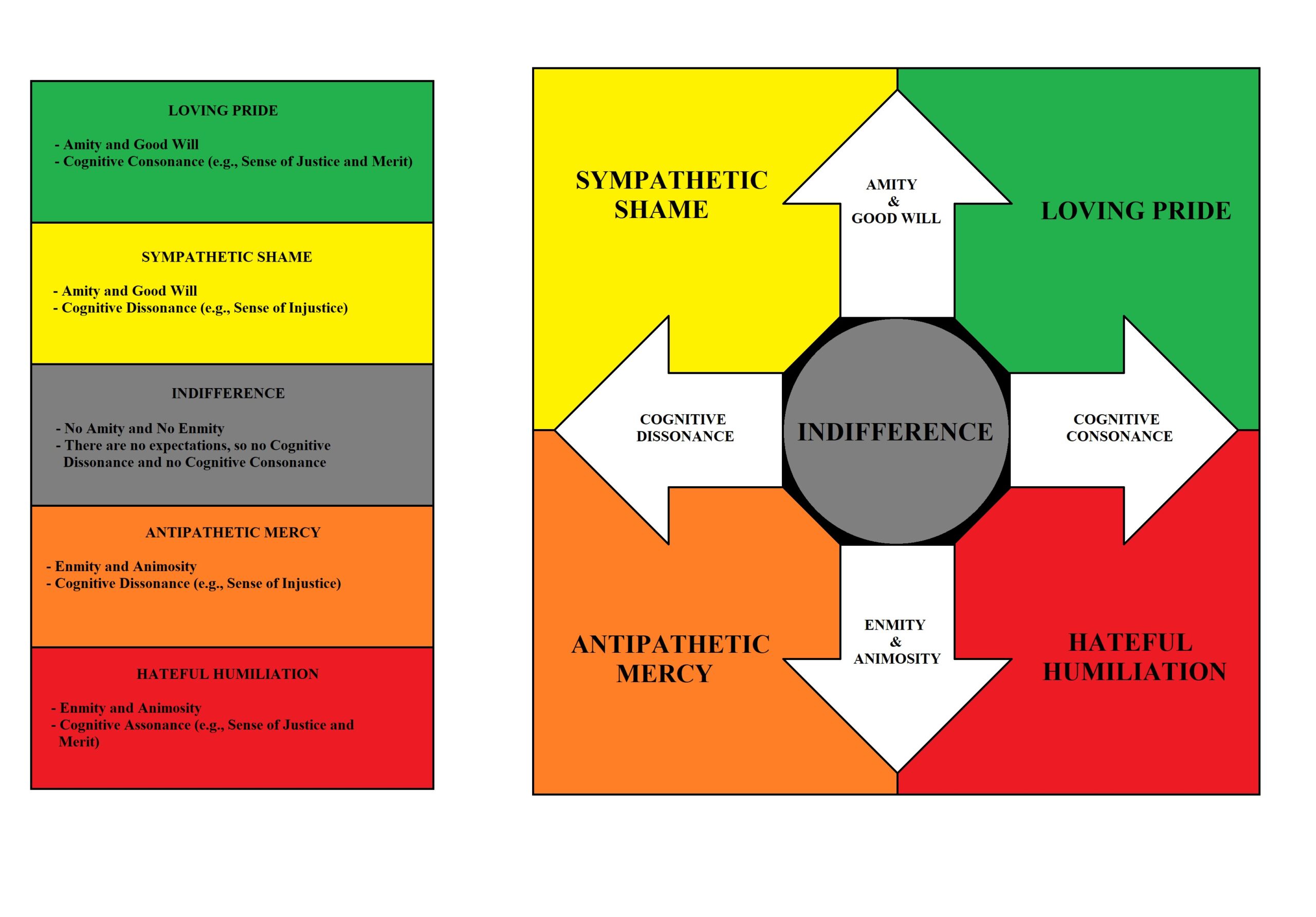
The conception of empathy in Affect Engineering can be likened to a compass with four directions represented by its four degrees. These four degrees can be mapped out on a pundit square with one scale being a measure for amity and goodwill against enmity and animosity, while the other scale is a measure for the amount of cognitive dissonance vs. cognitive consonance present, and the difference between expectations versus reality. The absence of amity and enmity along with the absence of cognitive dissonance and consonance would comprise the fifth pairing, Indifference, a general lack of empathy.

IN DEPTH EXPLANATION

Compass Mapping of the Four Degrees of Empathy

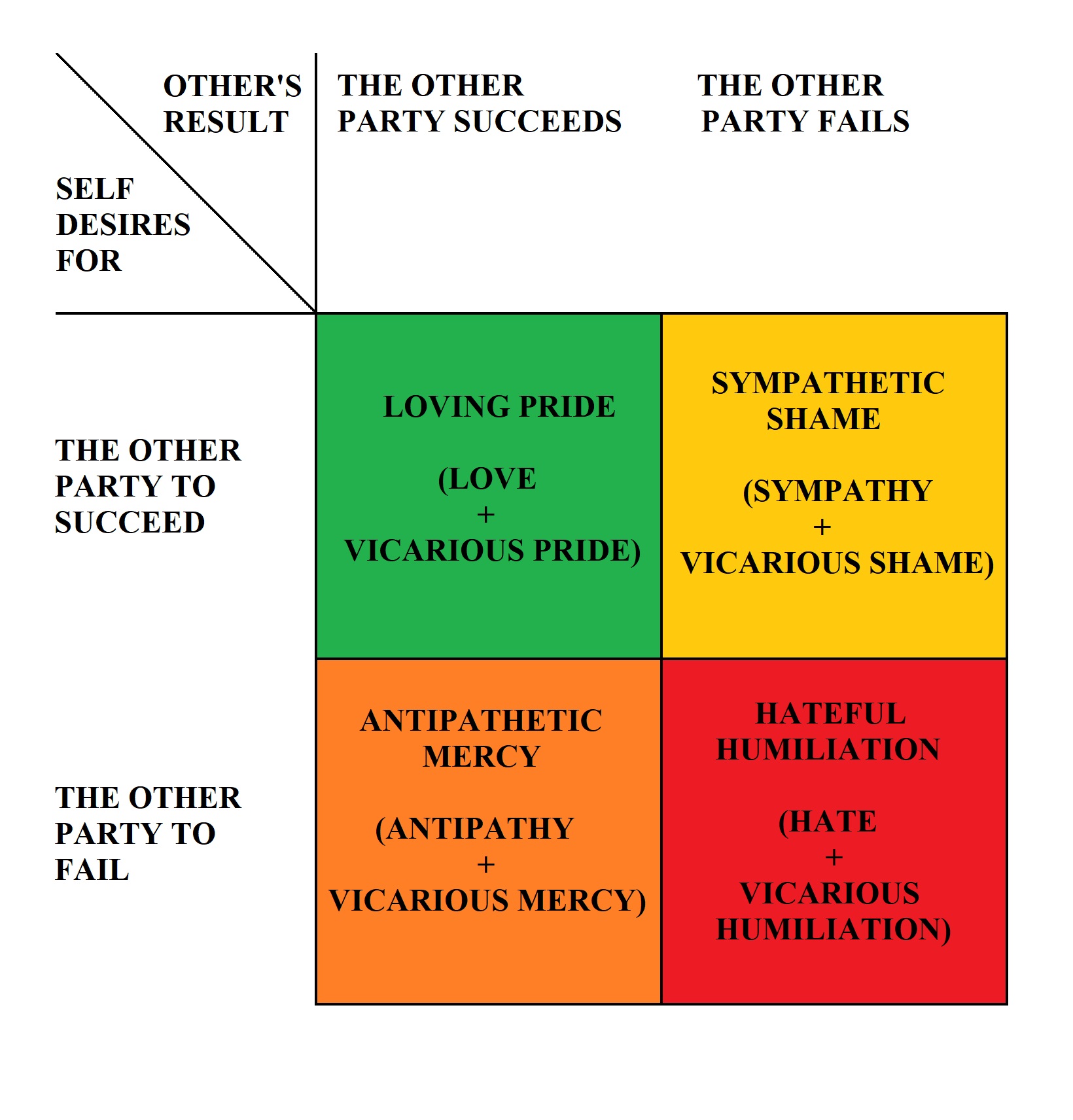
Assuming that the empathizing party is the passive party, then there are two questions that Category II Emotions address:

  1. Does the empathizing party want to vicariously experience the targeted party (i.e., the other) succeed or fail at their objective?
  2. Does the targeted arty (i.e., the other) succeed or fail?

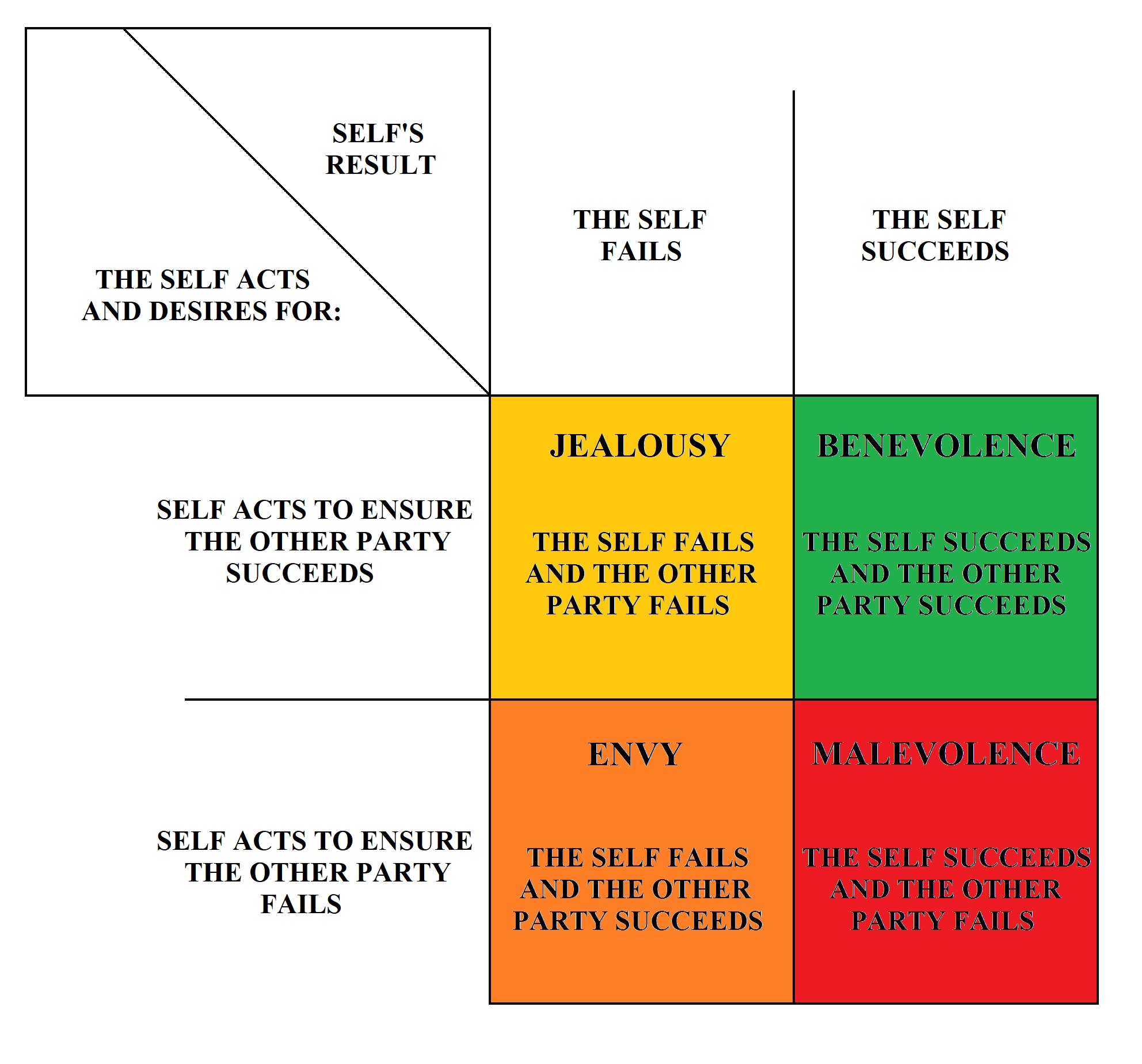
For instance, if the self is passively observing another party attempt to achieve an objective, a two by two pundit square results with the four possibilities.

Image 7 (below) What the self feels when the self is the passive party and the other party is active.

For instances where the self is actively working towards an objective and the other party is passively observing them, the pundit square is similar but the vicariously experienced emotions flip.

Image 8 (below) What the self feels when the self is the active party and the other party is passive.

The fifth, or perhaps better labeled zeroth degree of empathy, would occur when the empathizing party does not lean one way or the other in regards to which outcome they prefer for the other party and there is neither cognitive dissonance nor consonance due to there being no expectations. This would be for Indifference (e.g., Neutrality and Vicarious Loneliness or Vicarious Neutrality and Loneliness).

3) Why does Affect Engineering bother to distinguish emotions that are experienced vicariously depending on whether or not one party has the ability to influence the outcome of another party’s situation?

SHORT ANSWER

An individual who is vicariously and passively experiencing another party’s success or failure will necessarily experience it differently than they would if they were actively trying to shape the outcome of the other party’s situation with their actions.

IN DEPTH EXPLANATION

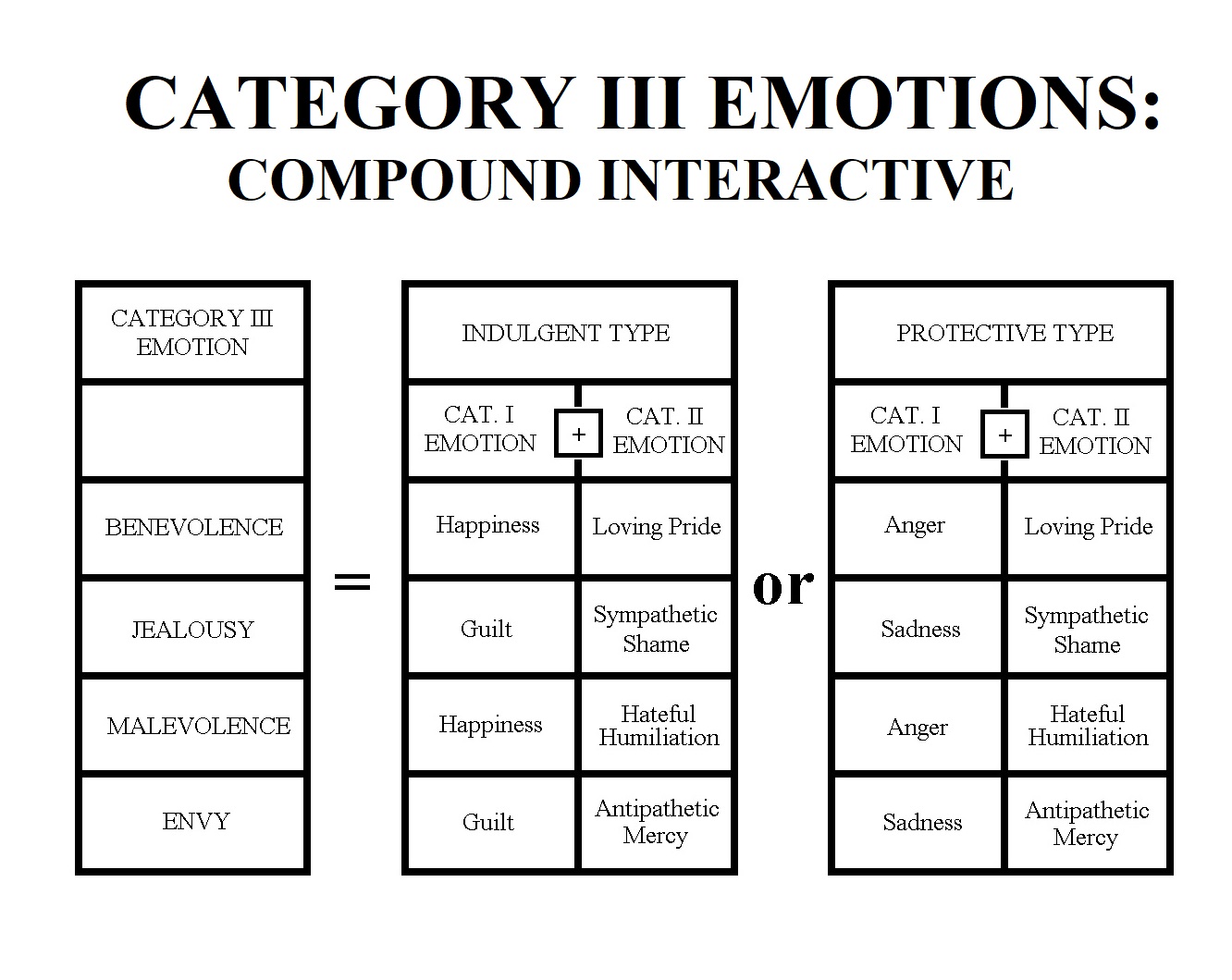
The distinction between Category II Emotions (Interpersonal Emotions) and Category III Emotions (Compound Interactive Emotions) lies solely within the answer to the question, “Does the empathizing party possess the ability to influence the outcome for the targeted party they are empathizing with?” This distinction is somewhat similar to the difference between fans of a sports team watching them on television and cheering them on from home or at a bar in isolation from the event, as opposed to cheering them on at the stadium or arena they are competing in.

Watching from home or at a bar effectively distances the fan far enough away from the event that they can only observe and vicariously experience the team’s situation from afar. There is nothing that they can do that might reasonably influence the outcome of the game.

However, a fan cheering their team on from a stadium can shout and cheer for their chosen team to boost morale; alternatively, they can boo, jeer, and heckle athletes and competitors from the opposing team during crucial moments to try and disrupt their concentration. While they can not play the sport themselves in lie of the professional athletes on the team, it does afford them some sense of influence over the atmosphere at the venue. Moreover, their emotions would more aptly be categorized as a Category III Emotion in these cases.

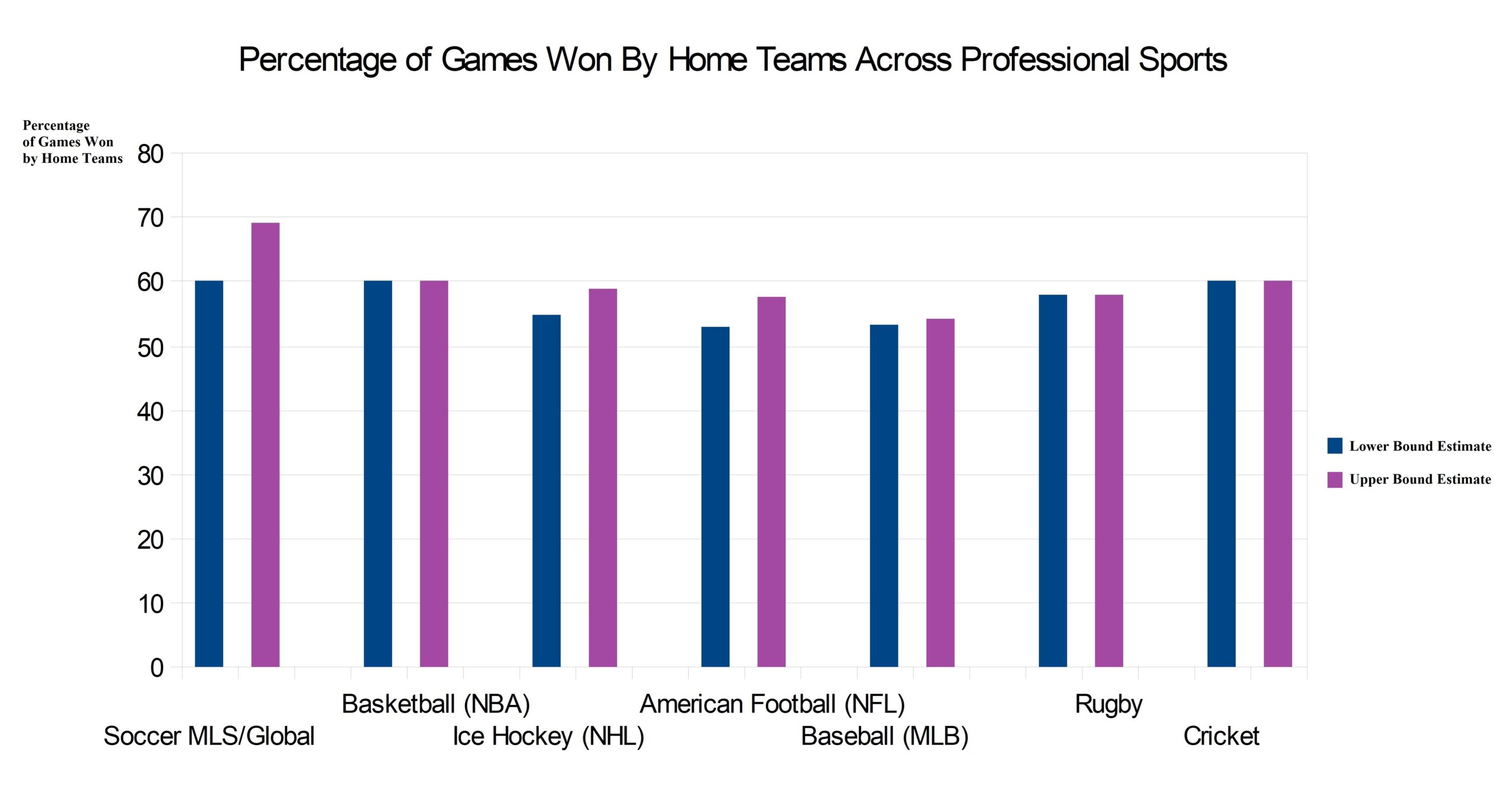
Although this is a relatively tame example of a Category III Emotion, it is a suitable enough example to highlight the difference between the two categories in Affect Engineering’s framework. For instance, having home field advantaged is well acknowledged in most professional team sports. Across the major professional sports league, during the course of a regular season, the home team generally wins more games on average than the away team:

Image 9 (below) Percentage of games won by home teams across major sports leagues. Source: Google Search Engine Result for lower and upper bound estimates.

Across these professional sports, home teams win more games on average than away teams (Soccer ~60-69%, NBA ~60%, NHL ~55-59%, NFL ~53-57%, MLB ~53-54%, Rugby ~58%, Cricket ~60%). Other factors such as familiarity with the venue, having less jetlag from not traveling, and being acclimated to an environment (e.g., high altitude, snow, or heat in certain regions), also play a large part in home field advantage.

What is life, however, without exceptions?

Anomalies

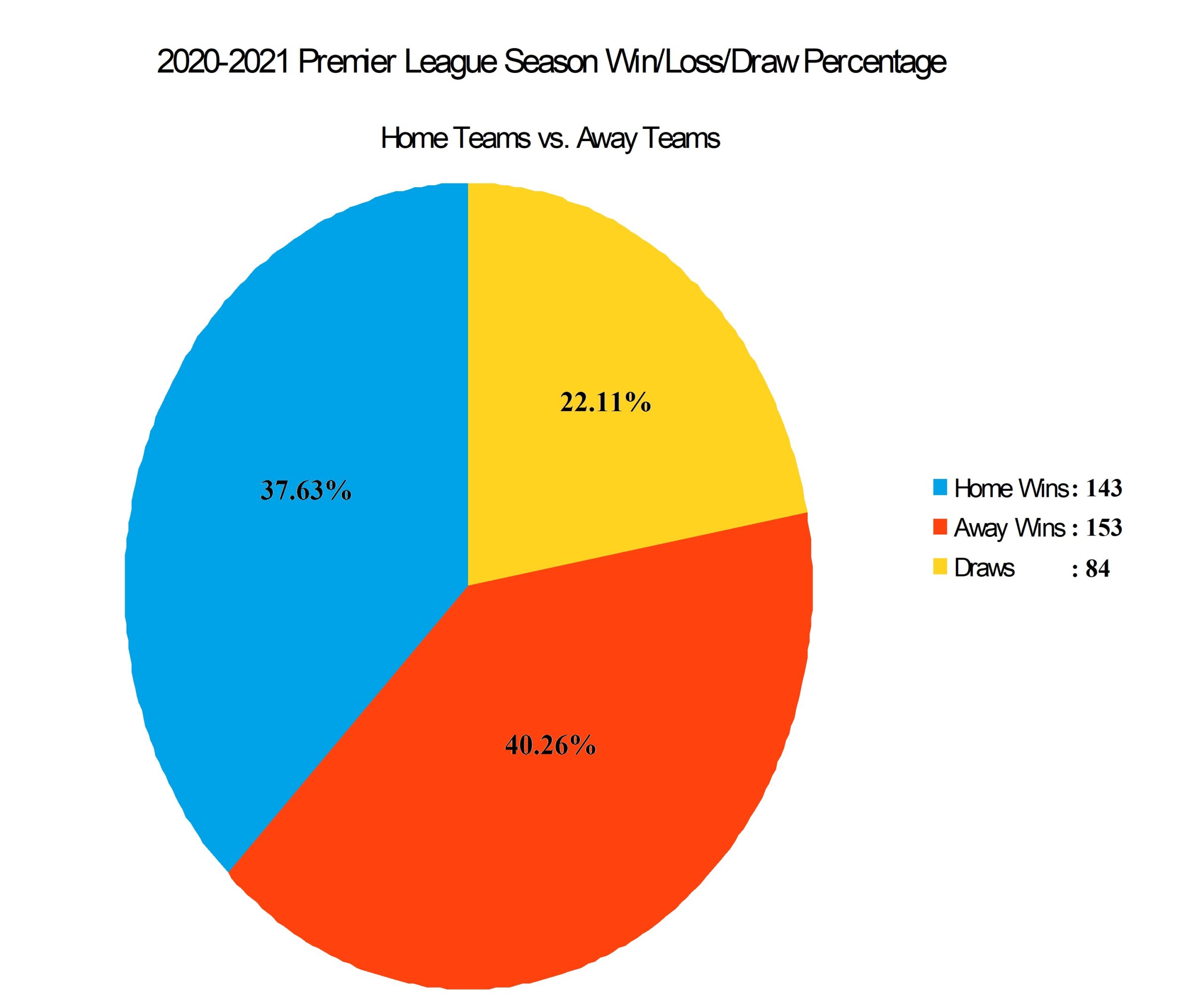
One exception to this home field advantage trend stands out among others. In its thirty three years and seasons of existence, the 2020-2021 season of the Premier League (soccer) is the only season that saw away teams win more games than home teams. This was also a season during which no fans were permitted in stadiums due to COVID-19 restrictions. It saw away teams win 40.3% of games against home teams, who won 37.9% of games.

Image 10 (below) – Away Teams 153 Wins – Draws 83 – Home Wins 144

Homefield advantage returned in the Premier League the next year and has remained for every subsequent year thereafter with home teams winning more games than away teams, as can be observed in the article “Crumbling fortresses – why are teams struggling to win at home?”.

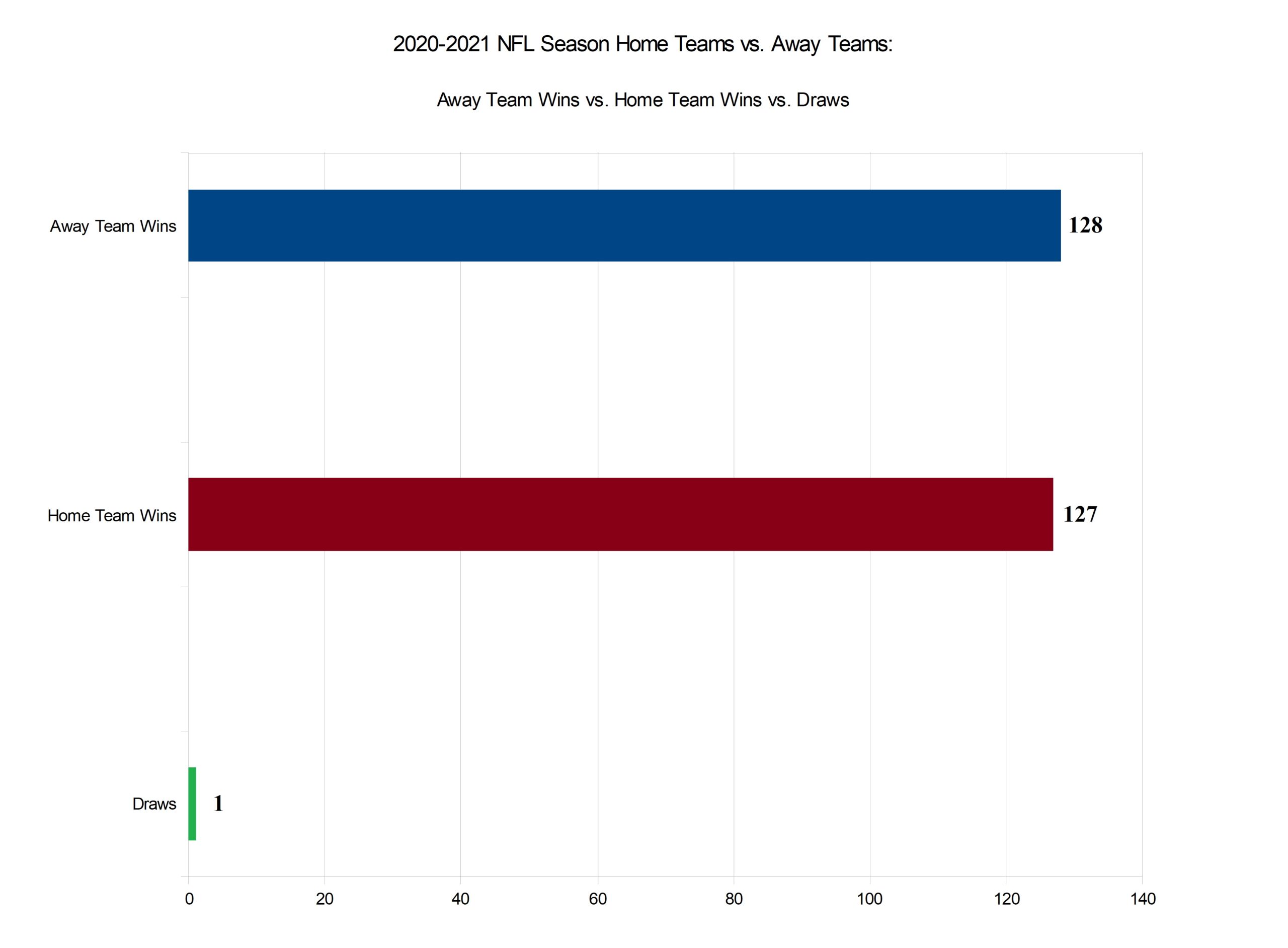
Also of note, the 2020-2021 NFL season was the only NFL season in its fifty plus year history, and only season since then, where home teams won fewer games than away teams (“What Happened to NFL Home-Field Advantage?”).

Image 14 (above) Home Team Wins = 127; Away Team Wins = 128, Draws = 1

Away teams were still traveling to less familiar venues, were jetlagged, and less acclimated to their environments, but with no homefield fans to create an atmosphere conducive to the home team winning, homefield advantage all but diminished for that year. During this season, the home teams odds of winning again away teams was reduced closer to chance or lower level than it was before or since then. This homefield advantage, as subtle and intangible as it is, virtually disappeared with the absence of fans in the stadium for a season, and then returned the following year and for every subsequent season thereafter in both leagues.

The implications of anomalies like this for modeling empathy in Affect Engineering are bit more straightforward fortunately. Judging by these two anomalies (the loss of homefield advantage that occurred during the absence of fans for these two leagues during the COVID lockdown), an observer might surmise the following: in general, fans who attend sporting events to cheer on their team or boo and jeer against rival teams are probably more inclined to believe that they contribute to their home team’s success more so than they would have if they had merely watched the game from home or at a bar where they could only passively watch it.

What this entails for Affect Engineering is that in the case of the sports fan, it would be more appropriate to model the empathy of fans who attend sporting events to cheer on their team and boo the opponent as a Category III Emotion, Compound Interactive Emotions, because they have the ability to influence, small as it may be on an individual level, the collective atmosphere at the venue where the event is taking place, and in some ways, the outcome. Category III Emotions will be examined in more detail in the next article of this series.

For the sports fan who watches and empathizes with their favorite sports team in isolation at home or with a small group of friends in a bar, it would be more appropriate to model their empathy as a Category II Emotion, or Interpersonal Emotion, as they have no tangible or easily identifiable means to influence the outcome of the event.

4) For what reasons might an individual intentionally alter their identification level with a target?

SHORT ANSWER

An individual might alter their identification level with a target by lowering it to avoid relating to someone or something potentially upsetting. Alternatively, they might intentionally elevate their identification level with a target by raising it abnormally to a heightened level if normal communication methods are inadequate for a situation.

IN DEPTH EXPLANATION

Identifying with extreme classes or types of people (e.g., serial killers, murders, criminals, heroes, celebrities, etc.) presents some unique opportunities and challenges to an individual. For an individual to identify with another person or lifeform, this entails putting themself in a different perspective to see the world from their point of view. Sometimes this might compel the empathizing party to confront their own capacity, or lack thereof, to commit certain offenses or perform certain heroic deeds under duress if they were in a similar situation. In the case of this last statement, two reasons for distancing oneself from a target (by not identifying with them or drastically lowering identification level) present themselves:

  1. Observers might choose to distance themselves from a serial killer or murderer (e.g., by dehumanizing or labeling them a monster) to avoid confronting the possibility that they too, might be capable of committing horrible crimes if they were in the same position.
  2. Similarly, observers might choose to distance themselves from a hero (e.g., by idolizing, them a saint, otherworldly, or putting them on a pedestal) to avoid confronting the possibility that may not be capable of performing a similar action if called upon to do so in a time of peril.

In other situations, identifying too much with a target can also make certain endeavors more difficult, such as warfare. Being called upon to fire at and potentially kill an enemy combatant, particularly one that the soldier personally knows nothing about and harbors no ill will towards, save that they are a citizen of another country that was also drafted into the same war but on the opposing side, requires a certain level of detachment that can be difficult to achieve under normal circumstances. These are instances where identification would be likely viewed as a general hindrance on one side (e.g., by warhawks), and viewed as a general necessity on the other side (e.g., by pacifists).

On the other side of this question, an abnormally heightened identification level with a target can prove useful, such as in a first encounter between different cultures, situations where there are unknowns and direct communication is not possible, or for identifying ideals towards which one wishes to aspire.

For the vast majority of situations though, an individual would most likely be inclined to identify with a target at an elevated level (e.g., at a higher level than they would if they were in the position) if it is necessary for the target’s well being, and normal communication is not possible. For example, a protective parent of a small baby, a pet owner, a horticulturist in a garden, or an owner of a vintage car (e.g., inanimate object) might identify with the target at a higher level than they would if they themself were in that position, perhaps in order to preemptively address issues related to their wellbeing that cannot be stated directly. Under ideal conditions, this state of hypervigilant or excessive identification would serve the purpose of helping the individual anticipate the targeted party’s needs and respond to them. Under less ideal conditions, this state of elevated identification might lead to infatuation or obsession, such as the idolization of a celebrity, and so moderation would be warranted.

Preview

The next article will examine Category III Emotions, the Compound Interactive Emotions, in more depth.

Previous: Article 7 of 12: Category I Emotions, the Intra-Personal Emotions or Emotions of the Self

Next: Article 9 of 12: Category III Emotions, the Compound Interactive Emotions

On the Nature of Emotions: Category I Emotions, the Intra-personal Emotions or Emotions of the Self (Article 7 of 12)
Category I Emotions, the Intra-personal Emotions or Emotions of the Self

This article gives an overview of Category I Emotions (Intra-personal Emotions or Emotions of the Self) in Affect Engineering. It is the seventh article in a series designed for the layperson that explains the basics of Affect Engineering as a theory of emotions. Each article will begin with a list of questions that it will aim to address. The sections that follow will be in two parts each. The first part will be a short statement that answers each question as succinctly as possible. The second part will either be an explanation that goes into more detail where needed or explain some of the implications of the short answer.

QUESTIONS

  1. What are the Category I Emotions in Affect Engineering?
  2. If the same object or entity can elicit different emotions for an individual, then how would this be represented in Affect Engineering and why is it significant?
  3. Why is it necessary to balance or hold certain emotions in check, including ones that are generally considered positive such as happiness and euphoria?
  4. How would instances of self-sacrifice be accounted for in Affect Engineering?
  5. What factors will amplify, or alternatively, reduce the intensity of each Category I Emotion when they are modeled in Affect Engineering?

1) What are the Category I Emotions in Affect Engineering?

SHORT ANSWER

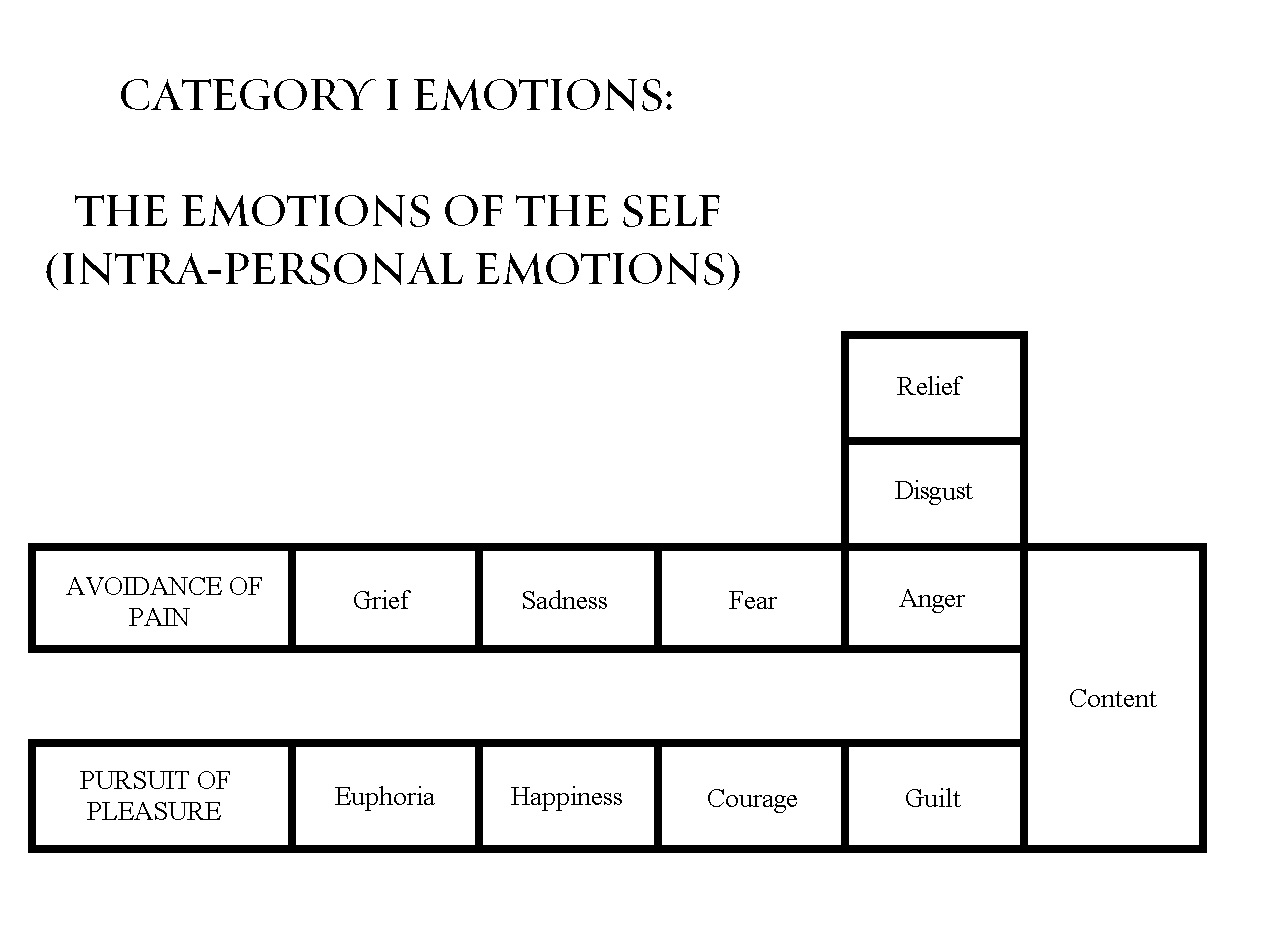
Category I Emotions in Affect Engineering are emotions arising from valuations of entities that concern a purpose held only by the individual in consideration (e.g., the self). No empathy is involved. The Category I Emotions are: Happiness, Euphoria, Courage, Guilt, Sadness, Grief, Fear, Anger, Disgust, Relief, and Content.

IN DEPTH EXPLANATION

Category I Emotions in Affect Engineering only concern valuations of entities for purposes or goals held by the self. They are further classified into one of two subcategories, the first being the Avoidance of Pain Emotions, and the second being the Pursuit of Pleasure Emotions. The classification of an emotion into one of these two subcategories is determined solely by the Appraisal variable (i.e., a coefficient equaling either +1 or -1). The Appraisal signals whether or not further acquisition of a particular entity is expected to lead towards a restoration of equilibrium, or away from the restoration of equilibrium between a purpose and its opposite or complementary purpose. Article three in this series goes into more detail on Appraisals as they are implemented in Affect Engineering, Cognitive Appraisals in the Context of Affect Engineering (Article 3 of 12).

An emotion felt by one individual is modeled in Affect Engineering to be felt for one entity as it relates to the fulfillment of one purpose held by the individual, and this will correspond to one emotion felt. This, the 1:1:1:1 Ratio (i.e., one person, one entity, one valuation and emotion felt, and one purpose), is a principle that Affect Engineering adheres to in order to prevent erroneous conflation in Affect Engineering, such as by merging two emotions into one emotion when it would be more accurate to keep them as separate emotions for separate instances. The 1:1:1:1 Ratio in Affect Engineering is explained in greater detail in article two of this series Reframing Anxiety as a Resource, (Article 2 of 12).

Avoidance of Pain Emotions

The Avoidance of Pain Emotions in Affect Engineering each have an Appraisal value that is positive (i.e., coefficient of +1), meaning an entity’s acquisition will lead towards a restoration of equilibrium between a purpose and its complementary purpose (opposing purpose). With respect to an individual’s valuation of an entity for the fulfillment of a purpose, the core features of the Avoidance of Pain Emotions are the following:

  • Sadness: The individual’s valuation of the entity rises towards positive infinity at a steady rate.
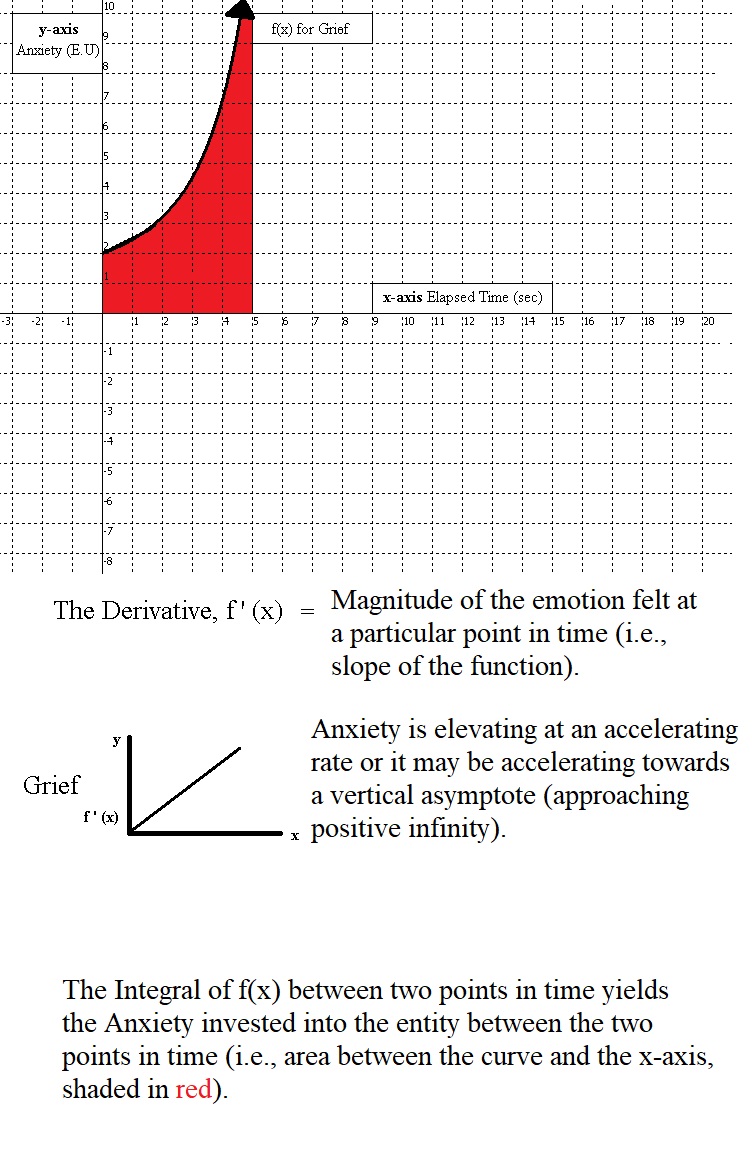
  • Grief: The individual’s valuation of the entity rises towards positive infinity at an accelerating rate, oftentimes approaching a vertical asymptote if the entity becomes impossible to attain (e.g., the loss of a loved one, if one wished to see them again).
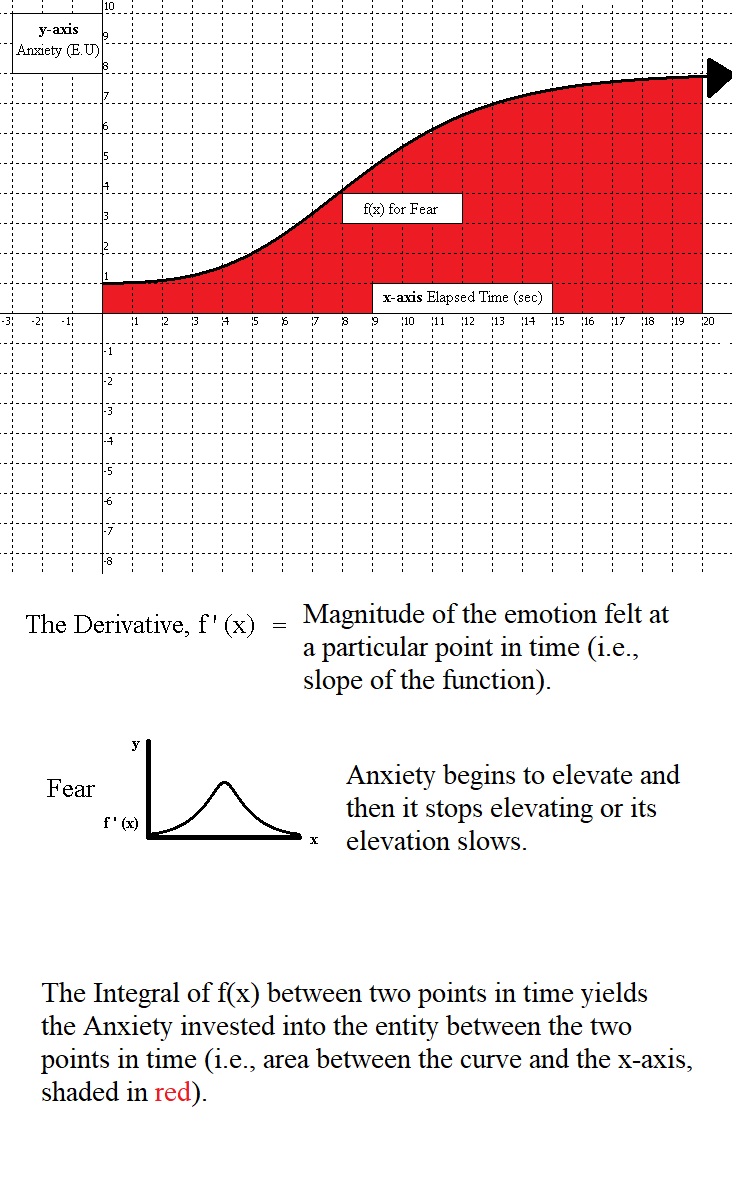
  • Fear: The individual’s valuation of the entity is initially at a lower and somewhat uncertain level before it rises towards positive infinity and then tapers off again.
  • Anger: The individual’s valuation of the entity is initially at a higher level and lowers towards its existential value (i.e., an absolute value of one). It is also characterized by the presence of aggression against a threat of harm to the entity; aggression distinguishes Anger from Disgust and Relief.
  • Disgust: The individual’s valuation of the entity is initially at a higher level and lowers towards its existential value. It is also characterized by evasion or evasive action against a threat of harm; evasion or evasive action distinguishes Disgust from Anger and Relief.
  • Relief: The individual’s valuation of the entity is initially at a higher level and lowers towards its existential value. It is also characterized by a lack of aggression and a lack of evasive action towards a threat of harm, and this distinguishes Relief from Anger and Disgust.
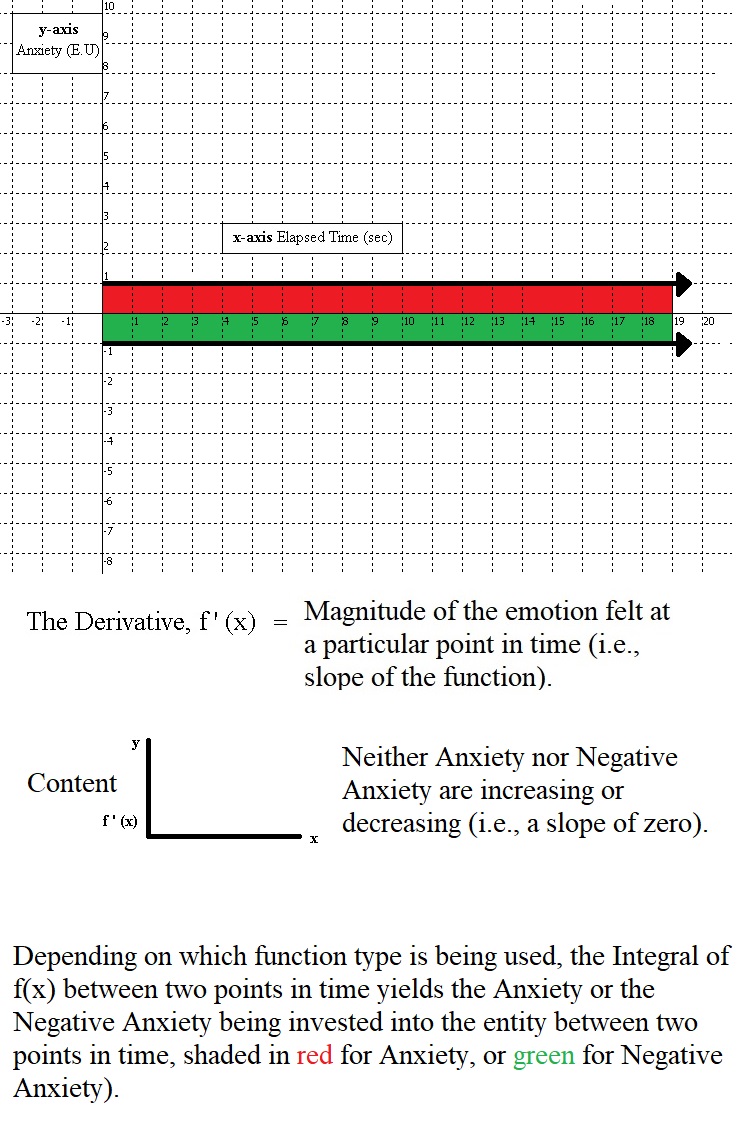
  • Content: Content felt for a particular entity is characterized by an individual’s valuation of the entity remaining the same or having an absolute value that remains at a low level, such as at or near its existential value.  Content is considered to be an Avoidance of Pain Emotion if it has an Appraisal value of +1. Content would be more likely to happen if balance between the opposing purposes is maintained near equilibrium.

Pursuit of Pleasure Emotions

The Pursuit of Pleasure Emotions in Affect Engineering each have an Appraisal value that is negative (i.e., coefficient of -1), meaning an entity’s acquisition will lead away from a restoration of equilibrium for a purpose relative to its complementary or opposing purpose. With respect to an individual’s valuation of an entity for the fulfillment of a purpose, the core features of the Pursuit of Pleasure Emotions are:

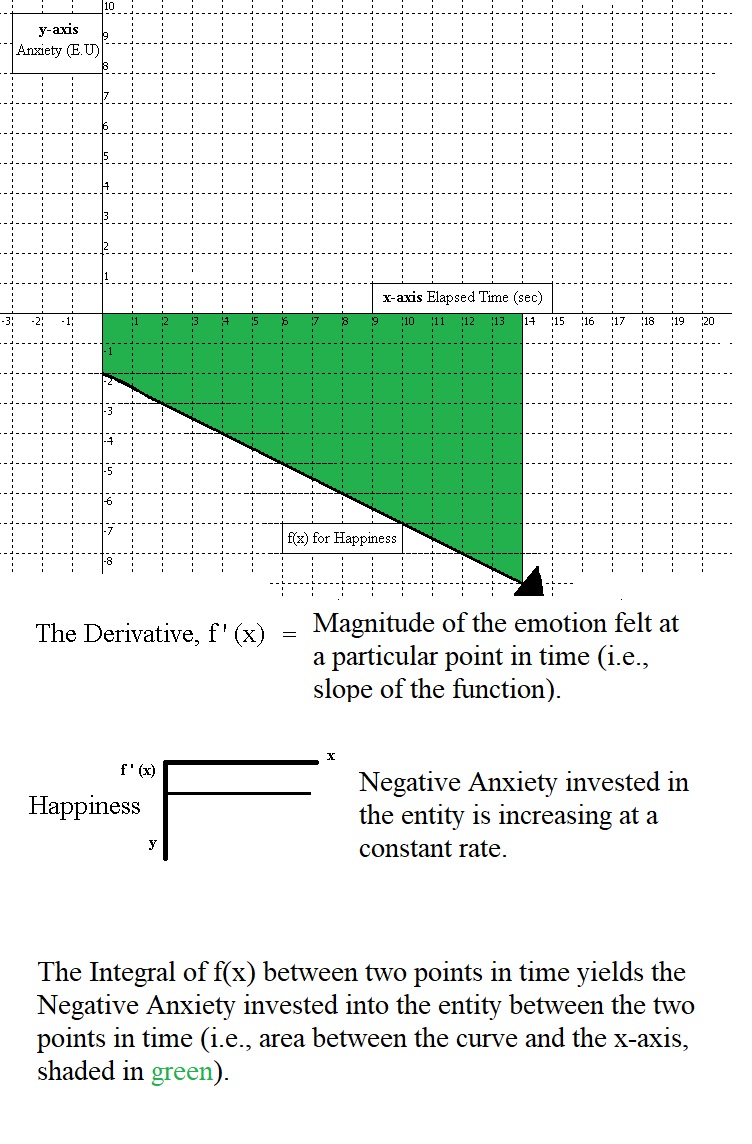
  • Happiness: The individual’s valuation of the entity lowers towards negative infinity at a steady rate. Its absolute value or distance from zero, however, is still increasing.
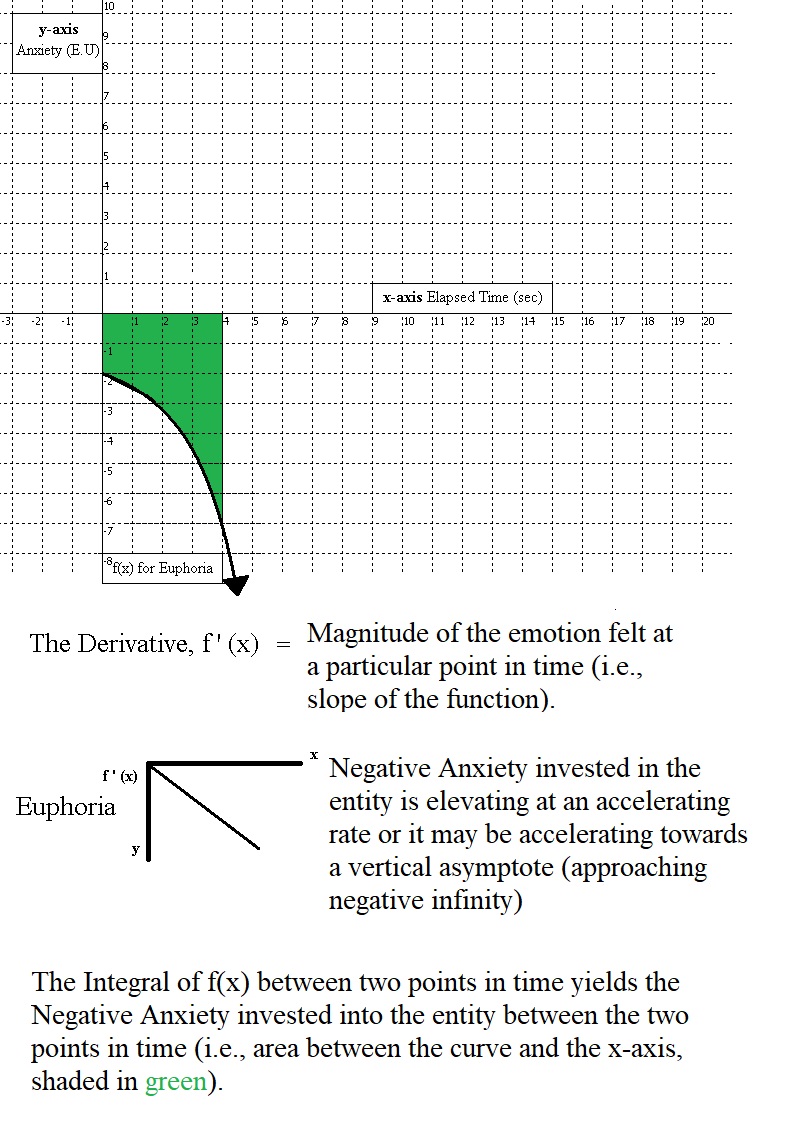
  • Euphoria: The individual’s valuation of the entity lowers towards negative infinity at an accelerating rate, oftentimes approaching a vertical asymptote if it becomes impossible to fail to attain (e.g., obtaining the entity is unavoidable). Its absolute value is still increasing.
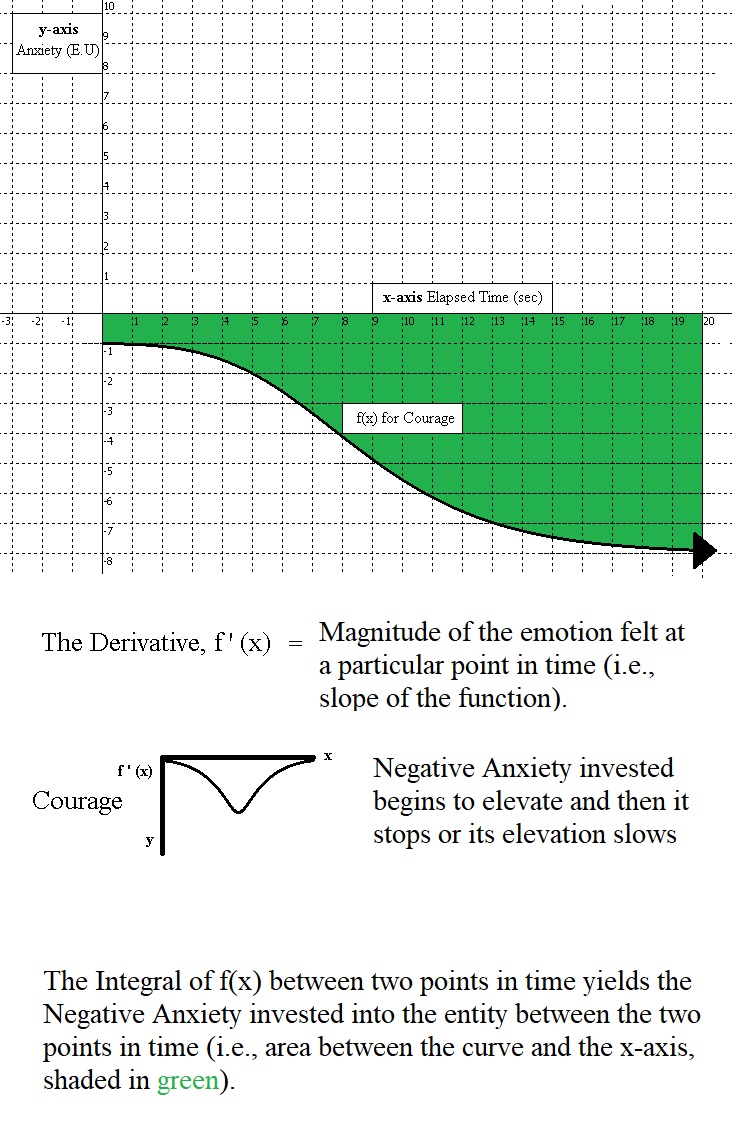
  • Courage: The individual’s valuation of the entity is initially at a higher (i.e., closer to zero) and somewhat uncertain level before it lowers towards negative infinity and then tapers off again. Its absolute value also increases.
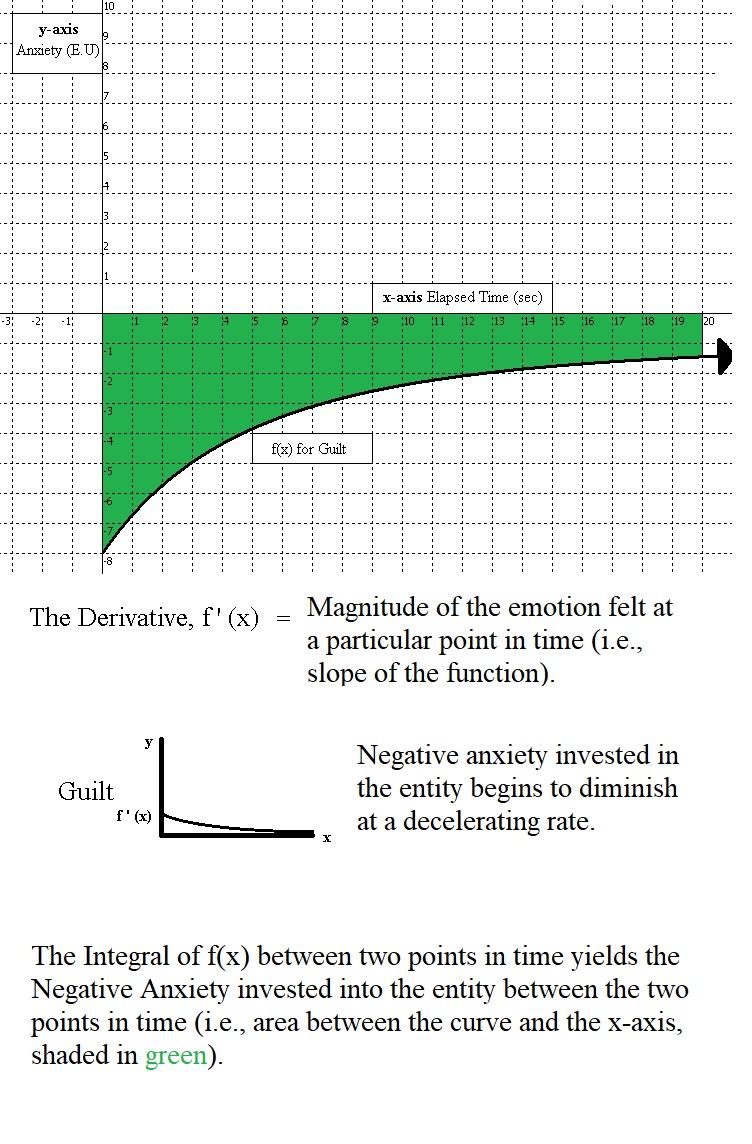
  • Guilt: The individual’s valuation of the entity is initially at a lower level and rises towards its existential value. Its absolute value diminishes and returns closer towards the existential level in this case. Guilt is modeled as a missed opportunity by an individual in Affect Engineering
  • Content: Content felt for a particular entity is characterized by an individual’s valuation of the entity remaining the same or having an absolute value at a low level, such as at or near its existential value.  It will be a Pursuit of Pleasure Emotion if it has an Appraisal value of -1. Content would be more likely to happen if balance between the opposing purposes is maintained near equilibrium.

The above Category I Emotions are described with sample graphs in article six of this series, Categories of Emotions and Organizing Principles in Affect Engineering (Article 6 of 12).

2) If the same object or entity can elicit different emotions for an individual, then how would this be represented in Affect Engineering and why is it significant?

SHORT ANSWER

The same object or entity can elicit different emotions for an individual if it is being valued for two or more separate purposes by an individual. The primary reason for this distinction in Affect Engineering is to avoid conflating two or more emotions into one erroneously.

IN DEPTH EXPLANATION

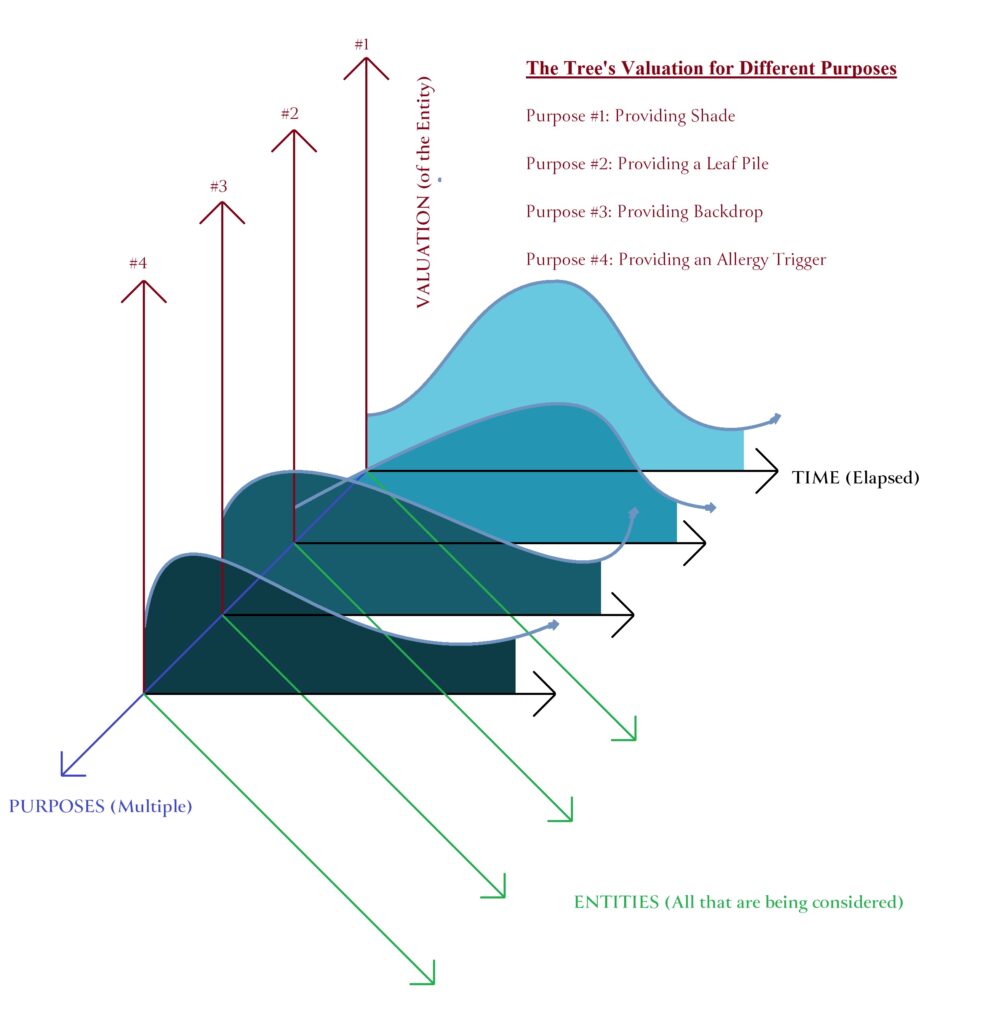
In Affect Engineering, a single entity can elicit and be linked to multiple emotions if the entity is being valued for different purposes by an individual. This is done to avoid mistakenly combining two or more emotions felt for an entity into one emotion when it is more accurate to leave them separate. It also grants a higher degree of specificity for each emotion felt. For example, the entity of a tree will be contemplated. The tree is being valued by an individual for its ability to fulfill several different purposes:

  • The tree’s capacity to provide shade on a hot day
  • The tree’s capacity to provide enough leaves to make a leaf pile to jump in
  • The tree’s capacity to provide a picturesque backdrop for a wedding photo

An individual’s valuation of the tree for the fulfillment of these different purposes would necessarily be different. It may be valuable for one or two of the purposes, and only somewhat valuable for the third purpose. To merge the three valuations of the tree, and subsequently, the emotions that are modeled to result when the tree is considered for each purpose independently, would be problematic for another reasons as well. There might be any number of hidden purposes held by the individual that could influence the feeling felt towards it. A fourth and less desirable purpose will also be considered.

  • The tree’s capacity to release pollen and trigger allergies in the individual

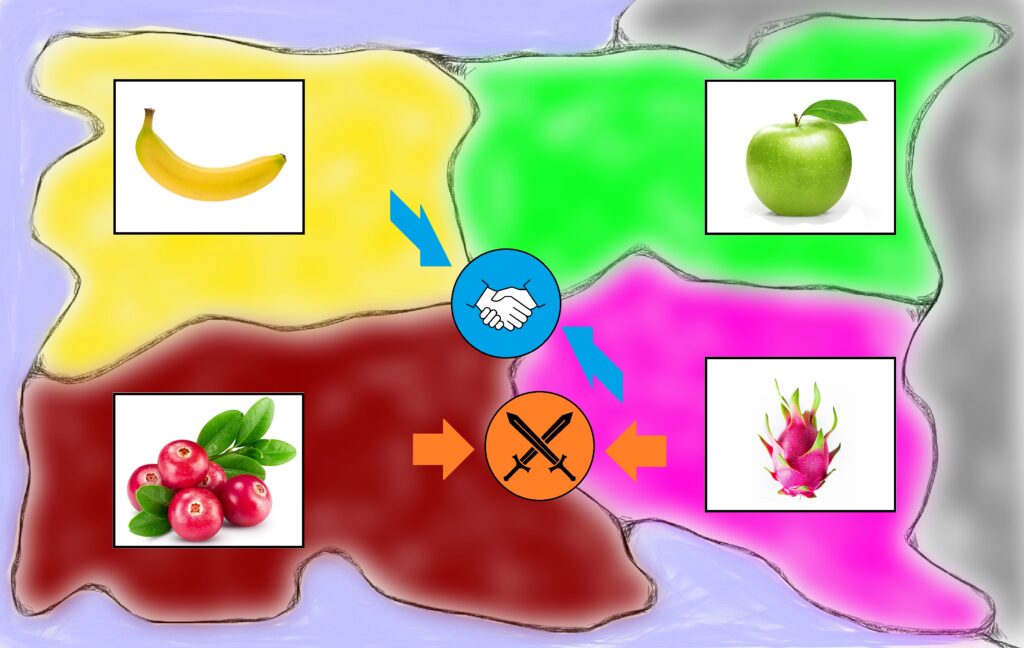
A single tree can be assessed by an individual for four different purposes will have four different emotions felt for it with respect to: providing shade (top left); providing leaves to jump in (top right), providing a picturesque backdrop (bottom left), and for providing pollen to trigger allergies (bottom right).

The individual’s valuation of the tree for this fourth and less pleasant purpose could swing any feelings they feel for it in a different direction, for example, depending on what purposes have priority to the individual or what time of the year it is. Keeping the valuations and emotions felt separate for separate purposes — in accordance with the 1:1:1:1 Ratio — does not preclude an observer from making later predictions about what the individual’s overall feelings towards the tree might be, as the magnitude of these different emotions can be compared against one another, even as seasons change, to arrive at an average. However, if these valuations are merged together prematurely, the need to tease them apart, for accuracy’s sake, can be overlooked.

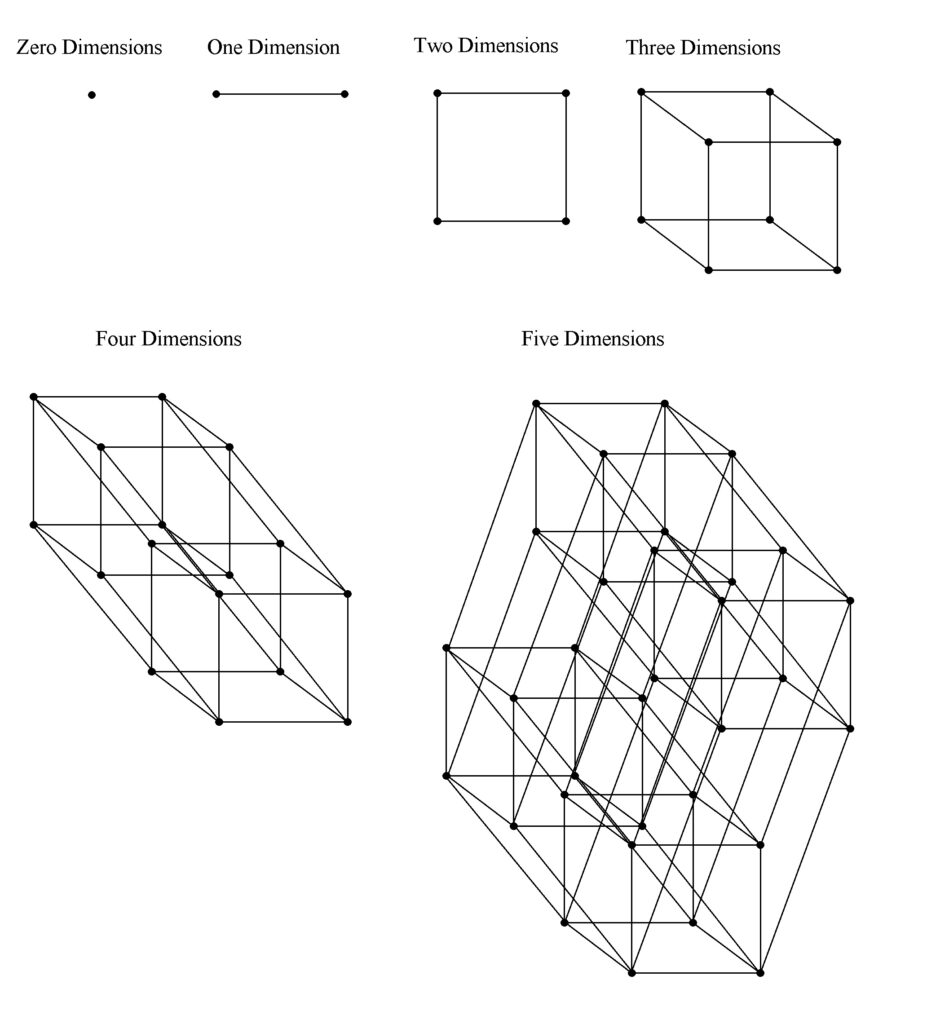
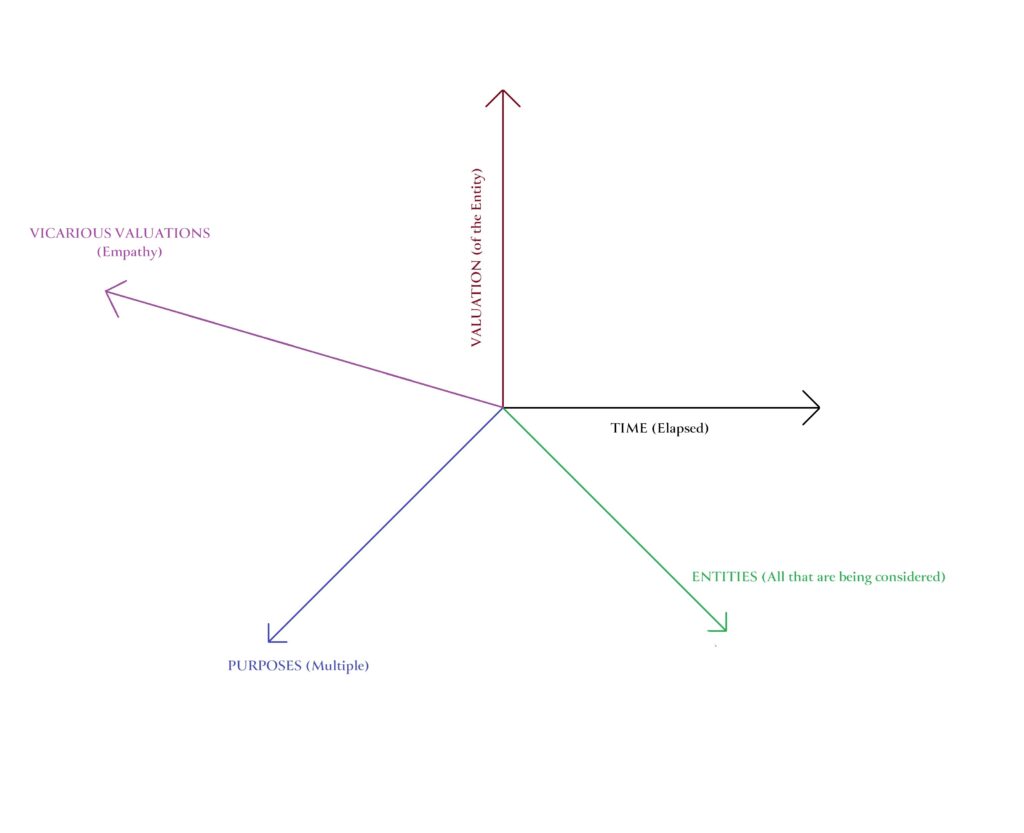
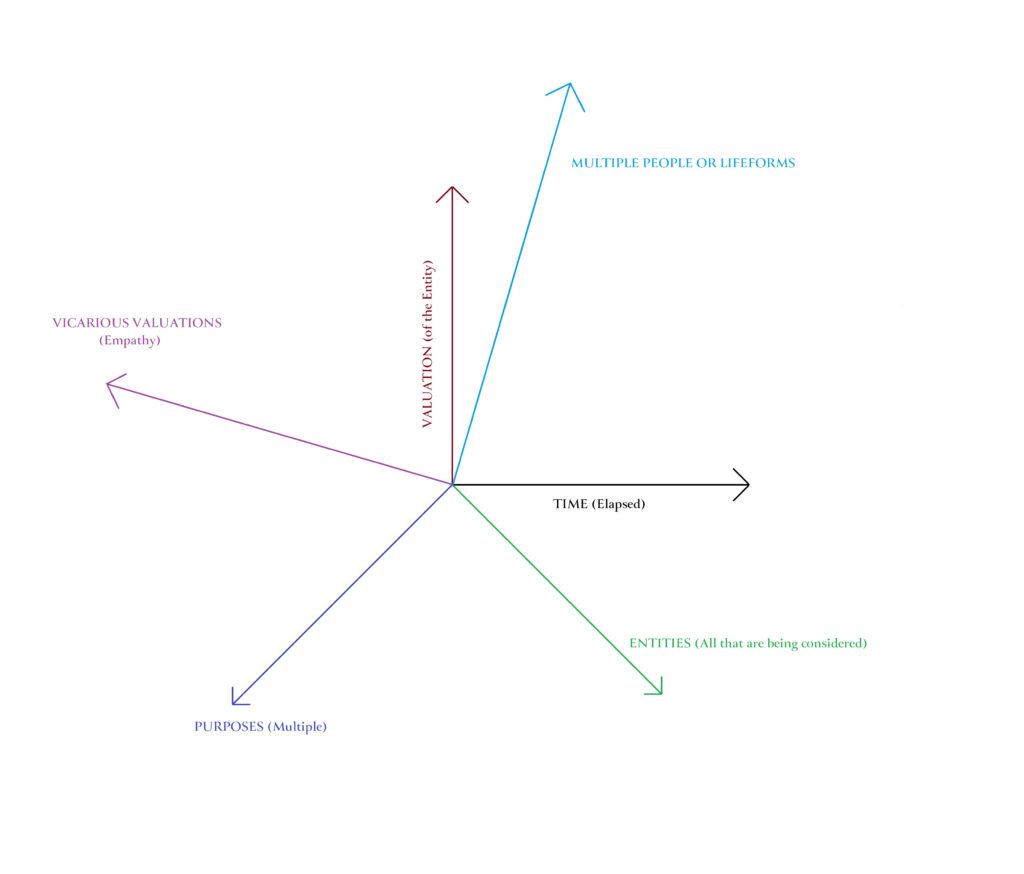
What this entails for Affect Engineering is that any entity that an individual is assessing for its ability to help fulfill multiple purposes will need to be organized in some way as to be useful without feeling cumbersome and overwhelming. Ultimately, multiple dimensions will need to be used to organize the many emotions that are modeled to be simultaneously present in an individual for each entity and purpose. Although a dimension could be used for every variable in the multivariate functions, six dimensions (e.g., six-dimensional space) are adequate for organizing and modeling the most useful information for all four Categories of Emotions in Affect Engineering. To visualize spatial dimensions higher than three dimensions on a two dimensional surface, one can extend a shape that is perpendicular to all of the existing dimensions as follows:

Dimensional diagram: zero dimensions (point); one dimension (line); two dimensions (square); three dimensions (cube); four dimensions (tesseract), five dimensions (penteract). A six dimensional cube (hexeract) would follow, perpendicular to the penteract.

The six most important dimensions to consider are as follows:

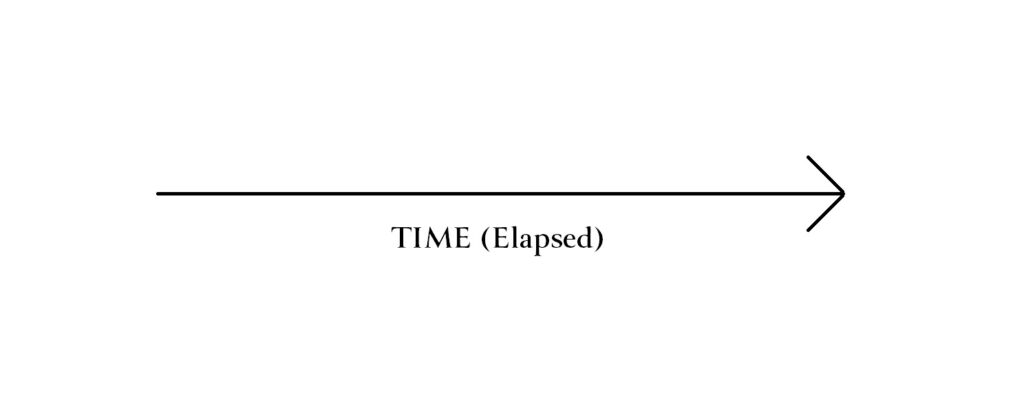
  1. 1st Dimension, the x-axis: Elapsed Time.
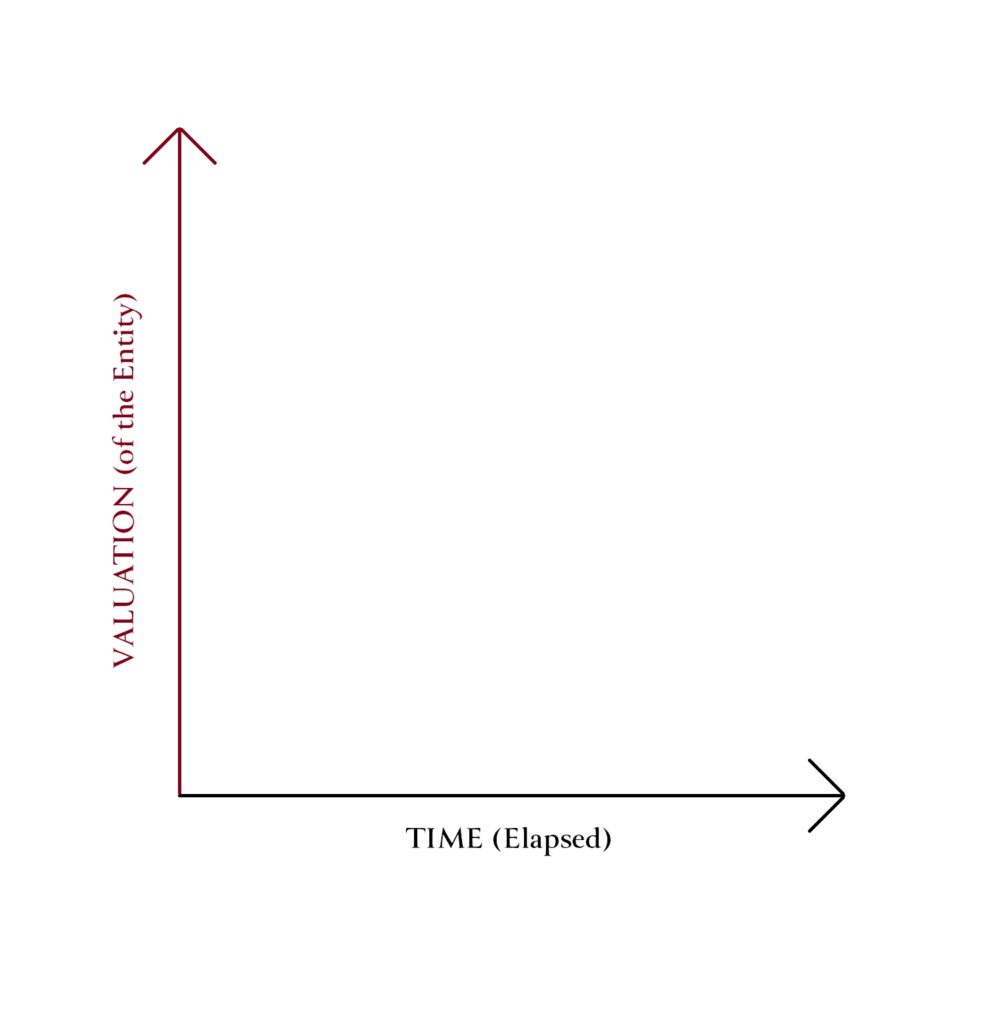
  2. 2nd Dimension, the y-axis: Valuation of a single entity for a single purpose.
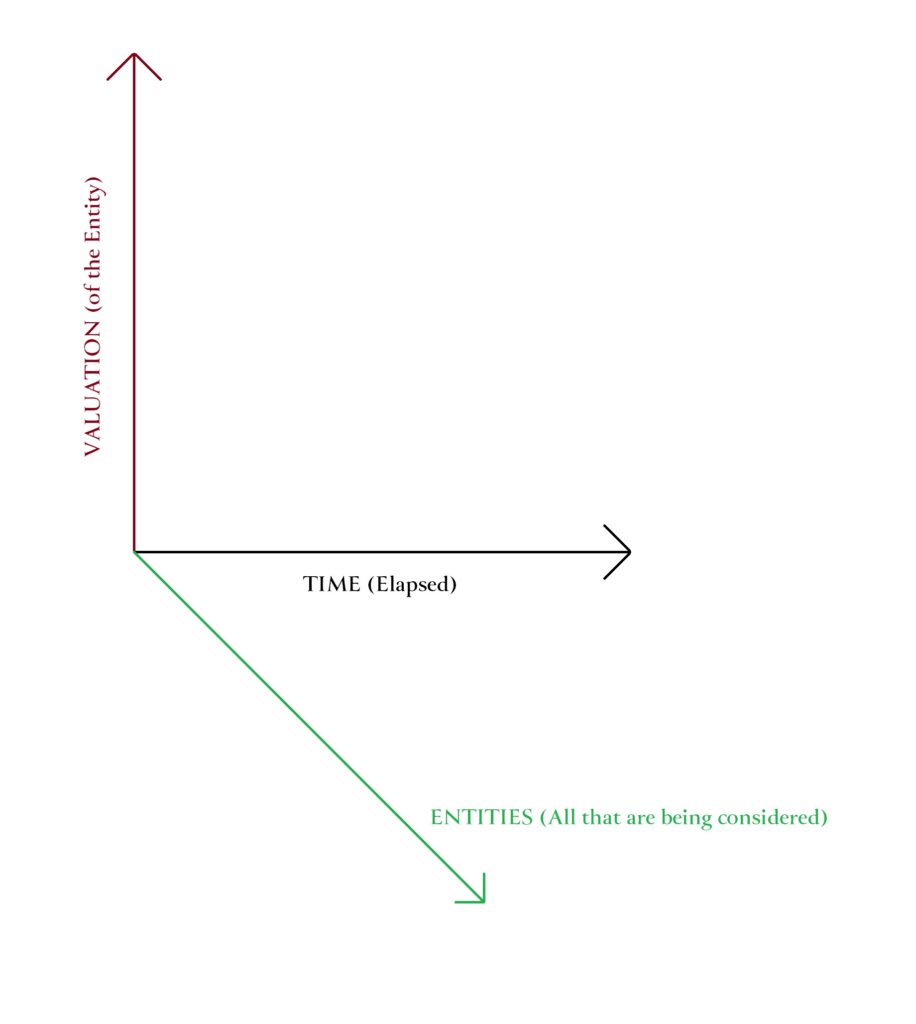
  3. 3rd Dimension, the z-axis: Multiple Entities being valued for a single purpose.
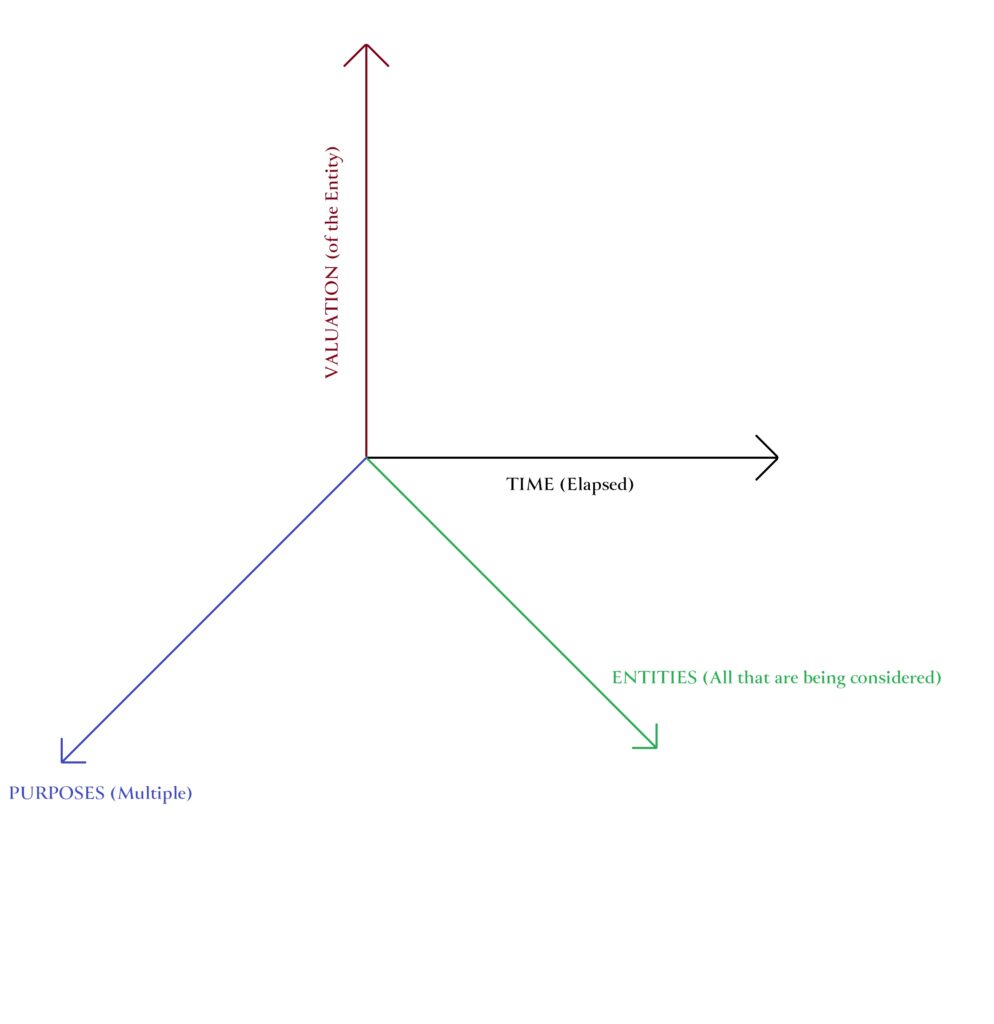
  4. 4th Dimension, the x4-axis: The Multiple Purposes for which multiple entities are given valuations.
  5. 5th Dimension, the x5-axis: Vicarious Valuations made by the self (i.e., involving empathy) of multiple entities for multiple purposes that are held by others.
  6. 6th Dimension, the x6-axis: Multiple valuations and vicarious valuations of multiple entities for multiple purposes from Multiple People (or lifeforms). One example would be the perspective from an omniscient external observer in a fictional book delving inside the experiences and vicarious experiences of all the characters in the story.

Time

The time elapsed is organized on the first dimension.

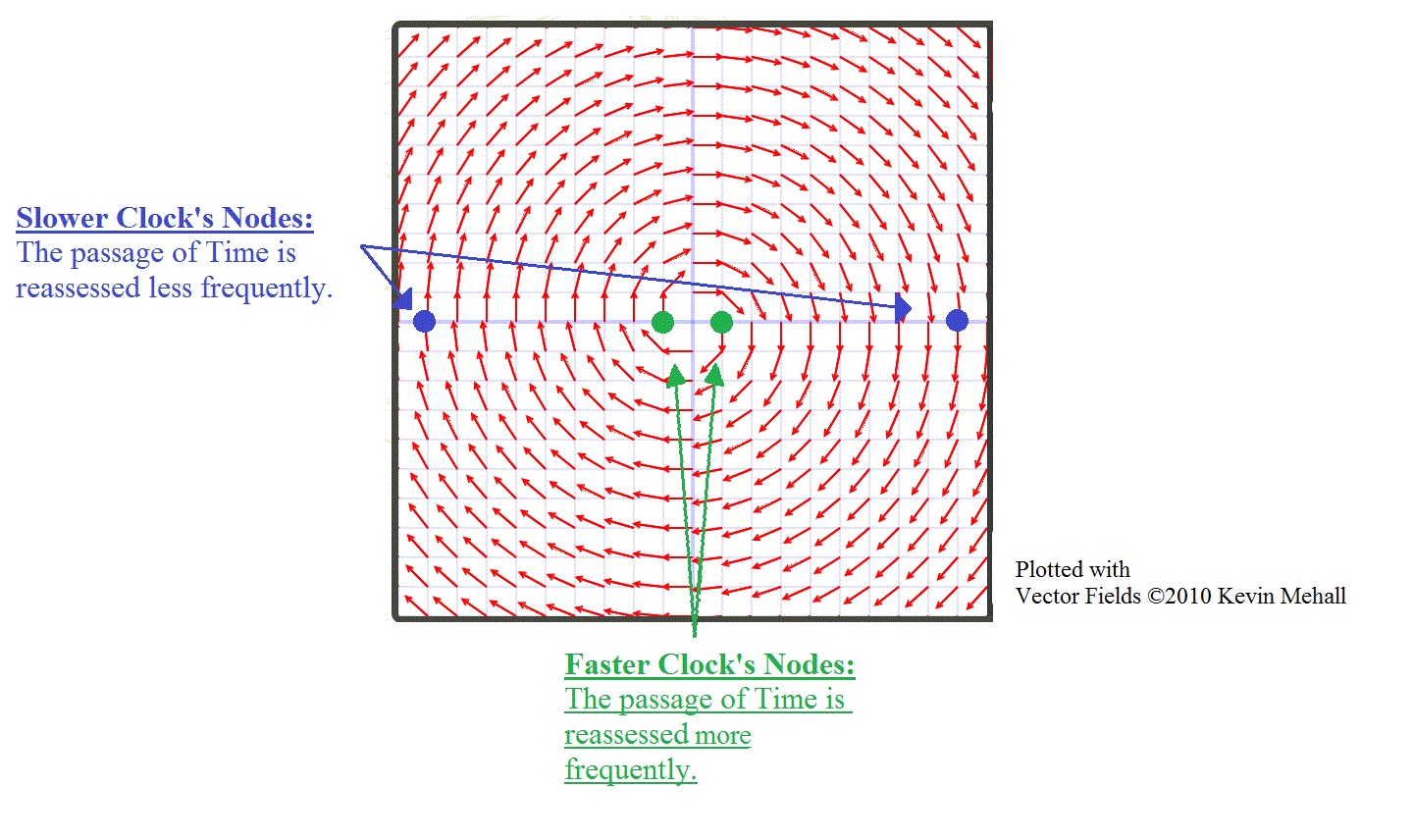
The first dimension, the x-axis, is the time elapsed from a given point. This is dependent upon an individual’s perspective and their own internal clock. It may also project backwards in time if the individual is trying to remember something from the past, such as how they felt 25 years ago. Alternatively, it may forecast the future based on expectations and what is currently known about current variables, such as how they expect to feel in the coming week. Neurologically, this would likely resemble a closed loop with a tick and a tock, similar to an actual clock, and can be modeled with a vector field.

A more in depth explanation of this is available at this link Representing an Internal Mental Clock with a Vector Field.

Valuation

The second dimension, the y-axis, is the individual’s valuation of an entity for a single purpose. This is the value or amount of weight that an entity is given by the individual with respect to the fulfillment of a particular goal.

The Valuation of an entity (for a single purpose) is the second dimension.

Multiple Entities

The third dimension, the z-axis, is used to organize different entities being valued by the individual for a particular purpose. As for how to arrange different entities along this axis, entities may be individually arranged along the natural numbers (1, 2, 3, 4 . . .) with one entity assigned per number. Tracking the changes in an individual’s valuations of entities for a purpose is the primary aim at this level. The z-axis is used to organize all the entities that an individual can conceive, and this facilitates comparing changes in the flow of energy being invested by the individual into different entities over time. Other arrangements of the entities along the z-axis are possible so long as they accomplish this aim of organizing entities.

The third dimension organizes the multiple entities that are being valued for the same purpose.

Multiple Purposes

The fourth dimension, the x4-axis, organizes every purpose that the individual possesses.

The different purposes that all of the entities are being valued for are organized along the fourth dimension.

To make comparisons easier, valuations of an entity for a purpose and its complementary purpose are organized along the fourth dimension, the x4-axis. Returning to the earlier example of the tree being valued for four different purposes, four dimensions are also sufficient to model the individual’s valuation of a single entity for the aforementioned purposes:

  1. The tree’s capacity to provide shade on a hot day
  2. The tree’s capacity to provide enough leaves to make a leaf pile to jump in
  3. The tree’s capacity to provide a picturesque backdrop for a wedding photo
  4. The tree’s capacity to release pollen that triggers allergies in the individual

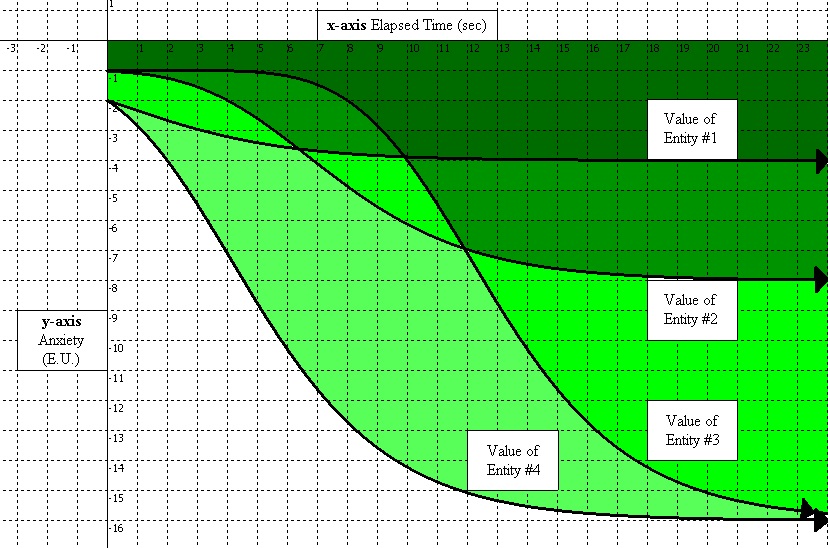
A hypothetical plot of the individual’s valuation of the tree for the fulfillment of four separate purposes throughout the course of a year. If other objects were to be valued for these same four purposes, they would be aligned along the green axis (z-axis) for different entities.

The valuation of the tree for its ability to fulfill these four purposes is extended out along the fourth dimension, the x4-axis for Multiple Purposes. The complements to these purposes would also be extended out along this axis as they are purposes themselves. Alternatively, if one wished to compare a purpose to its complementary purpose they can optionally be graphed on the same graph in order to make comparisons easier; they are still two separate values for separate emotions and would be on opposite sides of the x-axis due to having an Appraisal that is the opposite of the original purpose (i.e., +1 or -1). Being able to easily observe changes in the flow of energy invested into entities, across time, and for different purposes, is the ultimate aim, regardless of the setup chosen.

Vicarious Valuations

The fifth dimension, the x5-axis, organizes vicarious valuations for instances where the self imagines itself as another person or thing. This dimension concerns empathy and is generally not used for Category I emotions, as all valuations for Category I Emotions would normally be collapsed on zero of the x5-axis. Category II, Category III, and Category IV Emotions make use of the x5-axis, as empathy is involved for nearly all of the emotions in these categories.

The fifth dimension organizes vicarious valuations that the self makes when it imagines itself as an other, and concerns empathy.

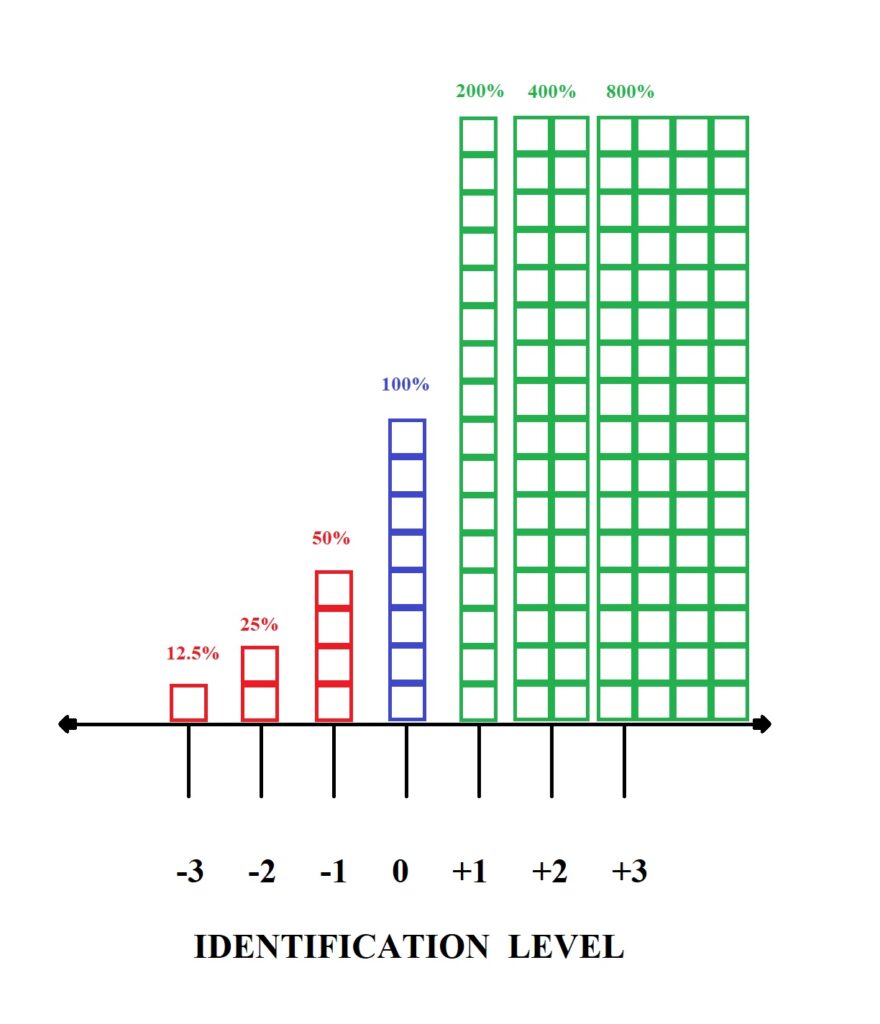
Positive and negative real numbers may be used to organize vicarious valuations along this dimension and distance from the origin can be considered a parallel for the self’s Identification Level with the target (e.g., an optional coefficient along the base of the function) and another means of organizing the flow of vicarious valuations across time. For example, going from positive to negative values along the x5-axis, each integer may be chosen to represent half the magnitude of the previous identification level of the previous whole number, with an Identification level of zero being equivalent to identifying with another person at the same level as oneself, an Identification level of negative one being half the magnitude as the self, and an Identification level of negative two being one quarter the magnitude as the self. Mathematically, this would be written as two taken to the power of the Identification level and is illustrated below. A scale by a factor of ten could alternatively be used as well, like the Richter Scale:

2“Identification Level”(graph below), or alternatively, 10“Identification Level”

Graph of the self’s identification with a target and the effect on magnitude. A displacement of 0 (blue) indicates the self identifies with an other to the same degree as the self. A negative displacement (red) indicates less identification relative to the self, whereas a positive displacement (green) indicates more. This is a scale by a factor of two, though a factor of ten could be used similar to the Richter Scale.

As seen in the image, if one desired, negative values for an Identification level would indicate when an individual is identifying less with an other than they would if the self were in the same situation (e.g., reduced empathy). In contrast, positive values for an Identification level would indicate when the individual is identifying more with an other than they would if the self were in the same situation (e.g., excessive empathizing).

Although the variables of “Identification Level” and Self-Distinction both concern empathy, they represent different concepts. Self-Distinction confirms that empathizing is occurring, while Identification Level is a gauge for the intensity to which an individual is empathizing or distancing themself from the target.

Multiple People or Lifeforms

The sixth dimension, the x6-axis, organizes all of the people or lifeforms that are valuing entities for the fulfillment of purposes they hold, and entities that they are vicariously valuing for the fulfillment of purposes held by others.

The sixth dimension organizes all of the people or lifeforms that are both valuing and vicariously valuing entities for multiple purposes held by the self and others.

For Category I Emotions concerning a single individual, only the first four dimensions are utilized. Category II and Category III Emotions utilize five dimensions, with the fifth dimension being a complex plane (for imaginary numbers). Most Category IV Emotions will utilize five dimensions as well. Utilization of the sixth dimensions is generally restricted to literature, film, and works of art told from a third person point of view that is omniscient. This would be a perspective that is capable of seeing inside the minds and thoughts of everyone and everything in a story.

3) Why is it necessary to balance or hold certain emotions in check, including ones that are generally considered positive such as happiness and euphoria?

SHORT ANSWER

If an individual intends to continue living, then emotions arising from the fulfillment of purposes related to primary drives will need to be held in check by the fulfillment of an opposing purpose in order to maintain homeostasis. If an individual does not intend to continue living, then no emotions or purposes need to be balanced or held in check.

IN DEPTH EXPLANATION

If the fulfillment of a particular purpose related to a primary drive is pursued ceaselessly, this will eventually lead to an imbalance with respect to the fulfillment of the individual’s other goals that are necessary to sustain life. Successfully not pursuing the acquisition of food, water, or sleep indefinitely will lead to death (e.g., a hunger strike, a thirst strike, or a sleep strike). Similarly, a bout binge of eating, drinking, or sleeping that goes unchecked will also lead to death.

However, the above would not necessarily be the case for the fulfillment of purposes related to secondary drives, as these do not always entail matters of life and death if they are pursued, such as seeking praise from one’s peers, seeking the acquisition of money, or seeking fame by being victorious in sporting events. Additionally, not pursuing the acquisition of any of the above indefinitely, or other secondary or learned drives, will not necessarily lead to death.

Most of the purposes or goals that a person possesses, both those related to primary and secondary drives, require the individual to be alive in order to both facilitate and realize their fulfillment. As it would follow, staying alive generally has a high priority to most individuals. Because life’s maintenance requires maintaining homeostasis, achieving a balance between all the drives the individual possesses also takes on a heightened importance to most lifeforms. In Affect Engineering, an individual’s impulse to stay alive by maintaining balance between all the drives possessed is called the Drive to Maintain all Drives; it is a parallel to the survival or self-preservation instinct, or even somewhat analogous to Sigmund Freud’s life instinct in psychoanalytic theory. In Affect Engineering, this would be the metaphorical equivalent of a ship’s navigator plotting a course that keeps a ship sailing (alive) by going in circles within a large lake so that the captain does not run it aground (death).

On the opposite side of the spectrum, there are cases where an individual chooses a course of action that directly opposes their own odds for survival. In Affect Engineering’s framework, an individual’s impulse to not stay alive by not maintaining a balance between all the drives possessed is called the Drive to Not Maintain all Drives. This entails holding the fulfillment of one particular purpose and the pursuit of one drive above the fulfillment of its opposing drive and the balancing of other primary drives at any cost indefinitely (i.e., beyond the point where life can be sustained). This is referred to as “breaking a double bind” in Affect Engineering (addressed in question #5 of Article two in this series, Reframing Anxiety as a Resource, Article 2 of 12). The Drive to Not Maintain all Drives in Affect Engineering, while not a direct parallel, occasionally functions in a somewhat similar manner to Freud’s death instinct, albeit with some reservations. Among other things, the Drive to Not Maintain all Drives also accounts for instances where a secondary drive may supersede in importance the balancing of other drives, including primary ones that are necessary for survival, or what might sometimes be called instances of sheer determination. As for the individual’s motivation to engage in this behavior, one explanation might simply be exploratory; if the boundaries at which point an individual might normally expect to perish are pushed further out beyond what was believed to be a limit, it may afford access to additional resources, status, self-actualization, or something else that is evolutionarily advantageous to the individual or their kin.

4) How would instances of self-sacrifice be accounted for in Affect Engineering?

SHORT ANSWER

Instances of self-sacrifice would be modeled as scenarios where the individual opts to hold the fulfillment of one purpose above its complementary or opposing purpose beyond the point where their life can be sustained. This could occur for a number of reasons, but they all involve the breaking of a double in Affect Engineering, and the exaltation of the Drive to not Maintain all Drives over its opposing drive.

IN DEPTH EXPLANATION

Instances of self-sacrifice, where the self voluntarily takes measures that lead to their own demise, are labeled “breaking a double bind” in Affect Engineering. These are also scenarios where the individual’s Drive to not Maintain all Drives is held above its opposite, the Drive to Maintain all Drives. This is exemplified in the following three examples regarding resolve, altruistic acts, and martyrdom coupled with belief afterlife.

Resolve: Determination to Succeed No Matter the Price

An individual determined to achieve a particular feat, such as reaching the summit of Mount Everest, becoming the first human to set foot on Mars, besting the free dive record or seeking any achievement that might potentially land their name in the Guinness Book of World Records for that matter, might be inclined to risk their own life in pursuit of the goal. The Drive to Not Maintain all Drives in Affect Engineering’s framework, essentially becomes an individual’s impetus for testing and pushing the bounds and limitations of their own body, or a high stakes game of brinkmanship.

The marathon, of course, is a well known example, having earned its name from the second of two runs by the Greek messenger Pheidippides, who first ran approximately 150 miles from Athens to Sparta and back to seek military assistance before the Battle of Marathon 490 BCE, covering the distance in about two days, and then later ran another 26 miles after the Battle of Marathon from Marathon to Athens to announce victory before collapsing and dying.

While death itself would not necessarily be the objective in such instances, an admittedly high level of resolve is required from an individual to ignore feedback from their own body imploring them to reverse course from whatever hardships are being imposed on their body by a chosen objective. These scenarios, where the self holds the pursuit of one purpose against its complementary purpose up to or even beyond the point where the double bind is broken, the Drive to Not Maintain all Drives, is a proverbial double-edged sword in Affect Engineering. It can lead to fantastic feats being achieved by an individual in some cases, or incredible folly, tragedy, or a death that would otherwise have easily been avoided in other cases.

For anyone who has seen the movie GATTACA (1997), directed by Andrew Niccol, this is exemplified spectacularly in the climactic scene where Vincent and his brother Anton compete against each other in their childhood game of chicken; both brothers both swim out into the ocean and whoever turns back first loses. During the scene, Vincent says the iconic line, “I never saved anything for the swim back.”

GATTACA “I never saved anything for the swim back.” (A five minute video clip of the scene from the movie)

Altruistic: Sacrificing One’s Own Life to Save Another’s

A parent sacrificing their own life to save the life of another, such as their own child or even the life or lives of complete strangers, are also examples of the Drive to Not Maintain all Drives. These are also scenarios that would typically involve empathy and the other Categories of Emotions (e.g., II and III) where the self’s own objectives that have the most priority to them are also linked to the outcomes of others around them, and they will be addressed in the coming articles.

Martyrdom: When Fanaticism Meets Belief in an Afterlife

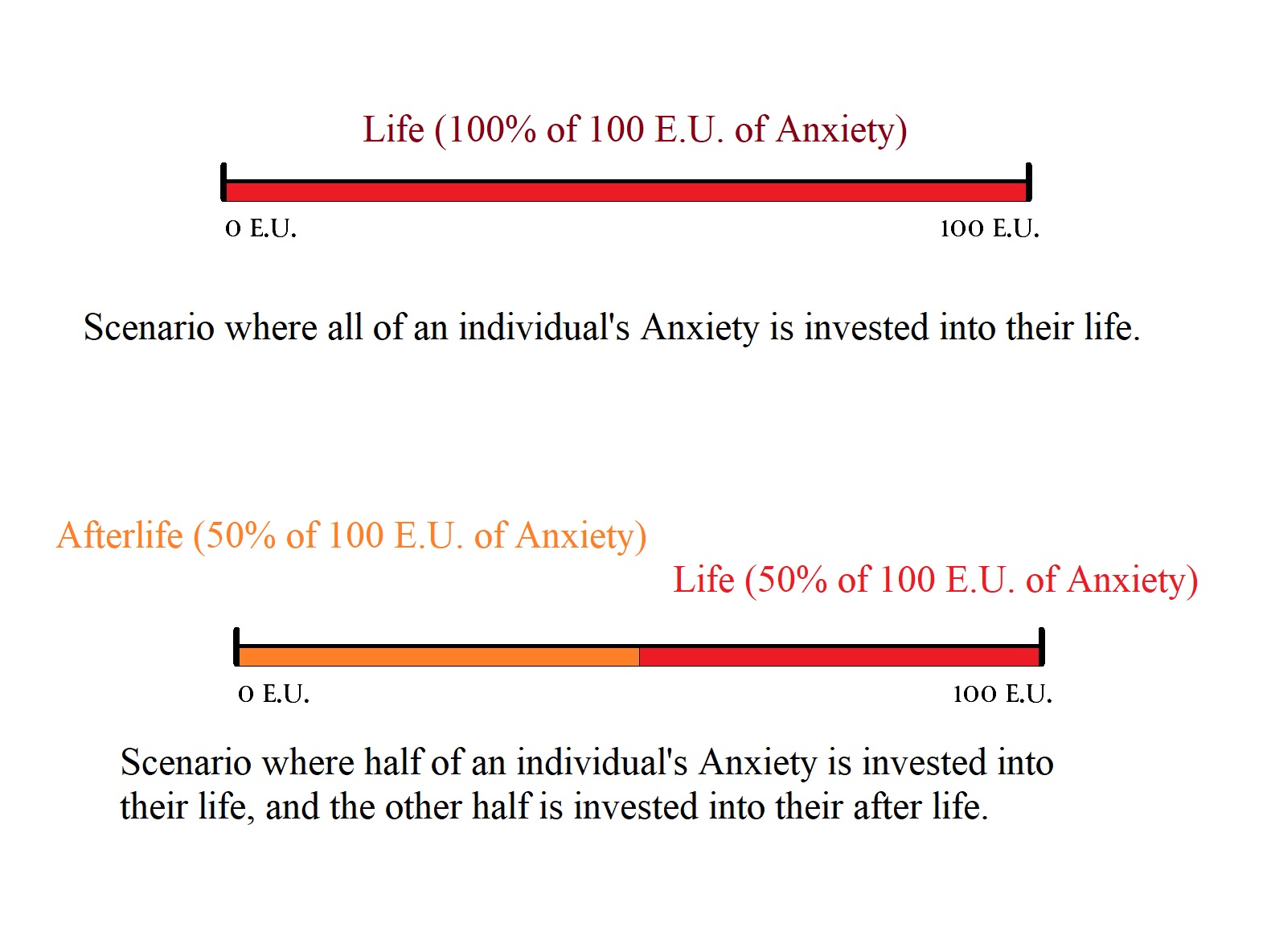
Most world religions contain some sort of belief in an afterlife. If one looks a few centuries back into history, in most regions of the world death from disease, famine, warfare, and violence were all too common. Moreover, life expectancies were generally far shorter than they are today. Experiencing frequent trauma was likely inevitable, and belief in an afterlife would have afforded a measurable degree of relief by enabling individuals to split their investment of Anxiety (e.g., a resource in Affect Engineering) into two lives: one, over which they had seemingly little control due to the uncertainty around them; and a second one, an afterlife, that they could potentially exercise a greater degree control over through their actions or faith. This would be similar to the golfing example from article two of this series, where Anxiety was split between strokes depending upon the par level of a course.

On the surface, this would seem like an ideal way for managing stress to avoid over-mobilizing the investment of Anxiety into one’s present life. In a dangerous world where death could happen at any moment from a plague, a war, famine, or any number of environmental disasters from earthquakes and fires to floods and blizzards, belief in an afterlife would have been an effective psychological tool for conserving resources, and not becoming paralyzed from an over-mobilization of Anxiety. Affect Engineering’s framework would posit that throughout much of history, belief in an afterlife among organized religions served this function, and afforded everyday individuals a means for helping managing stress related to an uncertain existence in a perilous world.

In Affect Engineering’s framework, this would have entailed the individual avoiding the over investment of Anxiety into their present life (i.e., the one they were living that was rife with uncertainty and had death lurking at every corner), and splitting it between an afterlife with certain promises should they behave in certain ways and believe in certain things. Nearly every world religion incorporates belief in an afterlife in one form or another, and from a purely objective standpoint, this would likely have been advantageous, at least from an evolutionary perspective regarding stress management.

However, on a darker note, it can and has often lead to a less than wholesome brand of fanaticism and zealotry if too much Anxiety is invested into the afterlife. Should the allure of what awaits in an afterlife be made to appear more appealing than what is transpiring in one’s present life, it could inspire an individual to not only throw away their own life for a route to something promised in the afterlife, but it could also inspire them to take measures to end the lives of others along the way. Unfortunately, there is no shortage of events in history where the promise of a paradisal afterlife has inspired, motivated, or absolved them from the murder of other people, along with the individual’s own life, effectively granted them what some might label a blank check on morality for any misdeeds or crimes they might have committed in the course of their life. Some examples include:

  • The Rhineland Massacres (1096): The slaughter of Jewish communities in the 11th Century by knights of the First Crusade, following Pope Urban II’s speech that promised remission of sins for anyone participating in the Crusade to retake Jerusalem from Muslim control.
  • A mass suicide or mass murder perpetuated by a charismatic or abusive cult leader, such as by Jim Jones in Jonestown, Guyana: The Jonestown Massacre (1978)

5) What factors will amplify, or alternatively, reduce the intensity of each Category I Emotion when they are modeled in Affect Engineering?

SHORT ANSWER

All of the variables in the functions employed in Affect Engineering are modeled to influence an individual’s valuation of an entity for a purpose, which then could lead to amplifying or reducing the intensity of particular emotions.

IN DEPTH EXPLANATION

Variables and changes to the variables that will amplify particular Category I Emotions are listed below.

Variables that Have a Major Influence (Base of the Function)

Existence

If an individual has no cognizance of an entity, that is to say, it does not exist to them, then all valuations for the entity are reduced to zero. No emotions are modeled to be felt for the entity with respect to any purpose until the entity exists to them.

Utility Components

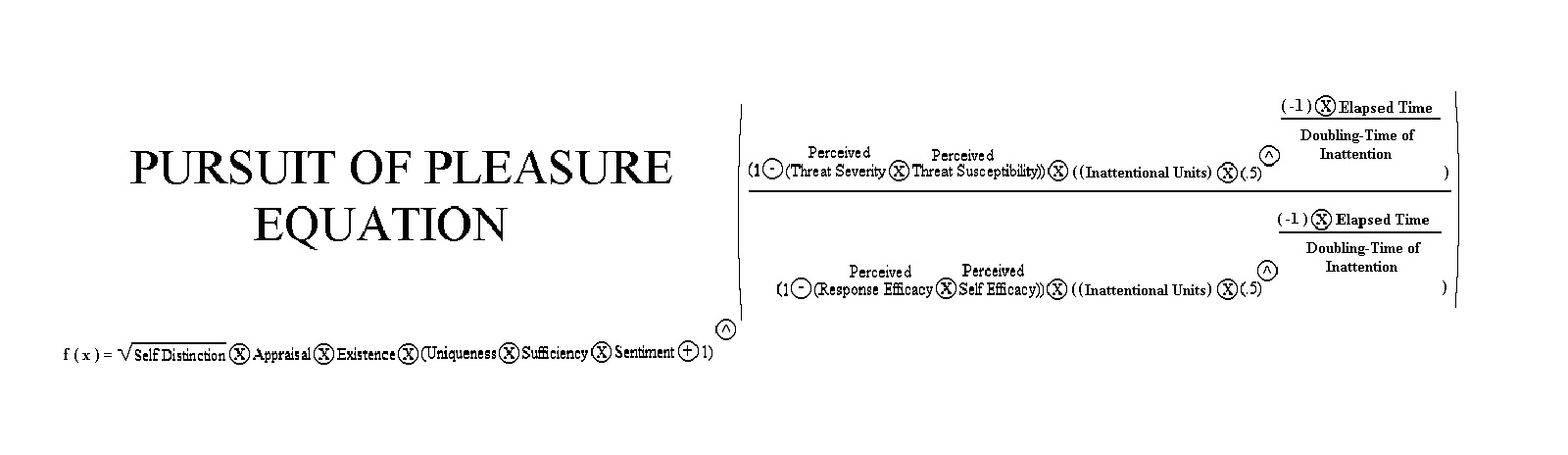
Uniqueness (Answers the question, “Are there alternatives?”), Sufficiency (Answers the question, “Is it enough?”), and Sentiment (Answers the question, “How important is the purpose at hand relative to the purpose with the most priority?”). These three variables either amplify the valuation of an entity if they are all at their maximum value of one, or they reduce the valuation of an entity if they are near their minimum value approaching zero.

Variables that Have a Specific Influence (e.g., Coefficients Outside the Base of the Function that Are Discrete Variables)

Appraisal

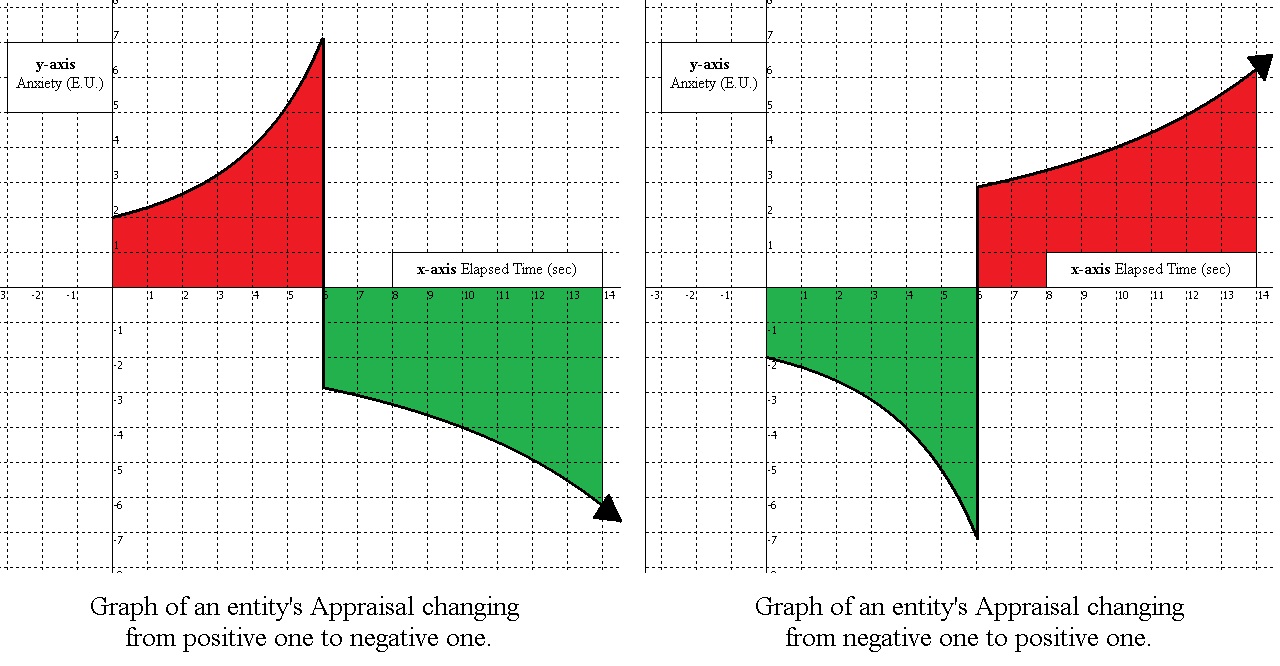
The Appraisal variable determines which of the two function types is used (i.e., Avoidance of Pain or Pursuit of Pleasure). If it changes unexpectedly, it can be indicative of Surprise, a Category IV emotion; otherwise, it tends to flip at or near the level when Indifference is felt towards entities being valued for both a purpose and its complement (near homeostasis or equilibrium).

Self-Distinction normally equals +1 for Category I Emotions, and generally no empathizing takes place. As noted earlier, different levels or intensities of identification for Category II and III Emotions can be represented by a coefficient alongside the base of the function.

However, if an individual holds a valuation of an entity for a purpose, but the individual does not feel as if they fully identify with themself (e.g., they are detached from themselves), then setting Self-Distinction to -1 and using empathy would be warranted even though the purpose is held by the self. This could occur, for example, as a result of depersonalization, derealization or other related DSM-5 disorders.

Variables that Have a Catalytic Influence (e.g., Variables in the Exponent of the Function)

Harm, Benefit, and Efficacy Components

The influence of Harm and Efficacy Components is modeled to be similar across both functions depending on the setup of functions that are chosen. Harm and efficacy concern relationships and expectations between two entities that an individual is contemplating. Either Harm or Benefit is used for the functions, but not both. These are expressed as contingencies and their structure also depends on one’s choice of language. There are at least four pairs of functions for modeling Harm, Benefit, and Efficacy, but only one pair (i.e., two of the eight function setups) are needed to model all of the emotions in Affect Engineering.

Harm is expressed as a negative contingency to varying degrees: “When event A happens, then event B never happens. For example: “Whenever my neighbors practice playing the drums, I never sleep.” If it is not a perfect contingency, then probability becomes a factor. For example, “Whenever my neighbors practice playing the drums, I only sleep half the time.”

Benefit is expressed as a positive contingency: Whenever event C happens, then event D always happens. For example: “Whenever it rains, then the ground becomes wet.”

Harm components (e.g., threat susceptibility and threat severity), when maximized, are modeled to increase the Anxiety invested into entities for Avoidance of Pain functions, and reduce the Negative Anxiety invested into entities for Pursuit of Pleasure functions.

Benefit components (e.g., benefit susceptibility and benefit intensity), when maximized, are modeled to reduce Anxiety invested into entities for Avoidance of Pain functions, and increase the Negative Anxiety invested into entities for Pursuit of Pleasure functions.

Efficacy components (e.g., self-efficacy and response efficacy), may be modeled as the individual’s ability to prevent one entity from harming another entity, to prevent one entity from benefiting another entity, or to ensure that either of these happens instead as an alternative setup. If Efficacy components are held to be preventative with respect to one entity harming another entity, then when they are maximized they are modeled to reduce Anxiety invested into entities for Avoidance of Pain functions, and increase the Negative Anxiety invested into entities for Pursuit of Pleasure.

Alternatively, if Efficacy components are held to be preventative with respect to one entity benefiting another entity, then when maximized they are modeled to increase Anxiety invested into entities for Avoidance of Pain functions, and decrease Negative Anxiety invested into entities for Pursuit of Pleasure functions.

Depending on what nuances of language someone wishes to explore, any of the pairs listed above, or that are not listed, may be used.

Reasoning, Attention, Half-life of Attention, the Doubling Time of In-attention, and Time

Reasoning is modeled to be under executive control, and is a means by which an individual may regulate emotions directing attention. The manner this happens in also depends on how attention is being modeled in a function, and there are several ways that attention can be modeled.

The most straightforward way to model attention is with decay (e.g., half-lives, like in radioactive decay) over a specified amount of time. An individual’s reasoning faculties would be modeled to selectively direct and hold attention over a particular variable group at a somewhat constant level while permitting attention held over other variable groups to fall into attentional decay. For example, if reasoning is used to hold attention over Efficacy components while permitting attention held over Harm components to diminish, then this would reduce the Anxiety invested into an entity and perhaps give the individual the belief that the objective is more feasible than it might actually be.

The Doubling-time of Inattention is one alternative, albeit a similar one, to the use of a Half-life of Attention in Affect Engineering. It is a measure for how long it takes the attentional resources that are not directed towards some feature to double.

A third alternative for modeling attention is valuation resilience. This setup does not presume that attention towards something decreases, but rather, that attention reverts back towards its original level at the onset of a particular instance. Reasoning, in this case, must be used to forcibly direct attention away from or towards different components in a function at all times in order to manage attentional resources. This would be particularly useful if one did not wish to model forgetting in a function. If their working parts are all in order, machines and computers do not forget things in the sense that humans do. They can certainly be programmed to delete certain memories though, after a time, but this is more akin to a purge. With regards to humans and other lifeforms, valuation resilience as a form of attention would likely prove more useful for modeling traumatic events and post-traumatic stress disorders, as memories related to these events are typically intrusive, bringing the individual back to the traumatizing event.

Other Major Variables (e.g., Those on the Other Side of the Function)

Valuation

The y-value, or the measure for the affect felt for an entity with respect to a particular purpose, is on the other side of the function. This, however, does not always mean it would be the last variable known to the individual. It, the valuation, may even be perceived before a purpose has been detected for which the entity ability to fulfill it is known. For novel experiences where an individual has no idea of what is happening and no prior knowledge to pull from, such as the first time one gets a cut in the skin or breaks a bone in the body, or experiencing the first taste of ice cream or a cookie, then the affect would likely be felt first. A more physiological based approach to the mental construction of an emotion, beginning on the left side of the function, would be more appropriate in such cases. Thereafter, through introspection, self-reflection, and investigation, an understanding may evolve in the individual along with expectations about the self, the world, and their place in it.

Preview

The next article, eight, will explore the Category II Emotions in Affect Engineering in greater detail.

Previous: Article 6 of 12: Organizing Principles of the Categories of Emotions in Affect Engineering

Next: Article 8 of 12: Category II Emotions: Inter-personal Emotions or the Four Degrees of Empathy

On the Nature of Emotions: Categories of Emotions and Organizing Principles in Affect Engineering (Article 6 of 12)
Categories of Emotions and Organizing Principles in Affect Engineering

This is the sixth article in a series designed for the layperson and it overviews the organizational principles behind how emotions are classified in Affect Engineering and also provides a general description of many of the basic emotions. It will begin with a list of questions that it aims to address. The sections that follow will be in two parts each. The first part will be a short statement that answers each question as succinctly as possible. The second part will either be an explanation that goes into more detail where needed or explain some of the more nuanced implications of the short answer.

QUESTIONS

  1. How are emotions organized in Affect Engineering?
  2. What are the core distinguishing features used to classify emotions in Affect Engineering?
  3. What would a general description of the main emotions in each category of emotions sound like?

How are emotions organized in Affect Engineering?

SHORT ANSWER

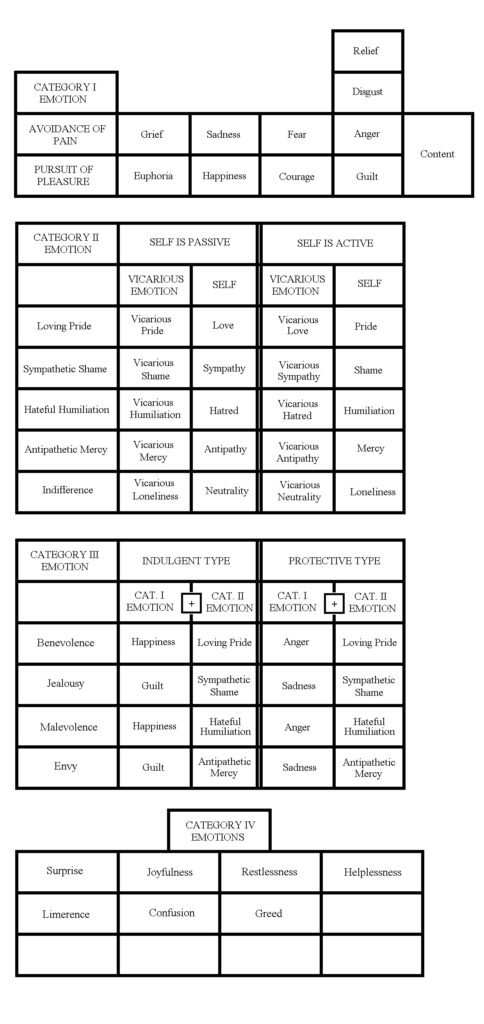
Emotions in Affect Engineering are grouped into one of four categories: Emotions of the Self; Interpersonal Emotions; Compound Interactive Emotions; Emotive States.

IN DEPTH EXPLANATION

Emotions in Affect Engineering are grouped into one of four categories based upon a handful of features. Emotions that concern a single individual’s objectives and that take place over a relatively shorter time frame (e.g., minutes as opposed to days or weeks) are grouped together under Category I Emotions, Emotions of the Self or the Intrapersonal Emotions.

Emotions that involve empathy (e.g., scenarios where individuals imagines themselves in an other party’s position experiencing something) where they vicariously experience the other party’s success or failure in a passive manner without attempting to influence the outcome are grouped together under Category II Emotions. These are called the Interpersonal Emotions or the Four Degrees of Empathy in Affect Engineering.

Emotions that involve empathy and where individuals are attempting to influence the outcome of the other party’s situation while they are vicariously experiencing their success or failure are grouped together under Category III Emotions. These are called the Compound Interactive Emotions.

Lastly, emotions that are influenced more heavily by the amount of elapsed time, that are somewhat more unique in how they arise, or that are characterized by an interplay between multiple objectives (e.g., three or more objectives) are grouped together under Category IV Emotions, the Emotive States.

The Four Categories of Emotions in Affect Engineering. In the Category I Emotions, Anger, Disgust, and Relief are all grouped under Avoidance of Pain and would possess similar graphs, but differ in the response by the Self (i.e., Aggression, Evasion, Neither). Content is grouped under both the Avoidance of Pain and Pursuit of Pleasure subcategories. Category II and Category III Emotions involve empathy. Category IV Emotions include emotive states and miscellaneous emotions; it is a bit more expansive than the other three categories.

What are the core distinguishing features used to classify emotions in Affect Engineering?

SHORT ANSWER

The core distinguishing features used to classify emotions in Affect Engineering are primarily derived from answers to the following questions:

  1. At what rate is the individual’s valuation of an entity for a purpose changing?
  2. What is the Appraisal of an entity, and will its acquisition lead towards or away from restoring equilibrium between the purpose at hand and its complementary purpose?
  3. Is empathy is involved?
  4. If empathy is involved, is the self actively attempting to influence the outcome for the other party’s success or failure, or is the self simply observing and vicariously experiencing the other party’s situation in a passive manner?
  5. What is the time frame over which an entity’s valuation is changing? Is it a drastic change?
  6. Is there an interplay between three or more purposes or other variables in the functions?
  7. What type of response is the self engaging in (e.g., aggressive, evasive, or neither)?

IN DEPTH EXPLANATION

The main feature used to distinguish one emotion from another in Affect Engineering is the rate of change in an entity’s valuation for the fulfillment of a purpose. For Category I Emotions, Emotions of the Self, the rate of change of an entity’s valuation for a purpose over time is the primary distinguishing feature between different emotions. This value may be increasing or decreasing at either an accelerating rate or a deaccelerating rate. It may also be staying the same.

The Appraisal of an entity, which is concerned with whether the entity’s acquisition will lead towards a restoration of equilibrium between a purpose and its complementary purpose or away from equilibrium, determines whether an Avoidance of Pain function is used as opposed to a Pursuit of Pleasure function. Each of these types of functions has different emotions that fall under their domains, although the emotion of Content is an exception as it falls under both. The Avoidance of Pain emotions under Category I Emotions include: Sadness, Grief, Fear, Anger, Disgust, Relief, and Content. The Pursuit of Pleasure emotions under Category I Emotions include: Happiness, Euphoria, Courage, Guilt, and Content.

Empathy, or the self imagining itself experiencing a situation as another party, is present in all Category II, all Category III Emotions, and in some Category IV Emotions. In the case of Category II Emotions, the self’s vicarious experience is purely passive, akin to watching a movie and identifying with one of the characters in it. In the case of Category III Emotions, the self is actively attempting to influence the outcome of the situation for the another while also vicariously experiencing the other’s success or failure.

Category IV Emotions, or Emotive States, are those where the duration of the situation is taken into consideration when classifying an emotion; Category Four Emotions also include emotions that are characterized by an interplay between three or more objectives, and this category includes emotions that arise due to specific variables in the functions that may be consistently elevated, depressed, unknown, or fluctuating wildly, among several other possibilities.

Lastly, regarding the self’s response type (e.g., to a threat of harm to an entity), if the self’s response involves aggression and moving against a threat of harm, attempts to evade a threat of harm, or neither of these, then this would alter the classification of the emotion being expressed. This applies primarily to the Category I Emotion of Anger, and is used to distinguish Anger from both Disgust and from Relief.

What would a general description of the main emotions in each category of emotions sound like?

SHORT ANSWER

Category I Emotions, the Intrapersonal Emotions, include the emotions related to purposes that only concern the self, and no empathy is involved. They are: Sadness; Grief; Fear; Anger; Content; Happiness; Euphoria; Courage; Guilt, Disgust, Relief.

Category II Emotions, the Interpersonal Emotions, or Four Degrees of Empathy, include the emotions that concern the self and others when the empathizing party is passive and not actively trying to influence the outcome of the other. They are: Love and Vicarious Pride; Pride and Vicarious Love; Sympathy and Vicarious Shame; Shame and Vicarious Sympathy; Hatred and Vicarious Humiliation; Humiliation and Vicarious Hatred; Antipathy and Vicarious Mercy; Mercy Vicarious Antipathy; Neutrality, Vicarious Loneliness; Loneliness, Vicarious Neutrality.

Category III Emotions, the Compound Interactive Emotions, concern the self and others when the empathizing party is actively trying to influence the outcome of the other. They are: Benevolence; Jealousy; Malevolence; Envy. Each of the these four emotions may also be one of two types, Indulgent or Protective. Category III Emotions are comprised of both a Category I and a Category II emotion.

Category IV, the Emotive States, often concern the time frame over which some valuations are established, and include emotions that are characterized by the interplay between multiple purposes or variables within the functions. Some examples include: Surprise; Joyfulness; Restlessness; Helplessness; Confusion; Limerence. Other more culturally specific, obscure, or lesser known emotions would likely fall under this category if they cannot be explained by the other three Categories.

IN DEPTH EXPLANATION

A brief explanation of each emotion along with a sample graph where applicable, follows below. A more in depth explanation of each of the emotions along with examples, descriptions of what variables in the functions could lead to these emotions arising, how the self can regulate these emotions, and instances of other miscellaneous emotions will follow in the remaining six articles (articles 7-12).

The Category I Emotions: Intrapersonal Emotions

Sadness

Sadness felt for a particular entity is characterized by an individual’s valuation of the entity rising at a steady rate. This could be due, for instance, to the entity becoming more difficult to acquire.

Grief

Grief felt for a particular entity is characterized by an individual’s valuation of the entity rising at an accelerating rate, oftentimes approaching a vertical asymptote (i.e., towards positive infinity). A steep slope or a vertical asymptote could arise due to the self’s realization that the entity is either nearly impossible to attain or no longer attainable at all.

Fear

Fear felt for a particular entity is characterized by an individual’s valuation of the entity initially being low and somewhat uncertain before rising and tapering off again. This could be due to new information becoming available concerning a threat of harm to an entity or the inability to prevent the threat of harm (e.g., low efficacy and a high probability of the harm happening). This could happen if a threat of harm was initially dismissed as negligible, but is later revealed to be significant.

Anger, Disgust, and Relief

Anger felt for a particular entity is characterized by an individual’s valuation of the entity lowering and the presence of aggression against a threat of harm to it; aggression distinguishes Anger from the emotions of Disgust and Relief. Anger’s presence would be indicated by the self actively eliminating a threat of harm, that is to say, demonstrating aggression against it.

Disgust felt for a particular entity is also characterized by an individual’s valuation of the entity lowering. However, evasion or evasive action is the critical component in this case; evasive action distinguishes Disgust from the emotions of Anger and Relief. Disgust could arise due to the self taking action to successfully evade a threat of harm to the entity, for instance, by moving the entity away from the threat of harm.

Relief felt for a particular entity is characterized by an individual’s valuation of the entity lowering, but without aggression or evasion; the lack of aggression or evasive action distinguishes Relief from the emotions of Anger and Disgust. Relief could arise due to the threat of harm to the entity simply not happening, or the threat of harm having a low likelihood and becoming negligible through chance.

Content

Content felt for a particular entity is characterized by an individual’s valuation of the entity remaining the same or at a low level, such as at or near its existential value. This could be due to the entity simply not having all that much importance to the individual, or if the entity’s valuation has remained steady for an extended period of time and is being used as a benchmark of sorts to compare against other entities. Valuations for two separate entities are listed below on the same graph.

Happiness

Happiness felt for a particular entity is characterized by an individual’s valuation of the entity descending at a steady rate towards negative infinity. It is important to keep in mind that the negative symbol here (-), for Negative Anxiety, does not symbolize good or bad, but simply means that further acquisition of the entity will lead away from equilibrium between the purpose at hand and its complement or opposing purpose. The entity is already in ample supply, and further acquisition of it is akin to increasing a stockpile of a resource that is already possessed in a sufficient amount. In contrast, for emotions gauged with Anxiety (i.e., Positive Anxiety), the positive Appraisal value implies that acquiring the entity will lead towards a restoration of equilibrium.

Euphoria

Euphoria felt for a particular entity is characterized by an individual’s valuation of the entity descending at a steady rate towards negative infinity. Similarly to Happiness, the entity is already in ample supply, and further acquisition of it is akin to increasing a personal stockpile. Approaching a vertical asymptote could be due to an instance of extremely good fortune, such as winning the lottery or becoming obsessed with and successfully collecting a specific entity, or suddenly acquiring the means to engage in an enjoyable activity such as traveling. The primary risk here arises from other entities and objectives that are being ignored or neglected, as euphoria felt for successfully acquiring a specific entity in excess for the fulfillment of the purpose will necessarily come at the expense of successfully achieving other objectives that the individual is not fulfilling.

Courage

Courage felt for a particular entity as it relates to the fulfillment of a purpose is characterized by an individual’s valuation of the entity initially having a low absolute value (i.e., closer to zero) and being somewhat uncertain before increasing and tapering off again. It is similar to the graph for Fear in this sense, but because Negative Anxiety is used its value descends negatively towards negative infinity before tapering off again. Like for courage, this could be due to the availability of new information concerning a threat of harm to an entity or the inability to prevent the threat of harm (e.g., high efficacy or a low probability of the threat of harm to the entity). If the acquisition of an entity initially seemed unattainable, but new information later suggests that the individual can more easily acquire it, then they would feel emboldened or encouraged to obtain the entity under this model.

Guilt

Guilt felt for a particular entity is characterized by an individual’s valuation of the entity initially having a high absolute value, and then rising towards its existential value (i.e., its absolute value diminishes and returns closer towards one in this case). Guilt is modeled as a missed opportunity by an individual in Affect Engineering, and this could arise due to the self initially possessing a good chance or favorable odds to acquire the entity (e.g., high initial efficacy and low threat components), but failing to acquire the entity nonetheless. This often times happens with procrastination for individuals, where they may have initially had time to complete a task, but because they failed to act with urgency, they end up not succeeding.

The Category II Emotions: Interpersonal Emotions or the Four Degrees of Empathy

All of the Category II Emotions involve empathy. However, the party that is vicariously experiencing the other party’s success or failure only does so passively. They do not attempt to influence the outcome of the other party’s situation, and oftentimes cannot interact with the other party. They only observe and mirror them.

When the self is the passive party, they will feel either Love and Vicarious Pride, Sympathy and Vicarious Shame, Hatred and Vicarious Humiliation, or Antipathy and Vicarious Mercy.

When the self is the active party and is aware that they are being passively observed by someone empathizing with them, then the roles essentially flip. The self vicariously experiences the other party vicariously experiencing their situation. That is to say, the self imagines they are another party imagining that they are the original individual. When this happens, Pride and Vicarious Love, Shame and Vicarious Sympathy, Humiliation and Vicarious Hatred, or Mercy and Vicarious Antipathy may be felt by the self in Affect Engineering’s framework.

Love and Vicarious Pride; Pride and Vicarious Love

Love and Vicarious Pride felt for another party are characterized by the self wanting the other party to succeed, and the other party does succeed. This may take one of two forms, depending on which functions are being used for the self (top left and bottom left graphs of the next two images) and their vicarious valuation of the other party (top right and bottom right graphs of the next two images).

For Pride and Vicarious Love, the self would have agency and the graphs would be flipped, with the self’s valuation of an entity being on the right, and their imagining of the other party vicariously experiencing their success on the left . . . vicariously experiencing the other party wanting to vicariously experience the self’s own success and the self succeeds.

Sympathy and Vicarious Shame; Shame and Vicarious Sympathy

Sympathy and Vicarious Shame felt for another party are characterized by the self wanting the other party to succeed, but the other party fails. This may take one of two forms, depending on which functions are being used for the self (top left and bottom left graphs of the next two images) and their vicarious valuation of the other party (top right and bottom right graphs of the next two images).

For Shame and Vicarious Sympathy, the self would have agency and the graphs would be flipped, with the self’s valuation of an entity being on the right, and their imagining of the other party vicariously experiencing their failure on the left. In contrast to Vicarious Love, with Vicarious Sympathy the self would be vicariously experiencing the other party wanting to vicariously experience the self’s own success, but because the individual failed then that awareness of the disappointment (Shame) is felt along with Vicarious Sympathy.

Hatred and Vicarious Humiliation; Humiliation and Vicarious Hatred

Hatred and Vicarious Humiliation felt for another party are characterized by the self wanting the other party to fail at their objective, and the other party does fails. This may take one of two forms, depending on which functions are being used for the self (top left and bottom left graphs of the next two images) and their vicarious valuation of the other party (top right and bottom right graphs of the next two images).

For Humiliation and Vicarious Hatred, the self would have agency and the graphs would be flipped, with the self’s valuation of an entity being on the right, and their imagining of the other party vicariously experiencing delight at their failure on the left . . . vicariously experiencing the other party wanting to vicariously experience the self’s own failure, and the self ultimately fails. This could arise from the other party feeling like the self did not deserve to achieve whatever goal was sought.

Antipathy and Vicarious Mercy; Mercy and Vicarious Antipathy

Antipathy and Vicarious Mercy felt for another party are characterized by the self wanting the other party to fail at their objective, but the other party ultimately succeeds. Vicarious Mercy in this sense is the sensation by the self that the other party either avoided a harm that they deserved or achieved a goal that they did not deserve to achieve. This may take one of two forms, depending on which functions are being used for the self (top left and bottom left graphs of the next two images) and their vicarious valuation of the other party (top right and bottom right graphs of the next two images).

For Mercy and Vicarious Antipathy, the self would have agency and the graphs would be flipped, with the self’s valuation of an entity being on the right, and their imagining of the other party vicariously experiencing frustration at their success on the left. In contrast to Vicarious Hatred, they would be vicariously experiencing the other party wanting to vicariously experience the self’s own failure, but the self ultimately succeeds. This could arise from the other party feeling like the self did not deserve to achieve whatever goal was sought, and that the self, in essence, escaped justice.

Neutrality, Vicarious Loneliness; Loneliness, Vicarious Neutrality

Neutrality and Vicarious loneliness felt for another party are characterized by the self neither reacting to the success nor failure of the other party. It is akin to indifference, and the graph for the self is similar to Content.

For Loneliness and Vicarious Neutrality, the self would have agency and the graphs would be flipped, with the self’s valuation of an entity being on the right, and their imagining of the other party not reacting to their success or failure on the left.

The Category III Emotions: Compound Interactive Emotions:

The primary distinction between Category III Emotions and Category II Emotions is that for Category III Emotions, the self also has agency, and is able to perform actions that can influence the outcome of the scenario for the other party. Category III Emotions are also comprised of both a Category I and Category II Emotion.

For Category III Emotions, the distinction between Indulgent Type and Protective Type depends on the Appraisal of the entity being valued for actions that the self may take. Indulgent Type emotions involve a negative Appraisal towards the restoration of equilibrium and a Pursuit of Pleasure Emotion for the self. Protective Type emotions involve a positive Appraisal towards the restoration of equilibrium and an Avoidance of Pain emotion for the self.

Lastly, for any of the Protective Type Emotions listed below, Anger may be substituted for Disgust or Relief depending on the approach type used by the self (i.e., aggression, evasion, or neither), as all three are considered Avoidance of Pain Emotions in Affect Engineering.

Benevolence: Indulgent Type and Protective Type

Benevolence entails the self wanting the other party to succeed, and the self successfully performs an action to ensure that the other party succeeds. The other party ultimately succeeds.

Jealousy: Indulgent Type and Protective Type

Jealousy entails the self wanting the other party to succeed. However, the self is unable to successfully perform an action to ensure that the other party succeeds and the other party ultimately fails. Jealousy’s definition here is more precise and limited, but still in line with the fear of losing loyalty (e.g., to a third party, see jealousy); this definition does not include being covetous, as this would violate the 1:1:1:1 ratio that Affect Engineering adheres towards. Coveting a rival’s situation would be a separate object and would involve a separate emotion. In Affect Engineering, that third party does not need to be another person; it may be any activity or thing that can fulfill the other party’s desire where the self failed to do so.

Malevolence: Indulgent Type and Protective Type

Malevolence entails the self wanting the other party to fail. The self is able to successfully performs an action to ensure that the other party fails and the other party ultimately does not succeed.

Envy: Indulgent Type and Protective Type

Envy entails the self wanting the other party to fail. The self is not able to successfully performs an action to ensure that the other party fails and the other party ultimately succeeds. Envy in this context refers to contempt for another’s gain or resentment that arises from the other party’s fortune. The gain, in this case, is the other party escaping a fate that the self considered deserved (e.g., the perception that the other escaped justice). It is comparable to the standard definition of envy, but does not include desiring what the other party has, as this would also violate the 1:1:1:1 ratio in Affect Engineering, in much the same way that being covetous would for jealousy. If the individual desires what the other party has, then that would be a separate purpose and it would involve an additional emotion.

The Category IV Emotions: Emotive States (and other miscellaneous emotions)

Category IV Emotions, or Emotive States, are include all other emotions not mentioned up to this point. As mentioned earlier, Category IV Emotions include those where the duration of the situation is taken into consideration when classifying an emotion, emotions that are characterized by an interplay between three or more objectives, and emotions where certain variables in the functions may be consistently elevated, depressed, unknown, or fluctuating wildly, among other possibilities. Difficult to generalize and culturally specific emotions would often fall under this category, as, more often than not, they are characterized by an interplay between multiple objectives (e.g., three or more). This category is necessarily broader and more expansive than the other three, and permits some flexibility within Affect Engineering’s classification scheme.

Surprise

Surprise felt for an entity is characterized by a sharp change in the valuation of an entity for a purpose. This could be due, for instance, to the Appraisal variable switching from negative to positive or vice versa. A sudden, unexpected change in any other variable could also lead to Surprise arising.

Joyfulness

Joyfulness felt by the self is characterized by the individual having a significant amount of Negative Anxiety invested into several different entities, often times for different purposes. All of the entities all possessed in ample supply and can be stockpiled easily, and with respect to the purpose or purposes at hand, accomplishing them would be relatively easy.

Restlessness

Restlessness felt by the self is characterized by the individual having a significant amount of Anxiety invested into several different entities, often times for different purposes. All of the entities are needed and in short supply. With respect to the purpose or purposes at hand, accomplishing them will be relatively difficult and a general state of unease would be expected. Restlessness would be the counterpart to Joyfulness.

Helplessness

Helplessness felt by the self for an entity is characterized by the individual having a chronically low sense of control over their situation. This could be modeled by low efficacy components, or even an inability of the self to effectively regulate the emotions themselves. Graphs for Helplessness might take on a variety of different appearances.

Confusion

Confusion felt by the self for an entity is characterized by one or more variables in the function being unknown, only known within a certain range, or varying unpredictably from one instance to another. The valuation of the entity for a specific purpose might oscillate within whatever range is possible based on what is known or suspected with the given information the individual knows.

Greed

Greed in Affect Engineering would be modeled as conflict between at least three purposes. The self, by fulfilling one purpose for the self ends up preventing another party from fulfilling a purpose. Moreover, the self wanted the other party to successfully achieve their purpose, but the self’s actions prevented this. A hypothetical scenario will follow to explain this with the author as the subject.

Scenario A: Buying cookies from a pastry shop for friends.

The subject, Marcus, goes to a pastry shop to buy cookies for his friends. His friends want to enjoy some of the pastry shop’s cookies but they cannot get to the shop to order any before it closes. However, Marcus is able to go and he is more than happy to go there and purchase some cookies to make them happy. However, on his way back to delivering them to his friends, the smell of the cookies proves irresistible and Marcus eats all of the cookies before his friends get to try any of them.

The three objectives under consideration:

  1. Marcus’s friends (the other party) want to eat some cookies from the pastry shop but are unable to go there themselves. Their situation and objectives are experienced vicariously by Marcus (i.e., mirrored).
  2. Marcus wants to help his friends achieve their objective (eating the cookies) and is able to go to the pastry shop to get the cookies for them.
  3. Marcus wants to eat the cookies for himself.

The first two objectives would fall under the Category III emotion of Jealousy, and would be of the indulgent type if Marcus simply could not resist the cookies despite having enough of his own. If Marcus was starving to death and the only way to avoid expiring from hunger was by eating the cookies, the case could be made that it was of the protective type, but this would be unlikely. The third objective, wanting to eat the cookies for himself, would fall under the Category I emotion of Happiness and is a separate objective that is in opposition to the other two.

The collective dynamic between these three objectives would be labeled Greed in Affect Engineering. In the image below, Marcus wanting to eat the cookies would be one of the topmost graphs. Marcus wanting to help his friends enjoy some of the cookies but failing to do so would be on of the bottommost graphs below.

Romantic Love, Limerence and Other Emotions

Romantic love, limerence, and some of the more obscure emotions would likely fall under Category IV as many involve an interplay between three or more objectives. These, and other lesser known emotions such as Schadenfreude, Sonder, Callosity, Sehensucht, Hiraeth, and potentially others will be addressed with Category IV Emotions (article 12).

Preview

In the remaining articles, each category of emotion will be examined more in depth with either contemporary examples or hypothetical ones. Some of the relationships between variables will also be explored with sample functions comprised of the variables introduced in the first five articles. A sample function for both the Avoidance of Pain and Pursuit of Pleasure equations is provided below.

Sample function for an avoidance of pain emotion (e.g., Category I)
Sample function for a Pursuit of Pleasure Emotion (e.g., Category I Emotion).

The categories of emotions and their application to real life scenarios can, fortunately, be explored without getting into too much of the math.

Previous: Article 5 of 12 Empathy in Affect Engineering

Next: Article 7 of 12 Category I Emotions: Intra-personal Emotions or Emotions of the Self

On the Nature of Emotions: Empathy in Affect Engineering (Article 5 of 12)
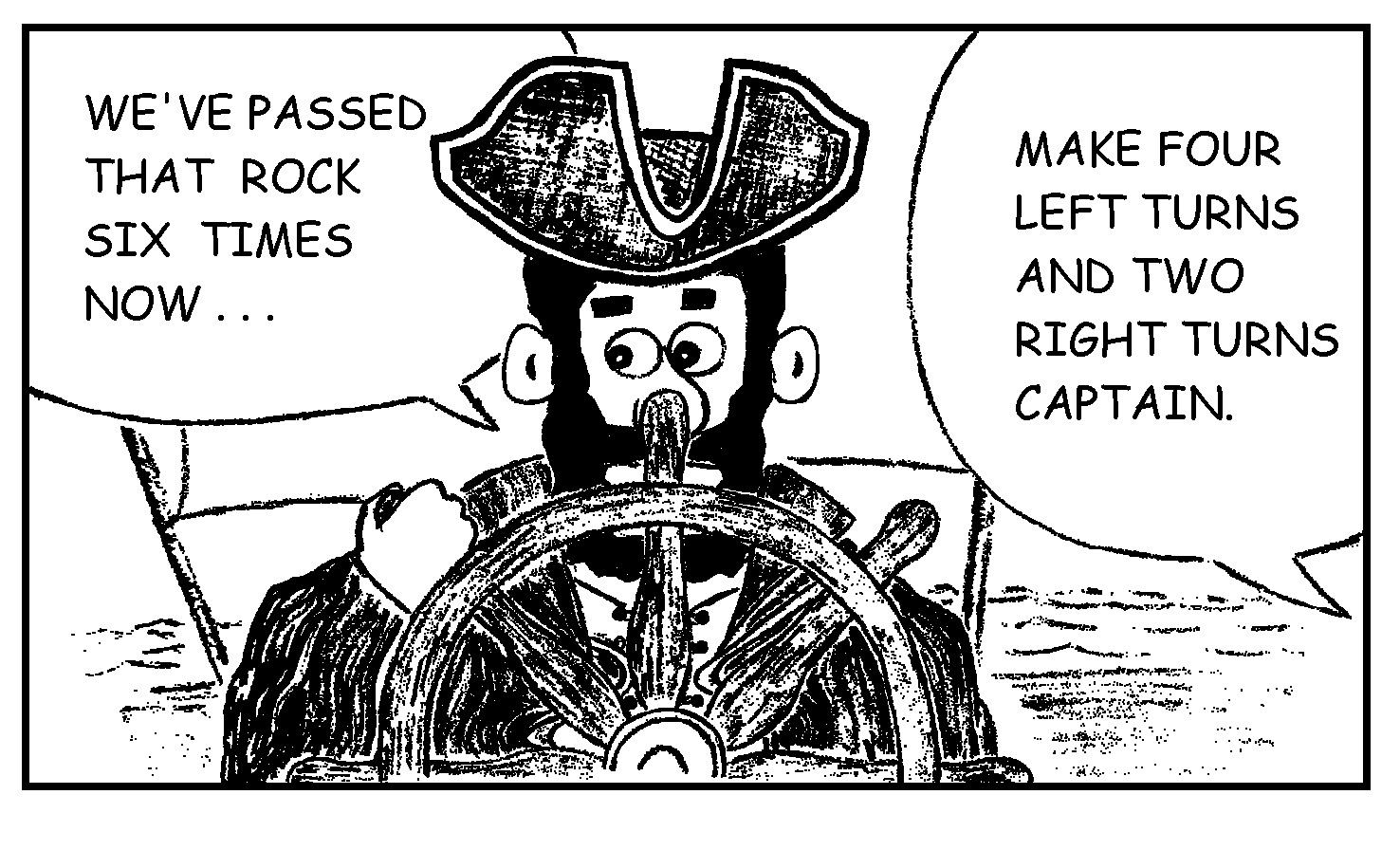
Empathy in Affect Engineering

This article gives an overview of empathy in Affect Engineering and is the fifth article in a series designed for the layperson that explains the basics of Affect Engineering as a theory of emotions. Each article will begin with a list of questions that it will aim to address. The sections that follow will be in two parts each. The first part will be a short statement that answers each question as succinctly as possible. The second part will either be an explanation that goes into more detail where needed or explain some of the implications of the short answer.

QUESTIONS

  1. How is empathy represented in Affect Engineering?
  2. Can the regulation or intensity of empathy in the individual be modeled in Affect Engineering?
  3. Can empathy, if it is extended towards other sentient lifeforms, inanimate objects, or intangible entities, be modeled in Affect Engineering?

How is empathy represented in Affect Engineering?

SHORT ANSWER

Empathy is mathematically modeled in Affect Engineering using imaginary numbers, that is to say, √(-1) or “i”. The variable used to signify whether or not empathy is involved is “Self-Distinction.” Vicarious valuations and emotions are mapped on a complex plane, with the real values marking the elapsed time.

IN DEPTH EXPLANATION

Empathy in Affect Engineering is generally understood as a person’s capacity to imagine the self as an other (i.e., non-self) experiencing a feeling. Individuals imagine themselves experiencing how an other would value an entity for a purpose and what they would feel with respect to the entity in a given scenario; this is modeled in a fashion similar to the emotions of the self (Category I emotions in Affect Engineering) and empathy’s presence is signaled by the variable of “Self-Distinction.” Self-Distinction answers the question, “Is the entity being valued for a purpose held by the self, or is the individual imagining the self as an other valuing the object for a purpose held by the other?”

Self-Distinction, in Affect Engineering, is a distinct variable (i.e., having a limit to what its inputs may be) and may only equal either +1 or -1. If the valuation for an object/entity concerns a purpose held by the individual (no empathy involved), then Self-Distinction equals +1. Alternatively, if the valuation for an object/entity concerns a purpose held by an other (empathy involved), then Self-Distinction equals -1. In the functions of Affect Engineering, Self-Distinction is taken to the one-half power (i.e., square root) and is positioned alongside the base of the functions. If no empathy is involved, the output becomes √(+1) or simply one, and a Cartesian plane is used. If empathy is involved, the output becomes ✓(-1) or “i” and an Argand plane (i.e., complex plane) is used to map the valuations for the imaginary numbers, which would then correspond to a vicarious valuation (i.e., the self imagining itself as an other).

Even though individuals are imagining themselves as an other valuing the entity, the 1:1:1:1 ratio (i.e., one entity may be given one value by one person for the fulfillment of one purpose) is still upheld as a principle, but it becomes a 2:2:2:2 ratio where the self’s own valuations respond to or combine and interact with what they imagine the other to be experiencing. This occurs in Category II Emotions (Interpersonal Emotions), Category III Emotions (Compound Interactive Emotions), and some Category IV Emotions (Emotive States).

Although the neurological model above may look overwhelming, it is perhaps easiest to look at one part of it at a time and keep in mind that the relationships are primarily associative; that is to say, things that happen together or in a chain are considered to be linked. When empathy is involved, the box “Other” [located in the middle near the top] in the chart is used, and indicates that the variable of Self-Distinction is -1. The above neurological model is based upon a function for a Category III Emotion in Affect Engineering (Compound Interactive) where the individual is attempting to influence the outcome of the other’s situation. It is also of the protective type for Category III emotions, as the self is attempting to avoid pain and Anxiety is being used to measure value. The counterpart to this would be an indulgent type, where the individual is attempting to pursue pleasure with Negative Anxiety being used.

Excitatory and inhibitory synapses are also incorporated just as in the model for the emotions of the self. Similarly, cognitive appraisal based approaches (starting with the cognitive processes that influence affect and feeling) would begin at top of the chart with signals and neural activity flowing in a predominantly downward direction. Alternatively, more physiological based approaches (starting with the affect and feeling itself) would start at the bottom of the chart with signals and neural activity generally flowing upwards to associate the feeling to something cognitively meaningful.

As the relationships are associative, these groups of neurons are modeled to be firing together and/or in sequence to one another to signify that they are related to one another. For instance, neurons firing to signal a particular entity might be marked with value for a purpose depending on how much Anxiety is being invested into them (i.e., valuing neurons firing at the same time, along with a cluster of neurons corresponding to the purpose they are being valued for). For scenarios concerning empathy, that is, where the individual imagines the self as an other, mirror neurons that fire both when the valuation concerns the self and someone or something the self is observing are one possible means by which an individual’s value system might be organized; alternatively, the individual might possess a separate group of neurons specifically tasked for vicariously valuing an other’s response. Either one of these possibilities could be modeled. In the above neurological model, the individual is acting to influence the outcome of the observed party (i.e., the other), and the two purposes are linked to one another; the perceived success or failure of the other has an influence on a purpose held by the self.

Can the regulation or intensity of empathy in the individual be modeled in Affect Engineering? 

SHORT ANSWER

Yes, the regulation and intensity of empathy can be modeled with coefficients and modifiers to those coefficients to signify the self’s identification level with an other.

IN DEPTH EXPLANATION

The different degrees to which an individual may or may not empathize with an other is modeled with coefficients alongside the functions in Affect Engineering.  It is well documented throughout history that people, for one reason or another, identify with certain groups of people or animals more easily than others. For groups that people do not identify with, they might even ignore them altogether, treating them as if they did not even exist. These coefficients are just outside of the Self-Distinction variable and represent the identification level of the self to an other target when empathy is involved. A larger coefficient (e.g., one) indicates that the self strongly identifies with the other individual and vicariously values the entity to the same degree that they would if they themselves were in the other’s position.

Identification levels can be illustrated with hypothetical sentient blobs of color and subtractive color mixing; this is a parallel for identifying with others based on socially constructed concepts such as race.

In the above identification chart, green blobs would be expected to identify strongest with other green blobs, because they share the fact of their greenness together. A coefficient of one for the identification level implies that the self identifies with the other perfectly. The self’s identification level with the other green blob is 100% and does not influence the self’s capacity to empathize at all; this serves as a baseline. Hence, the identification level chart above for the colored blobs reveals that a green blob would identify with another green blob perfectly.

In contrast, a smaller coefficient, (e.g., one-half or 1/2) would model that the self vicariously values the entity for a purpose at one-half of the intensity that they imagine an other would experience it at. Subsequently, the intensity of the emotion felt will be reduced. Blue and yellow paint mixed together will yield green; from a green blob’s perspective, this would lead to an identification level of one-half for both the yellow and blue blobs. This might be valuable to the individual for distancing the self from the plight of others in the face of overwhelming tragedy, in order to mitigate vicariously felt trauma. It might even just stem from the fact that yellow and blue are different enough from green that this could lead a green blob to not having a strong personal connection to the target (i.e., the other). This might serve the aim of resource management, given that empathizing with everyone and everything would potentially exhaust one’s available emotional resources quickly. Alternatively, it might stem from bias against the unknown.

A green blob in this case, might be expected to identify with a blue or yellow blob at one-half the level they would if they were in their position themselves. What this means is that the green blob would internalize vicarious valuations at approximately one-half the level a blue or yellow blog perceives them. It would take the vicarious valuations of two blue blobs, two yellow blobs, or a blue and a yellow blob together to equal that of one green blob, if they were all experiencing the same trauma or plight.

In cases where the coefficient for identification is set to zero, the self has no vicarious valuation for what they imagine an other would experience it (i.e., reduced to zero). The self effectively does not identify with the other at all, which might arise in scenarios where the self deems it is necessary to distance itself from an other. It might also arise from refusing to acknowledge the other as being worthy of empathy. This might be done by the individual in cases where an other or group of others is dehumanized so that the self does not empathize with their suffering, such as in scenarios where the other has committed offenses that the self deems unforgivable (e.g., war crimes, or serial killers). The usefulness here might be for resource management of emotional energy, or for maintaining one’s worldviews concerning morality and adherence to a code of ethics. If the self empathizes with an other whose conduct persistently violates what the self considers acceptable behavior, then cognitive dissonance would be one of the expected results; choosing to not identify, and subsequently not empathize with the other, would be one way to resolve the cognitive dissonance, or prevent it from arising in the first place.

In the above illustration, the green blob has not identified at all with the red blob, its complementary and opposite color. No matter how many red blobs are present, because the coefficient for the green blob’s identification level with the red blobs is zero, the green blob will effectively dismiss any and all vicarious valuations that arise from observing a red blob. It bears mentioning that such a blanket generalization of the red blobs would likely be fraught with errors in most cases.

On the opposite end, if one wished to model a situation where the self over-empathizes (e.g., hyper-empathy) or vicariously experiences the valuations and corresponding emotions to a greater degree than they imagine the other would experience it, then this could be modeled with coefficients greater than one.  For example, a coefficient of three where empathy is involved, or 3 x √(-1), would hold that the self vicariously values the entity at three times the intensity that they imagine the other to experience it. This identification level formation may be voluntary, involuntary, or a mix of both depending on what assumptions a scientific observer wishes to use in a setup of function in Affect Engineering.  Notwithstanding, the corresponding intensity of the emotion felt would also be modeled to be greater in the above example.  A person who is overly sensitive to the wants and needs of others may easily blow things out of proportion if they overestimate an other’s situation in this manner, and feel the emotion more strongly than they would if they were in that position themselves. This might happen, for instance, between a parent and a child.

Can empathy, if it is extended towards other sentient lifeforms, inanimate objects, or intangible entities, be modeled in Affect Engineering?

SHORT ANSWER

Yes, empathy, if extended towards other sentient lifeforms, towards inanimate objects, or towards intangible entities for which the individual imagines what the object would feel if it could feel, can be modeled in Affect Engineering.

IN DEPTH EXPLANATION

The extension of empathy is not limited to other human beings in Affect Engineering. It may be extended towards other creatures (e.g., animals, pets, plants, other wildlife), towards inanimate objects (e.g., rocks, personal possessions like a doll or stuffed animal, vehicles, etc), or towards intangible concepts (e.g., ideas, fictional characters in a story, vague labels for groups of people, nations, etc). In each of these cases there are important things to consider.

Empathy Extended Towards Other Lifeforms 

This is perhaps the most easily recognizable and relatable form of empathy due to the individual being able to readily witness the responses, behaviors, and actions of an other (e.g., lifeform in this case) they are empathizing with. Its usefulness in these scenarios is also somewhat self-evident as it is often directly tied to survival, or at least it is easier to make this connection when other lifeforms are involved. For instance, if, while hiking in a wooded area, one encounters and startles a mountain lion, being able to empathize with, or at the very least, grasp a rudimentary understanding of the mountain lion’s state of heightened alarm, becomes potentially life saving knowledge. One’s chances of surviving the encounter unscathed would go up significantly by taking this into account and backing away slowly instead of continuing in a business as usual manner.

Empathy Extended Towards Inanimate Objects

Regarding inanimate objects such as stuff animals and dolls, the use of empathy can serve a number of functions.  In childhood, it may serve the role of helping a child to develop their empathy skills through practice and imaginative play. A stuffed teddy bear for example, is not going to give any feedback at a tea party, so it compels the child to imagine and anticipate the needs, albeit imaginary, of the toy.

Imaginative play with a stuff teddy bear is essentially empathy practice, more so if the child at play holds up both ends of the conversation, such as by asking the stuffed animal or doll, “Would you like some more tea?” and then responds for the stuffed bear, “Yes, I would. Thank you.”

While the parallels for this to eventually empathizing with people are readily apparent, sometimes empathizing with an inanimate object simply serves the function of inspiring them to take better care of the inanimate object. Plenty of people have given nicknames to the cars they drive, private planes they fly, boats they pilot, or they have anthropomorphized other machines, vehicles, or material possessions they own. If they are an adult, one would presume that they have hopefully already learned to empathize with other people, and are not doing it to practice for future human interactions. In the case of these inanimate objects, anticipating the maintenance needs of large/heavy machinery is also important for keeping it functioning properly. Like stuffed animals, dolls, or action figures, these inanimate objects cannot say what they need, unless they have been electronically programmed that way, such as a car’s check engine light.

Empathy Extended Towards Intangible Concepts 

Thirdly, regarding the use of empathy with intangible objects, empathy may also be employed for other uses, such as a means of self-comfort (e.g., in the case of a lonely child with an imaginary friend) and is not solely restricted to practice. Empathizing with intangible objects may also be used for entertainment value, such as in the case of reading a fictional horror and romance novels. It may also be used for projective purposes if one wishes to forecast what a loosely defined group of people or things might value, feel, or do, such as a culture, society, or country, if they do not have a clearly defined center.

Summary

In sum, for each of these cases, where the self empathizes with other lifeforms, inanimate entities, and intangible entities, empathy can be modeled in Affect Engineering with the variable of Self-Distinction. However, as the employment of empathy in these instances goes from the more concrete (e.g., fauna and flora that have motives that can be reasonably deduced from evidence) towards the increasingly abstract (e.g., stuffed animals, dolls, statues, and cars with motives that are frequently fabricated) it is important to keep in mind that empathy is oftentimes imaginative in its nature. This is both a blessing and a curse.

Preview

The organizing principles behind the four categories of emotions in Affect Engineering will be covered in the sixth article. Thereafter, each emotion’s core distinguishing features will be covered in the remaining six.

Previous: Article 4 of 12: Emotional Responses and Emotional Regulation in Affect Engineering

Next: Article 6 of 12: Organizing Principles of the Categories of Emotions in Affect Engineering

On the Nature of Emotions: Emotional Responses and Emotional Regulation in Affect Engineering (Article 4 of 12)

Emotional Responses and Emotional Regulation in Affect Engineering

This is the fourth article in a series designed for the layperson that will explain the basics of Affect Engineering as a theory of emotions. Each article will begin with a list of questions that it will aim to address. The sections that follow will be in two parts each. The first part will be a short statement that answers each question as succinctly as possible. The second part will either be an explanation that goes into more detail where needed or explain some of the implications of the short answer.

QUESTIONS

  1. What is an emotional response in Affect Engineering?
  2. What does heeding an emotion’s call to action mean in Affect Engineering?
  3. What variables can amplify, or alternatively, reduce an emotion’s call to action to the individual?
  4. How is emotion regulation by an individual modeled in Affect Engineering?
  5. How might someone use their understanding of Affect Engineering’s framework to better regulate their own emotional responses and actions?

What is an emotional response in Affect Engineering?

SHORT ANSWER

An emotional response in Affect Engineering consists of the feelings and reactions (e.g., facial expressions) that arise from a change in an individual’s valuation of an entity for the fulfillment of a purpose.

IN DEPTH EXPLANATION

A novel experience, whether pleasant or unpleasant, will often lead to an individual having future expectations. One’s first time eating a delicious brownie or cookie in response to hunger will typically lead to expectations of enjoying eating another food like it again in the future under similar circumstances. Likewise, an individual breaking a bone for the first time would likely have expectations that breaking a bone again in the future would be a painful and unpleasant experience that is best avoided.

While emotions, strong feelings, and affect can arise for both novel experiences where the individual has no prior expectations, and for scenarios in the future where the individual has predictions for what they expect to feel based upon their prior knowledge, most people would agree that an individual has a better chance to manage an emotional response to a situation where they have the advantage of holding past experience as a precedent. The focus here will be on emotional responses and emotional regulation for situations where the individual has relevant prior experience and knowledge about what they foresee will happen (e.g., an expected contingency). An emotional response in Affect Engineering consists of the physical sensations, feelings, affect arising from, and behavioral expressions (e.g., smiling when happy, crying when sad, frowning when angry) related to a change in an individual’s valuation of an object for the fulfillment of a specific purpose. Emotional responses serve as a call to action to the individual, and sometimes observers around them, to engage in behavior that will influence outcomes for the immediate situation at hand or alternatively future scenarios.

For example, a situation where an individual experiences a wave of good feelings and smiles after eating a food that looks strange but tastes appealing will create at least two messages. The individual both receives feedback from their own emotional response, a signal to continue eating, and the emotional response signals to observers that what the individual is eating is perhaps worth trying for themselves.

As mentioned in the first article of this series, affect that is unattached to a particular entity or purpose, such as a vague feelings of delight for no apparent reason to the individual, are best thought of as white noise or static interference in Affect Engineering. An individual unknowingly exposed to a drug for instance (e.g., in vapor form or dissolved in a consumed beverage), may feel the physical effects of it without knowing why they are occurring. Oftentimes, an entity, purpose, or explanation may be attributed to the feelings later, but until that happens it is not considered an emotional response in Affect Engineering. Instead, it is energy that is unavailable to do work by valuing entities until it is either demobilized, or attributed to something. In the context of Affect Engineering’s functions, this would be the equivalent of starting on the other side of the equation (i.e., the affect itself), and then working backwards to try to figure out an explanation for why the individual feels a certain way. In Affect Engineering’s framework, this is perhaps the best way to describe an individual’s formation of emotions for novel experiences where there are neither prior expectations nor context for the individual draw from, and also for accounting for physiological approaches to the study of emotions (e.g., James-Lange theory of emotions, Canon-Bard theory of emotions). However, for the purposes of explaining Affect Engineering’s basic framework here, a cognitive appraisal based approach (i.e., one emphasizing thoughts, mental processes, and interpretations) will be used here instead of a physiological one; but both approaches can be accounted for in Affect Engineering’s framework depending on which side of the functions one wishes to begin, or which variables are known initially.

There are pros and cons to each approach. If emotions are thought of as survival tools, then in some cases thinking one’s way through a situation and taking command of which emotions will be acted upon may be preferable. In these cases, the individual having absolute control over the tool will usually lead to more favorable outcomes, much like a construction worker adeptly wielding a heavy sledgehammer instead of being suddenly knocked off balance and falling over if they are carrying the tool on their back and its weight suddenly shifts.

In other cases, more favorable outcomes will tend to arise from the individual going along with wherever the emotion takes them, feeling their way through a situation in a more physiological approach. In these cases, going with the flow and letting one’s feelings guide a course of action will typically lead to more favorable outcomes, like a surfer on a surfboard following the path of least resistance, riding it where the waves take them instead of trying to fight against both the waves and board to go in a different direction.

Different situations often call for one approach over the other in terms of what is practical. Typically, the time one has available to act, or a deadline for action will determine which approach will yield a better outcome. When time and urgency are not a factor, approaches that emphasize thinking, interpretation, and mental processes (e.g., cognitive appraisal based) are often ideal. In contrast, when time is of the essence and acting quickly is important, physiological approaches oftentimes will yield better outcomes.

What does heeding an emotion’s call to action mean in Affect Engineering?

SHORT ANSWER

In Affect Engineering, heeding an emotion’s call to action means that the individual has chosen to carry out an action that will help in the acquisition of an entity related to the fulfillment of a purpose; this includes actions that can prevent a threat of harm to the entity or that can ensure a benefit befalls it.

IN DEPTH EXPLANATION

Heeding an emotion’s call to action concerns efficacy components and actions the individual can do to either acquire an entity, prevent a threat of harm to the entity, or to ensure a benefit happens to the entity. Acquiring an entity may be as straightforward as physically obtaining a piece of candy [entity] for the purpose of eating, or alternatively, something more abstract like acquiring the experience [entity] of simply witnessing an event taking place, such as seeing a display of fireworks at night. An entity could be anything tangible or intangible, depending on the context of the situation, and provides a greater degree of flexibility for analyzing different situations in Affect Engineering’s framework.

What variables can amplify, or alternatively, reduce an emotion’s call to action to the individual?

SHORT ANSWER

All of the variables in the functions have an influence or may potentially alter the magnitude and type of emotion felt by an individual.

IN DEPTH EXPLANATION

The variables that can alter the magnitude of an entity’s valuation, and subsequently alter the type of emotion felt and with the strength of its call to action include:

  • Existence: The variable of Existence concerns whether or not the entity exists to the individual. It answers the question, “Does the individual know about the entity at all?” If an entity does not exist to an individual, then no emotional response to it can be modeled in Affect Engineering (i.e., the individual does not know about it at all and it is presumed that no emotions are felt towards it).
  • Sufficiency: The variable of Sufficiency is concerned with the degree to which the entity in question is able to fulfill the task at hand on its own. It answers the question, “Is the entity enough for the purpose?”
  • Uniqueness: The variable of Uniqueness is concerned with the degree to which the entity in question is the only entity capable of fulfilling the task at hand. It answers the question, “Is this the only option for the purpose?”
  • Sentiment: The variable of Sentiment is concerned with the importance of the purpose at hand for which the entity is being valued. It answers the question, “How important is the purpose at hand relative to other purposes held by the individual?”
  • Appraisal: The Appraisal variable is concerned with whether or not acquisition of the entity to fulfill the purpose at hand will lead towards or away from a restoration of equilibrium between the purpose being considered and its opposite or complementary purpose. The Appraisal variable in Affect Engineering is used to determine which type of function — Avoidance of Pain or alternatively the Pursuit of Pleasure — to use. It answers the question, “Will acquiring this entity lead to a restoration of equilibrium between this purpose and its opposite?”
  • Threat (Threat of Harm to an entity): The variable of Threat, when at a high level, is modeled to amplify Anxiety invested in an entity and raise negative affect; alternatively, it is modeled to reduce Negative Anxiety invested and lower positive affect. It answers the question, “How severe is the threat of harm and how likely is it to happen?”
  • Benefit (Promise of Benefit to an entity): The variable of Benefit, when at a high level, is modeled to reduce Anxiety invested and lower negative affect; alternatively, it is modeled to amplify Negative Anxiety invested and raise positive affect. It answers the question, “How helpful is the promise of benefit and how likely is it to happen?”
  • Efficacy (Efficacy to prevent a threat of harm or to prevent a promise of benefit to an entity): Efficacy is modeled to counter the influence of Threat or Benefit, depending on which is used in a function. Functions in Affect Engineering use either Threat or Benefit, but not both. It answers the question, “How effective is the recommended action and what is the likelihood the individual can do it?”
  • Attention: The variable of Attention is generally modeled to decay with a half-life in Affect Engineering, though it can be modeled in other ways. When modeled to decay, whatever variable it is influencing will diminish over time, similar to radioactive decay. Attention is typically directed towards features that have salience in an environment, such as a high level of contrast in brightness, sharpness, color, etc. It answers the question, “Which variables in a scenario are being noticed?”
  • Reason (Reasoning or Executive functions): The variable of Reason generally influences valuations by holding Attention constant on one or several variables while permitting other variables to fall into attentional decay, that is to say, attention to them diminishes until they are all being ignored. It answers the question, “To which variables in a scenario is the individual directing their resources?”

The chart above illustrates a sample theoretical neural pathway for how an emotional response might arise based upon relationships and interactions between the above variables for an Avoidance of Pain function (i.e., used when the Appraisal variable is positive, explained in Article 3 of 12 in this series) in Affect Engineering. The original entity is given a base valuation for a purpose by the individual derived from its utility components (Sufficiency, Uniqueness, Sentiment felt for the purpose) and the fact that it exists to the individual. This valuation is then amplified or reduced further by expected threats of harm to it (e.g., via excitatory synapses that lower the threshold for neural activation) and the efficacy of the individual to prevent the harm to it (e.g., via inhibitory synapses that raise the threshold for neural activation). The groups of neurons that are used to mark the value of the entity (e.g., Anxiety in Affect Engineering) would also lead to pathways that correspond with negative affect (e.g., unpleasant feelings, or pain) in this setup.

This second chart illustrates a sample theoretical neural pathway for how an emotional response might arise based upon relationships and interactions between the above variables for a Pursuit of Pleasure function (i.e., used when the Appraisal variable is negative) in Affect Engineering. The setup is similar to the Avoidance of Pain function with a few exceptions. The original entity is still given a base valuation for a purpose derived from the same utility components (Sufficiency, Uniqueness, and Sentiment), and the fact it exists to the individual. The groups of neurons that are used to mark the value of the entity, Negative Affect in this case, would alternatively lead to pathways that correspond with positive affect (e.g., pleasant feelings, pleasure). The Threat components and Efficacy components have their excitatory and inhibitory roles reversed from the previous setup, with Threat having an inhibitory effect and Efficacy having an excitatory effect.

The above chart illustrates Attention being directed towards the Efficacy components for the first sample depicted, for the Avoidance of Pain function. If information concerning response-efficacy (i.e., the expected effectiveness of a response at preventing a threat of harm) and self-efficacy (i.e., the likelihood the individual believes they can perform the action) are more salient than the threat components (i.e., threat severity and threat susceptibility), then this would likely have the effect of helping the individual feel less overwhelmed in a potentially stressful or dire situation. This might prove helpful to the individual for conserving resources (i.e., Anxiety) in circumstances where the threat of harm is actually at a very high level and the efficacy appears low by comparison, or a classic underdog story (e.g., a David vs. Goliath scenario).

This final chart illustrates an executive function such as reasoning, being used to hold attention on efficacy components constant while permitting attention towards threat components to fall into attentional decay (e.g., neglect). This might be arranged by the individual if the purpose in question has a high level of importance to them and they are willing to do whatever it takes to achieve it.

Though the four sample neurological models above illustrate a more cognitive appraisal based approach, as mentioned earlier, the route is reversible. A route beginning with positive affect or negative affect (e.g., the feeling itself) and ending with the individual later identifying or assigning factors that caused it later would be a more physiological based approach and more useful for novel experiences for the individual. In Affect Engineering, this would be the equivalent of starting on the other side of the equation (e.g., knowing variables on one side of the function before the other). This is not to say that everyone’s internal organizational scheme would be identical to the above sample models, but most would likely possess a structure more or less similar to it. Every brain is wired differently of course, and variations are to be expected. However, a general template does provide a starting point from which more nuanced discrepancies can be made (e.g., with coefficients alongside some variables).

How is emotion regulation by an individual modeled in Affect Engineering?

SHORT ANSWER

Emotion regulation in Affect Engineering is modeled to be primarily guided by the level of importance the individual holds for the purpose the emotion is being felt for (i.e., Sentiment variable), attentional processes, and executive functioning processes that can direct attentional processes toward or away from components of a scenario (i.e., other variables in the functions).

IN DEPTH EXPLANATION

In Affect Engineering, emotion regulation by the individual is primarily modeled by the variables of Sentiment (i.e., the ranking of the purpose in question against the purpose with the utmost importance to the individual) and Reasoning. The variable of Sentiment works to influence emotion regulation by changing the importance of the purpose at hand for the individual, particularly in indeterministic setups of functions where free will is presumed and behavior cannot be predicted. Executive functions like Reasoning are modeled to influence emotion regulation primarily by directing Attention towards or away from other variables and maintaining it for an extended duration of time, or away from other variables to allow them to fall into attentional decay or neglect.

How might someone use their understanding of Affect Engineering’s framework to better regulate their own emotional responses and actions?

SHORT ANSWER

Someone might use their understanding of Affect Engineering’s framework to better regulate their own emotional responses, develop better resilience in the face of adversity, and potentially to influence the regulation of emotional responses in others.

IN DEPTH EXPLANATION AND PREVIEW

One of the aims in developing Affect Engineering was to organize and model different approaches to the study of the psychology of emotion underneath the umbrella of a single, unifying language, math in this case. Knowing what resources one has at their disposal, what the relationship between these resources might be with one another, where to direct attention to perform at an optimal level, and recognizing how to best interpret emotions in oneself and others has practical applications that extend beyond emotional regulation. Some of these uses extend to rhetoric and persuasive techniques, simulated intelligence, behavioral forecasting, and worldbuilding for writers to name a few.

Preview:

Interpreting emotions in others falls under the domain of empathy, and is the subject of the next article.

Previous: Article 3 of 12 Reframing Anxiety as a Resource

Next: Article 5 of 12 Empathy in Affect Engineering

This page is also available on this website here, Article 4 of 12, Emotional Responses and Emotional Regulation in Affect Engineering