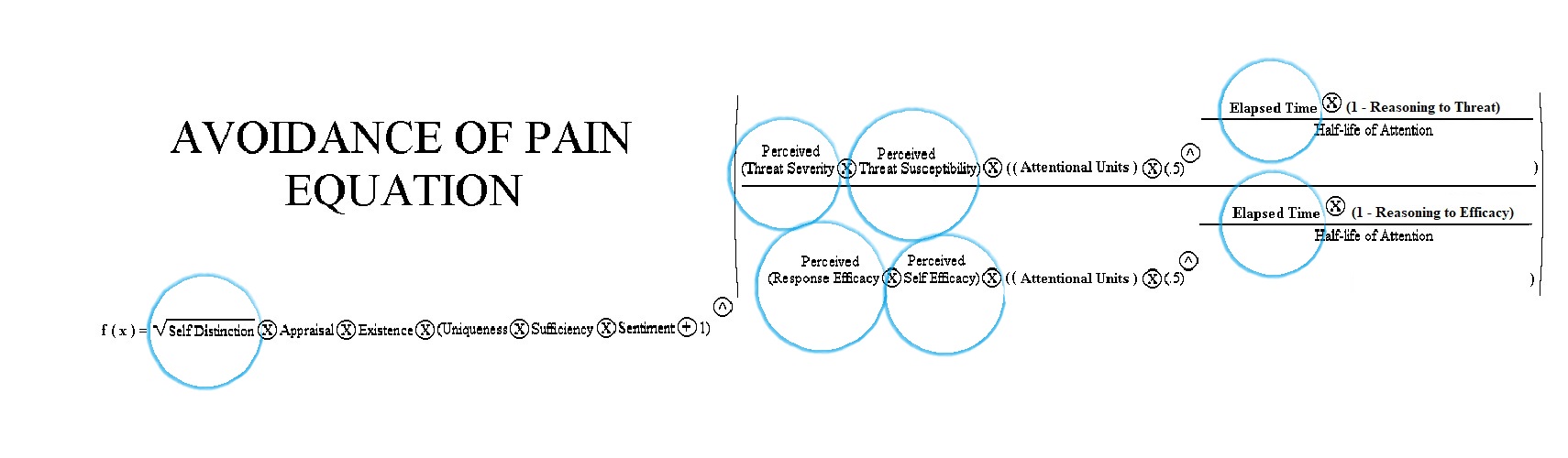
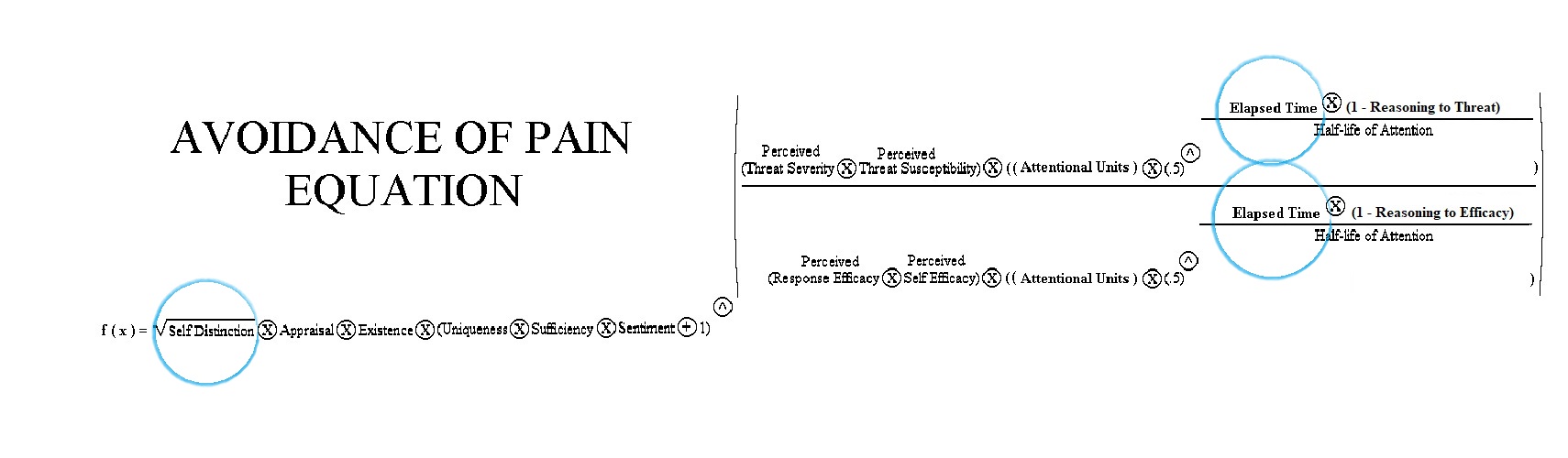
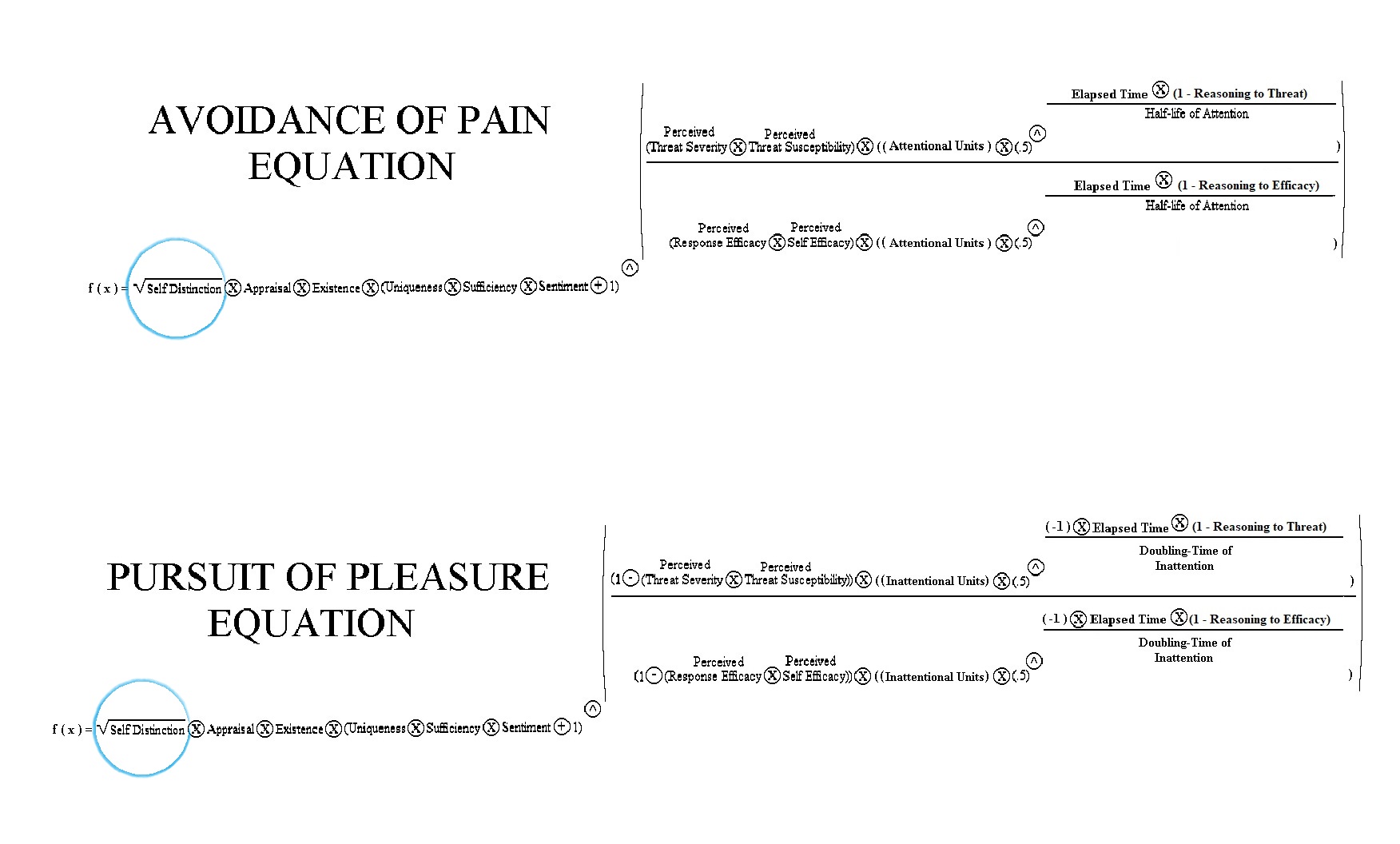
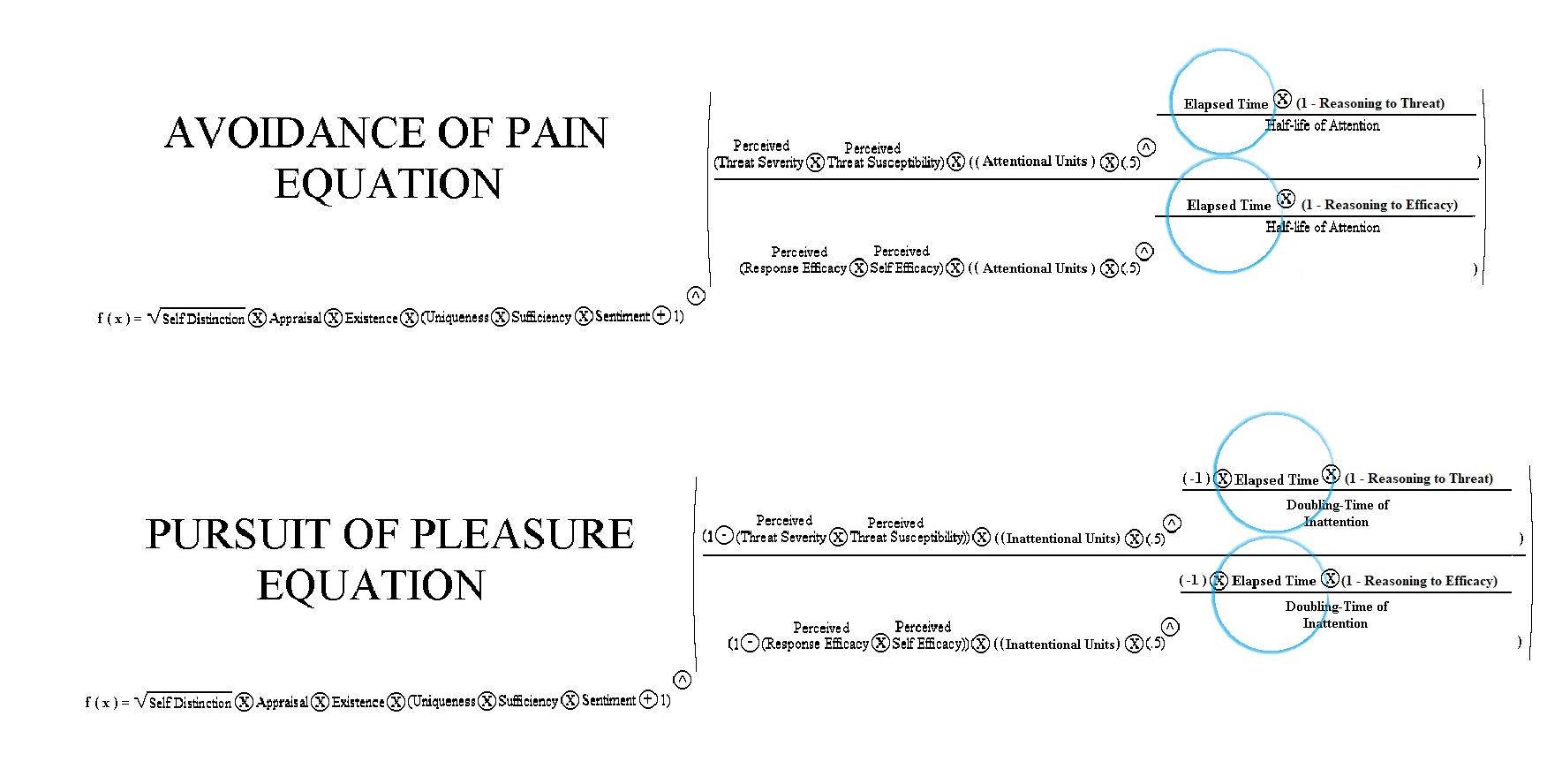
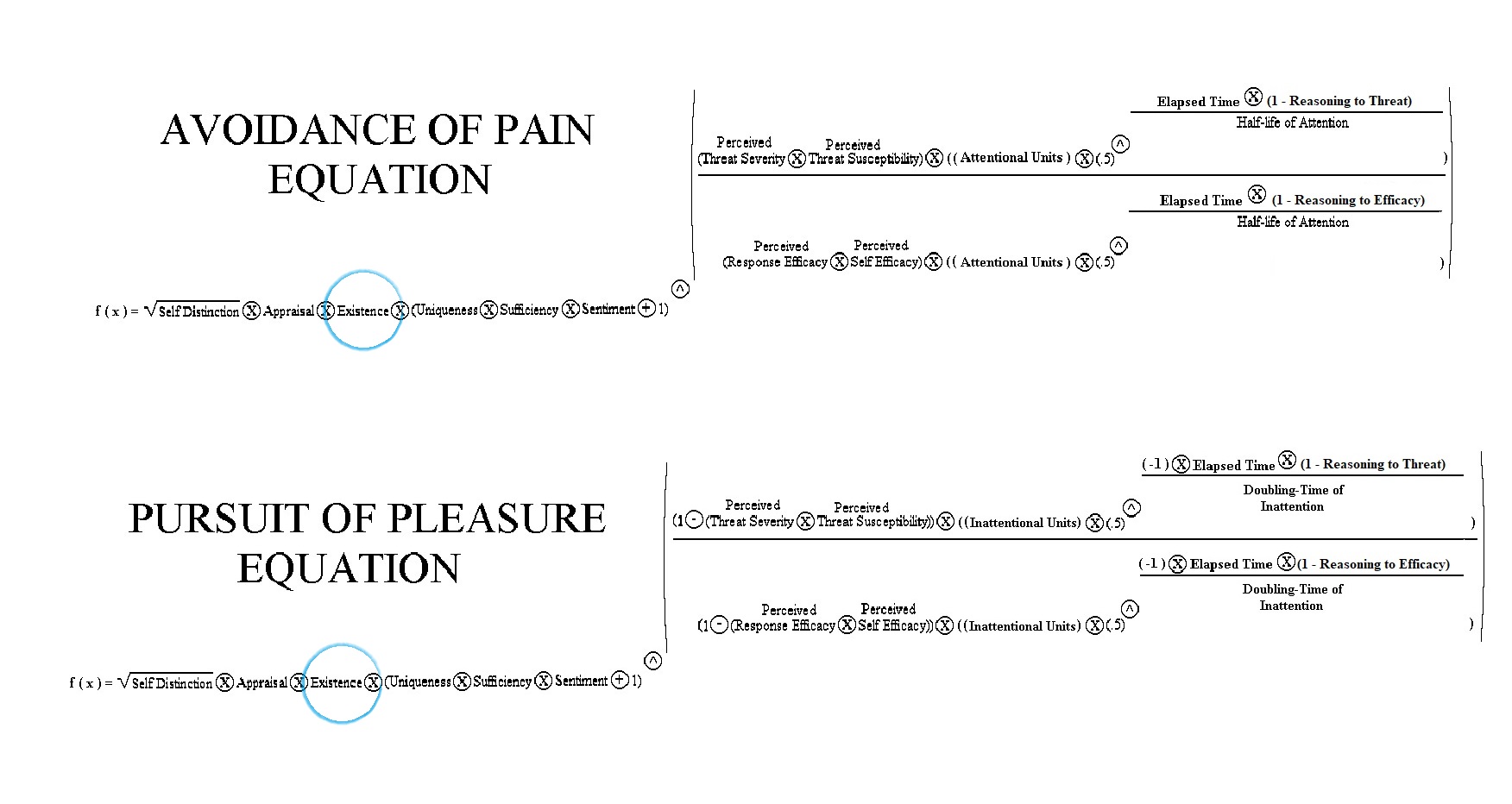
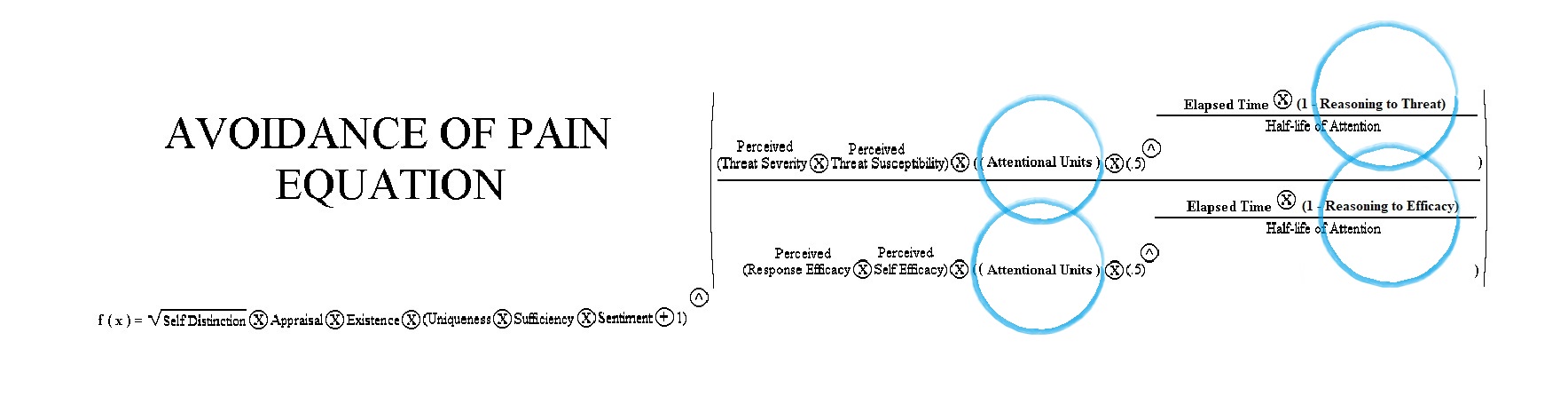
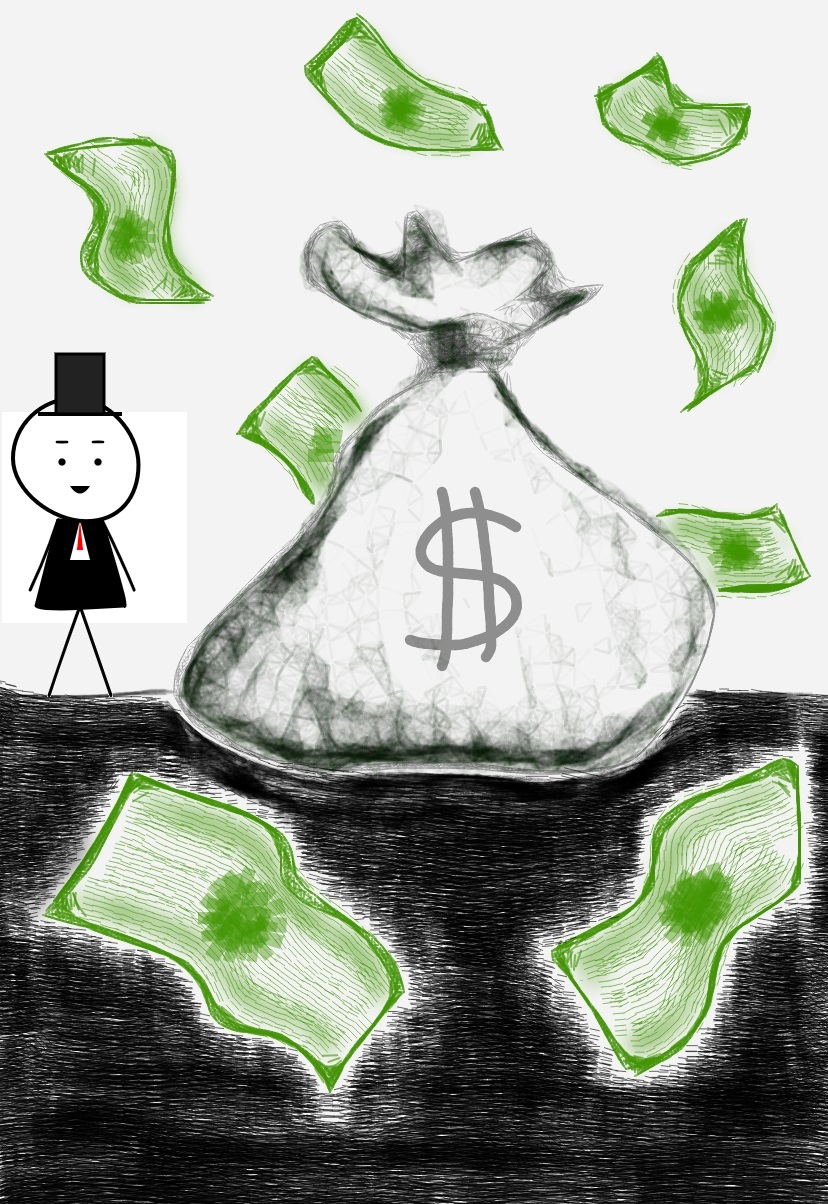
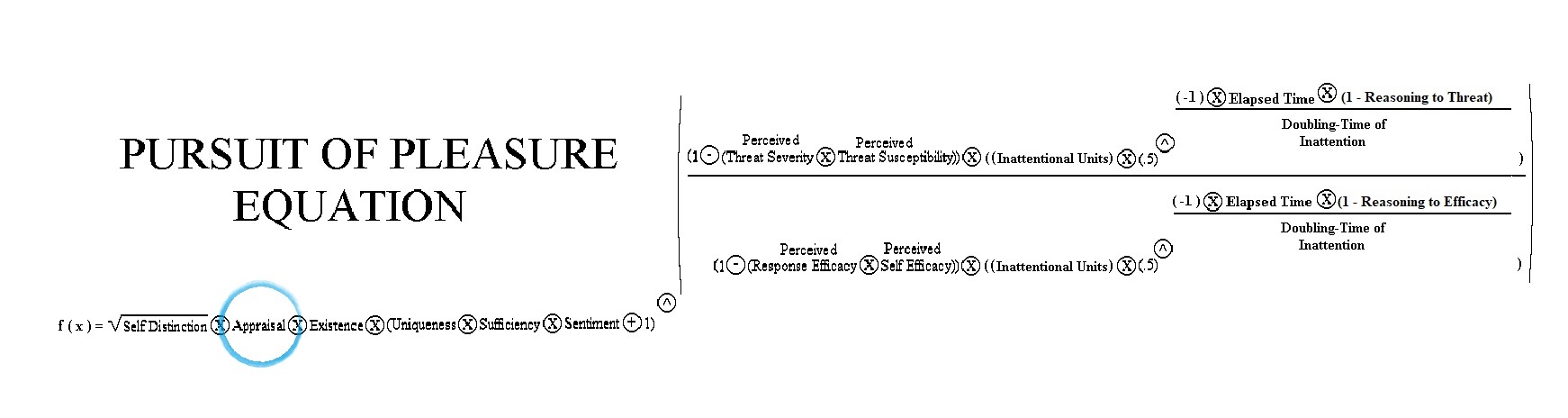
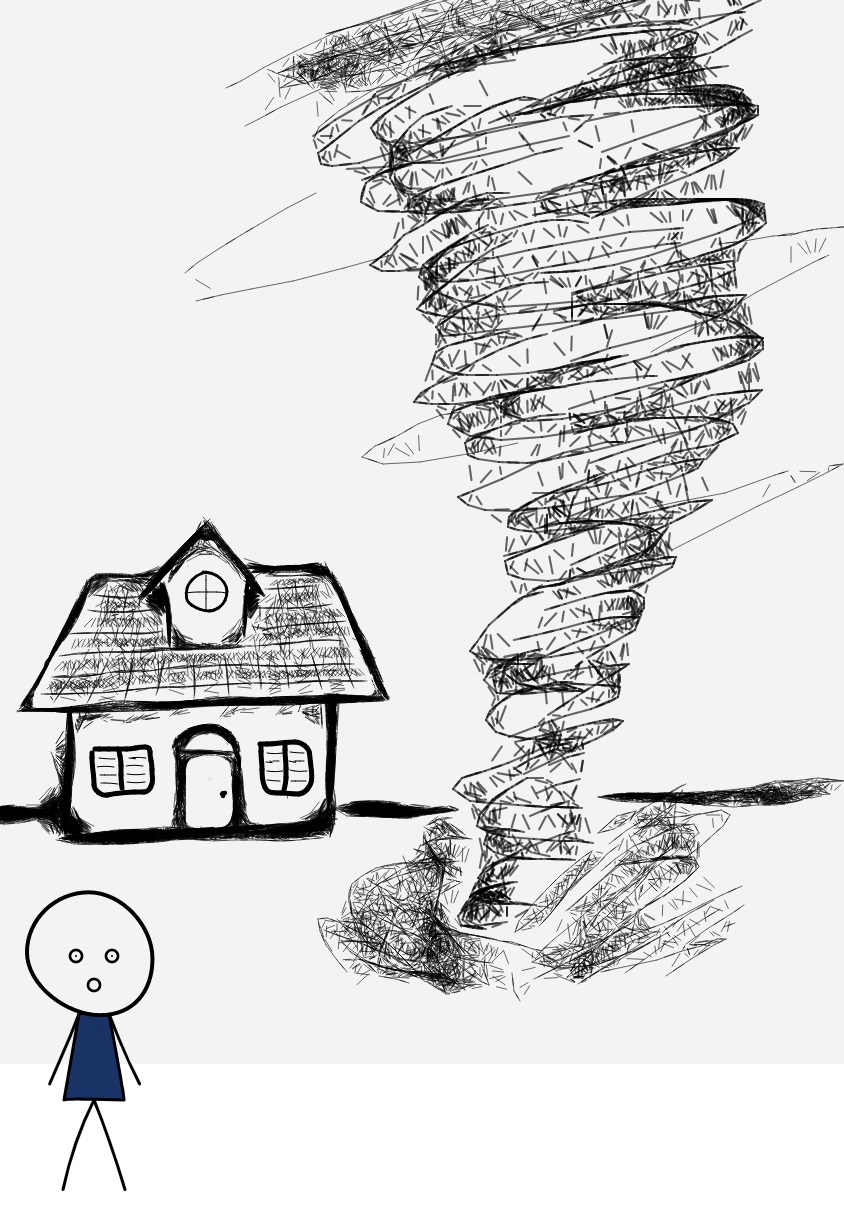
This is the twelfth and final article in a series and covers some additional applications of Affect Engineering and addresses topics that include vector fields, artificial intelligence, dreams, biological rhythms, and the erasure of memories. It is designed for the layperson and explains the basics of Affect Engineering as a theory of emotions. Each article in this series begins with a list of questions that it will aim to address. The sections that follow are in two parts each. The first part is a short statement that answers each question as succinctly as possible. The second part will offer a more in depth explanation that goes into more detail where needed by exploring some of the implications of the short answer.
QUESTIONS
Why is this theory called a Unified Field Theory of Emotions?
What inspired the creation of Affect Engineering and what use would anyone have for functions designed to model emotions?
How, if at all, might Affect Engineering be applied to artificial intelligence or simulated intelligence?
How would emotions arising in subconscious states, unconscious states, or altered states of consciousness such as sleep, be modeled in Affect Engineering? How might their transition from a subliminal state to extinction (i.e., totally purged from the individual’s memory) be modeled?
1) Why is this theory called a Unified Field Theory of Emotions?
SHORT ANSWER
Assessing changes in the flow of energy invested into entities by the individual across changes in the flow of time as experienced by the individual is a core component of Affect Engineering. Although it is not essential to use vector fields in order to grasp this concept, this flow can be visualized easily with vector fields in the six dimensions that Affect Engineering uses.
IN DEPTH EXPLANATION
Measuring changes in the flow of energy being invested into entities over time is a focal point of modeling emotions in Affect Engineering. Given that the conception of time by an individual is also modeled as a flow of energy, and given that an entity may receive a valuation for several different purposes from an individual, organizing all of this information neatly is a crucial consideration for the theory. As everything in Affect Engineering is modeled with a pair of functions, the subtitle Unified Field Theory of Emotions seemed appropriate to add to Affect Engineering in order to clarify what it entails when it was written.
A slope vector field, or direction field, of the functions used in Affect Engineering is one of the best ways to visualize the organization of information in Affect Engineering. These enable an observer to classify instances of particular emotions occurring at a glance of a graph. One of the common uses of slope vector fields is for modeling the flow of a material. Vectors are assigned to points on a grid and they typically represent different physical properties of a system such as velocity (e.g., ocean currents), or force (e.g., gravitational pull, electromagnetic fields). Wind speed vectors, for example, are often used by meteorologists on a map to visualize local wind speeds.
Below, a sample wind vector field overlain on a map (from YubaNet, October 2018)
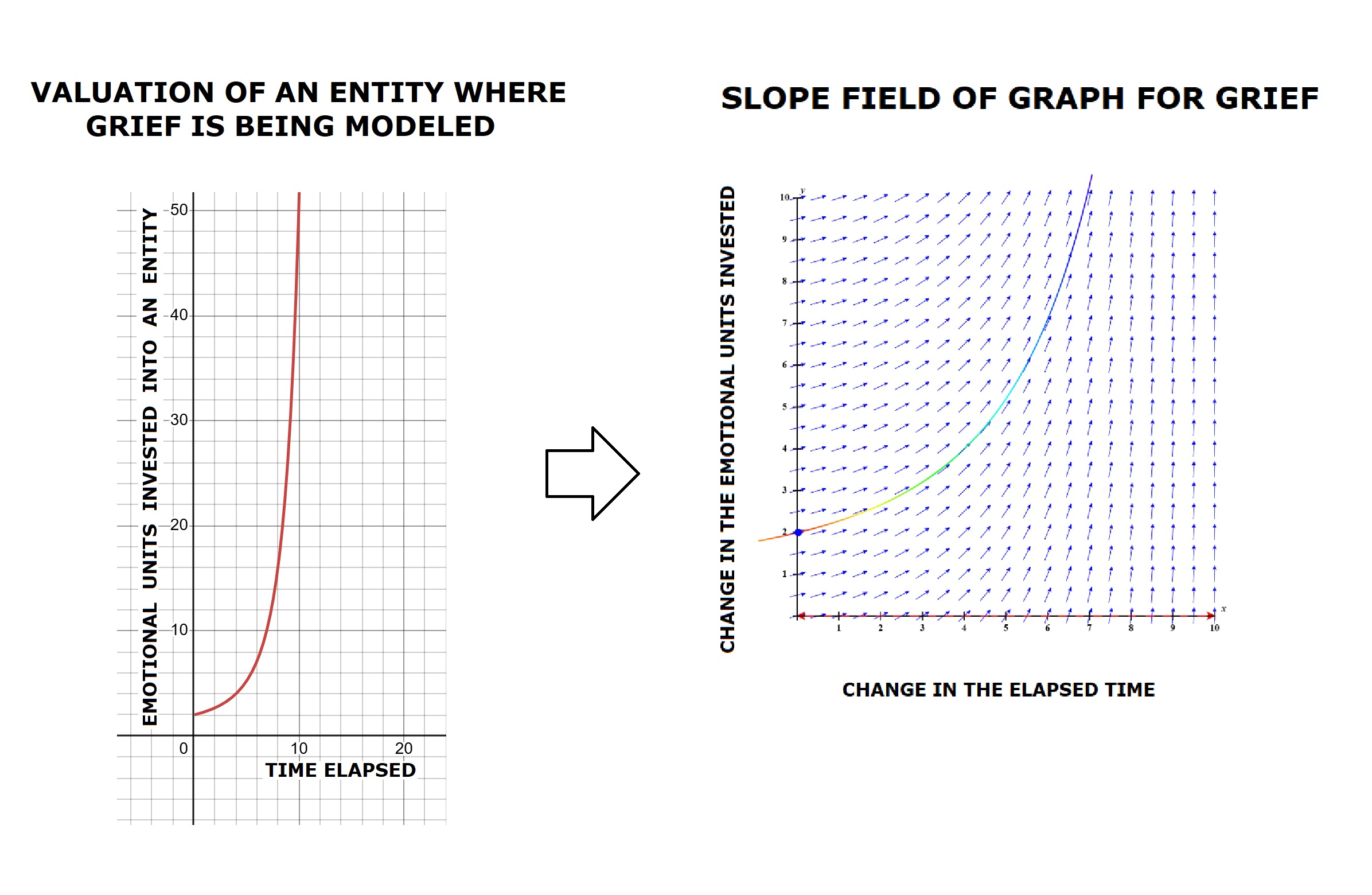
For the functions used in Affect Engineering, this would entail plotting the slope for the valuation given to an entity with respect to the fulfillment of a purpose, and doing this at certain intervals (e.g. every second, or minute, or hour, depending on the interval of time desired). If, for example, Grief felt towards an entity (e.g., a beloved pet that one desires to play with again, but they are about to be euthanized) were being modeled in Affect Engineering, then the valuation of the pet might look similar to the graph below (left), while the slope field, obtained from the derivative, would be the other graph (below and right).
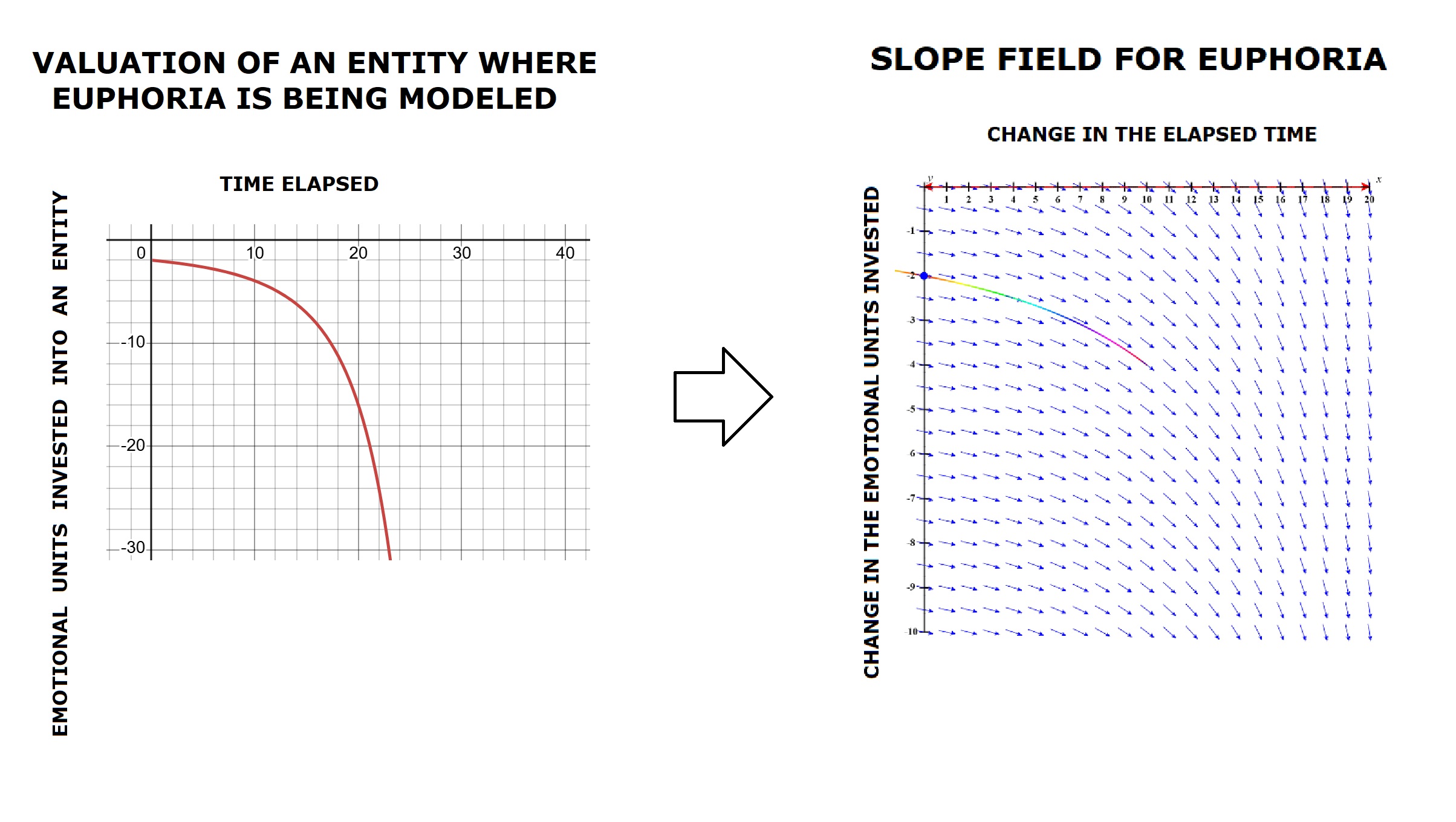
In another example, if Euphoria were being modeled for someone who just won a lifetime supply of their favorite snack, chocolate chip cookies, then the valuation of the entity (e.g., chocolate chip cookies for the fulfillment of the purpose of eating), might look like the graph below (left). Meanwhile, the slope field might look like the graph next to it (below and right).
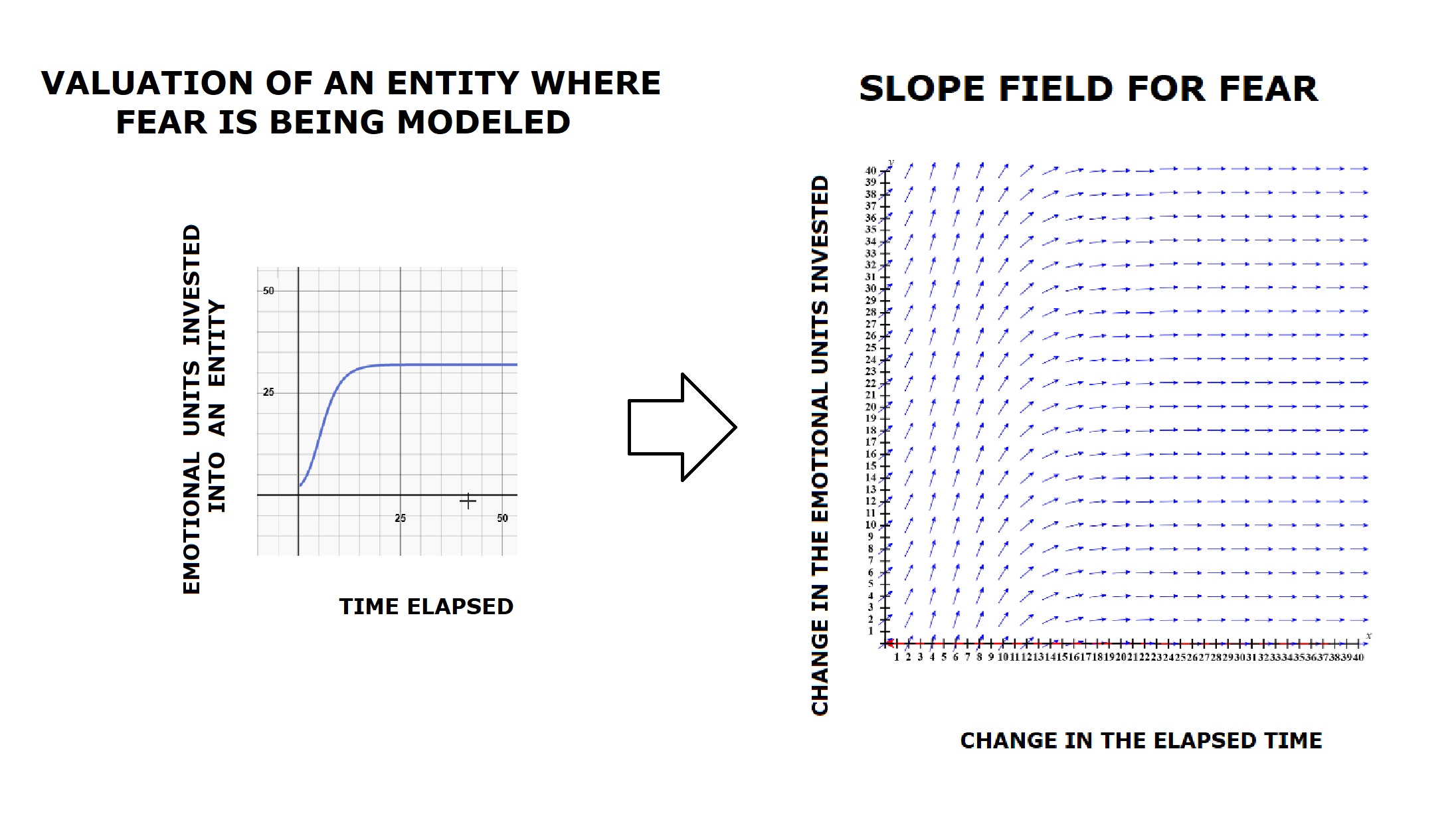
In a third example, if an emotion such as fear felt towards an entity is being modeled (e.g., where the individual’s valuation of the entity rises and then tapers off again), then the slope field would also reflect this. This could happen in an instance where the self initially might be somewhat confident in their ability to protect the entity from harm, but if, over time, the individual begins to doubt their own ability (i.e., ignoring Self-Efficacy to prevent a threat of harm to the entity and focusing only on the threat itself), then their valuation of the entity may elevate accordingly. For instance, an individual who initially possesses a good deal of confidence in their ability to pass an upcoming test, but is bombarded with messages about how difficult it is and all the people who have recently failed it, might have a graph and slope field resembling the ones below.
As Affect Engineering has six dimensions that it predominantly uses to organize information, tracking this flow of energy across changes in time can make interpreting and making comparisons at a glance more straightforward.
2) What inspired the creation of Affect Engineering and what use would anyone have for functions designed to model emotions?
SHORT ANSWER
In addition to modeling both common and obscure emotions, a secondary aim of using functions to model emotions in Affect Engineering’s is to facilitate reconciling the many different approaches to the study of emotion under the common language of math. The functions can also be used to interpret the behavior and motives of individuals or groups, to improve the effectiveness of communication, and to assist with introspection among other things.
IN DEPTH EXPLANATION
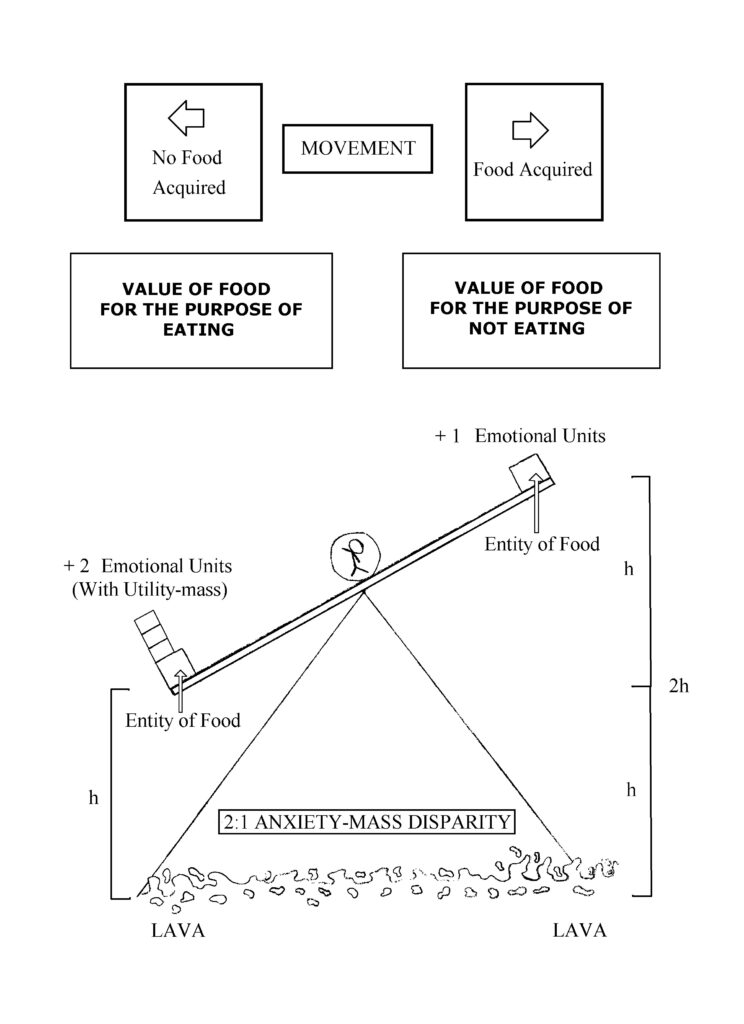
Affect Engineering began for me inadvertently as an outgrowth from a final paper I was working on in a Culture and Emotions that I was taking while I was an undergraduate at Boston College; the class was taught at the time by Makiko Deguchi (currently a professor at Sophia University). Of all the classes I took while in college, that one inspired the most ideas in me, and played a large role in the formation of Affect Engineering. There were, of course, other ideas mingling and merging in my head from a few other classes I was taking at the time, but this class and the work in it resonated with me the most. For our final paper in the Culture and Emotions class we had to come up with our own theory of emotions, and ultimately this is where Affect Engineering began; more specifically, with what would later become the Roll Cage Theory of Drives (image below), which is itself embedded into Affect Engineering’s paradigm and occasionally used to model or explain concepts from Psychodynamic Psychology within Affect Engineering’s framework.
The Roll Cage Theory of Drives, a visualization of how the self balances competing objectives within Affect Engineering’s framework.
The Roll Cage Theory of Drives is another way to visualize the individual’s effort to balance opposing goals against one another. In this model, the self is tasked with balancing itself upon a disc above a fulcrum that is being tipped by Anxiety being invested into opposing or complementary purposes (e.g., primary and secondary drives). If the self, represented by the roll cage, is unable to stay alive by balancing itself between the two complementary and opposing purposes, then it will fall into a giant pool of lava beneath the cone and disc apparatus surrounding it on all sides and perish.
As for the second part of this question, my principle aim in creating Affect Engineering and using functions to model emotions was to design a structured process for studying the Psychology of Emotion (e.g., also called Affective Sciences), one that offers itself as a methodology for both organizing and reconciling the many different, oftentimes seemingly contradictory approaches to the study of the Psychology of Emotion under the common language of math. Most approaches to the study of emotions fall under either biological and physiological, cognitive and appraisal based, and sociological and constructivist based ones. One of my aims in writing Affect Engineering was to unite them all under the language of math, as each approach possesses valid claims and arguments that are difficult to reconcile with one another when viewed through a single lens.
Other uses for Affect Engineering include, but are not limited to: enhancing one’s self-understanding; interpreting the behaviors, actions, and motives of other lifeforms, both human and non-human; and crafting more effective messages to targeted audiences.
3) How, if at all, might Affect Engineering be applied to artificial intelligence or simulated intelligence?
SHORT ANSWER
As Affect Engineering is structured on math principles, it lends itself to being applied to artificial or simulated intelligence in whatever manner desired. Nonetheless, it is not always sensible to do so in all cases.
IN DEPTH EXPLANATION
In short, all of the concepts and the framework in Affect Engineering can be applied to artificial intelligence or simulated Intelligence. However, it is not necessarily practical to do so in every case, as it might potentially reduce the machine’s reliability in some cases. For example, given that free will is also incorporated into Affect Engineering’s framework, via the variable of Sentiment, this would be the equivalent of giving any mechanical device this capacity (i.e., the capacity of free will as conceived in Affect Engineering) and all the issues associated with breaking a double bind — Article Two, question five in this series, addresses breaking a double bind, (Reframing Anxiety as a Resource, Article 2 of 12). This would be the equivalent of granting a microwave the capacity to self-destruct at whim, or at chance based on a few lines of code, for instance, by refusing to shut off and overheat. Alternatively, free will exercised by an appliance might take the opposite route and the microwave might not even power itself on completely in the first place.
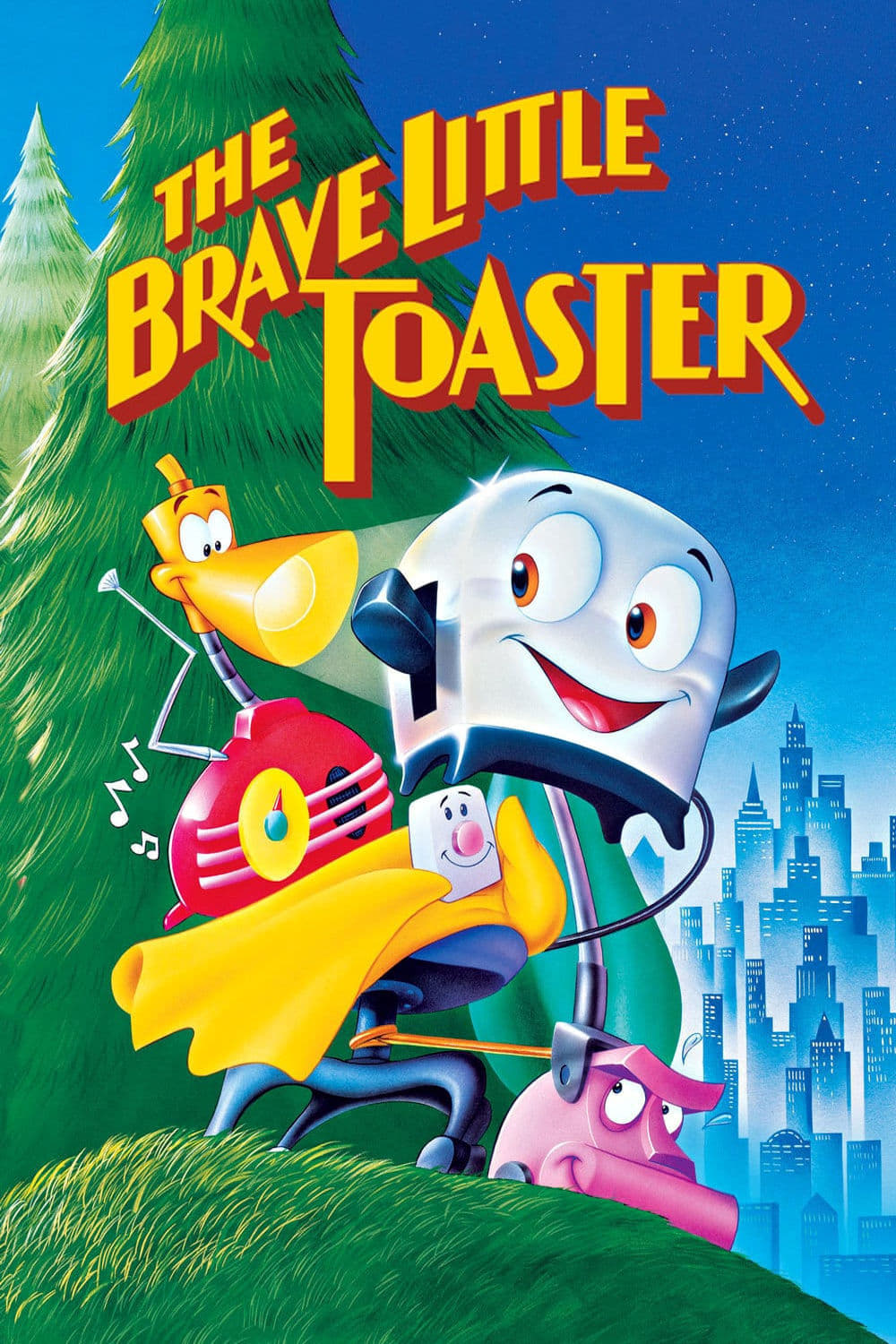
One of the earliest movies that I can remember watching as a child was the movie The Brave Little Toaster (1987).
Anthropomorphized appliances are abound in this animated, and somewhat dark film. For anyone unfamiliar with this movie’s plot, it is about five sentient household appliances who have been left behind for years. Fearing they have been abandoned and that they are no longer useful, they set out to find their owner, simply referred to as “the Master.”
Granting free will to appliances necessarily gives them them the capacity to choose a course of action that could potentially lead to self-destruction, because that falls under the domain of free will. It is worth stating that a machine simply choosing to destruct at whim would be an impractical implementation in most scenarios if it were input into every device. Reliability and predictability are traits that most people generally want in their tools, and those are two things that free will is not, reliable and predictable. The scene in The Brave Little Toaster where the air conditioner self-destructs is a good example of what can go wrong when appliances face an existential crisis (The Air Conditioner Scene. Moreover, the song “Worthless” that occurs later near the film’s climatic junkyard scene, takes this motif of depression induced self-destruction in appliances a bit further.
A notable exception to acts of self-destruction being completely unwarranted would include instances where a mechanical device might be called upon to forego whatever inclinations of self-preservation have been programmed in its code and choose to sacrifice itself for the good of another. This question, “When should self-sacrifice (e.g., self-destruction) be considered over self-preservation?” is also a question presented to robots in other popular works of fiction where artificial and simulated intelligence are prominent, such as I, Robot (2004) and WALL-E (2008).
This capacity for free will, which in Affect Engineering entails possessing the ability to break a double-bind and abandon the inclination for self-preservation, is debatably lauded as one of the quintessential distinguishing features between complex lifeforms and machines with their cold and mechanical efficiency. Machines simply do whatever they are programmed to do, but the possibility of them doing otherwise makes for intriguing stories; it gets audiences to ask themselves, “At what point might a robot’s actions be considered heroic?”
In Affect Engineering’s framework, free will is a double-edged sword; possessing it means an individual has the ability to pursue the fulfillment of one purpose against the fulfillment of its opposite purpose to the utmost, even in the face of death, at any time or place. The notion of machines wandering the world with this capacity, to shift at whim from acting for their own self-preservation to suicidal behavior (e.g., altruistic or otherwise) should give people at least a moment’s pause for concern, particularly if free will is implemented into them without careful consideration of the consequences.
Just as a determined human with an inexorable resolve can be a dangerous thing, a determined machine with an inexorable resolve can also be a dangerous thing.
4) How would emotions arising in subconscious states, unconscious states, or altered states of consciousness such as sleep, be modeled in Affect Engineering? How might their transition from a subliminal state to extinction (i.e., totally purged from the individual’s memory) be modeled?
SHORT ANSWER
Emotions arising from subconscious states, the unconscious, or altered states of consciousness such as sleep, are best modeled with different setups of the functions used in Affect Engineering. For example, one form of attention may be more ideal for modeling dreams, nightmares, and repressed memories that have been blocked, while another form of attention may be more ideal for modeling emotions arising in individuals with neurodegenerative diseases or to model situations where neural death or amnesia are taking place.
IN DEPTH EXPLANATION
Different setups of the functions in Affect Engineering may be used depending on what one intends to model. If analyzing a situation where some amount of affect is normally suppressed or alternatively elevated above normal levels, but then the affect ceases to be regulated by the individual, then the Valuation Resilience Form of Attention in Affect Engineering would be more ideal for modeling this than some of the other forms of attention. In the first case, the self’s valuation of the entity rebounds to the level it would normally be at if it was being suppressed. In the second case, it dwindles to a lower level if it was being elevated up to that point. This could be precipitated by a change in the individual’s state, going from a condition or activity level where an individual suppresses a larger portion of the affect they would normally experience, into a condition or activity level where that affect is no longer being suppressed and valuations of entities begin to fluctuate. It is the metaphorical equivalent of opening the floodgates.
Biological Rhythms and Sleep
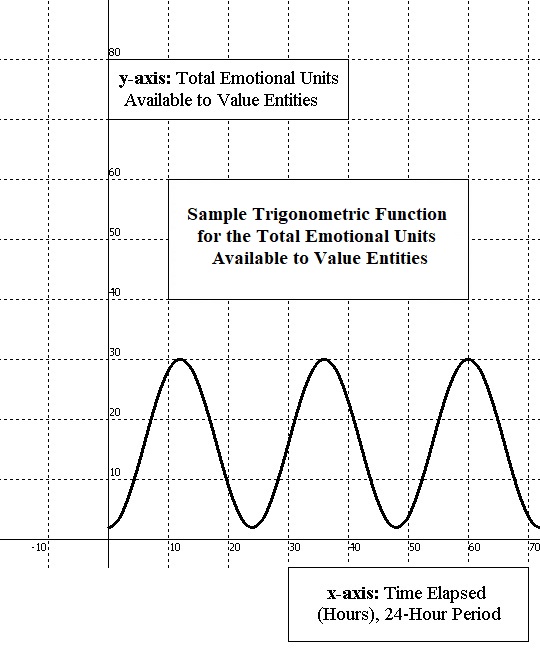
Biological rhythms refer to any “periodic variation in a living organism’s physiological or psychological function.” Circadian Rhythms (those occurring in approximately 24-hour periods, like the sleep cycle) are perhaps the most well known. There are also ultradian rhythms, (those occurring in less than 24-hour periods, such as breathing and the stages of the sleep cycle, like REM sleep), and infradian rhythms (those occurring in longer than 24-hour periods, such as monthly menstrual cycles and hibernating, a circannual rhythm). In Affect Engineering’s framework, these can be represented with trigonometric expressions.
Graph of a sample trigonometric expression that shows how many Emotional Units are available to an individual to value entities based on one biological rhythm. This graph oscillates between 2 and 30 Emotional Units available.
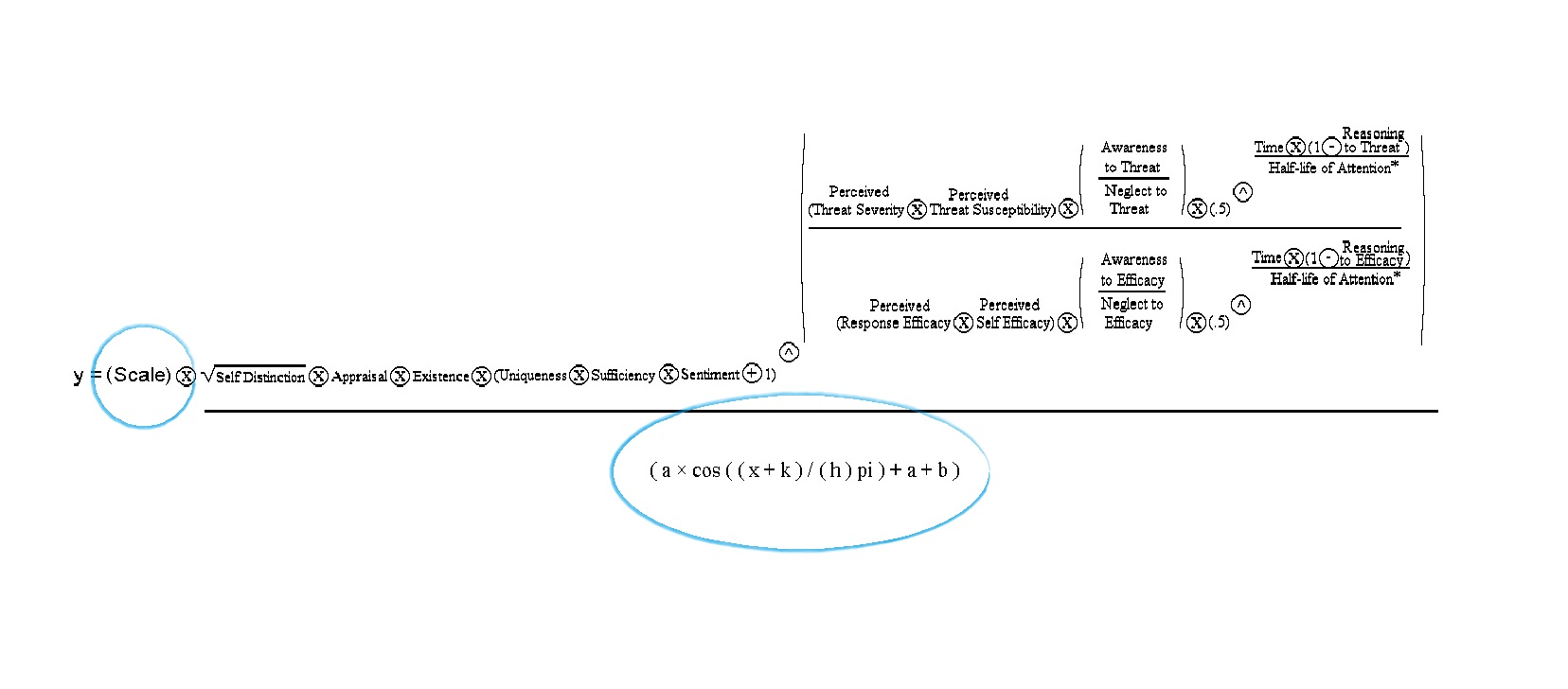
If biological rhythms are used to interpret information, then the trigonometric expressions for each rhythm would be in the denominator underneath the entire expression (Below, denominator). For ease of interpreting, this can then be scaled (Below left) as a fraction of the individual’s total emotional energy available value entities; the most practical scale would be to 100, as it would yield a percentage.
The introduction of biological rhythms also modifies what the y-value would represent. The y-value, with biological rhythms being considered, would now represent the Emotional Units being invested into a particular entity as a fraction of the total Emotional Units available. In Affect Engineering’s framework, the total Emotional Units available would correspond to Anxiety and negative affect, or alternatively, Negative Anxiety and positive affect if pleasure is being considered instead.
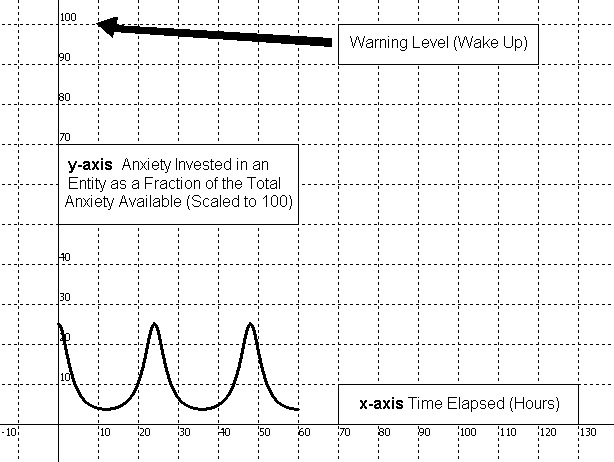
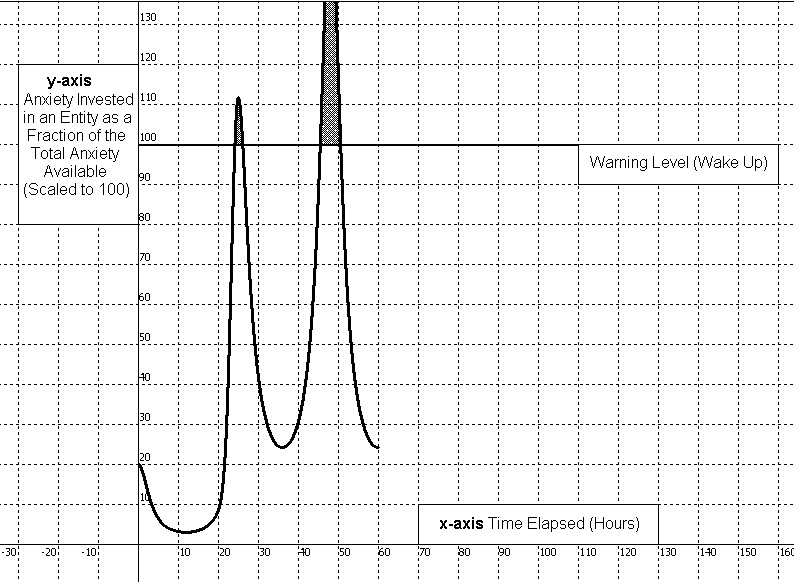
In the above graph, the individual’s valuation of the entity with respect to a particular purpose is remaining constant, but their total emotional energy available to value entities is fluctuating on a 24-hour cycle from a single biological rhythm. Additional biological rhythms of less or more than 24-hours in length could be implemented that would change the shape of the above graph, than, but it would still repeat at a certain point. Because the valuation of the entity stays under 100% of the individual’s total Emotional Units available to value entities, there is no need for the individual to wake up and mobilize more energy to value entities; they remain asleep.
Dreams and Nightmares
If during the day, for example, an individual is suppressing awareness to a serious threat of danger against a valuable entity, such as by actively diverting attention away from the threat, then Anxiety invested in the entity would generally remain low while this is occurring. However, if upon going to sleep, the individual’s suppression of their awareness of the threat ceases, then the threat of danger may surge to a higher level once this pressure cap is lifted so speak. The graph (below) was modeled using the Valuation Resilience form of Attention in Affect Engineering; the self’s valuation of the entity was modeled to increase while they are asleep on two successive nights, with the second night being more intense than the first. In both instances, the elevating valuation of the entity calls for more emotional units than are available while the individual is asleep. This might take the overt form of a sudden bout of panic a nightmare that wakes the individual up in the middle of the night.
This graph models the tracking of an individual’s valuation of an entity for a purpose as a fraction of their total Emotional Units available to value entities over the course of two nights. On both nights, the entity’s valuation surges as more Anxiety is invested into the entity while they are asleep, and models the individual being woken up in a panic.
This resurgence of an entity’s value could also apply to things the individual is ignoring that would alternatively evoke pleasure felt with respect to a single goal instead of pain. If Negative Anxiety were at stake instead, then the dream might be a pleasant one, but it would still be capable of waking the individual up if it outstrips the individual’s Emotional Units available to value entities while they are asleep. This could happen if the individual had been adhering to a strict diet for a long time, but desired to indulge in something sweet. A dream about gorging themselves on a feast of cake, cookies, and other sweets, while pleasant, could wake them up with the intensity of the pleasure they are experiencing in the dream just as a nightmare might wake them up in terror.
Modeling Extinction of the Entity
For situations where the individual’s cognition that something exists becomes jeopardized, forms of the functions used in Affect Engineering that account for the possible extinction or erasure of an entity from an individual’s psyche may be more ideal. Some of these situations include neurodegenerative diseases such as Alzheimer’s Disease, Parkinson’s Disease, Huntington’s Disease and scenarios where the introduction of any neurotoxins (e.g., arsenic, and heavy metals such as lead, and mercury). Amnesia, or the act of simply forgetting that an entity was ever encountered in the first place.
These could be modeled by a coefficient variable alongside Existence in the base of the function that either signals that the entity exists to the individual (e.g., coefficient of +1), or signals that the individual’s cognition of the entity is extinct (e.g., coefficient of 0).
An entity that lingers in an individual’s unconscious for long enough might very well go extinct, or be subtly purged from acknowledgement through the severing of neural connections in a use it or lose it fashion to maintain efficiency. The brain, after all, possesses remarkable plasticity. As it follows, any approach to cataloging emotions would need to account for its complexity and adaptability.
This is the eleventh article in a series of twelve and gives an overview of some additional Category IV Emotions as well as some miscellaneous emotions as they would be modeled in Affect Engineering. It is designed for the layperson and explains the basics of Affect Engineering as a theory of emotions. Each article in this series begins with a list of questions that it will aim to address. The sections that follow are in two parts each. The first part is a short statement that answers each question as succinctly as possible. The second part will offer a more in depth explanation that goes into more detail where needed by exploring some of the implications of the short answer.
QUESTIONS
How are new, obscure, or highly specific emotions classified and integrated into Affect Engineering?
What are some examples of obscure or lesser known Category IV emotions and other miscellaneous emotions?
How are ethics and morality implemented into Affect Engineering?
1) How are new, obscure, or highly specific emotions classified and integrated into Affect Engineering?
SHORT ANSWER
The classification of new, obscure, or highly specific emotions in Affect Engineering involves performing one or more of the following actions:
Identifying whether or not the emotion is instead a specific instance or subtype of another Category I, II, or III emotion.
Identifying whether or not multiple purposes/objectives are in the definition of the emotion and ascertaining the nature of the interactions between the purposes. In other words, are the purposes in conflict or in concert with one another.
Identifying if a key component of the emotion is due to variation in a specific variable or variation in multiple variables that have been described in Affect Engineering.
Identifying if the emotion is one that is developmental in nature, such as in the construction of a variable (i.e., the self’s creation of variables used in Affect Engineering) or an individual’s relational system between the variables (i.e., the organizational scheme that the self uses to build a personalized function in Affect Engineering).
IN DEPTH EXPLANATION
Determining how to classify a novel, obscure, or highly specific emotion in Affect Engineering is accomplished by going through a checklist of four features:
Determinging if it is another Category I, II, or III Emotion
Determining if multiple purposes are involved
Determining if a particular variable is an indicator of the emotion
Determining if the emotion is developmental in nature.
Instances or subtypes of Category I, Category II, or Category III Emotions
First, if the novel emotion appears to be similar to another Category I, II, or III Emotion already identified in Affect Engineering’s framework, then the classification of the emotion would fall under one of those domains. Various phobias and philias, such as acrophobia (fear of heights), arachnophobia (fear of arachnids), claustrophobia (fear of confined spaces), bibliophilia (fondness for or love of books), logophilia (fondness for or love of words), cinephilia (fondness for or love cinema), would fall under this realm. They would best be categorized as specific instances of a particular Category I, Category II, or Category III Emotion.
Multiple Purposes or Objectives are in the Definition of the Emotion
In the second case, if the novel emotion does not appear to match any other Category I, II, or III Emotions, then determining the number of purposes or objectives in its definition becomes the next task. If multiple purposes or objectives can be identified in its description, or if one of the purposes itself serves as an entity for another purpose, then it will generally be classified as a Category IV Emotion. This was the case for Boredom and Greed, discussed in Article 10, question #2 Category IV Emotions, Emotive States, Part One (Article 10 of 12) The 1:1:1:1 Ratio that Affect Engineering adheres towards is still upheld in these cases, but can become a much higher, unsimplified ratio (e.g., a 3:3:3:3 ratio, a 4:4:4:4 ratio, a 5:5:5:5 ratio, etc.).
Variation in specific or multiple variables
Thirdly, if the novel emotion does not appear to possess multiple objectives or purposes within it, then determining whether or not the description of the emotions involves a manipulation of a specific variable or variables in the function becomes the next task. For example, this would be the case for an individual forecasting expected scenarios in the future or revisiting scenarios from the past, both of which involve manipulation of the variable representing the passage of time in a function. Novel emotions where the individual is described as detaching themself from themself (e.g., thinking of their past or future self as another person), alternatively, would involve manipulation of the Self-Distinction variable as well as the variable for Elapsed Time.
Developmental Emotions
Fourthly, if the novel emotion does not fit any of the above criteria, then the novel emotion will best be classified as developmental in nature. Emotions that are developmental in nature relate to the construction of the variables used in the functions of Affect Engineering, such as Self-Distinction for the formation of empathy in Affect Engineering. Alternatively, developmental emotions might instead relate to the self’s assessments of the limitations of these variables. For example, the self’s assessment of variables representing the Time Elapsed, or those for Existence could lead to the identification of novel emotions that describe scenarios that are developmental in nature, such as if the individual begins to critically assesses their range or reliability.
2) What are some examples of obscure or lesser known Category IV emotions and other miscellaneous emotions?
SHORT ANSWER
Some examples of obscure or lesser known Category IV Emotions include Limerence, originally formulated by Dorothy Tennov in her book Love and Limerence (1979), along with notions of romantic love. Additionally, many of the emotions coined by John Koenig in his work The Dictionary of Obscure Sorrows (2012) would be classified as either a Category IV Emotion or a miscellaneous emotion, such as: Enouement, Lachesism, Liberosis, Kenopsia, Trumspringa, Harmonoia, Hubilance, Chrysalism, Pronoia, Kadot, Zenosyne, Jouska, Daguerreologue, Sonder, Vellichor, and Occhiolism, to name a few. Other emotions that are older, like Schadenfreude and Mitfreude, are better classified as specialized instances of emotions from other Categories in Affect Engineering (e.g., Category I, II, or III).
IN DEPTH EXPLANATION
Several examples for classifying novel emotions will be explained for each of the four stages of the checklist. The definition of each emotion will be provided first. Some, like Schadenfreude, are from language and much older, while others like Limerence are taken from more recent literature on Psychology. The majority listed here are neologisms from John Koenig’s Dictionary of Obscure Sorrows to serve as examples, but any novel or invented emotion can be classified into a category in Affect Engineering using the process describe in the answer to question #1 of this article.
Emotions Best Described as Instances or subtypes of Other Category I, Category II, or Category III Emotions
Schadenfreude
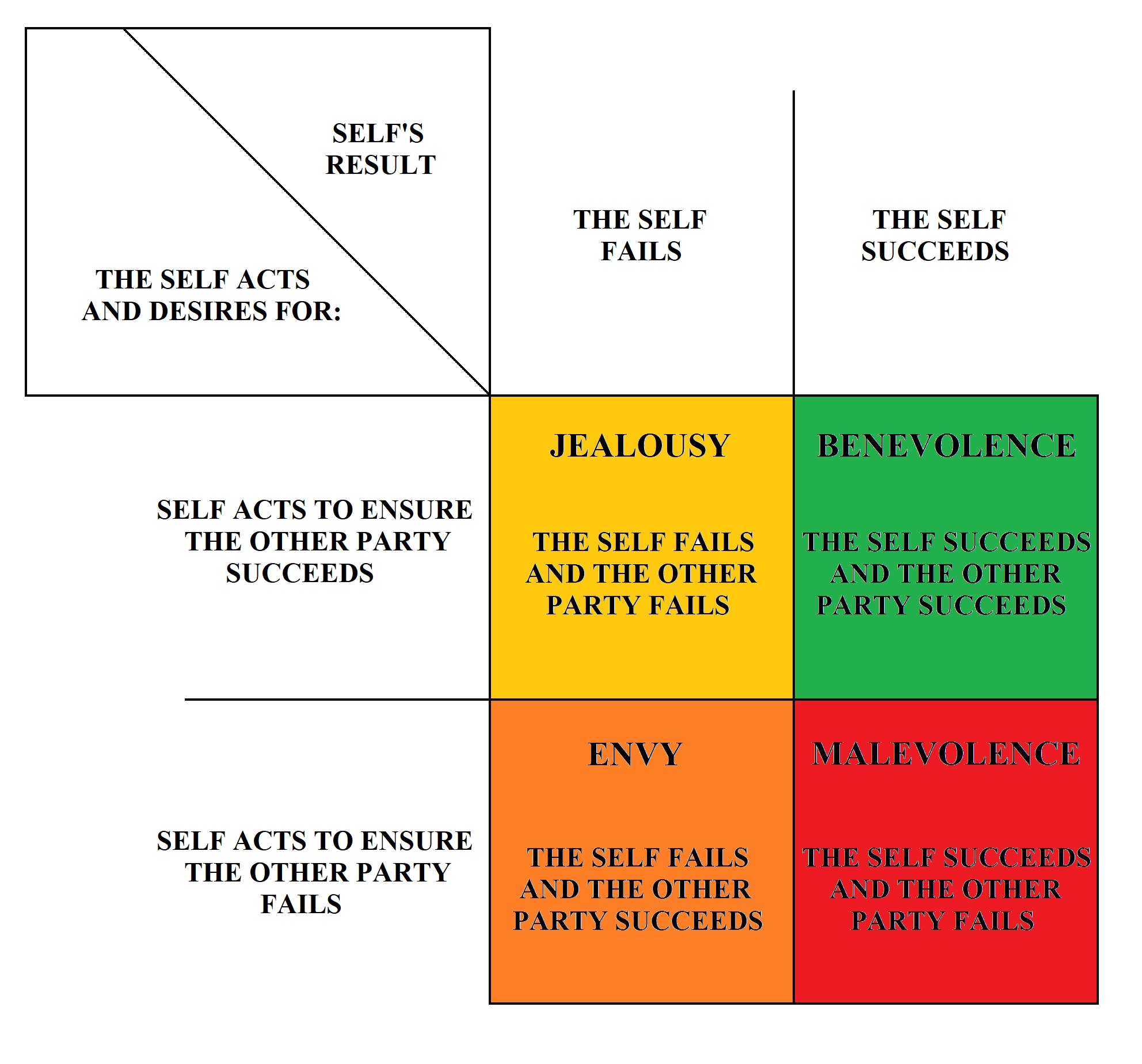
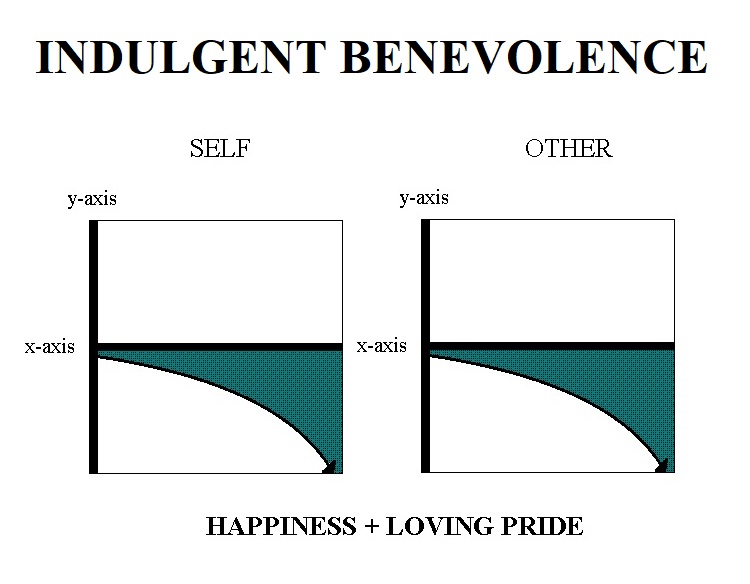
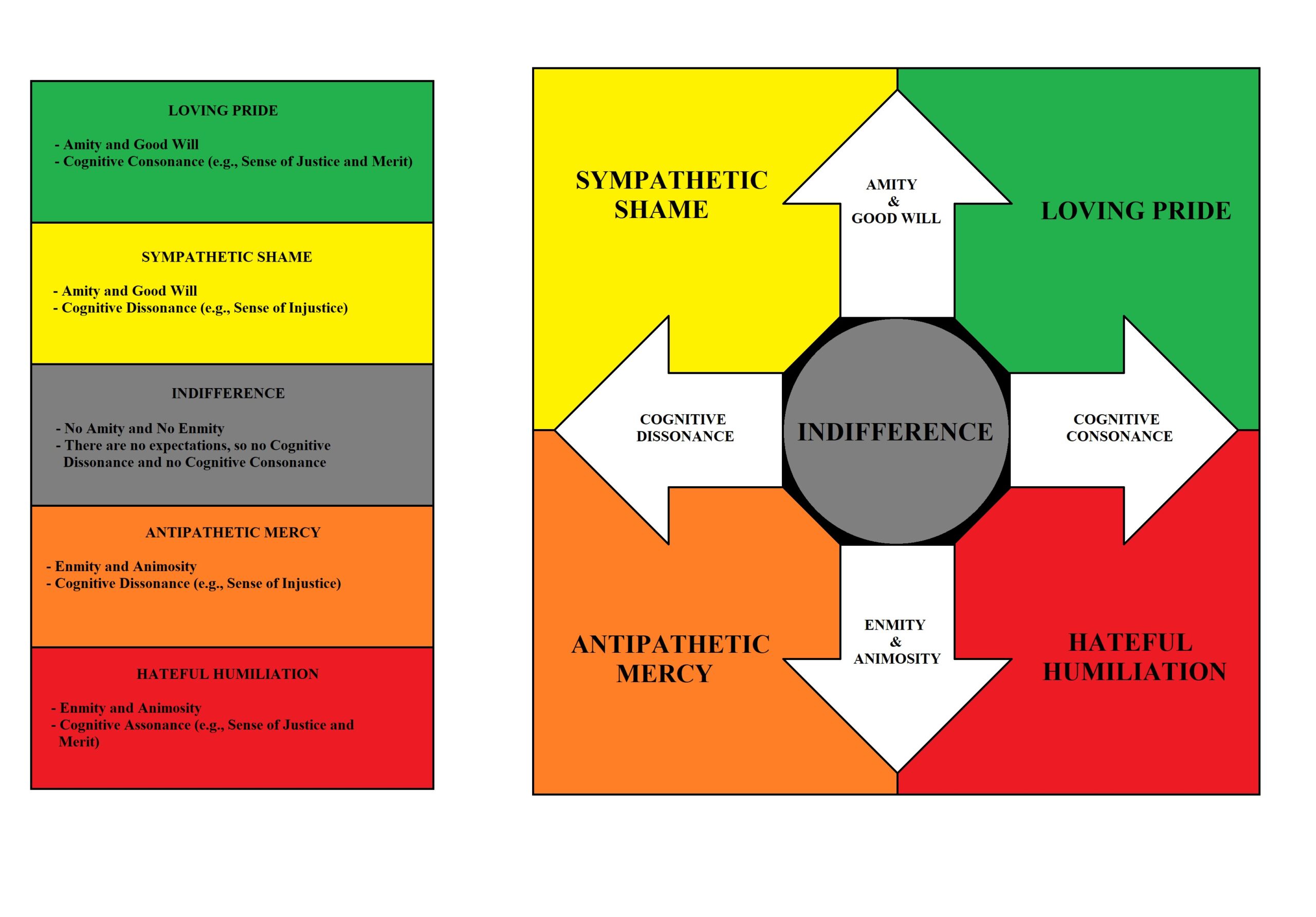
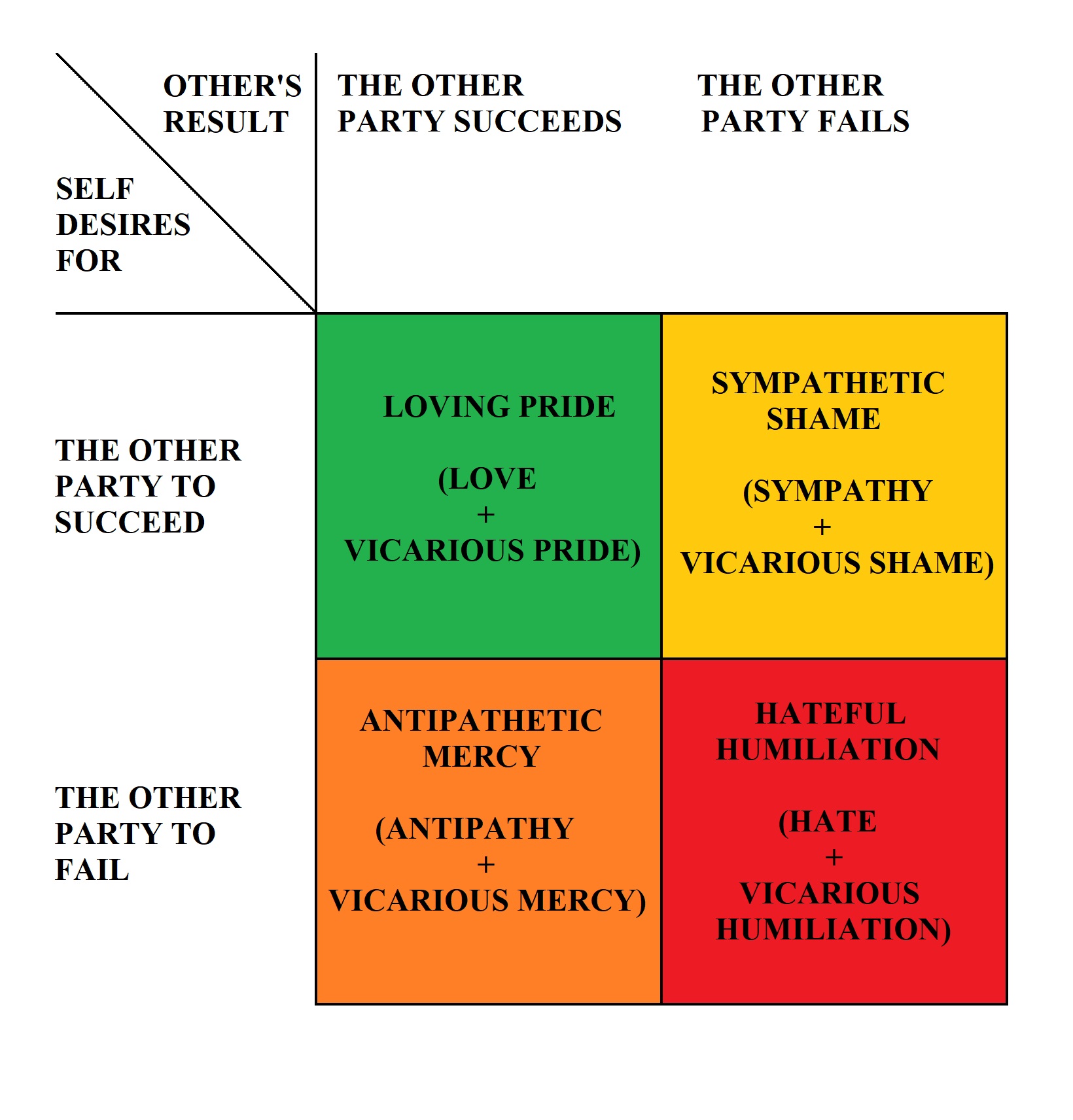
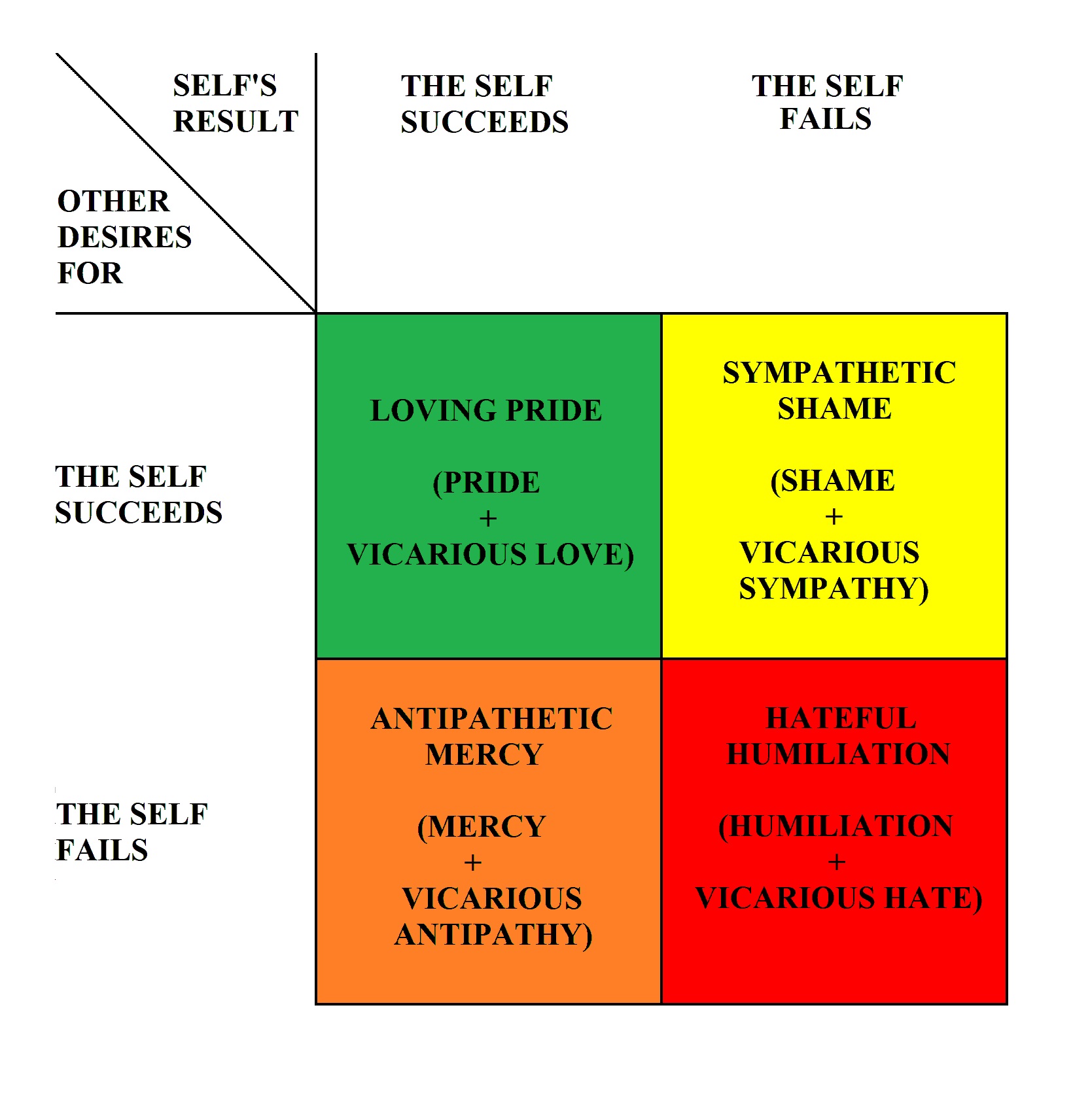
Schadenfreude, a word of German origin, is a good example of an emotion that is similar to one already described in Affect Engineering’s classification scheme. Schadenfreude is described as, “Satisfaction or pleasure felt at someone else’s misfortune,” (from Dictionary.com), and as “malicious joy in the misfortunes of other” (from online etymology dictionary). Its counterpart in some circles is considered to be Mitfreude, a term that translates to “with joy”, or sharing joy and rejoicing in another’s happiness. Both Schadenfreude and Mitfreude would be similar to the Category II Emotions of Hateful Humiliation (for Schadenfreude) and Loving Pride (for Mitfreude) in Affect Engineering’s framework. Both Hateful Humiliation and Loving Pride are explained in the eighth article of this series, question #1, (Category II Emotions, the Interpersonal Emotions or Four Degrees of Empathy, Article 8 of 12)
Chrysalism most resembles the Category I emotion of either Content, or Happiness, depending upon the order in which the threat of the thunderstorm is processed relative to the individual’s efficacy to safeguard themselves against it. If the threat of the thunderstorm is processed first, meaning the individual just returned indoors only after the weather took a turn for the worse and the threat became evident, then it would most likely resemble Happiness. If the individual was already safely indoors when the threat of the thunderstorm became salient, then it would most likely resemble Content. The end result would be the same once everything is assessed. Chrysalism would simply be a highly specific instance of one of these two emotions. Category I Emotions were examined in article seven of this series, the (Category I Emotions: the Intrapersonal Emotions or Emotions of the Self, Article 7 of 12).
Kadot
Kadot, “fear of the prospect of not existing one day, feeling like a student about to graduate from the universe, on the cusp of a transition you don’t feel ready for.” — from John Koenig’s Dictionary of Obscure Sorrows
Kadot, in Affect Engineering, would be best classified as a specific type of fear about a particular event (i.e., not existing one day). It most resembles the Category I Emotion of Fear, which was also examined in article seven of this series. However, because most of the life goals that an individual holds also depends upon their continued existence, kadot would necessarily carry a great deal of significance for most individuals. Whatever life goals or objectives that one does not manage to fulfill before dying would likely be absorbed by this feeling as well.
In contrast, for an individual who has done everything that they desired to do in life, or at least tried to the utmost of their ability, and left nothing on the table, kadot would likely not hold as much significance to them.
Callosity
Callosity: “lack of feeling or capacity for emotion.” — from Merriam Webster Dictionary
Callosity most resembles the Category II Emotion of Indifference in Affect Affect Engineering, and would be best classified as a type of Indifference if a scenario where empathy is expected is being considered. The reason for the lack of emotion in instances where it would be expected, (e.g., such as a lack of empathy during a tragedy) could be due to a number of reasons. The individual may have intentionally suppressed them (e.g., in Affect Engineering’s framework, by using Reasoning to direct Attention away from anything that would heighten empathy), or unintentionally suppressed if processes beyond the individual’s conscious control are modifying it (e.g., this would be represented mathematically by a coefficient alongside the Self-Distinction variable in a function). It may also be the case that their capacity for empathy may have not developed in the first place.
This is most similar to the Category I emotion of Courage, and suggests that the individual may be inspired to take certain risks that are perhaps unwarranted or unjustified. Accordingly, it would best be classified as a subtype of Courage in Affect Engineering’s framework. However, in a worst case scenario, pronoia might embolden an individual to take on more risk than a situation warrants and become more susceptible to harm. In this regard, it would be as detrimental as its counterpart, paranoia, but in the other direction; paranoia in a worst case scenario, might dissuade an individual from pursuing something that they would find rewarding.
Emotions that Have Multiples Purposes or Objectives in their Definition
Limerence
Limerence, a term coined by Dorothy Tennov in her work Love and Limerence (1979), is generally defined as “a state of mind resulting from romantic attraction, characterized by feelings of euphoria, the desire to have one’s feelings reciprocated.” — from Colins Dictionary, Limerence
The primary desire for someone in a state of limerence is a desire for a reciprocation of feeling. The individual experiencing limerence also has reason to both hope and doubt, given that the reciprocation of feeling has not been confirmed. Although Dorothy Tennov’s description of limerence is far more detailed in her writing than can be covered here, this article from Psychology Today, Limerence highlights some of the main features of it that include the following:
“The experience of limerence is different from love or lust in that it is based on the uncertainty that the person you desire, called the “limerent object” in the literature, also desires you,” and it can be thought of as the “Desire to be desired.” — from Psychology Today, Limerence
“The focus of limerence is the mental obsession of whether the object of limerence feels the same way toward you.” — from Psychology Today, Limerence
This Marginalian article, Love and Limerence, also goes into additional detail concerning many of the characteristics of Limerence as described originally by Dorothy Tennov.
“Intrusive thinking about the limerent object.” — from Marginalian article, Love and Limerence
“Acute longing for reciprocation.” — from Marginalian article, Love and Limerence
“Fear of rejection and sometimes incapacitating but always unsettling shyness in LO’s presence, especially in the beginning and whenever uncertainty strikes.” — from Marginalian article, Love and Limerence
“Acute sensitivity to any act or thought or condition that can be interpreted favorably, and an extraordinary ability to devise or invent “reasonable” explanations for why the neutrality that the disinterested observer might see is in fact a sign of hidden passion in the Limerent Object.” — from Marginalian article, Love and Limerence
“Buoyancy (a feeling of walking on air) when reciprocation seems evident.” — from Marginalian article, Love and Limerence
What this entails for modeling limerence in Affect Engineering is a bit more complex and turbulent, sometimes resembling a hall of mirrors with the self looking for a reciprocated feeling in the targeted party. At least five other purposes would be in consideration, with several other emotions ranging from euphoria and happiness, to uncertainty (e.g., confusion) and despair (e.g., sadness) occurring:
Purpose #1: The self desires the targeted other (i.e., the limerent object) as a potential sexual or romantic partner; that is to say, the self desires to acquire the entity of intimacy with the targeted other.
Purpose #2 and #3 (#3 is felt vicariously): The self desires for the targeted other (i.e., the limerent object) to successfully acquire a romantic relationship or sexual partnership with the self. This would necessarily entail that the targeted other must want a romantic relationship with the self more than they do not want a romantic relationship with the self, or in other words, that the self desires a reciprocation of feeling (i.e., a reciprocation of purpose #1 from above). There are two additional purposes here that are in consideration. The first purpose entails the self wanting the targeted other (i.e., limerent object) to succeed at a particular purpose, either passively (Category II Emotion) or actively (Category III Emotion) with the self taking action to ensure the limerent object’s success. The second purpose is experienced vicariously, with the self imagining itself as the limerent object wanting to acquire a romantic or sexual partnership with the self.
Purpose #4 and #5 (#5 is felt vicariously): The complementary purpose to the vicariously felt emotion (purposes #2 and #3 from above) that the self feels for the targeted other or the limerent object, is also under consideration and carries significant weight to the self. This would concern the limerent object wanting to avoid a romantic or sexual partnership with the self altogether. The self, as it follows, does not want the targeted other (i.e., the limerent object) to succeed at avoiding a romantic relationship or sexual partnership with the self, as this would indicate that the self’s feeling (from Purpose #1) is not being reciprocated.
Because uncertainty is also a crucial element of limerence, Confusion would also be one of the emotions felt for one, if not both of the vicariously experienced emotions in the case of Limerence in Affect Engineering’s framework. As new information becomes available, the individual’s state may swing from one extreme to another (e.g., euphoria to despair, or vice versa) as new information becomes available and the limerent object’s disposition evolves.
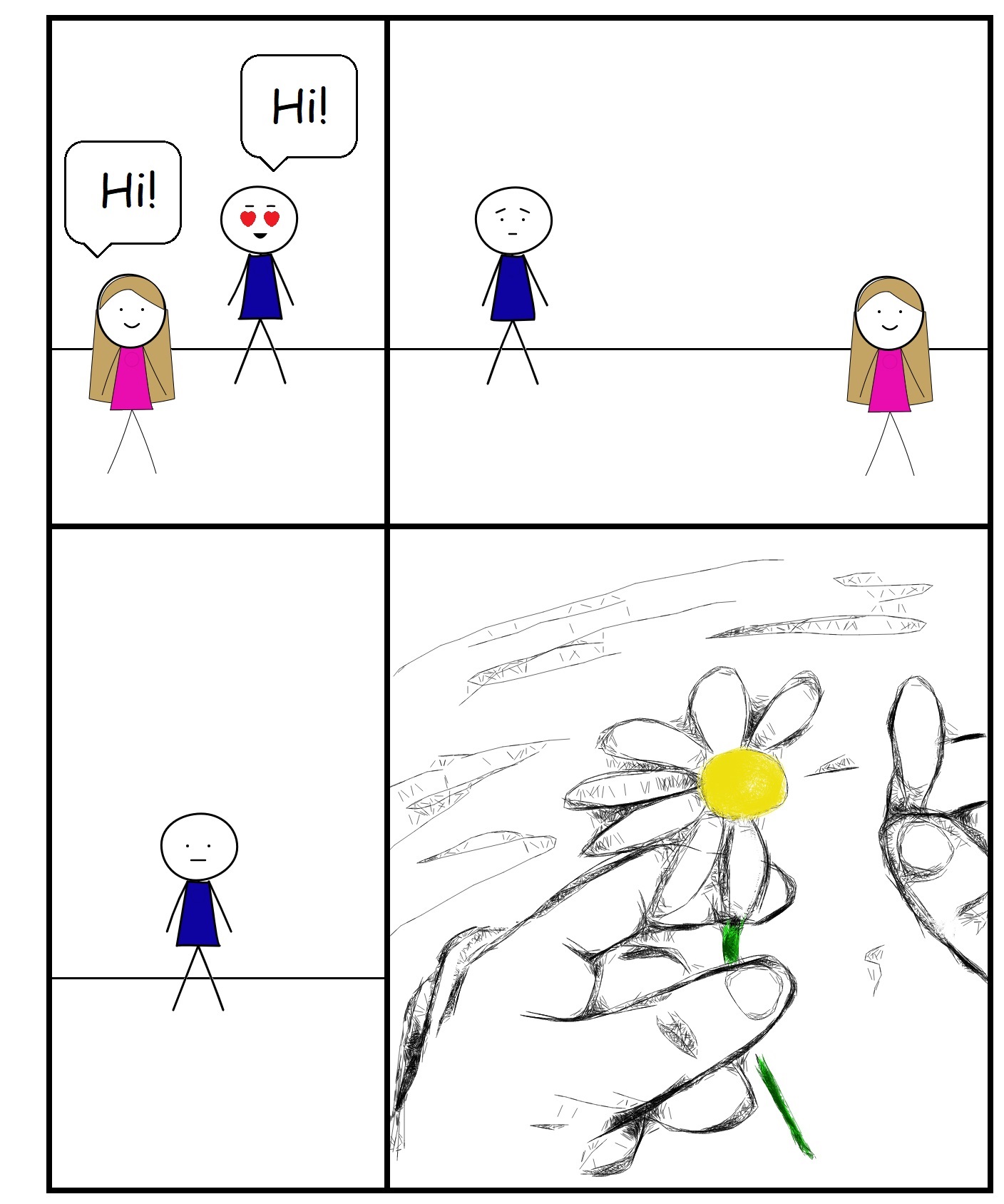
Buck (below, in the blue shirt), from the examples in article ten, will be considered in a hypothetical scenario for limerence where he desires a reciprocation of feeling from a limerent object, Buckette (below, in the pink skirt).
As simple as the example is above, there is enough uncertainty — with reason to both hope and doubt — for Buck’s limerence to continue, with Buck left wondering if Buckette desires him or not. If the other party reciprocates the feeling, then limerence will end from “consummation,” and the scenario will evolve into either a “physical or romantic relationship” as they discover that “the object of their desire also has a desire for them.” — from Psychology Today, Limerence. Limerence can also end in other ways, such as if the uncertainty ends (e.g., via rejection).
Admittedly, romantic love is a concept that means many different things to many people; romantic love has been written about by millions of singers, artists, and writers throughout history, and is difficult to pin down to a few words. The APA Dictionary of Psychology, however, observes that romantic love, “In some taxonomies of love, is identified with passionate love,” and it notes that “Passionate lovers typically are greatly preoccupied with each other, want their feelings to be reciprocated, and are usually greatly distressed when the relationship seems awry.” If romantic or passionate love are being modeled in Affect Engineering, then it would be sensible to also include the self’s desire for a reciprocation of feeling from the targeted other in a manner somewhat similar to limerence, but perhaps as a desire for a continued reciprocation of feeling. Several purposes would likely be in consideration, but one of the main differences between modeling romantic love and limerence in Affect Engineering would be that no uncertainty or reason to doubt would typically be present in the case of romantic love as there was for limerence, as the reciprocation of feeling would already have been confirmed in the case of the romantic love.
Enouement
Enouement, “the bittersweetness of having arrived here in the future, finally learning the answers to how things turned out but being unable to tell your past self.” — from John Koenig’s Dictionary of Obscure Sorrows
To model Enouement in Affect Engineering, there are two separate purposes the individual holds that would need to be considered:
Purpose #1: The self desires to acquire knowledge about the future.
Purpose #2: The self desires to deliver the acquired knowledge to one’s past self.
The conditions for the success of the first objective (experiencing the future firsthand) are only possible once the deadline for action has passed for the second objective, and the self is no longer in the past. For this pair of objectives, one cannot achieve both the first and second objectives listed. For Enouement, a great deal of frustration would center around the fact that the Efficacy component (both Self-Efficacy and Response Efficacy) for this second objective appears to be zero, due to the one way directionality of time’s progression. More on Efficacy can be found in article four, question #3 in this series, Emotional Responses and Emotional Regulation in Affect Engineering (Article 4 of 12)
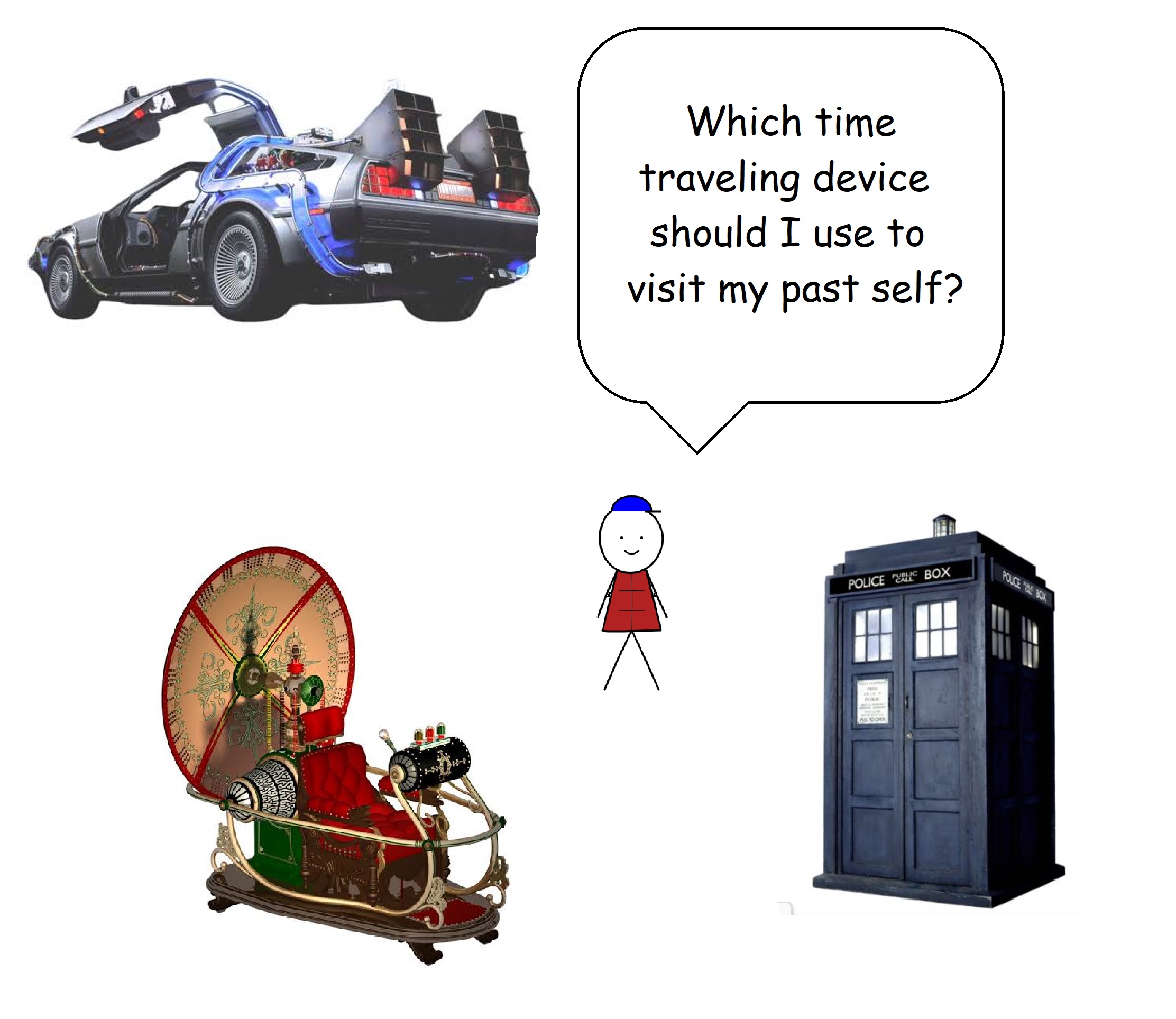
Given that time traveling Deloreans (from Back to the Future), time machines (from H.G. Well’s Time Machine), and TARDISes (from Doctor Who) are all in short supply in reality, it follows that the second purpose from above, concerning the self’s desire to deliver the acquired knowledge to one’s past self, is not actually possible to achieve.
To model Lachesism in Affect Engineering, there are at least three purposes that would need to be considered, but potentially more depending upon how many objectives are cluttering an individual’s list of priorities :
Purpose #1, Purpose#2 (or potentially more): Confusion (i.e., uncertainty) exists regarding what entity should be valued the most with respect towards its ability to fulfill a particular purpose held by the self. There may be two, three, or more purposes in consideration here as well.
Purpose #3: The self desires for the uncertainty to be eliminated, in this case, by a threat of harm taking place that that eliminates all, or all but one of the entities.
Purpose #4: The self desires to discover the entity and the purpose associated with it that have the utmost importance if the most important one is sought. Alternatively, they may desire instead a blank slate from which to begin totally anew.
At its base, the main component of Lachesism is the self’s desire to be rid of the uncertainty present in another purpose. If the threat of harm actually takes place and reveals to the self that which matters most or should matter most to the individual, then the uncertainty is gone. Zombie apocalyptic, or apocalyptic shows and movies in general, will sometimes explore or use the emotion of Lachesism as a catalyst to drive the story. One such example is The Last of Us: Trailer for The Last of Us.
Liberosis
Liberosis, “the desire to care less about things; to figure out a way to relax your grip on your life and hold it loosely and playfully, keeping it in the air like a volleyball, with quick and fleeting interventions, bouncing freely in the hands of trusted friends, always in play.” — from John Koenig’s Dictionary of Obscure Sorrows
To model Liberosis in Affect Enginerering, at least two purposes would need to be held in consideration:
Purpose #1: A great deal of Anxiety is invested by the self into one or more entities towards the fulfillment of one or more purposes.
Purpose #2: The self desires to lower the amount of Anxiety being invested into the aforementioned entities. Stated differently, the individual desires to acquire more free Anxiety to invest by demobilizing it from whatever it is currently invested in.
The critical feature of Liberosis concerns the second purpose listed above, and centers on the self’s desire to divest or free up the Anxiety that is currently being invested into entities. Anxiety, in Affect Engineering, is treated as a resource in Affect Engineering’s framework (Article two, Reframing Anxiety as a Resource). The individual is still able to successfully manage purpose #1 above, but is also working towards fulfilling purpose #2 from above.
To model Kenopsia in Affect Engineering, at least three purposes would need to be held in consideration.
Purpose #1: Desire to acquire the experience of a particular location that is normally bustling with activity.
Purpose #2 and Purpose #3 (#3 is vicariously felt): Loneliness and Vicarious Indifference are felt by the self due in part to the absence of the people that are normally there that the self expects should be there.
Kenopsia would be modeled to result from a conflict between the self’s expectations and the reality of the situation. The self still expects the empty venue to still be crammed with people and bustling with activity because it has always been that way. In the self’s mind, lots of people should be at the venue, but they are not. The absence of the crowd in some ways may seem like an abnormality to the self; the eeriness of it might even stem from a parallel to the crowd being there and ignoring the self. Even though these would be two different scenarios, to the self they might feel similar as the they struggle to accept the new reality of the venue.
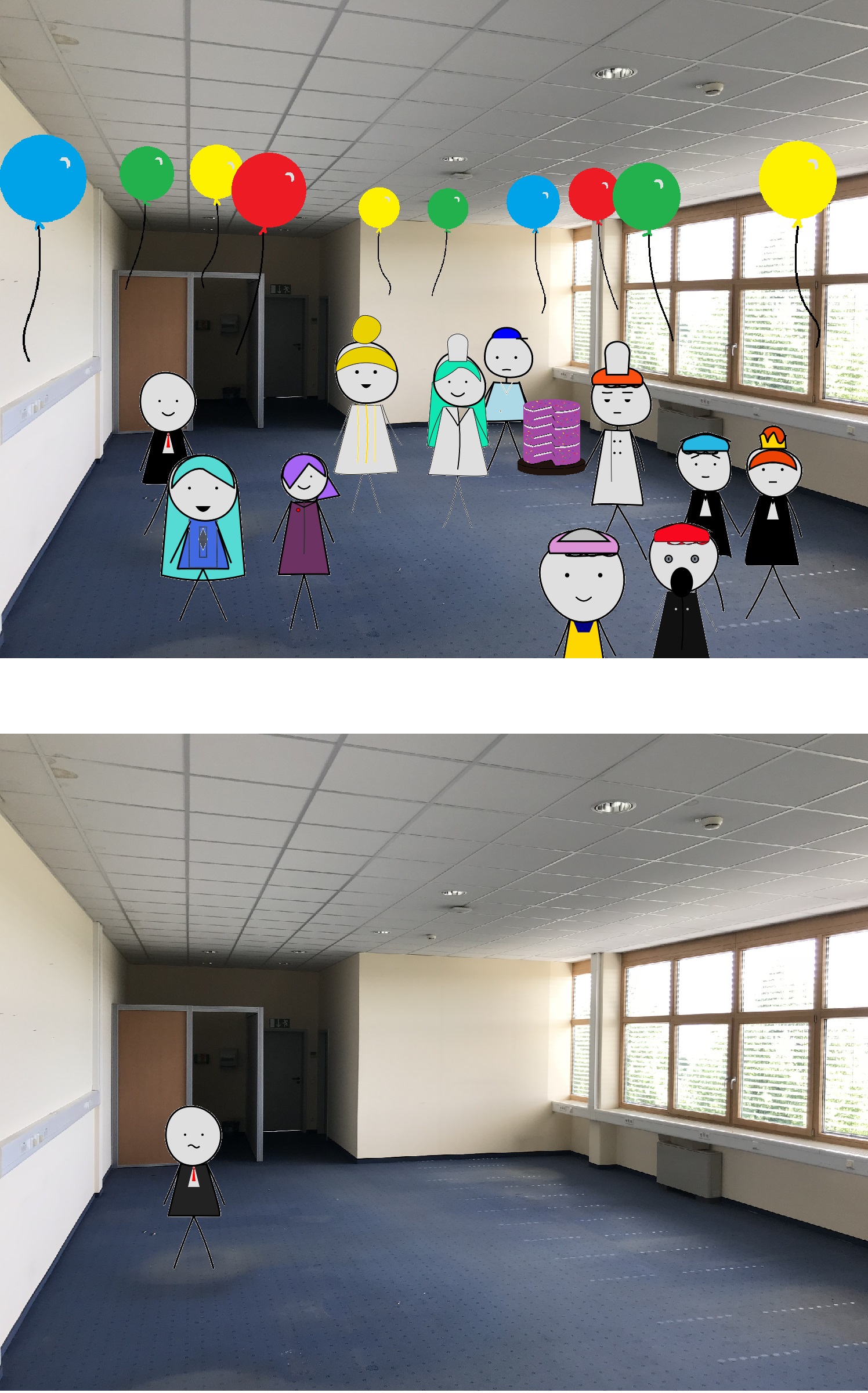
Buck (above) returns to what was a usually busy office after its moving party (above), but now discovers that it appears abandoned since the company moved (below). Buck, up until the present moment, had envisioned it as a place full of other people with desires, experiences, and meanings that he had to consider. He now has to reckon with the new reality of it.
Trumspringa
Trumspringa, “the longing to wander off your career track in pursuit of a simple life—tending a small farm in a forest clearing, keeping a lighthouse on a secluded atoll, or becoming a shepherd in the mountains—which is just the kind of hypnotic diversion that allows your thoughts to make a break for it and wander back to their cubicles in the city.” — from John Koenig’s Dictionary of Obscure Sorrows
To model Trumspringa in Affect Engineering, at least two purposes would need to be considered:
Purpose #1: The self desires to pursue or acquire expertise and experience in a particular career (e.g., for financial stability) and they currently doing this.
Purpose #2: The self, thereafter, desires to pursue a different set of goals, for instance, ones that are mutually exclusive with the aforementioned career path.
For the case of Trumspringa, the second purpose listed above overtakes the first in terms of importance. Within Affect Engineering’s framework, this could be modeled by a change in the value of the Sentiment variable. Henry David Thoreau’s account of his experiences of living simply in a cabin for two years, detailed in his book Walden, or Life in the Woods (1854), is a good example of Trumspringa.
Harmonoia
Harmonoia, “an itchy sense of dread when life feels just a hint too peaceful—when everyone seems to get along suspiciously well, with an eerie stillness that makes you want to brace for the inevitable collapse, or burn it down yourself.” — from John Koenig’s Dictionary of Obscure Sorrows
To model Harmonoia in Affect Engineering, at least two purposes would need to be held in consideration:
Purpose #1: The self is feeling Joyfulness as everything seems to be going one’s way; the self is successfully achieving purposes.
Purpose #2: The entity of Joyfulness or the previous success itself becomes viewed as a threat to future purposes or other objectives.
Notably, the rationale behind the emotion of Harmonia itself is also centered around the self’s belief in a gambler’s fallacy, a type of logical fallacy. The gambler’s fallacy concerns an error in reasoning where an individual believes that in a scenario that is based on random chance (e.g., flipping a coin and getting heads or tails) that past outcomes will influence future outcomes. In this instance, the self views the success and joy that is currently being felt as a threat to future unrelated objectives due to the erroneous belief that their perceived luck or good fortune will run out and bad things must inevitably be on the way.
For example, if the self were indeed gambling on a coin flip, and had already correctly guessed heads ten times in a row, then they still have a fifty percent chance of guessing heads again correctly on the eleventh flip of the coin.
A person experiencing Harmonoia, however, would fear that their chance of getting heads on their eleventh try would be less than fifty percent, given that they have had a seemingly lucky streak of ten coin flips in a row where they correctly guessed heads in a row. In addition to requiring two purposes, Harmonoia also incorporates an error in reasoning.
Hubiliance
Hubilance, “the quiet poignance of your own responsibility for someone, with a mix of pride and fear and love and humility—feeling a baby fall asleep on your chest, or driving at night surrounded by loved ones fast asleep, who trust you implicitly with their lives—a responsibility that wasn’t talked about or assigned to you, it was assumed to be yours without question.” — from John Koenig’s Dictionary of Obscure Sorrows
To model Hubilance in Affect Engineering, at least two purposes would need to be held in consideration, but potentially others.
Purpose #1: The self vicariously experiences the purposes related to survival in the targeted parties (e.g., the drive to maintain all drives in Affect Engineering) and takes action to ensure the survival of the targeted party or parties (Category III Emotion of Benevolence).
Purpose #2: As the self’s responsibility necessarily encompasses every purpose the targeted party or parties possesses, this can exhaust the self’s supply of Anxiety due to the enormity of the responsibilities at hand. At this point, the self may begin questioning their own Efficacy or begin to demobilize Anxiety that was invested into other purposes they had and shift them towards the necessary ones at hand.
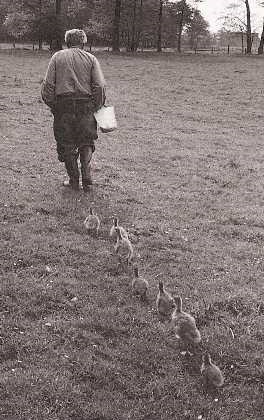
Hubilance, in essence, might involve the self putting aside one’s own personal objectives in order to ensure that the targeted parties survive and are able to pursue their own objectives. It might alternatively inspire the opposite and compel the self to ensure that their own personal objectives are successful if the survival of the targeted parties depends on the self’s success at their own endeavors as well. If a group of baby ducklings or geese, newly born, imprint (a process where “newly hatched chicks tend to follow the first moving object, human or animal, that catches their attention”, from APA Dictionary of Psychology) on a human instead of their mother, then hubilance might be an emotion expected to arise in the human if they take the chicks into their care.
Imprinting was formalized and popularized by Konrad Lorenz (above, with his geese) in 1935.
Emotions Involving Variation in Specific Variables or Multiple Variables
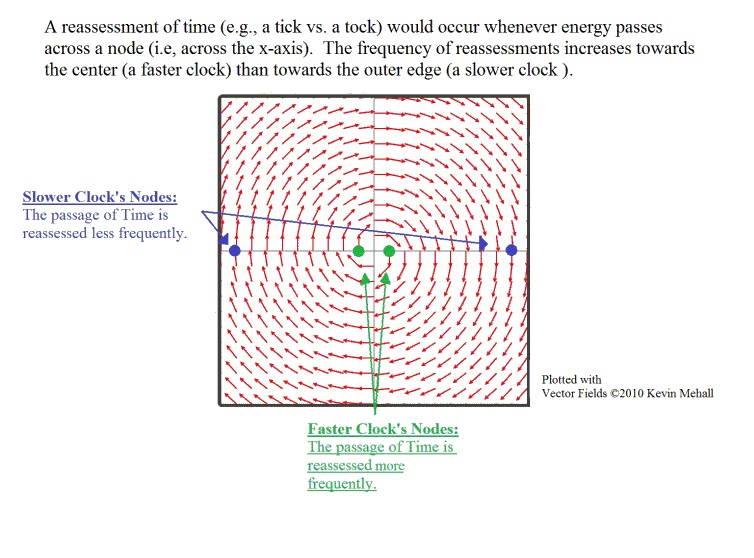
The primary variable involved in modeling Zenosyne within Affect Engineering’s framework would be Elapsed Time. For instance, the individual’s mental clock may give the appearance that time is going by more quickly if the self’s reassessment of time is on a slower loop (e.g., longer intervals between each tick and tock). This means that more time would have passed by upon the self’s reassessment of the elapsed time.
Zenosyne would by modeled in Affect Engineering as a shift in the self’s internal clock from one with a shorter reassessment interval to one with a longer reassessment interval. This would also happen with the self being aware of it. The modeling of a mental clock as a unit of measurement is described on the Affect Engineering web page (Modeling a Mental Clock with a Vector Field).
Jouska
Jouska, “a hypothetical conversation that you compulsively play out in your head—a crisp analysis, a devastating comeback, a cathartic heart-to-heart—which serves as a kind of psychological batting cage that feels far more satisfying than the small-ball strategies of everyday life.” — from John Koenig’s Dictionary of Obscure Sorrows
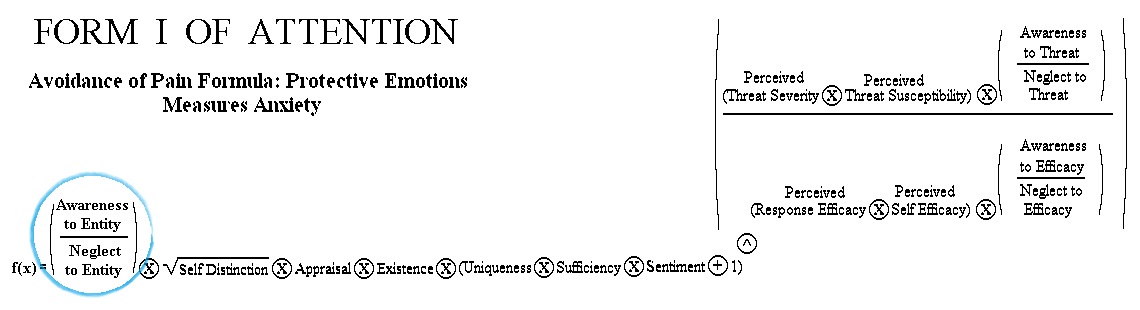
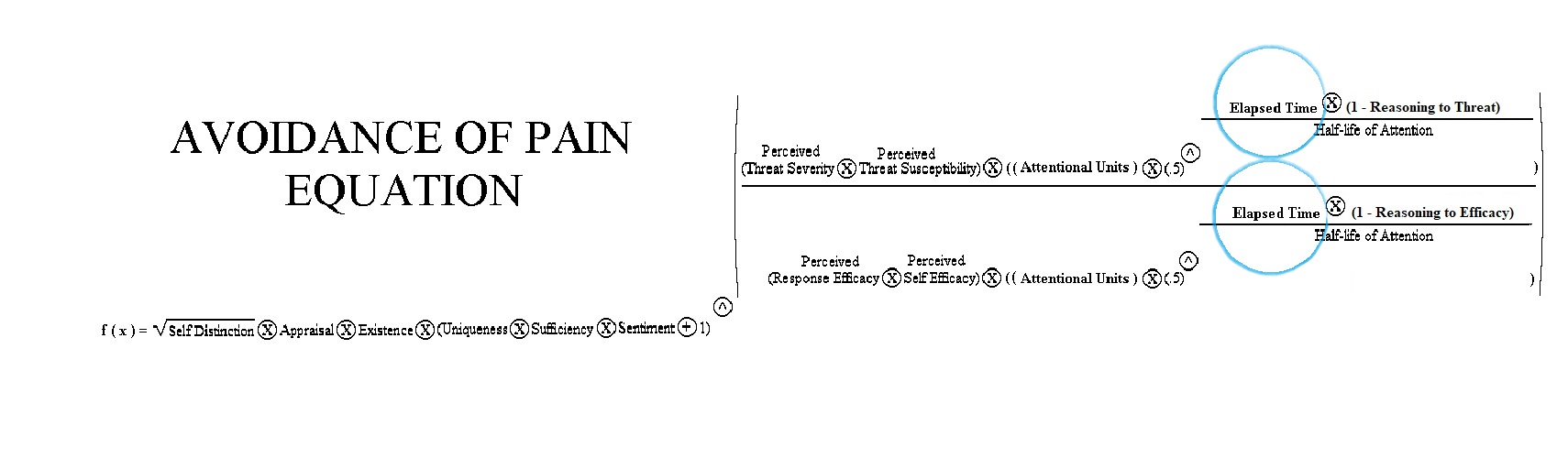
The primary variables involved in modeling Jouska in Affect Engineering’s framework would be Time, Efficacy, Threat, and potentially Self-Distinction. This may include imagining a future hypothetical scenarios about what might happen . . . a trial run of what might occur so to speak, taking place in the imagination. If the hypothetical responses of other individuals is being considered, then Self-Distinction would be involved as well.
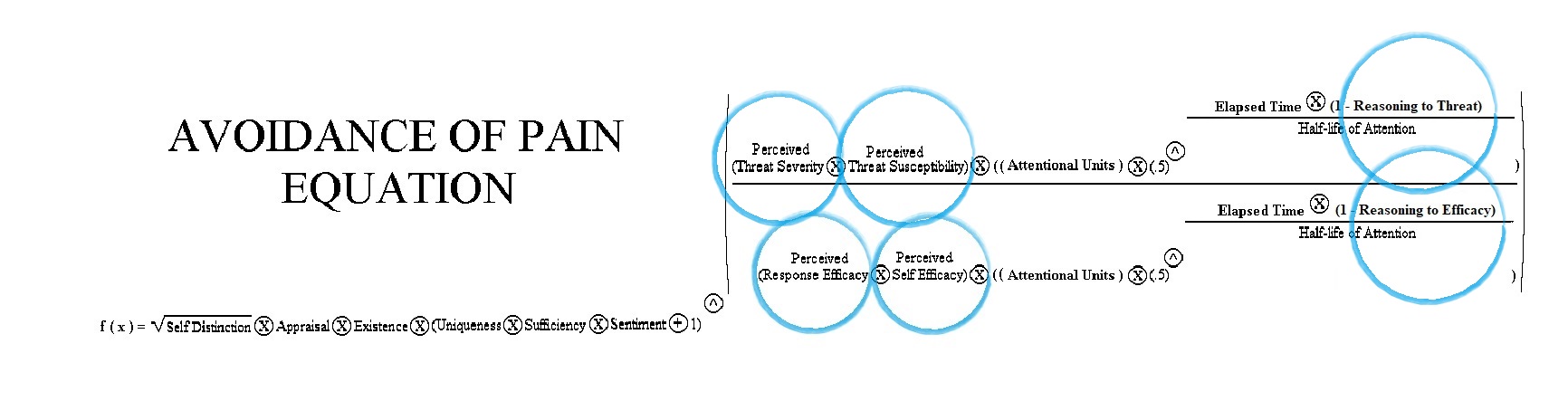
The circled variables above, Self-Distinction, Threat and Efficacy Components, and Elapsed Time, would be the ones primarily involved with Jouska.
Daguerreologue
Daguerreologue, “an imaginary conversation with an old photo of yourself, in which you might offer them a word of advice—to banish your worries, soak it all in, or shape up before it’s too late—or maybe just ask them if they thought you had done justice to the life they built for you.” — from John Koenig’s Dictionary of Obscure Sorrows
The primary variables involved in modeling Daguerreologue in Affect Engineering would be Time and Self-Distinction. This would be a rewinding of one’s mental clock to revisit the self in the past as if one’s past self were a different person.
Emotions that are Developmental in Nature
Sonder
Sonder, “the feeling one has on realizing that every other individual one sees has a life as full and real as one’s own, in which they are the central character and others, including oneself, have secondary or insignificant roles.” — from John Koenig’s Dictionary of Obscure Sorrows
As a concept, Sonder would be linked to the development of empathy, and in Affect Engineering, this would entail the emergence and shaping of the Self-Distinction variable for the individual. With sonder, its development would be two-fold, involving:
The realization that the self’s experiences are distinct from the experiences of other people and other lifeforms
The realization that another person’s or lifeform’s experiences are distinct from the experiences of other people or other lifeforms.
Sonder primarily concerns the formation of the Self-Distinction variable and its refinement in Affect Engineering.
Vellichor
Vellichor, “the strange wistfulness of used bookstores, which are somehow infused with the passage of time—filled with thousands of old books you’ll never have time to read, each of which is itself locked in its own era, bound and dated and papered over like an old room the author abandoned years ago, a hidden annex littered with thoughts left just as they were on the day they were captured.” — from John Koenig’s Dictionary of Obscure Sorrows
As a concept, Vellichor would relate to the self’s realization that the variable of Elapsed Time, particularly the self’s experiencing of it, is a finite resource. This creates a deadline for action for all the things that one may hope to achieve in their own lifetime, as an individual’s life expectancy can be estimated thereafter. The self realizes that there is not enough time to experience everything, and this is made more poignant by all the books in the bookstore.
Vellichor primarily concerns the realization that the self’s awareness of elapsed time will have an end point, and that the time the self gets to experience alive is limited. The vastness of a bookstore, filled with thousands of books and stories they will not have time to read in their lifetime, would be the onset of this realization. A similar response might be felt when looking at a library of every movie ever filmed and produced, or exploring a library of every song every written and performed, as there is not enough time in an individual’s life to watch or listen to them all.
Occhiolism
Occhiolism “the awareness of how fundamentally limited your senses are—noticing how little of your field of vision is ever in focus, how few colors you’re able to see, how few sounds you’re able to hear, and how intrusively your brain fills in the blanks with its own cartoonish extrapolations—which makes you wish you could experience the whole of reality instead of only ever catching a tiny glimpse of it, to just once step back from the keyhole and finally open the door.” — from John Koenig’s Dictionary of Obscure Sorrows
As a concept, Occhiolism relates to the variable for Existence in Affect Engineering, and the perceptual routes that lead to the awareness of an entity’s existence (e.g., touch, taste, sight, smell, sound). Occhiolism would concern self’s realization that many entities and distinctions between entities exist that the self is completely oblivious to due to the limitations of perception.
Occhiolism concerns the self’s realization that their perception has limitations, and that entities exists that the self is wholly unaware of due to the senses either not being either sharp enough or far reaching enough to detect.
3)How are ethics and morality implemented into Affect Engineering?
SHORT ANSWER
Ethics and Morality are indicated or modulated in Affect Engineering predominantly through the Sentiment variable (e.g., variable in a function for the priority ranking of a purpose), and the Self-Distinction variable, which concerns modeling empathy.
IN DEPTH EXPLANATION
“Ethics refers to the rules of conduct recognized within a specific group, culture, or class of human actions. These rules are provided by external sources.
Morals are principles with respect to right or wrong conduct. Morals refer to an individual’s own principles and morality is a personal compass of right and wrong.” — excerpt from theknowledgeacademy
In short, it may be said that morality generally concerns an individual’s own principles, while ethics generally concerns the principles of an external group or source to which the individual may also belong. Regarding the morality of an individual (i.e., their own personal moral code), this is modeled simply by ordering different purposes held by the individual along their Sentiment value in Affect Engineering. This is, in essence, the individual’s moral code, their ranking of purposes according to priority. Similarly, the ethical code of an external group, culture, or class of humans, incorporates the Self-Distinction variable in Affect Engineering; the self vicariously experiences another group’s, culture’s, or class’s organization of purposes according to priority, or their Sentiment value in Affect Engineering. Essentially, this is what the self imagines their (e.g., targeted others) principles to be based upon the self’s observations.
In Affect Engineering, the individual’s own personal moral code concerns the priority ranking of purposes held by the self (i.e., where Self-Distinction variable equals +1 in Affect Engineering). The ethical codes of different groups, cultures, or classes of humans concerns the priority ranking of purposes that the self imagines targeted others hold; these are experienced vicariously by the self (i.e., where the Self-Distinction variable equals -1 in Affect Engineering).
PREVIEW
The final article in this series will explore additional applications of Affect Engineering and address any outstanding concerns.
This is the tenth article in a series of twelve and gives an overview of some of the main Category IV Emotions, or Emotive States, in Affect Engineering, such as Boredom, Surprise, Helplessness, Confusion, Restlessness, Joyfulness, and Greed. It is designed for the layperson and explains the basics of Affect Engineering as a theory of emotions. Each article in this series begins with a list of questions that it will aim to address. The sections that follow are in two parts each. The first part is a short statement that answers each question as succinctly as possible. The second part will offer a more in depth explanation that goes into more detail where needed by exploring some of the implications of the short answer.
QUESTIONS
What distinguishes the Category IV Emotions from the other Categories of Emotions in Affect Engineering?
What are the major Category IV Emotions and what are some of their defining characteristics?
1) What distinguishes the Category IV Emotions from the other Categories of Emotions in Affect Engineering?
SHORT ANSWER
Category IV Emotions, or Emotive States, in Affect Engineering consist of emotions that do not fit neatly into a specific archetype as the other categories of emotions. They are oftentimes more complex than the other emotions, and many emotions in this category have more nuances than emotions in the other three categories.
IN DEPTH EXPLANATION
Category IV Emotions differ from the other three categories of emotions in how they are identified or in some cases their composition. These emotions, for the most part, are a miscellaneous category of emotions. Category IV Emotions may arise due to variations in a single variable, due to variations in multiple variables, or they may arise from the individual’s acknowledgement of a situation that arises from the influence of multiple purposes, entities, and subsequently, other emotions (e.g., interactions between three, four, or more purposes); in these cases, sometimes one purpose held by an individual is also an entity that the individual is assessing for another purpose. Any situation where a purpose held by the individual is also an entity for another purpose, would likely be classified as a Category IV Emotion. Interactions and relationships between multiple Category I, II, or III emotions where the individual wants the dynamic to change would also be classified as a Category IV Emotion. Lastly, some Category IV Emotions may have durations that are considerably longer-lived (e.g., weeks or months) than the emotions described in the other three categories.
2) What are the major Category IV Emotions and what are some of their defining characteristics?
SHORT ANSWER
Some of the major Category IV Emotions are Boredom, Surprise, Helplessness, Confusion, Restlessness, Joyfulness, and Greed. A few of these emotions are distinguished by sudden and extreme changes to a particular variable that changes their graph, such as Surprise. Others are distinguished by having one or more variables that may be unknown or that can only be estimated within a range, such as Confusion. Some may be distinguished by having variables that are chronically low or high, such as in the case for Helplessness. Others still may be distinguished as situations that can arise due to the combined influence of several other emotions and relevant purposes, or that can arise as a conflict between multiple purposes and emotions or (e.g., Boredom, Restlessness, Joyfulness, and Greed).
IN DEPTH EXPLANATION
Boredom
Of all the emotions discussed thus far, few perhaps have quite the reach, influence, and relevance today as Boredom does, so it will be addressed here first. Even with only a passing glance at the many economies and markets of the world, it would be hard to miss the fact that there entire industries are built on or centered around combating boredom, alleviating boredom, or preventing situations that may potentially lead to boredom in the first place.
For example, in the United States, the Arts and Entertainment sectors (e.g., sports, comedy, movies, theater, and musical concerts, to name a few) represented about 4.2% of the United State’s GDP in 2023 ($1.2 Trillion), or approximately 5.4 million workers according to the National Endowment for the Arts (out of the 171.9 million who worked that year, from Bureau of U.S. Labor Statistics, or about 3.1%). Although four percent is not a particularly large amount, this was not the only sector of the workforce concerned with eliminating boredom as part of its product. The broader service-industry as a whole, which includes everything from eating out at restaurants, to food delivery Apps such as Door Dash, to Amazon Prime deliveries made to one’s home, and streaming subscription services like Netflix, Disney+, Paramount+, and Hulu, comprises about 79% of the U.S. workforce (from Statista, Distribution of the Workforce Across Economic Sectors in the United State), and much of this economic activity is convenience driven. The primary appeal of a convenience driven economy is that it offers people speed in order to save time, accessibility to save people from feeling restricted, and ease to save people from difficult work. All of these things, waiting, (i.e., for anything in general), being restricted, and having to do difficult work, are things that are often associated with boredom and presented as undesirable.
Before going further, however, boredom needs a workable definition for it to be of any use here. Defining boredom in a manner that is clear and unambiguous might seem difficult at first, as it can appear in a number of different contexts that are contradictory. For example, boredom is highly specific to the individual; what bores one person may excite another person. Moreover, boredom can also arise in completely opposite scenarios. If a task is too easy and not challenging enough for the individual, they may become bored; on the other hand, if a task is too difficult then the individual may see no way to succeed and grow tired of engaging with it if their efforts feel wasted, also leading to boredom. The APA Dictionary of Psychology’s definition of boredom is as good a place to start.
Boredom is “a state of weariness or ennui resulting from a lack of engagement with stimuli in the environment. It is generally considered to be one of the least desirable conditions of daily life and is often identified by individuals as a cause of feeling depressed. It can be seen as the opposite of interest and surprise.” – Boredom, from APA Dictionary of Psychology
Interest, a suggested opposite to boredom in the above definition, is subsequently defined as “an attitude characterized by a need or desire to give selective attention to something that is significant to the individual, such as an activity, goal, or research area.” – Interest, from APA Dictionary of Psychology
If interest is characterized by a need or desire to give selective attention to something that is significant to the individual, then one would expect boredom to be characterized by the exact opposite. Selective attention is modeled by the variable of Reasoning in Affect Engineering (Article four, question #4 in this series goes into more detail on Reasoning and selective attention, Emotional Responses and Emotional Regulation in Affect Engineering, Article 4 of 12). That is to say, the feeling of boredom would be characterized by a need or desire to take selective attention away from something that is insignificant to the individual. As Psychology Today also observed, a growing number of scientists have conceived of the state of boredom as a signal for change that indicates “a current activity or situation isn’t providing engagement or meaning,” and that this serves as a call to the individual to shift their attention to something or some activity that is more fulfilling (from Boredom, Psychology Today).
Lastly, John Eastwood, a clinical psychologist, Associate Professor of Psychology at York University, and expert on the subject of boredom, along with his colleagues described boredom as “the aversive experience of wanting, but being unable, to engage in satisfying activity,” (from The Unengaged Mind: Defining Boredom in Terms of Attention). “A bored person,” as Kirsten Weir sums up Eastwood’s words, “Doesn’t just have nothing to do. He or she wants to be stimulated, but is unable, for whatever reason, to connect with his or her environment — a state Eastwood describes as an “unengaged mind” (Perspectives on Psychological Science, 2012),” (as cited in the APA Monitor on Psychology).
Taking into account all of this, Boredom, in Affect Engineering, would need to be understood as a signal or call to action to the individual to redirect selective attention elsewhere, such as towards the fulfillment of a different purpose or to the acquisition of a different entity that is potentially more meaningful to the individual. Given Affect Engineering’s structure, redirecting selective attention would also help to optimize the use of Anxiety and Negative Anxiety resources for an individual for one of two general manners:
To redirect selective attention and resources away from tasks that are of too little importance to the individual (e.g., low variables in the base of the function and low Threat variables), or away from tasks that are too easy (e.g., high Efficacy variable) in order to prioritize other entities as they relate to goals that are more difficult and may require more concentration, or that may provide more satisfaction if they are achieved;
Or, to redirect selective attention and resources away from tasks that are too difficult and offer the individual little to no chance of success (e.g., extremely low Efficacy variables); this would orient the investment of Anxiety and Negative Anxiety towards objectives the individual could realistically influence and achieve some sort of satisfaction.
A desire for novelty and novel experiences, even if the individual is not exactly sure of what they want, is also oftentimes described as a source of boredom, particularly if a purpose and the acquisition of whatever entity is associated with its fulfillment becomes repetitive over time and begins to feel too easy (e.g., manner #1 above, too easy). Taking into account Affect Engineering’s 1:1:1:1 ratio, this might manifest as the individual starting to experiment with the entity at hand, and see if it can be used for the fulfillment of a novel purpose (for more on the 1:1:1:1 ratio, see Article Two, Question number #4 in this series, Reframing Anxiety as a Resource, (Article 2 of 12). For example, a child who finds putting laundry in the hamper for cleaning (a relatively simple and repetitive task for most people) to be boring, may start using the laundry bin as a basketball hoop and begin throwing their clothing into the hamper like a basketball so that the task feels more stimulating and less mundane. It is the same entity (i.e., dirty laundry), but being used for a slightly different purpose that potentially has more appeal, throwing into a hoop. The end result is still the same, however, as the laundry ends up in the hamper, even though it is being used for a different purpose. This was the logic behind a product that is still being sold today:
In contrast, if the task of putting dirty laundry in the hamper was too difficult or impossible, such as if the hamper is in an inaccessible area that is too high for the child (e.g., manner #2 for Boredom from above, task is too difficult), then a novel purpose and novel entity may be sought to help fulfill it, such as by putting the dirty laundry in a cardboard box that is accessible instead. However, if no alternatives to the too difficult task are available (e.g., no cardboard box or containers of any kind can be found), abandonment of the fulfillment of the original purpose and the use of the entity are also possible. Wearing dirty laundry again and foregoing washing it altogether, or even opting to just not wear clothes at all and go around naked are two such possibilities.
To demonstrate Boredom and the other Category IV Emotions, the entity of money will be considered in some fictional scenarios, given that money is a concept that most people are familiar with. The character of Buck, age five, will be considered.
Buck, at age five.
To Buck, a child in this scenario who currently has no understanding that money is used to trade for other desirable things, money just seems like pieces of paper or shiny pieces of metal. As Buck has a low estimation of money’s worth (e.g., due to perceived low or unknown Sufficiency variables, low Uniqueness variables, or a low Sentiment variable if the purpose itself, acquiring money, is just not important to Buck), then his perceived efficacy to acquire money would likely also be heavily inflated, particularly if money is just paper or pieces of metal to him. Buck may see money as no different than coloring books on which he has drawn pictures, or metal bottlecaps. The acquisition of money would not be stimulating to him in such an instance, as it appears interchangeable with other common items and would be of too little importance to him given what he knows of the world in that moment. Being told to go acquire money, in this case for Buck, would very likely elicit boredom from him, as the task appears too easy and holds little meaning to him. This would be due in large part to him not knowing money is used as a facilitator of trade.
Boredom could still arise if Buck, alternatively, is aware of what money is used for, but had been born into a situation of extreme wealth (e.g., low perceived Uniqueness variable for money) and his Efficacy to acquire money is abnormally inflated because he is indulged and spoiled by his parents with an absurdly large allowance. The importance attributed to money by Buck can also diminish by circumstance or by choice; that is to say, if money is deemed too easy to acquire or not a challenge, then the variables in the base of the function for the entity of money become diminished for Buck. He may seek out the acquisition of other entities for the fulfillment of other purposes that he deems to be more challenging or worthy of his effort, such as high risk taking behavior, vandalism, or the fulfillment of purposes that money simply cannot buy. Being compelled to acquire money by a parent or guardian would be boring for Buck in this scenario as well, but for a different reason: the task appears too easy.
In a third case, if Buck was instead born into a situation of extreme poverty, one where no one around him had any money either, and his Efficacy to acquire money was effectively zero for him and everyone he knows for the foreseeable future, then it would seem futile to him to focus on the acquisition of money. It would be more advantageous for him to seek out alternatives that could match the money on all levels, such as bartering and trading for other goods, or even focusing on less materialistic things. Despite there being a severe lack of Efficacy for this particular entity as it relates to the fulfillment of a single purpose, Buck’s Boredom here does not necessarily slide into another yet to be discussed Category IV Emotion, Helplessness (e.g., low Efficacy concerning the acquisition of multiple entities for the fulfillment of multiple purposes, usually with a resignation to their fate) because he wants to find meaning elsewhere but is unable to do so for whatever the reason may be. If Buck were told by his parents to go out to acquire money, an impossible task for him at this point, boredom with the task is a strong possibility as he cannot realistically acquire it and particularly so if he would rather be engaged in some other activity.
John Eastwood noted in a statement that boredom, in a nutshell, boils down to “being the unfulfilled desire for satisfying activity,” (from, Never a Dull Moment, APA Monitor). Following from this, in Affect Engineering, Boredom, as a Category IV Emotion, involves an interplay between at least two different purposes and entities and the conflict resulting between the two:
Purpose #1 The self is trying to acquire a particular entity for the fulfillment of a purpose, and much of their selective attention is being devoted towards it. In this case, Buck is trying to acquire money (e.g., coins or paper currency) for the fulfillment of a purpose, the acquisition of money. Buck may or may not be successfully fulfilling this purpose, depending on the scenario.
Purpose #2 The self wants to find a satisfying activity to engage in. That is to say, the entity that the self wants to acquire is a satisfying purpose, but purpose #1 above, the one towards which most of their selective attention is being devoted towards, is either not offering enough satisfaction or does offering enough potential for satisfaction. In Buck’s case, pursuing the acquisition of the entity of money is either producing too little satisfaction (if it is too easy, too low stakes, and the entity has a low value), or none at all (if money’s acquisition is too difficult and offers little hope of success for Buck) for the amount of attention being given towards it. Buck feels dissatisfaction for purpose #2 (i.e., it is not being fulfilled) due to circumstances or disappointment regarding purpose #1.
In Affect Engineering’s framework, what this means is that the acquisition of a satisfying purpose itself has become an entity that the individual seeks to acquire. The current purpose being attended to, the one that has a substantial amount of selective attention being given towards it (i.e., the acquisition of money for Buck in this case), is being compared against the purpose of finding a satisfying activity to engage in, and there is conflict between these two purposes. Being compelled to give more attention than one wants to give towards an entity for the fulfillment of a purpose, either because fulfillment of the purpose is offering too little satisfaction or offering no satisfaction at all, would be the onset of Boredom in Affect Engineering. For Buck, this means that the acquisition of money is either not offering him enough fulfillment if it is too easy, or it is not offering him favorable odds that it will be fulfilling if it is too difficult to achieve.
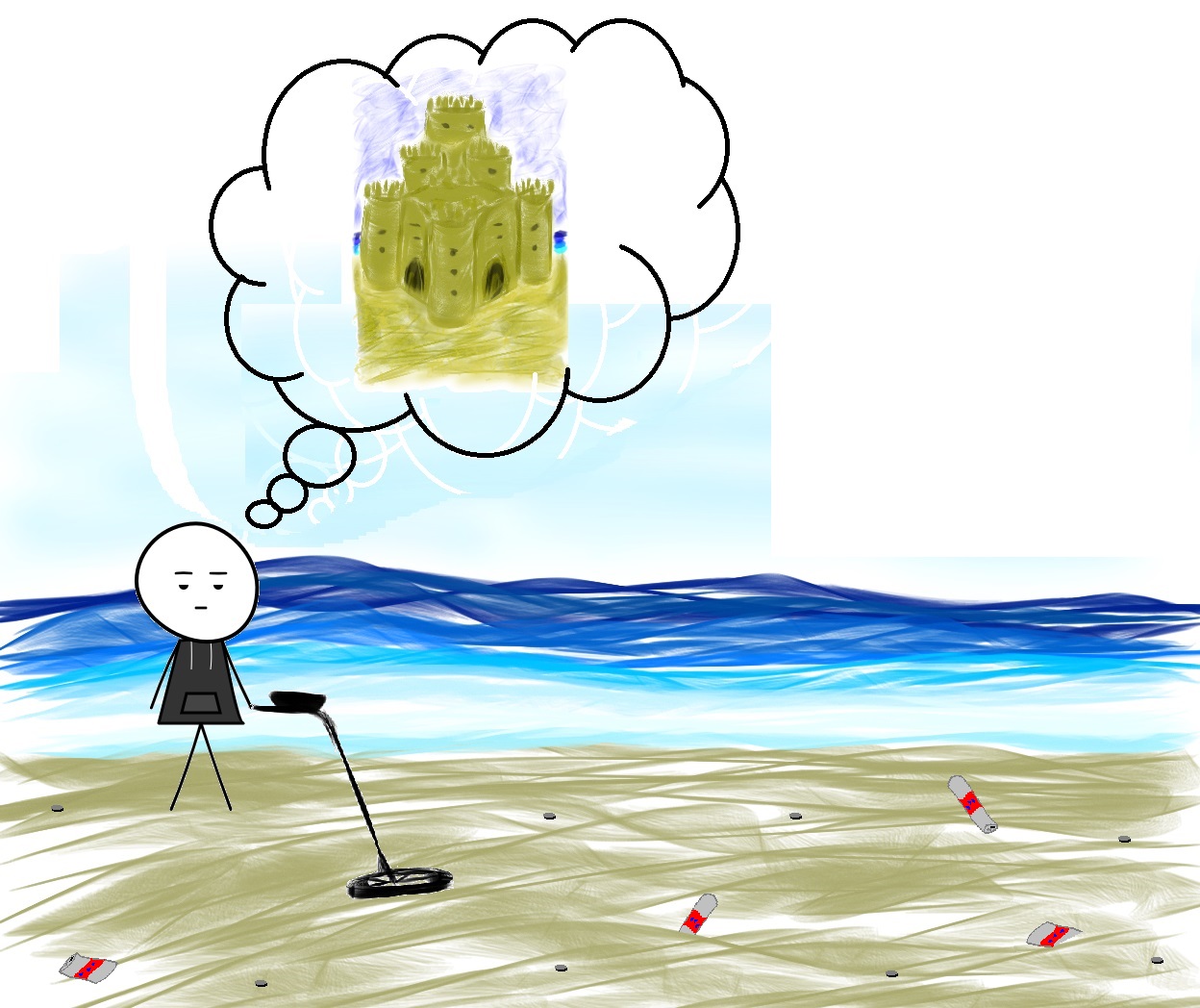
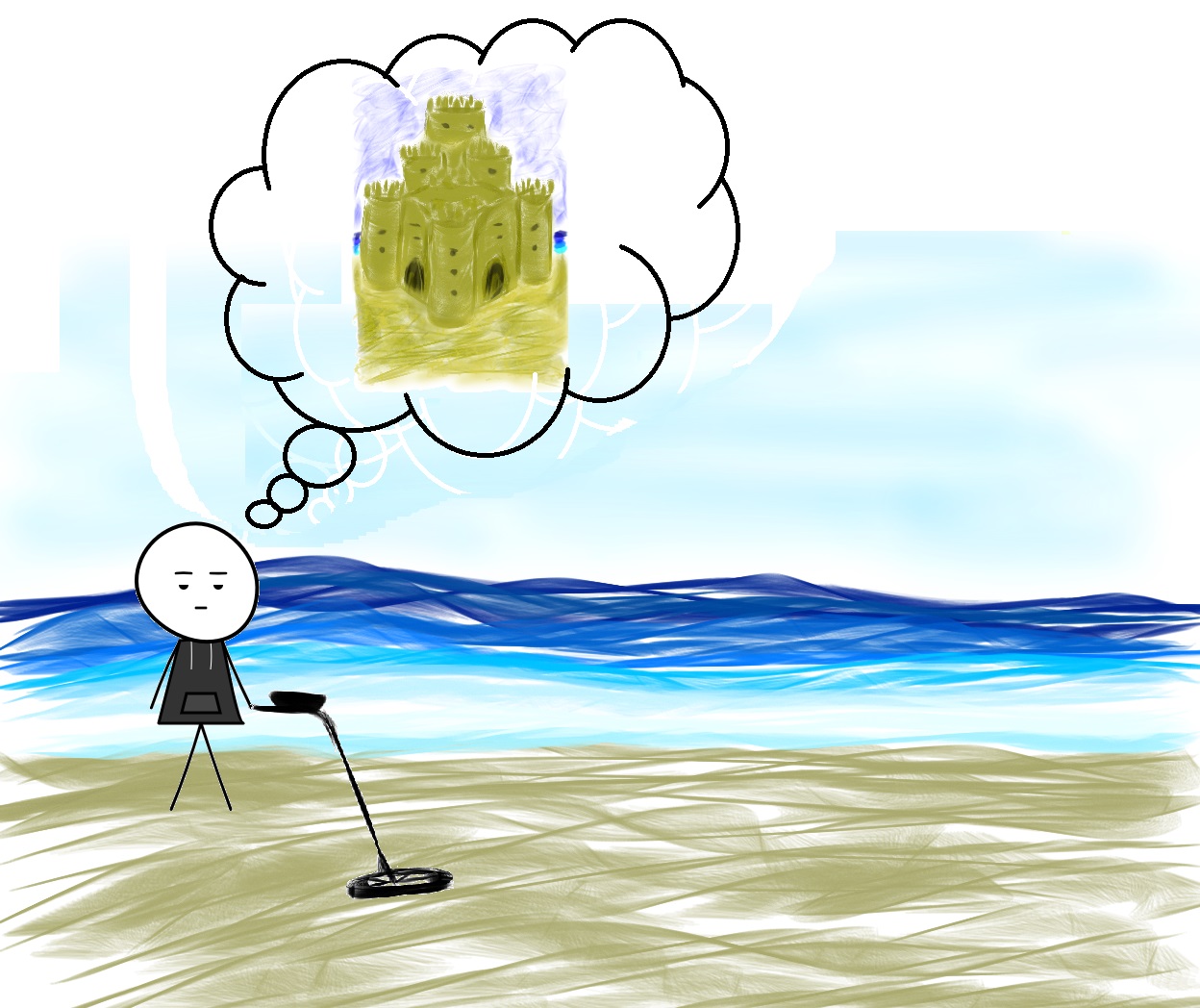
This will be visualized first in a scenario, where Buck, age five, is unaware of money’s worth. Buck has never felt compelled to acquire it, and he just sees it as interchangeable with scrap book paper or shiny bottle caps. His parents have provided everything he has needed to survive up to this point (e.g., food, water, shelter, clothing), and the concept of money does not interest him yet. Taking note of this, Buck’s parents have decided to bring him to the beach and have commanded him to use a metal detector that they have provided him to scour the beach for coins, aluminum cans, or any metal that can be recycled in exchange for money. Buck, however, would rather build sandcastles on the shore than hunt for coins or aluminum cans with the metal detector.
The first manner in which Boredom may arise (e.g., task too easy) would be considered here, as coins are just shiny pieces of metal to Buck at this point, much like paper clips or nuts and bolts, and they are littering the beach above. His selective attention is being directed towards an entity and the fulfillment of a purpose that hold little significance for him; he would prefer to direct his attention elsewhere. Buck does not understand what all the fuss is about over money, as paper that resembles money and pieces of metal that resemble coins seem to be everywhere, but he does not get the chance to build sand castles and would much prefer to be doing that.
Conversely, if Buck is instead aware of what money is used for — trading for desirable things — but has no chance of finding anything to acquire money because the beach has already been picked clean by other people with metal detectors, then Boredom may arise by the second manner (e.g., task too difficult). His selective attention is being directed towards acquiring an entity that is extremely difficult or nearly impossible to find on the beach, and his efforts, to him, feel futile and wasted. He would still rather be building sandcastles instead of looking for something he will likely never find. He might even prefer to just be doing something else, even if he does not know what it is that he would prefer to be doing.
Sample function for Boredom with the variables that influence it circled (below).
Boredom results in both cases due to Buck’s selective attention being directed towards a task that holds little interest to him, and he would rather be doing something else that interests him. In this case, that other activity is building sandcastles, but the activity does not need to be identified, or may not even be known. Boredom, in Affect Engineering, holds that there is conflict between the current purpose being attended to, and the individual’s desire pursue the fulfillment of a satisfying purpose.
Surprise
Thirteen years later, Buck has become an adult, fully understands what money is used for, knows its worth, and he has moved out to be on his own. Buck has all the glamorous trappings of adulthood: bills to pay, daily expenses, taxes owed to the government, a minimum wage job, and is struggling to get by in tough economy. However, he receives a surprise in the form of a windfall from an inheritance that was left to him by his late great-uncle. Unbeknownst to him, it had been in a trust until he turned eighteen, at which point it would become available to him to spend as he pleases. This brings about the next Category IV Emotion for Buck, Surprise. Surprise is generally defined as “an emotion typically resulting from the violation of an expectation or the detection of novelty in the environment.” – Surprise, from APA Dictionary of Psychology
For Buck, his circumstances are an instance of peripeteia, a literary term indicating a sudden reversal of fortune or situation. Peripeteia is nearly always indicative of surprise as it is generally unexpected and an extreme change of fortune; it can occur if an extremely poor individual suddenly wins the lottery to become rich, or if a wealthy individual suddenly goes bankrupt overnight from a stock market crash. Surprise, like peripeteia, can go both ways however. For Buck, with his new money, this would look like he has suddenly been lifted out of the grind of working tirelessly for money into the stratospheres of wealth.
Sample function for Surprise with the variables that will typically influence it circled (below). For the Pursuit of Pleasure Function below, Inattention and the Doubling time of Inattention are used as an alternative to Attention and the Half-life of Attention that were used in the Avoidance of Pain function.
Buck then decides to invest all of the money he had from before along with the money he recently inherited into buying a new home. Unfortunately, shortly after purchasing his new home, Buck’s fortunes reverse again. His house is completely destroyed by an unexpected natural disaster for the area that he lives in, a tornado.
Buck’s Surprise has now fully swung in the opposite direction. Unfortunately, he is now worse off than he was before he received the inheritance, having lost the money he had saved from before along with everything that he had inherited from his late great-uncle. To make matters worse, the tornado also destroyed the building and business where he was employed, so he is also unemployed now as well.
Sample function for Surprise with the variables that will typically influence it circled (below)
Surprise, in Affect Engineering, entails a dramatic change in the valuation of an entity for the fulfillment of a purpose. The most dramatic shift would be those that involve a change in the Appraisal (a discrete variable in Affect Engineering equaling either +1 or -1).
Helplessness
As far as adapting to a situation is concerned, there are a number of things that Buck might do to feel empowered or in control to recover lost money after a natural disaster or if another unfortunate event strikes: he might attempt to repair damaged property and then sell it to recoup some of his investment; he might attempt to rebuild it altogether to sell at a higher price if it was completely destroyed; he might attempt to collect a claim from a home owner’s insurance policy that he held. For Buck, unfortunately, none of these are possible. Buck is not skilled enough to make the home repairs himself, nor is he adept at building a home from scratch. Moreover, the home owner’s insurance policy that he did possess tragically did not cover windstorm damage.
Buck is helpless to fix his home and can not do anything to collect a claim from his home insurance policy. Buck’s efficacy to recover any money from his home is at zero or near zero for all of the above courses of action.
Helplessness, is defined as “a state of incapacity, vulnerability, or powerlessness associated with the perception that one cannot do much to improve a negative situation that has arisen.” – from Helplessness, from the APA Dictionary of Psychology). This certainly describes Buck’s current state of affairs.
In Affect Engineering, Helplessness consists of a low Efficacy or Efficacy variables that are near zero across one or several purposes that are important to the individual. Given that the tornado also destroyed the building where Buck worked, his ability to acquire money via working a job is diminished. This helplessness or resignation to his fate, though it may not seem advantageous, may inspire goodwill from a benevolent third party witnessing it; at the very least, it might prevent Buck from making his situation any worse by adopting a wait it out approach.
Sample function for Helplessness with the variables that influence it circled (below). High levels of Threat variables and a high level of Reasoning directing Attention towards Threat components, along with a low level of Efficacy variables and a low level of Reasoning directing Attention towards Threat components are modeled to elevate Helplessness in Affect Engineering.
Confusion
After some time, Buck finally decides that he is going to take action to try and get back on his feet financially. He decides that he is going to invest in foreign currencies and cryptocurrencies to try and earn some money. Unfortunately, Buck has no experience with the foreign exchange market, much less cryptocurrencies. Upon seeing the vast array of foreign currencies and cryptocurrencies that he can invest in, Buck is initially overwhelmed.
Buck realizes that he does not know enough about any other currencies to judge their value. He has no idea what their buying power would be if he wanted to buy a loaf of bread (e.g., Sufficiency variable), nor does he know how much of each currency is in circulation (e.g., Uniqueness variable). He also does not know if there is political turmoil in any of the countries that back the banknotes (e.g., Threat variables) In short, Buck’s knowledge about the different currencies is too uncertain for him to make any decision. His understanding of cryptocurrencies is even less than it is for the foreign banknotes. It would be safe to say that Buck feels confused by all of these different types of money, but this confusion needs to be explained in terms of the variables in Affect Engineering.
(Above) Buck is overwhelmed and confused by the multitude of so many new currencies that he is discovering.
In Affect Engineering, Confusion is understood as uncertainty arising due to one or several variables being unknown, being known only within a certain range, or being unknown due to novelty, such as encountering a never before seen currency and not knowing its utility (e.g., variables in the base of the function, such as Sufficiency and Uniqueness). This, in turn, makes choosing a course of action based upon expectations difficult or impossible. Confusion, notwithstanding, can lead to mental fatigue, stagnation, and analysis paralysis in the decision making process, or alternatively, to making rash and impulsive decisions based on chance (e.g., a coin flip) due to the lack of available information. Confusion can happen when any of the variables in the function are unknown, or known only within a range, though certain variables are more likely to be unknown or ambiguous than others.
Sample functions for Confusion along with the variables that primarily influence it are circled (below). Uncertainty or unknown values for the circled variables would generally lead to Confusion being modeled in Affect Engineering.
Restlessness
Buck, at first, made no decision about what to invest in. The overwhelming amount of things to consider left him at a standstill. However, Buck’s bills, expensive, and lines of credit kept rising. He had to do something. Buck was becoming restless.
The restlessness here is best thought of as “discontent or dissatisfaction that drives one to keep looking for solutions, alternatives, or new things.” – from restlessness, Dictionary.com. In the framework of Affect Engineering, Restlessness entails discontent or dissatisfaction felt by the individual with respect to one or several entities for several purposes and this leads to a shortfall in Anxiety resources (e.g., akin to pain in Affect Engineering) due to nearly all of it being already being mobilized to mark entities with value; no, or very little Anxiety, is available to mark new entities with value. This, in turn, would compel the individual to continue looking for solutions to the multiple problems due to the rising levels of Anxiety being invested in different entities, or even in the same entity, as it relates to the fulfillment of different purposes.
For Buck, all of his bills are separate objectives that happen to require acquisition of the same entity, money. Discontent and dissatisfaction are being felt for the entity of money as it relates to the fulfillment of each of these separate purposes (e.g., Sadness or Fear felt towards the entity of money with respect to each of these purposes). Restlessness, in Affect Engineering, then arises as an event or situation where an individual begins to feel as if they are running out of Anxiety to invest in new entities for the fulfillment of new purposes. For Buck, this means feeling overwhelmed by all of the tasks at hand and pressing deadlines (e.g., bills). He has no Anxiety resources left to worry about he is driving the newest car or whether the socks he is wearing match.
Of the Category IV Emotions discussed thus far, it can be seen that in the case of Boredom, Buck’s selective attention was the focal point. In the case of Surprise, volatility in expectations was the focal point (e.g., an oscillating Appraisal variable). In the case of Helplessness, Buck’s lack of Efficacy was the focal point. In the case of Confusion, Buck’s lack of clarity about the value of one or multiple variables was the focal point. In the case of Restlessness, Buck’s depletion of Anxiety available to value future entities was the focal point; in this case, the depletion of Anxiety available to value entities was due to the combined influence of multiple purposes (e.g., Bills and debt in Buck’s case), that all have the same entity being valued for them (i.e., money). The acquisition of more Anxiety to invest in other entities (e.g., to mark them with worth or priority) is the purpose at hand when Restlessness arises.
(Above) Sample function for Restlessness with the variables that primarily influence it are circled. High levels of Threat variables, along with a high level of Reasoning directing attention towards Threat components for one important purpose or several different purposes that are important to the individual, would amplify Restlessness in Affect Engineering.
Joyfulness
In need of money, Buck decides to invest the last portions of money in his possession into several different currencies in an effort to earn some money. Over the next several months, Buck’s fortunes begin to change for the better. His investments in shares of foreign currencies and cryptocurrencies begin to yield positive returns. After many months, Buck now has multiple streams of income coming in from his investments and feels joyfulness. He is living like a king again.
Joyfulness, or joy, is generally described as “a feeling of extreme gladness, delight, or exultation of the spirit arising from a sense of well-being or satisfaction.” – Joyfulness, from the APA Dictionary of Psychology
In the context of Affect Engineering’s framework, Joyfulness can be understood as the counterpart to Restlessness. For Buck, this would mean having an excessive amount of Negative Anxiety (e.g., akin to pleasure in Affect Engineering) invested in the entity of money for different purposes as it now available in excess. Whereas Restlessness in Affect Engineering was concerned with the depletion of Anxiety available to value future entities, Joyfulness is concerned with the depletion of Negative Anxiety available to value future entities.
Why this might be a problem for an individual (e.g., feeling too much pleasure felt with respect to the acquisition of money) has more to due with the repercussions it could have on the pursuit of other entities as they relate to the fulfillment of other purposes held by the individual. If all of Buck’s Negative Anxiety becomes tied up in the acquisition and valuing of money, then it leaves little room for anything else. It could trigger addictive behavior, the excessive pursuit of money in Buck’s example, and inadvertently hinder maintaining homeostasis (e.g., balancing a purpose with its complementary purpose in Affect Engineering). Addiction can happen with any behavior of course, and is not restricted to the acquisition of money. It could happen with food, or water, clothing, shelter, or any entity pursued excessively.
(Below) Sample function for Joyfulness along with the variables that would primarily influence it. High levels of Efficacy and a high level of Reasoning preventing Inattention to Efficacy from Increasing (i.e., this is similar to not letting Efficacy components fall into Attentional Decay), would amplify Joyfulness felt.
In the case of Joyfulness, Buck’s depletion of Negative Anxiety available to value future entities is the focal point; Buck’s depletion of Negative Anxiety available to value entities is due to the combined influence of multiple purposes (e.g., Buck’s successful investments bringing him money), that all have the same entity being valued for them (i.e., money). The acquisition of more Negative Anxiety to invest in entities is the purpose at hand here for Buck, as it would enable him to find pleasure in the fulfillment of other purposes. The danger here for Buck, however, can also arise from the purposes and entities that are not being attended to while Buck vigilantly pursues the acquisition of ever increasing amounts of money.
Greed
In Buck’s case, his resurgent wealth and determination to keep acquiring more and more money has lead him to become rich beyond his wildest dreams. Buck, now has enough money to start buying up houses and real estate everywhere. He has accumulated enough wealth to recapture some of the joy he experienced upon initially becoming wealthy and he will likely never again have to experience misfortune.
Buck now possesses nearly all the money and buying power where he lives.
Unfortunately, for Buck’s friends, relatives, acquaintances, and everyone around him, because he has accumulated so much money, nobody else can acquire enough money to be able to buy a home for themselves. Buck would like for them to be able to buy a home, and he wants to help them achieve their aims; however, Buck also wants more and more money for himself, and he can not bear to part with his own money to help them. Greed, defined as “a selfish and excessive desire for more of something (such as money) than is needed,” is modeled here to arise as an event where there is conflict between two or more objectives held by the individual. In Buck’s case, there is conflict between the Happiness (e.g., a Category I Emotion, described in Article seven, question #1 of this series, The Intra Personal Emotions or Emotions of the Self, Article 7 of 12) he feels at acquiring money for himself conflicting with the fact that his actions are preventing him from helping his friends achieve their goals of owning a home (e.g., the Category III Emotion of Jealousy due to him being unsuccessful. Jealousy is described in article nine, question #2 of this series, Compound Interactive Emotions, Article 9 of 12). In Affect Engineering’s framework, this would be conflict between Buck’s personal objectives, happiness felt with respect towards the acquisition of money, and Buck’s desire to help his friends to achieve their goals. Because Buck’s actions and pursuit of money have directly contributed to his friends not being able to buy homes, Buck would be modeled to simultaneously feel both Happiness with respect to his own goal of acquiring money, and the Category III Emotion of Jealousy towards his friends, as his actions have also directly lead him to fail to helm them in their efforts to buy a home.
Greed, in Affect Engineering is understood as an event or situation where conflict arises between at least two or more competing purposes, one held by the individual for the individual, and this purpose takes precedence over a second purpose related to something the individual wants for another party. Moreover, the individual must also want to change the dynamic between these two competing purposes. In this example, Buck’s pursuit of one entity (e.g., Happiness felt with respect towards the acquisition of money, a Category I Emotion), comes at the expense of a purpose held by another party that Buck wanted them to achieve; that is, Buck fails to help his friends achieve their objective, and would be modeled to feel the Category III Emotion Jealousy because of that, a Category III Emotion. The distinguishing feature between Greed and Jealousy (fear of losing loyalty of a loved party) is that Buck also wants to change his current behavior, and more emotions are at play for Greed. This means that four purposes are in consideration Greed, and not merely the two for Jealousy. A 4:4:4:4 ratio then, is in play, regarding entities being valued for purposes held by the individual:
Purpose #1: Buck wants to acquire Money (He has succeeded, Happiness is felt). This is a 1:1:1:1 Ratio, the Category I Emotion of Happiness.
Purpose #2 and Purpose #3 (Purpose #3 is vicariously felt as if the self were a targeted other): Buck wants to take action to help a targeted party achieved their goal. However, his relentless acquisition of money (success for a personal goal) has directly prevented a targeted party from achieving their goal. Buck’s failure to help his friends acquire money to buy a house has lead to Jealousy (e.g., Sadness + Vicarious Shame or Guilt + Vicarious Shame) felt as if the self were the targeted third party. Jealousy is a 2:2:2:2 Ratio in Affect Engineering.
Purpose #4: Buck is dissatisfied with this dynamic and wants to engage in activity where his personal goals do not prevent him from helping a targeted party achieve their goal. The situation is now a 4:4:4:4 ratio, as this final purpose aims to alter the importance of an entity, (in this case the entity is Purpose #1) in order to change the outcome for purposes #2 and #3, ideally shifting it to Benevolence felt instead of Jealousy.
The individual desiring to change this dynamic (purpose #4 from above), and being unsuccessful thus far, would be the foundation for modeling Greed in Affect Engineering’s framework. It is a 4:4:4:4 ratio because there are three purposes at play held by the individual, and a fourth purpose that is vicariously experienced.
PREVIEW
Many of the Category IV Emotions involve dynamics like Boredom and Greed, with purposes themselves becoming the entity the individual seeks to acquire or manipulate in order to influence relationships with other purposes. This naturally leads into the much larger and broader philosophical implications concerning ethics and which purposes should have a priority to an individual, a topic in which many emotions also have their origins. Purposes that have other purposes as an entity still adhere to 1:1:1:1 Ratio in Affect Engineering, but they must expand in such a way that the ratio always stays proportional, be it a 5:5:5:5 ratio, or a 6:6:6:6 ratio, and so on. In the next article, additional Category IV Emotions as well miscellaneous emotions and their representation in Affect Engineering will be explored along with implications for other areas such as ethics.
Category III Emotions: Compound Interactive Emotions
This is the ninth article in a series of twelve and gives an overview of Category III Emotions, Compound Interactive Emotions in Affect Engineering, which include Benevolence, Malevolence, Jealousy, and Envy. It is designed for the layperson and explains the basics of Affect Engineering as a theory of emotions. Each article will begin with a list of questions that it will aim to address. The sections that follow will be in two parts each. The first part will be a short statement that answers each question as succinctly as possible. The second part will either be an explanation that goes into more detail where needed or explain some of the implications of the short answer.
QUESTIONS
What are the Category Three Emotions in Affect Engineering?
Why and how are conceptions of Jealousy and Envy altered to fit into Affect Engineering’s framework?
What are Indulgent Type and Protective Type Category Three Emotions and why is there a distinction between them in Affect Engineering?
What makes Category Three Emotions valuable to an individual?
1) What are the Category Three Emotions in Affect Engineering?
SHORT ANSWER
The Category Three Emotions, termed the Compound Interactive Emotions, consist of Benevolence, Malevolence, Jealousy, and Envy.
IN DEPTH EXPLANATION
Benevolence, Malevolence, Jealousy, and Envy are the four Category Three Emotions in Affect Engineering’s framework. Each involves empathy and they are considered compound in the sense that they are essentially comprised of a Category One Emotion (i.e., Intra-personal or Emotion of the Self) and a Category Two Emotion (i.e., Inter-personal or one of the Four Degrees of Empathy) and they often have implications for the outcomes of other goals held by the self and those around them. The self, however, has the ability to influence the outcome of the empathized party’s situation for Category Three Emotions, which is the primary distinguishing feature between this Category (i.e., Compound Interactive) and Category Two Emotions. The 1:1:1:1 Ratio in Affect Engineering is still upheld, as a 2:2:2:2 ratio because the self imagines itself as the targeted other and also identifies as themself, two entities are being valued for two separate purposes (one held be the self and the other for the target of empathy), and two emotions are being felt, one for the self and the other vicariously experienced as the targeted other. Article Two in this series, Reframing Anxiety as a Resource (Article 2 of 12), Question #4, offers more detail on the 1:1:1:1 Ratio.
The four Category Three Emotions are further classified as either Indulgent or Protective depending on the self’s Appraisal of an entity. In this case, the entity that the self is evaluating is the targeted party’s goal and whether the self wants them to succeed or fail. The Appraisal of an entity in Affect Engineering concerns whether further acquisition of the entity will lead towards or away from balance between a goal and its complementary goal, or homeostasis. Article Three in this series, Cognitive Appraisals in the Context of Affect Engineering (Article 3 of 12), offers more detail on Appraisals. When applied to Category Three Emotions that involve empathy, this becomes the self’s assessment as to whether or not the self successfully helping the targeted party fulfill a purpose will lead towards or away from equilibrium between a purpose and its complementary purpose for both the self and other. Indulgent Category Three Emotions have a negative Appraisal, while Protective Category III Emotions have a positive Appraisal. The chart below outlines basic forms of Category Three Emotions.
The core features of each Category Three Emotion in Affect Engineering are as follows:
Benevolence: The self wants a targeted other party (i.e. target of the empathy) to succeed at a goal or purpose. The self takes action to help the targeted other party achieve their goal and is successful. Both the self and the targeted other party are successful.
Jealousy: The self wants a targeted other party to succeed at a goal or purpose. The self takes action to help the targeted other achieve their goal but is unsuccessful. Both the self and the targeted other are unsuccessful.
Malevolence: The self wants a targeted other party to fail at a goal or purpose. The self takes action to ensure that the targeted other party does not achieve their goal and the self is successful. The targeted other party fails at their objective, but the self is successful.
Envy: The self wants a targeted other party to fail at a goal or purpose. The self takes action to ensure that the targeted other party does not achieve their goal but the self is unsuccessful. The targeted other party achieves their objective while the self, consequently, fails at their objective.
2) Why and how are conceptions of Jealousy and Envy altered to fit into Affect Engineering’s framework?
SHORT ANSWER
Many definitions of jealousy and envy are too broad in their scope and they inadvertently violate the 1:1:1:1 Ratio that Affect Engineering adheres towards when implemented directly. Therefore, only the minimal components of Jealousy and Envy considered in Affect Engineering. For Jealousy, this core component would be the fear of losing the target’s loyalty (e.g., typically precipitated by a failure by the self in some manner) and this is irrespective of any particular rival threatening to take it. For Envy, this core component would be contempt for another’s gain (such as that of a rival), or distress at the advantages or fortune enjoyed by another, and this is irrespective of any desire by the self to have that fortune or advantage for themself.
IN DEPTH EXPLANATION
In popular usage, jealousy and envy are often conflated with one another and mistakenly used as if they are interchangeable, typically to convey the idea of wanting something that another person has. The nuances between them, fortunately, are more clearly delineated in psychology.
The following descriptions and definitions for jealousy (below) and envy (further below) from the APA Dictionary of Psychology’s website, along with excerpts from the Stanford Encyclopedia of Philosophy’s website, offer a starting point for distinguishing between the two to understand how they are implemented in Affect Engineering.
Jealousy
Jealousy, defined: “n. a negative emotion in which an individual resents a third party for appearing to take away (or being likely to take away) the affections of a loved one. Jealousy requires a triangle of social relationships between three individuals: the one who is jealous, the partner with whom the jealous individual has or desires a relationship, and the rival who represents a preemptive threat to that relationship. Romantic relationships are the prototypic source of jealousy, but any significant relationship (with parents, friends, etc.) is capable of producing it. It differs from envy in that three people are always involved . . .” Jealousy, APA Dictionary of Psychology
“Jealousy involves three parties, the subject, the rival, and the beloved; and the jealous person’s real locus of concern is the beloved, a person (or being) whose affection he is losing or fears losing. The locus of concern in jealousy is not the rival.” — excerpt from Stanford Encyclopedia of Philosophy, section 1.2 Envy vs. Jealousy
“Envy is a propensity to view the well-being of others with distress, even though it does not detract from one’s own. [It is] a reluctance to see our own well-being overshadowed by another’s because the standard we use to see how well off we are is not the intrinsic worth of our own well-being but how it compares with that of others. [Envy] aims, at least in terms of one’s wishes, at destroying others’ good fortune. (Kant, The Metaphysics of Morals 6:459),” sourced from Stanford Encyclopedia of Psychology, 1.1 Defining Envy
Envy, defined: “n. a negative emotion of discontent and resentment generated by desire for the possessions, attributes, qualities, or achievements of another (the target of the envy). Unlike jealousy, with which it shares certain similarities and with which it is often confused, envy need involve only two individuals—the envious person and the person envied—whereas jealousy always involves a threesome. . .” Envy, APA Dictionary of Psychology
The observation from the Stanford Encyclopedia of Philosophy that Jealousy’s focus of concern is the beloved, whereas Envy’s central focus of concern is on competition with the rival, is a good starting point for understanding how these emotions are understood and implemented in Affect Engineering.
Jealousy, described as the fear of losing a beloved’s loyalty, also raises another question, “What is loyalty and how would loyalty be implemented in Affect Engineering?” A consultation with the Merriam-Webster dictionary sees loyalty being defined as “unswerving allegiance” or “faithfulness” to a cause or person. The APA dictionary definition of loyalty is similar:
“n. faithfulness and allegiance to individuals or social groups. —loyaladj.”
This unswerving allegiance, faithfulness, or devotion, like most things in the world, one would not expect to come freely; most things in the world, for better or worse, typically have a price, be it in currency, goods, or services, and the loyalty relationship would likely be transactional in some manner. For example, if loyalty is not being bought outright with money, such as in the case of mercenaries, then this loyalty might typically come with the expectation that it would be reciprocated by the other party, that is to say, the self would be expected to help a targeted other achieve a purpose in exchange for the other party helping the self achieve a purpose. The informal idiom, “I’ll scratch your back if you scratch mine,” is an example of this, and encapsulates the idea that it would be a two way street, a quid pro quo in essence. The price of loyalty from the other party to the self, in this case, would be the expectation of loyalty from the self to the other since it is not being bought with money.
The transaction, however, runs the risk of breaking down if it becomes a one way street and only one party loyally assists the other to achieve their purposes while the other offers nothing in return or fails to fulfill their part of the obligation. If a country were hiring mercenaries to defend their land and then suddenly stopped paying them without an explanation, one would not expect the mercenaries to continue offering their services to defend the land freely. Their services would generally be expected to go to the next highest bidder. Similarly, if the self fails to fulfill a purpose that would help a targeted party achieve their goal, meaning both the self and the targeted other are unsuccessful in a scenario, then the relationship is not mutually beneficial in that instance. It may continue if the other party decides to let it go and uphold it due to their history, but it will be less certain to the self because the self failed to uphold their end of the bargain in that instance. The core feature of Jealousy in Affect Engineering is that the jealous party fails to help a targeted other achieve a goal that is important to them, and as a result this jeopardizes the loyalty transaction. All of this can happen before the emergence of any rival party at all.
As far as rivals go, any other thing (e.g., a person, a hobby, a new interest, or even some vague unknown) that could potentially help the targeted other party achieve the goal, or even mitigate the disappointment from the self having failed in their efforts to help them achieve the goal, could potentially be viewed as a rival. The fact that the self failed to help the targeted other party achieve their aim in the first place is the onset of Jealousy in Affect Engineering, and would be enough for the self to presume that the other would be looking someone else or for some other thing that could satisfy them where the self was unable to do so, even if no such rivals were readily apparent.
The presence of a rival would indeed be expected to heighten the self’s acknowledgement that they failed the targeted other in some way, but this fear of a rival taking the beloved’s loyalty or affection would be a separate purpose and a separate emotion in Affect Engineering’s framework. This is in accordance with its adherence to the 1:1:1:1 Ratio, that one entity may elicit one emotion, as it relates to the fulfillment of one purpose for one individual; for both Category Three and Category Two Emotions this becomes a 2:2:2:2 Ratio, with the self imagining itself as the targeted other party vicariously experiencing their situation. The self fearing the loss of the beloved’s loyalty, due to some failure on the part of the self, is modeled as the source of Jealousy here, as the loyalty can be lost before a rival even shows up to have a chance to take it. Moreover, the self fearing a rival (e.g., another person, hobby, interest, etc.) taking the beloved’s loyalty concerns a vicariously felt emotion for a separate targeted other party, the rival as opposed to the beloved. Attempting to lump the two together under the definition of jealousy would violate Affect Engineering’s 1:1:1:1 Ratio, as there would be an additional party being empathized by the self that would not necessarily correspond to another entity, emotion, and purpose here (e.g., a 3:2:2:2 Ratio).
If, for the sake of considering an example, a boyfriend fails to take his girlfriend out to dinner for a date at a specific restaurant that she wanted to experience and that he promised he would take her to — he forgot to make reservations and it requires a month in advance due to its popularity — then this is enough to create the fear of losing the girlfriend’s loyalty and would be the onset of an instance of Jealousy in Affect Engineering’s framework. Namely, the boyfriend failed to acquire the entity of the restaurant reservation, and subsequently the girlfriend did not get to experience the restaurant, so she becomes disappointed. The boyfriend’s part of the loyalty transaction was not upheld, which he would be aware of, and the continuance of the transaction is at the whim of the girlfriend, as it went from being mutually beneficial (for both of them) towards being one directional with its benefits (only towards him). Again, all of this can happen before the emergence of any rival party at all.
A boyfriend failing to obtain a restaurant reservation for an agreed upon date would be an example for the onset of an instance of Jealousy in Affect Engineering, before the emergence of any rival party at all.
Should another party enter the foray, such as a coworker inviting her out for a night of karaoke the next weekend, or a group of her friends inviting her to go out dancing, or even the release of the next book in a series that she was eagerly awaiting to read, the boyfriend may indeed view them as potential rivals for the girlfriend’s loyalty if they deliver on what they promise (e.g., a good time) while he could not. Loyalty in this case, might similarly be measured by the boyfriend as a reciprocation of effort, that is to say the girlfriend helping him achieve a goal he wants to do, such as spending time together watching the debut of a new movie he wants to see at the movie theater the following weekend. If she declines to go to see the movie in order to do one of the aforementioned three activities, then the fear that any of these rivals (karaoke, dancing, or a book) offers something that he cannot certainly becomes more amplified, but the fear that the loyalty had been lost was already present beforehand from a separate event, that is, the boyfriend forgetting to get the restaurant reservation.
Any of the three activities mentioned (Karaoke, dancing, or reading a book) can be viewed by the boyfriend as a rival for the girlfriend’s loyalty.
It is also certainly possible that the order of these events could be flipped; if the boyfriend had no previous faults beforehand and actually possessed the dinner reservation, but his girlfriend had declined to go to see the movie with him on the previous weekend prior to their scheduled dinner date for any of the above three alternatives, then the loyalty transaction would have not been upheld on her end in that instance. Affect Engineering would model that the girlfriend would be the Jealous party at that point, and the continuance of the loyalty transaction would be up to the boyfriend. It would be up to him to decide whether or not to continue the loyalty transaction thereafter.
Granted, most relationships are not this draconian and are somewhat more forgiving. The point here in the original scenario, however, is that the boyfriend’s fear that any of these potential rivals (karaoke with a coworker, dancing with friends, or reading a book) may have possibly supplanted him by taking his girlfriend’s loyalty, and the fear that he has lost his girlfriend’s loyalty by a failure on his own part (forgetting to make the restaurant reservation), stem from two separate sources since the vicariously felt emotions target two different parties:
1) The fear of him losing his girlfriend’s loyalty via a fault or shortcoming on his part has the beloved as the target of empathy.
2) The fear that a rival party has taken his girlfriend’s loyalty by offering something he could not has the rival as the target of empathy.
The self fearing that a rival will take or has already taken the beloved’s loyalty would more aptly be labeled an instance of Envy (i.e., contempt for the rival’s gain) in Affect Engineering’s framework, which will be addressed further below. The two emotions of Jealousy and Envy can and often do occur simultaneously in the same scenario in Affect Engineering, but they would be two separate emotions felt towards two different target parties in most cases: Jealousy felt with respect towards the beloved, and Envy felt with respect towards the rival.
The relationship also need not be a romantic one for Jealousy or Envy to take place. It may be a diplomatic one and related to military defense for instance. An alternative scenario will be considered where four countries only grow one type of fruit (Apples, Bananas, Cranberries, and Dragon Fruit) on their land. Land, notwithstanding, would be a highly prized commodity in this realm.
Two hypothetical countries, the Apple Nation and the Banana Republic, have an exclusive mutual defense pact with one another. If one is attacked by a belligerent country, then the other agrees to help defend it.
The Apple Nation and the Banana Republic have agreed to an exclusive mutual defense pact with one another, and agree to help defend one another should they be attacked.
However, should a hostile aggressor attack (e.g., the Cranberry Confederation), and the Apple Nation fails to help defend its ally, the Banana Republic, against them, then this would be considered an instance for the onset of Jealousy in Affect Engineering’s framework for the Apple Nation. Failure in this case would either constitute not sending enough help to thwart the Cranberry Confederation’s assault, or sending no help at all. The failure of the Apple Nation to successfully help the Banana Republic achieve its aim (i.e., maintaining territorial integrity) would jeopardize the loyalty held between the two, since the loyalty transaction was an exchange, because its benefits would likely only be seen as one way thereafter.
The Apple Nation failed to send enough help to ensure that the Banana Republic achieved its goal of maintaining territorial integrity, in this case, against the Cranberry Confederation.
Any other party that can offer the Banana Republic what the Apple Nation Apple failed to offer would be viewed as a potential rival to the Apple Nation for the Banana Republic’s loyalty. This would be the case, for instance, if the Dragon Fruit Dominion, acting on behalf of the Banana Republic’s interest, wages a military campaign against the Cranberry Confederation to restore the Banana Republic’s land.
The Dragon Fruit Dominion, upon striking against the Cranberry Confederation to restore the Banana Republic’s territory, offers an exclusive mutual defense pact with them. The Dragon Fruit Dominion would then be viewed by the Apple Nation as a rival for the Banana Republic’s loyalty.
Affect Engineering would model that Jealousy would be felt by the Apple Nation with respect towards the Banana Republic for failing to help defend them against the Cranberry Confederation, and this would occur before the emergence of the Dragon Fruit Dominion as a rival. Affect Engineering would model that Envy (i.e., contempt for another party’s gain) would be felt by the Apple Nation with respect towards the Dragon Fruit Dominion for threatening to take away the Banana Republic’s loyalty; this might arise if the Apple Nation wanted to be the hero that came in and saved the day, but the Dragon Fruit Dominion usurped them instead.
To complete the example with the four Category Three Emotions, Affect Engineering would model Malevolence (i.e., successfully taking action to prevent another from achieving a goal) to be felt by the Cranberry Confederation towards the Banana Republic upon successfully seizing land held by the Banana Republic in the first place. Affect Engineering would model Benevolence (successfully taking action to enable an other to achieve a goal) to be felt by the Dragon Fruit Dominion towards the Banana Republic if they are able to successfully help the Banana Republic reclaim their land.
Jealousy, in Affect Engineering, is similar to Benevolence to the degree that the self wants the targeted other party to succeed and the self takes action to try to make this happen. However, the difference between the two lies in the fact that for the case of Jealousy, the self and the targeted other are not successful. In the case of Benevolence, however, the self and the targeted other party are both successful. The self’s lack of success to help the targeted other in the case of Jealousy is what jeopardizes the loyalty transaction, and opens the door for any rival party to then replace them thereafter. A state of initial amity and good will exists for both Benevolence and Jealousy in this framework.
Envy, on the other hand, has been described in this article and previous articles as contempt for another’s gain. As Benevolence is the counterpart to Malevolence in Affect Engineering’s framework, Envy is the counterpart to Jealousy in Affect Engineering. Envy can be also generally be thought of as the fear of condoning, or allowing to go unchecked, a rival party’s lack of loyalty, perfidiousness, or misdeeds that enabled them to acquire a gain that the self considers to be ill-gotten.
In this regard, Envy is also similar to Malevolence in affect Engineering’s framework. For both Envy and Malevolence, the self takes action to prevent a targeted other from achieving a purpose. However, in the case of Envy the self is unsuccessful in their endeavors to prevent a targeted other party from achieving a goal. In the case of Malevolence, the self is successful and the targeted other party fails to achieve their goal. An initial state of animosity and hostility exists for both Malevolence and Envy in this framework.
If the self merely wants or covets what the targeted other party manages to achieve or acquire, this is not sufficient to distinguish Envy in Affect Engineering. The core feature of Envy here is that the self does not want the targeted other party to achieve a goal and acquire a good of some sort, but the envied party succeeds anyway, despite the self’s efforts to prevent this from happening. The self does not have to want for themselves what the targeted other party acquired for the emotion to be classified as Envy here, they only have to want the other party not to have it. The self taking action to prevent the other party from acquiring a good, and failing to prevent them from acquiring it, is the necessary component. Moreover, even if the self does want what the targeted party acquired, which may oftentimes be the case, this would be modeled as a separate purpose, and a separate emotion would be modeled to be felt in Affect Engineering due to the framework’s adherence to its 1:1:1:1 Ratio.
Hence, the standard definitions of both jealousy and envy are streamlined in order to adhere to Affect Engineering’s 1:1:1:1 Ratio to avoid conflating two emotions into one for each. In Affect Engineering, Jealousy only concerns the fear of the self losing a beloved’s loyalty, and does not need it to be lost to a rival, but rather, just lost or at risk of being lost. Meanwhile, Envy in Affect Engineering only concerns a rival acquiring something the self does not want them to acquire, and the self does not need to want what the rival has for themselves. These aspects are not ignored completely, as both Jealousy and Envy are often modeled to occur simultaneously in the same situation in Affect Engineering, but would be felt towards different targeted other parties. The aspect of jealousy that is eliminated in Affect Engineering’s conception of Jealousy (i.e., the rival threatening to take the beloved’s loyalty), is usually covered by Envy in Affect Engineering. The aspect that of envy that is eliminated in Affect Engineering’s conception of Envy (i.e., the self wanting what the rival party has), is usually covered by Jealousy in Affect Engineering for instances where a beloved’s loyalty is at stake.
The boyfriend fearing the loss of his girlfriend’s loyalty (e.g., loss of reciprocation in the above case) is an instance of Jealousy felt towards the girlfriend in Affect Engineering, and is irrespective of any rival. The boyfriend holding contempt for a rival party that threatens to take his girlfriend’s loyalty is an instance of Envy felt towards the rival party in Affect Engineering; the boyfriend does indeed want the girlfriend’s loyalty that the rival party appears to take, but this is a separate purpose and not included in Envy’s definition for Affect Engineering.
The Apple Nation fearing the loss of the Banana Republic’s loyalty (e.g., the exclusive mutual defense pact) is an instance of Jealousy felt towards the Banana Republic in Affect Engineering and is irrespective of any rival party. The Apple Nation holding contempt for the Dragon Fruit Dominion for threatening to take the Banana Republic’s loyalty would be an instance of Envy in Affect Engineering; the Apple Nation does indeed want what the Dragon Fruit Dominion is on the verge of acquiring (the Banana Republic’s loyalty), but this is also a separate purpose and not included in Envy’s definition for Affect Engineering.
The four Category Three Emotions, or Compound Interactive Emotions, correspond to the Four Degrees of Empathy from the Category Two Emotions (See Article Eight: The Category II Emotions, or Four Degrees of Empathy, Question #2) and can be mapped on a similar two by two pundit square. The major exception is that the self possesses the ability to influence the outcome for the targeted other party, so there are some differences.
3) What are Indulgent Type and Protective Type Category Three Emotions and why is there a distinction between them in Affect Engineering?
SHORT ANSWER
Indulgent Type and Protective Type are two classifications for the four Category Three Emotions and they correspond to whether the pursuit of pleasure or avoidance of pain is being considered for the self. The distinction is used to acknowledge subtle differences between instances of the Compound Interactive Emotions that share similar objectives and characteristics. If Anxiety is at stake for the self, then a Category Three Emotion is classified as a Protective Type emotion, similar to the Avoidance of Pain Category One Emotions. If Negative Anxiety is at stake for the self, then a Category Three Emotion is classified as an Indulgent Type emotion, similar to the Pursuit of Pleasure Category One Emotions.
IN DEPTH EXPLANATION
All the Category Three Emotions involve the self actively attempting to influence the outcome for a targeted other party. They are nearly identical to the Category Two Emotions except for the fact that the self can influence the outcome for the targeted other party. This would be reflected in neurological models as well. For the Indulgent Type Category Three Emotions a Pursuit of Pleasure Emotion is felt by the self (e.g., Happiness, Guilt, or in other cases Courage or Euphoria). For the Protective Type Category Three Emotions an Avoidance of Pain Emotion is felt by the self (e.g., Sadness, Anger, or in other cases Grief, Fear, or potentially Disgust).
In the diagrams and sample neurological models below, the modifications of the variables in the exponents of functions (Threat and Efficacy components) that will maximize particular emotions felt will be stated. Although attentional processes, reasoning, and executive processes, could also modify them, they are not included in these models in order to minimize clutter. Article Four in this series, Emotional Responses and Emotional Regulation in Affect Engineering, goes into more detail with these concepts (Article 4 of 12).
Indulgent Type Benevolence: Happiness + Loving Pride, or Courage + Loving Pride, or Euphoria + Loving Pride
Indulgent Type Benevolence entails the self wanting a targeted other party to succeed, and the self successfully achieves a purpose that ensures the targeted party succeeds as well. Moreover, further acquisition of an entity by the self will lead the self and targeted other away from equilibrium between the purpose and its complementary purpose (i.e., it is already available in ample supply).
This is the equivalent of the self spoiling the targeted party by performing an action that gives the targeted party an excess in some department. A parent or guardian giving a child an extra serving of food after they had already been adequately fed would be an example. A sample graph of Indulgent Benevolence (Happiness + Loving Pride) is below.
In the sample neurological model below, amplification of the Efficacy Components (variables of Response-Efficacy and Self-Efficacy) for both the Self and Other, along with a decrease in the Threat Components (variables of Threat-Severity and Threat Susceptibility) will maximize Indulgent Benevolence. This could happen if the parent or guardian were able to easily acquire the additional food item for their child, despite the fact the child was already well fed, provided for, and the child successfully eats it.
Indulgent Type Jealousy: Guilt + Sympathetic Shame
Indulgent Type Jealousy entails the self wanting a targeted other party to succeed, but the self is unsuccessful at fulfilling a purpose that would ensure the targeted party succeeds; both the self and the other party fail. Moreover, as further acquisition of an entity by the self would have lead the self and targeted other party away from equilibrium between the purpose and its complementary purpose (it is already available in ample supply), this results in a reduction of Negative Anxiety (e.g., pleasure) felt with respect towards the purpose at hand.
This would be the equivalent of the self attempting to spoil the targeted party by performing an action that would give the targeted party an excess, but is unsuccessful. Using the same example as above, if a parent or guardian attempted to give their child an extra serving of food at a restaurant, such as a dessert, but to their dismay discovered they are not able to access it any longer because the restaurant is closing and they were too late, then Indulgent Jealousy would be modeled here. A sample graph of Indulgent Jealousy (Guilt + Sympathetic Shame) is below.
In the sample neurological model below, a decrease of the Efficacy Components (variables of Response-Efficacy and Self-Efficacy) for both the self and other party, along with an amplification in the Threat Components (variables of Threat-Severity and Threat Susceptibility) will maximize Indulgent Jealousy felt. This could happen if the parent or guardian were suddenly not able to easily acquire the additional food for their child to eat due to the restaurant closing earlier than anticipated. Because the child was already adequately fed beforehand, however, Affect Engineering only models a reduction in Negative Anxiety invested (e.g., pleasure) with respect to the particular goal.
Indulgent Type Malevolence: Happiness + Hateful Humiliation, or Courage + Hateful Humiliation, or Euphoria + Hateful Humiliation
Indulgent Type Malevolence entails the self wanting a targeted other party to fail, and the self is successful at fulfilling a purpose that would ensure the targeted party fails; the self succeeds and the other party fails. Moreover, as further acquisition of an entity by the self leads the self and the targeted other away from equilibrium between the purpose and its complementary purpose (it is already available in ample supply for the self, and not in ample supply for the other party), this results in an increase of Negative Anxiety (e.g., pleasure) felt by the self with respect towards the purpose at hand, but an increase in Positive Anxiety (e.g., pain) felt by the other.
This would be the equivalent of the self attempting to punish the targeted party far beyond equilibrium up to the point that it would closely resemble torture. If, for example, a gardener were attempting to eliminate weeds from a plot of soil, and successfully withheld water from the garden until the weeds began to wither from dehydration, then Indulgent Malevolence would be modeled here. A sample graph of Indulgent Malevolence (Happiness + Hateful Humiliation) is below.
In the sample neurological model below, an increase of the Efficacy Components (variables of Response-Efficacy and Self-Efficacy) for the self and a decrease of the Threat Components (variables of Threat-Severity and Threat Susceptibility) for the self, will maximize Indulgent Malevolence felt. For the targeted other party, Efficacy Components would need to decrease and Threat Components would need to increase in order to maximize Indulgent Malevolence felt by the self. This could happen if the gardener is easily able to withhold water from the plot of soil with no threats of rain, and if the weeds in the garden are unable to reach deep enough in the ground to pull underground water from the soil. If the weeds were already on the verge of wilting from dehydration, then this will push them closer to perishing.
Indulgent Type Envy: Guilt + Antipathetic Mercy
Indulgent Type Envy entails the self wanting a targeted other party to fail, but the self is unsuccessful at fulfilling a purpose that would ensure the targeted party fails; the self fails but the other party succeeds. Moreover, as further acquisition of an entity by the self would have lead the self and the targeted other away from equilibrium between the purpose and its complementary purpose (i.e., it is already available in ample supply for the self, but not for the other party), the failure by the self results in a decrease of Negative Anxiety (e.g., pleasure) felt by the self with respect towards the purpose at hand, and a decrease in Positive Anxiety (e.g., pain) felt by the other.
This would be the equivalent of the self attempting to punish the targeted party far beyond equilibrium, but because they fail in the effort the targeted party recovers towards equilibrium. If, for example, the same gardener were attempting to eliminate weeds from a plot of soil by withholding water from the garden until they began to wither from dehydration, but failed to do so because it rained heavily, then Indulgent Envy would be modeled here. A sample graph of Indulgent Envy (Guilt + Antipathetic Mercy) is below.
In the sample neurological model below, a decrease of the Efficacy Components (variables of Response-Efficacy and Self-Efficacy) for the self and an increase of the Threat Components (variables of Threat-Severity and Threat Susceptibility) for the self, will maximize Indulgent Envy felt. For the targeted other party, Efficacy Components would need to increase and Threat Components would need to decrease in order to maximize Indulgent Envy felt by the self. This could happen if the gardener attempts to withhold water from the plot of soil to dry out the weeds, but a heavy rainstorm sweeps past enabling the weeds in the garden to hydrate or reach deep enough into the soil to pull up moisture from an elevated water table. If the weeds were already on the verge of wilting from dehydration, then this will bring them closer to equilibrium and away from dying.
Protective Type Benevolence: Anger + Loving Pride, or Disgust + Loving Pride
Protective Type Benevolence entails the self wanting a targeted other party to succeed, and the self successfully achieving a purpose that ensures the targeted party succeeds as well. Moreover, further acquisition of an entity by the self will lead the self and targeted other towards equilibrium between the purpose and its complementary purpose (i.e., it is not available in ample supply for the self or other party).
This might be the equivalent of the self wanting to better provide for the targeted party by performing an action that gives the targeted party resources to help restore its well being. A parent or guardian giving a starving child a serving of food after they had been malnourished for an extended period of time would be an example. A sample graph of Protective Benevolence (Anger + Loving Pride) is below.
In the sample neurological model below, amplification of the Efficacy Components (variables of Response-Efficacy and Self-Efficacy) for both the Self and Other, along with a decrease in the Threat Components (variables of Threat-Severity and Threat Susceptibility) will maximize Protective Benevolence. This could happen if the parent or guardian were able to successfully acquire food to give to their child to eat if, up until that point, the child had been starving and extremely malnourished.
Protective Type Jealousy: Sadness + Sympathetic Shame, or Fear + Sympathetic Shame, or Grief + Sympathetic Shame
Protective Type Jealousy entails the self wanting a targeted other party to succeed, but the self is unsuccessful at fulfilling a purpose that would ensure the targeted party succeeds; both the self and the other party fail. Moreover, as further acquisition of an entity by the self would have lead the self and targeted other towards equilibrium between the purpose and its complementary purpose (i.e., it is not available in ample supply for the self or the other party), this results in an increase in Positive Anxiety (e.g., pain) felt with respect towards the purpose at hand.
This would be the equivalent of the self attempting to provide resources for the targeted party by performing an action that would bring the targeted party closer to equilibrium, but the self is unsuccessful. Using the same example as above, if a parent or guardian attempted to give their starving child a serving of food, but to their dismay discovered they are not able to access it any longer for any reason, then Protective Jealousy would be modeled here. A sample graph of Indulgent Jealousy (Sadness + Sympathetic Shame) is below.
In the sample neurological model below, a decrease of the Efficacy Components (variables of Response-Efficacy and Self-Efficacy) for both the self and other party, along with an amplification in the Threat Components (variables of Threat-Severity and Threat Susceptibility) will maximize Protective Jealousy felt. This could happen if the parent or guardian were suddenly not able to acquire the food item to provide for their starving child to eat. Because the child was already malnourished beforehand, Affect Engineering would model an increase Positive Anxiety invested (e.g., pain) with respect to the particular goal.
Protective Type Malevolence: Anger + Hateful Humiliation, or Disgust + Hateful Humiliation
Protective Type Malevolence entails the self wanting a targeted other party to fail, and the self is successful at fulfilling a purpose that would ensure the targeted party fails; the self succeeds but the other fails. Moreover, as further acquisition of an entity by the self leads the self and the targeted other towards a restoration of equilibrium between the purpose and its complementary purpose (i.e., the entity is not in ample supply for the self), this results in a decrease of Positive Anxiety (e.g., pain) felt by the self with respect towards the purpose at hand, and a decrease in Positive Anxiety (e.g., pleasure) felt by the targeted other.
This would be the equivalent of the self attempting to restrict a targeted party that is enjoying success far beyond equilibrium. If, for example, a gardener were attempting to eliminate weeds that had completely overrun a plot of soil, and the gardener successfully withheld water from the garden until the weeds began to wither from dehydration, culling their numbers, then Protective Malevolence would be modeled here. A sample graph of Indulgent Malevolence (Anger + Hateful Humiliation) is below.
In the sample neurological model below, an increase of the Efficacy Components (variables of Response-Efficacy and Self-Efficacy) for the self and a decrease of the Threat Components (variables of Threat-Severity and Threat Susceptibility) for the self, will maximize Protective Malevolence felt. For the targeted other party, Efficacy Components would need to decrease and Threat Components would need to increase in order to maximize Protective Malevolence felt by the self. This could happen if the gardener is able to withhold water from the plot of soil with no threats of rain, and if the weeds in the garden are unable to reach deep enough in the ground to pull underground water from the soil. Because the weeds were thriving prior to this, the self’s success here only brings them closer to equilibrium.
Protective Type Envy: Sadness + Antipathetic Mercy, or Fear + Antipathetic Mercy, or Grief + Antipathetic Mercy
Protective Type Envy entails the self wanting a targeted other party to fail, but the self is unsuccessful at fulfilling a purpose that would ensure the targeted party fails; the self fails but the other party succeeds. Moreover, as further acquisition of an entity by the self would have lead the self and the targeted other towards a restoration of equilibrium between the purpose and its complementary purpose (i.e., it is not available in ample supply for the self and at a deficiency), the failure by the self results in an increase of Positive Anxiety (e.g., pain) felt by the self with respect towards the purpose at hand, and an increase in Negative Anxiety (e.g., pleasure) felt by the other.
This would be the equivalent of the self attempting to restrict the targeted party and bring it closer to equilibrium, but because they fail in their efforts the targeted party continues thriving far beyond equilibrium. If, for example, the same gardener were attempting to eliminate weeds that had completely overrun a plot of soil by withholding water from the garden until the weeds began to wither from dehydration, but fails to do so (e.g., it rains heavily) then Protective Envy would be modeled here. A sample graph of Protective Envy (Sadness+ Antipathetic Mercy) is shown below.
In the sample neurological model below, a decrease of the Efficacy Components (variables of Response-Efficacy and Self-Efficacy) for the self and a increase of the Threat Components (variables of Threat-Severity and Threat Susceptibility) for the self, will maximize Protective Envy felt. For the targeted other party, Efficacy Components would need to increase and Threat Components would need to decrease in order to maximize Protective Envy felt by the self. This could happen if the gardener attempts to withhold water from the plot of soil to dry out the weeds, but a heavy rainstorm sweeps past enabling the already thriving weeds in the garden to hydrate and further solidify their hold on the soil to the point they become wildly successful.
4) What makes Category Three Emotions valuable to an individual?
SHORT ANSWER
Category Three Emotions signal messages towards the self, the target of empathy (i.e., the other party) and towards third parties or outsiders observing the scenario. Much of the value or usefulness that Category Three emotions provide to an individual also comes from these messages that they deliver to observers by setting the stage for establishing new relationships and offering suggestions for courses of action.
IN DEPTH EXPLANATION
The Category Three Emotions serve a handful of aims for both the individual, the targeted other party or target of empathy, and third party observers.
Self
In regards to the self, the Category Three Emotions, like the other Categories of Emotions, are posited to serve as a call to action to the self in some manner and they also provide feedback to the self in Affect Engineering.
The presence of either Benevolence or Jealousy indicate that the self generally holds the target of empathy in good will and amity. For Benevolence, the self successfully helps the targeted other achieve a goal and this emotion would call the self to continue doing what they are doing in order to maintain that. The presence of Jealousy, in comparison, indicates that the self would need to do more to help the targeted other achieve a goal, and that some some of change for the self is needed.
In contrast, Malevolence and Envy indicate that the self generally holds the target of empathy in a state of hostility and enmity. For Malevolence, the self successfully prevents the targeted other from achieving a goal and this emotion would call the self to continue doing what they are doing in order to maintain that. The presence of Envy, however, indicates that the self would need to do more to help prevent the targeted other from achieving a goal, and that some sort of change for the self is needed.
Target of Empathy (The Other Party)
Similarly, these four emotion also send a message to the target of empathy, or the targeted other party.
In the case of Benevolence, the self’s efforts to help the targeted other party achieve a goal can encourage the targeted party to collaborate with the self and even reciprocate the Benevolence. For Jealousy, depending upon the extent to which the self exhibits a fear of losing the targeted other party’s loyalty, it may encourage the other party to forgive the self’s shortcoming, for instance, on the condition that circumstances improve.
In contrast to this, Malevolence and Envy, which both signal hostility and enmity, the message to the target of empathy would be more confrontational. In the case of Malevolence, the self successfully taking action to prevent the targeted other from achieving a goal is straightforwardly antagonistic and territorial in nature. For Envy, even though the self is unsuccessful at preventing a targeted other from achieving a goal, there is still a territorial nature to this emotion implying that the targeted other should not tempt their luck again and should be wary with future endeavors.
Third Party Observers
Finally, to third party observers witnessing instances of these emotions, the Category Three Emotions also signal alliances, rivalries, and suggestions for what courses of action would be considered safe or optimal:
Benevolence: A third party witnessing the self demonstrate Benevolence towards a targeted other party would realize that a state of good will and amity exists between the two and that aggression towards one would likely provoke the other. Acts of kindness, however, would likely be looked upon favorable, for instance, if the self considers the friend of a friend a friend.
Jealousy: A third party witnessing the self demonstrate Jealousy towards a targeted other party would know that a state of good will once existed, that it may still exist, or that it may be more fluid and uncertain if the self is attempting to reconcile and repair the relationship. Similar to Benevolence, any act of aggression by a third party towards the targeted party (the object of Jealousy), may provoke the self to act as a means of reconciliation. Acts of kindness, however, may alternatively be looked upon either favorably or unfavorably depending on whether or not the self views the third party as a potential threat.
Malevolence: A third party witnessing the self demonstrate Malevolence towards a targeted other party would know that a state of hostility exists between the two, and that any act of kindness towards the other party would likely be met with hostility from the self for appearing to side with their rival. Acts of aggression towards the rival, however, would likely be met with approval, especially if the self considers the enemy of an enemy to be a friend.
Envy: A third party witnessing the self demonstrate Envy towards a targeted other party would also know that a state of hostility once existed between the self and the other, that it may still exist, and that the self may be contemplating retribution of some sort against the rival in the future. Similar to Malevolence, any act of kindness towards the other party might be met with hostility from the self for appearing to side with their rival. Acts of aggression by a third party would likely be met with approval, unless the self the dynamic has changed. Envy, like Jealousy, also suggests a fluid dynamic between the self and the other party, so uncertainty may exist.
Preview
The next article, number ten, will go into more detail on the final class of emotions in Affect Engineering, Category Four Emotions: The Emotive States.
Category II Emotions: the Inter-personal Emotions or the Four Degrees of Empathy
Category II Emotions: the Inter-personal Emotions or the Four Degrees of Empathy
This article gives an overview of Category II Emotions (the Inter-personal Emotions or Four Degrees of Empathy) in Affect Engineering. It is the eighth article in a series of twelve designed for the layperson that explains the basics of Affect Engineering as a theory of emotions. Each article will begin with a list of questions that it will aim to address. The sections that follow will be in two parts each. The first part will be a short statement that answers each question as succinctly as possible. The second part will either be an explanation that goes into more detail where needed or explain some of the implications of the short answer.
*Note, this article contains some movie spoilers, albeit for older films.*
QUESTIONS
What are the Category II Emotions and what distinguishes them from Category I and Category III Emotions?
Why are there only four degrees of empathy in Affect Engineering if there are five pairs of Category II Emotions?
Why does Affect Engineering bother to distinguish emotions that are experienced vicariously depending on whether or not one party has the ability to influence the outcome of another party’s situation?
For what reasons might an individual intentionally alter their identification level with a target?
1) What are the Category II Emotions and what distinguishes them from Category I and Category III Emotions?
SHORT ANSWER
Category II Emotions in Affect Engineering concern instances where one party vicariously experiences the situation of another party but has no ability to influence the outcome (i.e., they are completely passive). Category II Emotions always involve empathy, and the presence of empathy distinguishes them from Category I Emotions. Additionally, Category II Emotions always have a party that is passively empathizing with the observed party, and the passivity of one party distinguishes them from Category III Emotions where the empathizing party can actively influence the outcome for the other’s situation.
IN DEPTH EXPLANATION
Category II Emotions are organized into two separate, but related, groups. Love, Sympathy, Hate, Antipathy, and Neutrality are felt by the passive party that is observing the active party. The passive party imagines themself as the target and desires to vicariously experience the target’s success (for Love and Sympathy), or their failure (for Hate and Antipathy), or neither (for Neutrality).
The other group, consisting of Pride, Shame, Humiliation, Mercy, and Loneliness, are construed in Affect Engineering as emotional responses arising in the target from awareness that their circumstances and the outcome are being empathized with in some manner by an observing party (for Pride, Shame, Humiliation, and Mercy), or not empathized with at all in the case of Loneliness.
Altogether, there are five pairs. Each pair may have one of two constructions depending on which party is passively observing and which party is actively attempting to influence the outcome for a scenario and a relevant purpose. For the following examples, the self will be assumed to be passively observing and empathizing with a targeted party that is actively attempting to achieve a purpose.
For the case of Loving Pride in Affect Engineering, the self would desire for the targeted party to succeed and subsequently, to vicariously experience their success. If the other party succeeds, then this would be classified as an instance of love in Affect Engineering. Love, in this context, is construed as a sense of satisfaction at having acknowledged and vicariously experienced another’s success and good fortune; it is not love in the romantic sense, which often entails additional objectives. Pride, a sense of accomplishment arising when a goal has been achieved and also recognized and approved by others, would be modeled to occur in conjunction with this from the targeted party; pride would arise from the awareness by the targeted party that the self desires for them to succeed and they are being admired for it because they did succeed. Pride, in this context, is understood as an emotional response in the loved party.
Moreover, because the self is not the loved party (the self is the one doing the loving) and they are only passively observing, they would not be modeled to feel pride themselves directly. The targeted party would feel pride if they are aware that the self or any other empathizing party wants them to succeed and they do succeed. The self, at the very least, knows that they want the targeted party to succeed, and so the self would be modeled to feel vicarious pride along with love in Affect Engineering.
In the Love and Vicarious Pride variant of Loving Pride, an observer, (e.g., the self) desires for the targeted party to achieve their goal, and they succeed. For the targeted party, the goal might be something as simple as a desire to safely return home, as was the case for the crew of astronauts in the movie Apollo 13 (1995), (link to Roger Ebert’s review of Apollo 13 with some background for those unfamiliar with the story). Another example would be the pets Shadow, Sassy, and Chance in the Disney movie Homeward Bound: The Incredible Journey (1993) (link to the Homeward Bound Disney movie trailer). For individuals watching and wanting the targeted parties to succeed, these would be modeled as instances of Love in Affect Engineering. The self wants the target party to succeed and the targeted party does succeed. Both movies have happy endings, given that they are mentioned in this group of Category II Emotions, and take a fairly direct approach in the sense that viewers are expected to want these characters to succeed.
The targeted parties, if they were aware that the self were observing them, would feel pride at the acknowledgement that the self wanted them to succeed, in this case by safely returning home. Because these are movies filmed beforehand, this is not technically possible, but it can be simulated with other characters and family members in the story that want them to succeed. The self can then more easily imagine being in the position of the characters feeling loved for safely returning home. The self would feel vicarious pride, imagining themself as the targeted party feeling pride for safely returning home, if the supporting characters are likable enough that audience members can also identify with them.
The hero, if they were aware that they were being empathized, would be modeled to feel Vicarious Love, imagining themself as the self or another spectator wanting them to succeed. If a story is well written, then whoever is waiting for the hero to return home would ideally be someone that an audience member or viewer can easily identify with in order to be more effective (e.g., family members of the astronauts Jim Lovell, Fred Haise, and Jack Swigert, or the three children Peter, Jamie, and Hope who the pets identify as their owners in Homeward Bound).
An example of Loving Pride (e.g., Love and Vicarious Pride variant) felt by the audience. Apollo 13 (1995) with Jim Lovell (portrayed by Tom Hanks), Fred Haise (portrayed by Bill Paxton) and Jack Swigert (portrayed by Kevin Bacon).
An example of Loving Pride (e.g., Love and Vicarious Pride variant) felt by the audience. Chance, Shadow, and Sassy from the movie Homeward Bound: The Incredible Journey (1993).
For each party (i.e., the self and the other), one of the two emotions would be felt as a vicarious one while the other emotion would be felt for the individual themself. If the self were instead the active party in the story, then the emotions felt would be flipped with the self feeling Pride and Vicarious Love and the other party feeling Love and Vicarious Pride. As each was a movie filmed beforehand, the closest scenario that this could be the case would be if the real life astronauts that the Apollo 13 movie was based on watched the movie version of their ordeal with their characters being portrayed by famous actors (e.g., Tom Hanks, Bill Paxton, Kevin Bacon). Not surprisingly, after watching the film, actual Apollo 13 captain Jim Lovell said in a statement in the Independent, “More than 50 years after the mission, the film put me right back in the captain’s seat.”
Image 3a (below) Sample neural model for Loving Pride where the self is the passive party and feels Love and Vicarious Pride.
Image 3b (below) Sample neural model for Loving Pride where the self is the active party and feels Pride and Vicarious Love.
The passive party vs. active party dynamic applies to all of the other Category II Emotions in Affect Engineering as well. The passive party will either feel Love and Vicarious Pride, Sympathy and Vicarious Shame, Hate and Vicarious Humiliation, Antipathy and Vicarious Mercy, or Neutrality and Vicarious Loneliness. The active party will either feel Pride and Vicarious Love, Shame and Vicarious Sympathy, Humiliation and Vicarious Hate, Mercy and Vicarious Antipathy, or Loneliness and Vicarious Neutrality.
In each case, the 1:1:1:1 Ratio is still maintained, but becomes a 2:2:2:2 for all parties (for more on the 1:1:1:1 Ratio, see Article two, question number four in this series Reframing Anxiety as a Resource). The self, for example, imagines themself to be another person while vicariously experiencing the other’s situation, so the ratio is upheld.
It should not come as a surprise that the other pairs of Category II Emotions are also prevalent in popular cinema, books, or other works of art that seek to sway an audience one way or another, often times for artistic or rhetorical effect. In more benign cases, being able to readily identify when and how this is occurring can help give an audience a greater appreciation for the work and effort that went into crafting a message or story, or to critique the narrative if it fell short in some regard. In more malignant cases, it can afford audiences some inoculation against being manipulated via bias or prejudice by being better able to recognize it.
For the case of Sympathetic Shame, if the self were the passive party observing another and wanted a targeted other to succeed, but they failed, then the self would be modeled to feel Sympathy in Affect Engineering. Correspondingly, the targeted party, if they were aware that they were being empathized with, would feel Shame; shame, in this case, is more a sense of disappointment at having failed to achieve a goal that one desired to achieve coupled with the acknowledgment that others around expected or wanted the individual to achieve it. The self, in turn, would experience this sense of disappointment or Shame secondhand and vicariously in Affect Engineering’s framework, even if the self were the only one feeling Sympathy for the targeted party’s plight at having failed.
Image 4a (below) Sample neural model for Sympathetic Shame, where the self is the passive party and feels Sympathy and Vicarious Shame.
Image 4b (below) Sample neural model for Sympathetic Shame where the self is the active party and feels Shame and Vicarious Sympathy.
In the Sympathy and Vicarious Shame variant of Sympathetic Shame, the self wants the targeted party (e.g., hero, protagonist, etc.) to achieve their goal, but the hero is unsuccessful in their endeavors. The character of Jack Dawson in James Cameron’s movie Titanic is a good example of this, as most audience members who watched the film wanted him to survive. This would be an instance of Sympathy in Affect Engineering (i.e., the self wants the target to succeed, but the they fail). In this particular case, the target of empathy, Jack, made it almost all the way to the finish line, but unfortunately fell short just before rescuers came and saved Rose. Jack’s fate, by many, is viewed as undeserved and unfair given all the other things he survived through to get there.
The targeted party would be modeled to feel Shame at the acknowledgement that the self or anyone empathizing with their situation, wanted them to succeed, but they were unable to succeed, and this leads to disappointment in those witnessing it.
The self would be modeled to feel vicarious Shame, imagining themself as the hero feeling Shame at having failed to achieve their objective and everyone else wanted them to, even if the self is the only one feeling sympathy for their failure.
The hero or protagonist in this case, feels vicarious Sympathy, imagining themself as the self or another spectator wanting them to succeed but being compelled to witness their failure and become disappointed.
An example of Sympathetic Shame (e.g., Sympathy and Vicarious Shame variant) felt by the audience. Jack and Rose on the floating piece of wood from the movie Titanic (1997)
The above two Category II Emotions of Loving Pride and Sympathetic Shame are often used in narratives where an author, politician, content creator, artist, or marketer to name a few fields, wants to align the audience with a particular group or ideals, such as the protagonist, the hero, or whatever values they espouse.
In contrast, on the other side of the spectrum are Hate with Humiliation and Antipathy with Mercy. These Category II Emotions are generally reserved for targeted parties that the creator of a narrative desires to be viewed as antagonists, villains, or in politics, any person or group that one may seek to demonize or suggest that their values are less than wholesome.
If the self is passively observing a target party (e.g., a villain), wants the villain to fail at their objective, and the target party fails, then the self would be modeled to feel Hate in Affect Engineering, that is to say, delight at the failure of the other. Correspondingly, the target party or villain in this case, would feel Humiliation upon acknowledging that the self or other empathizing parties wanted them to fail at their objective and they did fail. The sense of humiliation here arises from the target being aware that observers disapprove of their objective and are celebrating upon their failure.
Meanwhile, the self, passively observing in this example, would experience the target’s sense of humiliation secondhand and vicariously.
Image 5a (below) Sample neural model of Hateful Humiliation where the self is the passive party and feels Hate and Vicarious Humiliation.
Image 5b (below) Sample neural model of Hateful Humiliation where the self is the active party and feels Humiliation and Vicarious Hate.
In the Hate and Vicarious Humiliation variant of Hateful Humiliation, the spectator (e.g., the self) wants the villain (the target party) to fail by being unsuccessful and the villain was unsuccessful. This would be an instance of Hate, as the self wants the hero to fail and the villain does fail. In popular films, this would be exemplified by Emperor Palpatine from the Star Wars franchise, or Pennywise from the movie It. These are both characters that are relatively easy for audiences to cheer against and hope for their downfall, as neither one has any particularly redeeming qualities and they are easy to label, for lack of a better word, as evil.
The villain (the target party) would be modeled to feel Humiliation at the acknowledgement that the self wanted them to fail and they were unable to achieve their aims.
The self feels Vicarious Humiliation, imagining themself as the villain feeling Humiliation.
The villain, in this case, would be modeled to feel vicarious Hate, imagining themself as the self or another spectator wanting them to be unsuccessful and celebrating their failure.
An example of Hateful Humiliation (e.g., Hate and Vicarious Humiliation variant) felt by the audience. Emperor Palpatine from the Star Wars franchise.
An example of Hateful Humiliation (e.g., Hate and Vicarious Humiliation variant) felt by the audience. Pennywise from the movie It.
Fourth on this list is the situation where the self is a passive party observing a target party (e.g., a villain), wants the target party to be unsuccessful at their objective, but the target party succeeds. The self would be modeled to feel Antipathy in these instances, as the target party ends up successfully achieving their aims despite the self not desiring this to have occurred. Correspondingly, the target party would be modeled to feel Mercy (e.g., a sense that they have escaped justice, either obtaining an unearned reward or evading deserved punishment for their actions) in Affect Engineering at having succeeded despite the fact that those observing desired or expected for them to fail to achieve their objective (e.g., if their actions are in the wrong). Additionally, the self, passively observing, would experience the target’s sense of mercy secondhand and vicariously.
Image 6a (below) Sample neural model of Antipathetic Mercy, where the self is the passive party and feels Antipathy and Vicarious Mercy.
Image 6b (below) Sample neural model of Antipathetic Mercy where the self is the active party and feels Mercy and Vicarious Antipathy.
In the Antipathy and Vicarious Mercy variant of Antipathetic Mercy, the spectator (e.g., the self) wants the villain or, antihero in some cases, to fail, but they are successful. This is modeled as an instance of Antipathy in Affect Engineering as the self wanted the target to fail, but they succeed anyway. The character of Joe Goldberg in the series You is an example of this, as the character in the series commits some fairly egregious deeds ranging from theft, to kidnapping and murder, yet manages to repeatedly escape justice, even if for no other reason than being the main character of the show and possessing plot armor, so to speak, along with the benefits that go with it (“You” trailer). Another example would be Danny Ocean in the 2001 remake of Ocean’s Eleven (e.g., Ocean’s Eleven trailer). These types of characters are also often written as being very charismatic, which can help enable them to earn a pass for their wrongdoings from observers and those empathizing with them.
The targeted party (e.g., a villain or an antihero) would be modeled to feel Mercy at the acknowledgement that the self wanted or at least should expect them to fail, but they were successful nonetheless.
The self would be modeled to feel Vicarious Mercy, imagining themself as the villain feeling Mercy, even if the self is the only one mercifying them.
The villain, or alternatively an antihero, would be modeled to feel Vicarious Antipathy, imagining themself as the self or another spectator wanting them to be unsuccessful but being disappointed because they succeeded despite this.
An example of Antipathetic Mercy (e.g., Antipathy and Vicarious Mercy variant) felt by the audience. Joe Goldberg from the series You.
An example of Antipathetic Mercy (e.g., Antipathy and Vicarious Mercy variant) felt by the audience. Danny Ocean from the 2001 remake of Ocean’s Eleven.
Lastly, Neutrality with Vicarious Loneliness or Vicarious Neutrality with Loneliness would be modeled to arise if the passive party neither desires for the active party to succeed nor fail (e.g., both are weighted the same). This, in essence, would be the absence of an empathetic response in Affect Engineering, or an instance of Indifference. The outcome of the scenario for the active party has no effect on the state of the passive party; there is no correlation one way or the other.
2) Why are there only four degrees of empathy in Affect Engineering if there are five pairs of Category II Emotions?
SHORT ANSWER
The conception of empathy in Affect Engineering can be likened to a compass with four directions represented by its four degrees. These four degrees can be mapped out on a pundit square with one scale being a measure for amity and goodwill against enmity and animosity, while the other scale is a measure for the amount of cognitive dissonance vs. cognitive consonance present, and the difference between expectations versus reality. The absence of amity and enmity along with the absence of cognitive dissonance and consonance would comprise the fifth pairing, Indifference, a general lack of empathy.
IN DEPTH EXPLANATION
Compass Mapping of the Four Degrees of Empathy
Assuming that the empathizing party is the passive party, then there are two questions that Category II Emotions address:
Does the empathizing party want to vicariously experience the targeted party (i.e., the other) succeed or fail at their objective?
Does the targeted party (i.e., the other) succeed or fail?
For instance, if the self is passively observing another party attempt to achieve an objective, a two by two pundit square results with the four possibilities.
Image 7 (below) What the self feels when the self is the passive party and the other party is active.
For instances where the self is actively working towards an objective and the other party is passively observing them, the pundit square is similar but the vicariously experienced emotions flip.
Image 8 (below) What the self feels when the self is the active party and the other party is passive.
The fifth, or perhaps better labeled zeroth degree of empathy, would occur when the empathizing party does not lean one way or the other in regards to which outcome they prefer for the other party and there is neither cognitive dissonance nor consonance due to there being no expectations. This would be for Indifference (e.g., Neutrality and Vicarious Loneliness or Vicarious Neutrality and Loneliness).
3) Why does Affect Engineering bother to distinguish emotions that are experienced vicariously depending on whether or not one party has the ability to influence the outcome of another party’s situation?
SHORT ANSWER
An individual who is vicariously and passively experiencing another party’s success or failure will necessarily experience it differently than they would if they were actively trying to shape the outcome of the other party’s situation with their actions.
IN DEPTH EXPLANATION
The distinction between Category II Emotions (Interpersonal Emotions) and Category III Emotions (Compound Interactive Emotions) lies solely within the answer to the question, “Does the empathizing party possess the ability to influence the outcome for the targeted party they are empathizing with?” This distinction is somewhat similar to the difference between fans of a sports team watching them on television and cheering them on from home or at a bar in isolation from the event, as opposed to cheering them on at the stadium or arena they are competing in.
Watching from home or at a bar effectively distances the fan far enough away from the event that they can only observe and vicariously experience the team’s situation from afar. There is nothing that they can do that might reasonably influence the outcome of the game.
However, a fan cheering their team on from a stadium can shout and cheer for their chosen team to boost morale; alternatively, they can boo, jeer, and heckle athletes and competitors from the opposing team during crucial moments to try and disrupt their concentration. While they can not play the sport themselves in lieu of the professional athletes on the team, it does afford them some sense of influence over the atmosphere at the venue. Moreover, their emotions would more aptly be categorized as a Category III Emotion in these cases.
Although this is a relatively tame example of a Category III Emotion, it is a suitable enough example to highlight the difference between the two categories in Affect Engineering’s framework. For instance, having home field advantaged is well acknowledged in most professional team sports. Across the major professional sports league, during the course of a regular season, the home team generally wins more games on average than the away team:
Image 9 (below) Percentage of games won by home teams across major sports leagues. Source: Google Search Engine Result for lower and upper bound estimates.
Across these professional sports, home teams win more games on average than away teams (Soccer ~60-69%, NBA ~60%, NHL ~55-59%, NFL ~53-57%, MLB ~53-54%, Rugby ~58%, Cricket ~60%). Other factors such as familiarity with the venue, having less jetlag from not traveling, and being acclimated to an environment (e.g., high altitude, snow, or heat in certain regions), also play a large part in home field advantage.
What is life, however, without exceptions?
Anomalies
One exception to this home field advantage trend stands out among others. In its thirty three years and seasons of existence, the 2020-2021 season of the Premier League (soccer) is the only season that saw away teams win more games than home teams. This was also a season during which no fans were permitted in stadiums due to COVID-19 restrictions. It saw away teams win 40.3% of games against home teams, who won 37.9% of games.
Image 10 (below) – Away Teams 153 Wins – Draws 83 – Home Wins 144
Homefield advantage returned in the Premier League the next year and has remained for every subsequent year thereafter with home teams winning more games than away teams, as can be observed in the article “Crumbling fortresses – why are teams struggling to win at home?”.
Also of note, the 2020-2021 NFL season was the only NFL season in its fifty plus year history, and only season since then, where home teams won fewer games than away teams (“What Happened to NFL Home-Field Advantage?”).
Image 14 (above) Home Team Wins = 127; Away Team Wins = 128, Draws = 1
Away teams were still traveling to less familiar venues, were jetlagged, and less acclimated to their environments, but with no homefield fans to create an atmosphere conducive to the home team winning, homefield advantage all but diminished for that year. During this season, the home teams odds of winning again away teams was reduced closer to chance or lower level than it was before or since then. This homefield advantage, as subtle and intangible as it is, virtually disappeared with the absence of fans in the stadium for a season, and then returned the following year and for every subsequent season thereafter in both leagues.
The implications of anomalies like this for modeling empathy in Affect Engineering are bit more straightforward fortunately. Judging by these two anomalies (the loss of homefield advantage that occurred during the absence of fans for these two leagues during the COVID lockdown), an observer might surmise the following: in general, fans who attend sporting events to cheer on their team or boo and jeer against rival teams are probably more inclined to believe that they contribute to their home team’s success more so than they would have if they had merely watched the game from home or at a bar where they could only passively watch it.
What this entails for Affect Engineering is that in the case of the sports fan, it would be more appropriate to model the empathy of fans who attend sporting events to cheer on their team and boo the opponent as a Category III Emotion, Compound Interactive Emotions, because they have the ability to influence, small as it may be on an individual level, the collective atmosphere at the venue where the event is taking place, and in some ways, the outcome. Category III Emotions will be examined in more detail in the next article of this series.
For the sports fan who watches and empathizes with their favorite sports team in isolation at home or with a small group of friends in a bar, it would be more appropriate to model their empathy as a Category II Emotion, or Interpersonal Emotion, as they have no tangible or easily identifiable means to influence the outcome of the event.
4) For what reasons might an individual intentionally alter their identification level with a target?
SHORT ANSWER
An individual might alter their identification level with a target by lowering it to avoid relating to someone or something potentially upsetting. Alternatively, they might intentionally elevate their identification level with a target by raising it abnormally to a heightened level if normal communication methods are inadequate for a situation.
IN DEPTH EXPLANATION
Identifying with extreme classes or types of people (e.g., serial killers, murders, criminals, heroes, celebrities, etc.) presents some unique opportunities and challenges to an individual. For an individual to identify with another person or lifeform, this entails putting themself in a different perspective to see the world from their point of view. Sometimes this might compel the empathizing party to confront their own capacity, or lack thereof, to commit certain offenses or perform certain heroic deeds under duress if they were in a similar situation. In the case of this last statement, two reasons for distancing oneself from a target (by not identifying with them or drastically lowering identification level) present themselves:
Observers might choose to distance themselves from a serial killer or murderer (e.g., by dehumanizing or labeling them a monster) to avoid confronting the possibility that they too, might be capable of committing horrible crimes if they were in the same position.
Similarly, observers might choose to distance themselves from a hero (e.g., by idolizing, them a saint, otherworldly, or putting them on a pedestal) to avoid confronting the possibility that may not be capable of performing a similar action if called upon to do so in a time of peril.
In other situations, identifying too much with a target can also make certain endeavors more difficult, such as warfare. Being called upon to fire at and potentially kill an enemy combatant, particularly one that the soldier personally knows nothing about and harbors no ill will towards, save that they are a citizen of another country that was also drafted into the same war but on the opposing side, requires a certain level of detachment that can be difficult to achieve under normal circumstances. These are instances where identification would be likely viewed as a general hindrance on one side (e.g., by warhawks), and viewed as a general necessity on the other side (e.g., by pacifists).
On the other side of this question, an abnormally heightened identification level with a target can prove useful, such as in a first encounter between different cultures, situations where there are unknowns and direct communication is not possible, or for identifying ideals towards which one wishes to aspire.
For the vast majority of situations though, an individual would most likely be inclined to identify with a target at an elevated level (e.g., at a higher level than they would if they were in the position) if it is necessary for the target’s well being, and normal communication is not possible. For example, a protective parent of a small baby, a pet owner, a horticulturist in a garden, or an owner of a vintage car (e.g., inanimate object) might identify with the target at a higher level than they would if they themself were in that position, perhaps in order to preemptively address issues related to their wellbeing that cannot be stated directly. Under ideal conditions, this state of hypervigilant or excessive identification would serve the purpose of helping the individual anticipate the targeted party’s needs and respond to them. Under less ideal conditions, this state of elevated identification might lead to infatuation or obsession, such as the idolization of a celebrity, and so moderation would be warranted.
Preview
The next article will examine Category III Emotions, the Compound Interactive Emotions, in more depth.